India’s varied climates—from the Himalaya and central plateaus to coastal plains—support a rich tapestry of plants shaped by local soils and seasons. Contextual lists help spot patterns in height, habitat and regional occurrence, whether you’re planning a garden or studying ecology.
There are 39 India’s native plants, ranging from Amla to Vanda orchid. For each species, data are organized with Scientific name,Typical height (m),Native range (states/regions), and you’ll find below.
How can I use this list to pick plants for my region?
Check the “Native range (states/regions)” and “Typical height (m)” columns to match plants to your climate, space and canopy goals; prefer species already recorded in your state, source stock from reputable nurseries, and avoid collecting wild plants unless you have permits.
Are any of these species protected or restricted?
Yes—some native species are legally protected or locally rare; before sourcing or promoting a plant, verify its conservation status with state forest departments or the Botanical Survey of India and follow guidelines on propagation and trade.
India’s Native Plants
| Common name | Scientific name | Typical height (m) | Native range (states/regions) |
|---|---|---|---|
| Neem | Azadirachta indica | 20.0 | Widespread across India |
| Mango | Mangifera indica | 10.0 | Widespread across India (native to Indian subcontinent) |
| Banyan | Ficus benghalensis | 25.0 | Plains and tropical India |
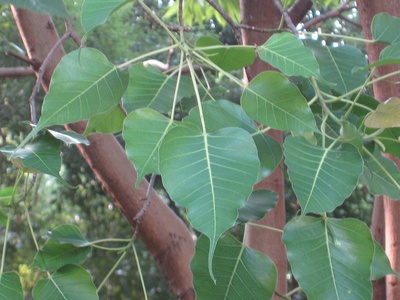
| Peepal | Ficus religiosa | 25.0 | Widespread across India, riverine and hill forests |
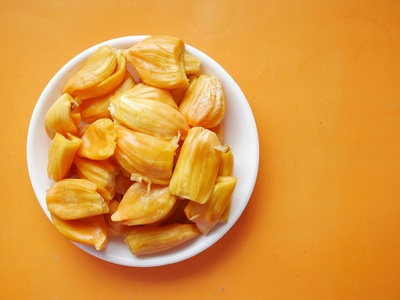
| Jackfruit | Artocarpus heterophyllus | 20.0 | Western Ghats and coastal South India |
| Sal | Shorea robusta | 30.0 | Central and eastern India (Sal forests) |
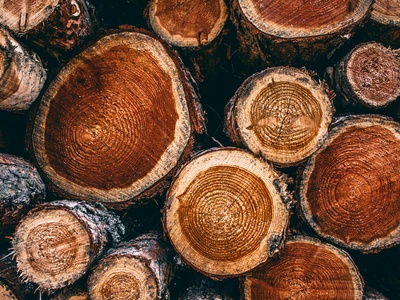
| Teak | Tectona grandis | 35.0 | Central and southern India, deciduous forests |
| Sandalwood | Santalum album | 10.0 | Southern India, Western Ghats and dry forests |
| Amla | Phyllanthus emblica | 8.0 | Widespread across India, dry and semi-evergreen forests |
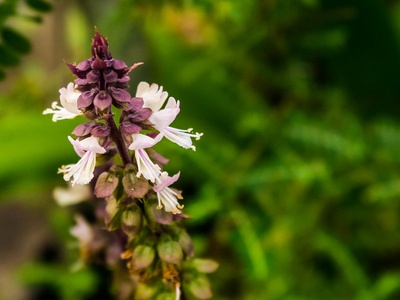
| Tulsi | Ocimum tenuiflorum | 0.6 | Widespread across India, cultivated and wild in plains |
| Bael | Aegle marmelos | 6.0 | Central and northern India, dry forests and plains |
| Golden Shower | Cassia fistula | 10.0 | Peninsular and western India, deciduous forests |
| Flame of the forest | Butea monosperma | 10.0 | Central and peninsular India, dry deciduous forests |
| Pongamia | Millettia pinnata | 12.0 | Coastal and inland India, riverbanks and dry forests |
| Arjuna | Terminalia arjuna | 20.0 | Riverbanks and floodplains across India |
| Bahera | Terminalia bellirica | 25.0 | Widespread in India, mixed deciduous forests |
| Haritaki | Terminalia chebula | 20.0 | Widespread in India, mixed forests and plains |
| Rhododendron | Rhododendron arboreum | 8.0 | Western and eastern Himalaya |
| Deodar | Cedrus deodara | 40.0 | Western Himalaya, montane forests |
| Chir pine | Pinus roxburghii | 30.0 | Lower Himalaya and foothills |
| Lotus | Nelumbo nucifera | 0.6 | Freshwater wetlands and ponds across India |
| Kokum | Garcinia indica | 8.0 | Western Ghats coastal forests (Konkan) |
| Sissoo | Dalbergia sissoo | 25.0 | Indo-Gangetic plains and riverine forests |
| Khejri | Prosopis cineraria | 8.0 | Thar Desert and arid western India |
| Giant bamboo | Bambusa bambos | 15.0 | Peninsular India and northeast |
| Indian bamboo | Dendrocalamus strictus | 20.0 | Central and peninsular India |
| Vanda orchid | Vanda tessellata | 0.3 | Himalaya to peninsular India, moist forests |
| Sundari | Heritiera fomes | 20.0 | Sundarbans mangrove (West Bengal) |
| Red mangrove | Rhizophora mucronata | 12.0 | Coastal mangroves around India |
| Coral tree | Erythrina variegata | 12.0 | Coastal and tropical India |
| Kachnar | Bauhinia variegata | 8.0 | Himalayan foothills to peninsular India |
| Strychnos | Strychnos nux-vomica | 8.0 | Widespread in dry to moist forests of India |
| Mahua | Madhuca longifolia | 15.0 | Central and northern India, dry deciduous forests |
| Babul | Vachellia nilotica | 15.0 | Arid and semi-arid India, plains and scrub |
| Jamun | Syzygium cumini | 20.0 | Widespread across India, moist forests and plains |
| Kurchi | Holarrhena antidysenterica | 10.0 | Dry and deciduous forests across India |
| Calotropis | Calotropis gigantea | 3.0 | Dry regions across India, disturbed soils |
| Malabar nut | Adhatoda vasica | 1.5 | Moist deciduous forests, plains across India |
| Curry leaf | Murraya koenigii | 3.0 | Widespread across India, native to peninsular India |
Images and Descriptions
Neem
Fast-growing evergreen tree of dry and semi-evergreen areas; identifiable by pinnate leaves and bitter neem oil. Valuable medicinal, pesticidal and shade tree supporting insects and birds; widely used in traditional medicine and agroforestry.
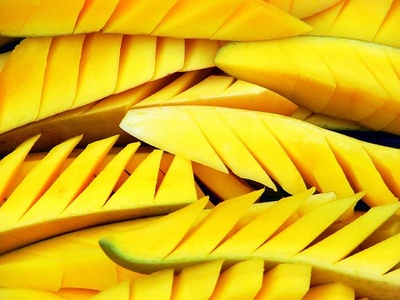
Mango
Large evergreen fruit tree common in homesteads and forests; recognized by dense crown and sweet, fibrous fruits. Ecologically important for frugivores; culturally and economically central as a native fruit crop and shade species.
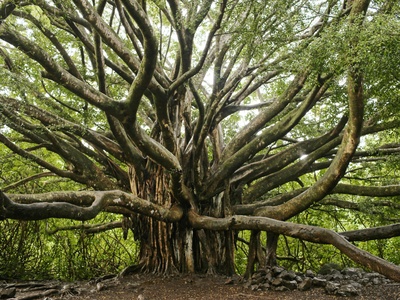
Banyan
Iconic strangler fig with aerial roots forming wide canopies; easy to ID by buttressed trunk and fig fruits. Important keystone species supporting many bird and insect species, commonly found in village groves and sacred sites.
Peepal
Deciduous fig with heart-shaped leaves and distinctive pointed tip; sacred in many traditions. Produces small figs feeding wildlife and supports complex epiphyte and insect communities in moist to dry forests.
Jackfruit
Large evergreen tree bearing massive, sweet fruits; glossy simple leaves and rough bark are ID tips. Important food tree in agroforestry, provides habitat and seasonal food for wildlife and people.

Sal
Tall emergent of moist deciduous forests with hard, flaky bark and buttress roots. Timber species with ecological dominance in understory-managed forests; supports many canopy-dependent birds and mammals.
Teak
Large deciduous timber tree with broad leaves and flaky bark; pale, durable wood is prized. Native teak forms monsoon forests and supports traditional forestry economies and associated biodiversity.
Sandalwood
Small hemi-parasitic fragrant tree with opposite leaves and smooth bark; heartwood yields aromatic oil long used in rituals and perfumery. Overharvesting has made native populations conservation-priority.

Amla
Small deciduous tree with pale bark and small clustered fruits high in vitamin C. Easily grown in dry soils; used extensively in ayurvedic medicine, food products, and for soil restoration.
Tulsi
Aromatic perennial herb with square stems and fragrant leaves; small white or purple flowers help identification. Sacred and medicinal basil used in traditional remedies, attracts pollinators and grows readily in home gardens.
Bael
Medium tree with trifoliate leaves and round, hard-shelled fruits; aromatic pulp used in drinks and medicine. Drought-tolerant and often planted near temples; supports pollinators and wildlife.
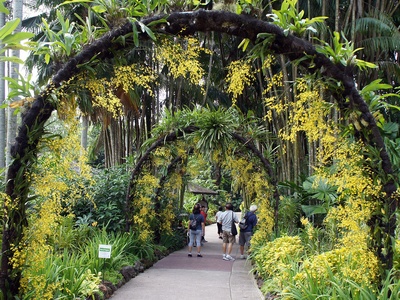
Golden Shower
Deciduous tree noted for long pendent clusters of bright yellow flowers and smooth seed pods. Widely used as an ornamental and medicinal tree, provides seasonal nectar for bees and butterflies.
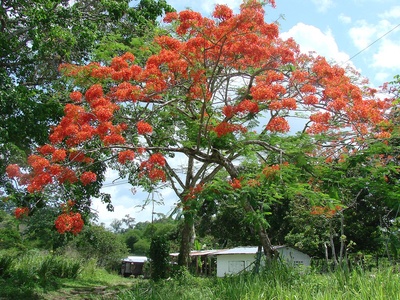
Flame of the forest
Medium tree with distinctive bright orange, flame-like flowers and pinnate leaves. Important for agroforestry, fodder, lac insect hosts, and traditional medicines; attracts nectar-feeding birds and insects.
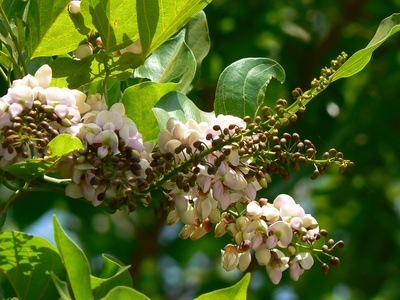
Pongamia
Evergreen to semi-deciduous tree with pinnate leaves and pea-like flowers; seeds yield oil useful for biofuel and traditional remedies. Tolerant of poor soils; used in reforestation and soil stabilization.
Arjuna
Large deciduous tree with thick, flaky bark and oblong leaves; bark is a traditional cardiotonic. Common along rivers, stabilizes banks and supports riparian wildlife communities.
Bahera
Large deciduous tree bearing large drupes used in traditional medicine and as a timber source. Found in moist to dry forests; fruits are part of classical herbal formulations and feed wildlife.
Haritaki
Deciduous tree with distinctive fruit used medicinally in ayurveda. Found in diverse habitats from dry forests to riverine areas; fruits support birds and traditional medicine systems.
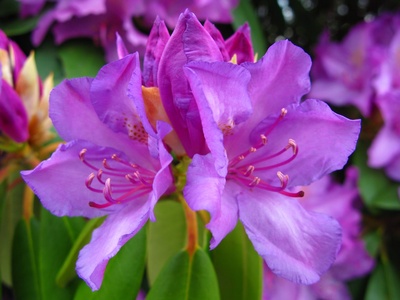
Rhododendron
Evergreen shrub or small tree with showy red to pink bell-shaped flowers at high elevations. Characteristic leathery leaves and profuse blooms make it a valuable ornamental and nectar source for mountain pollinators.
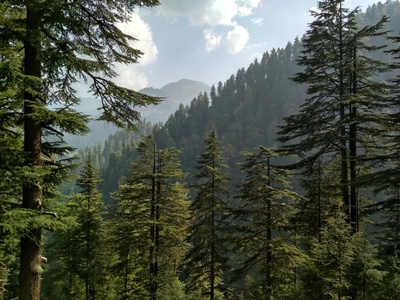
Deodar
Conical evergreen conifer with drooping branchlets and fragrant resinous wood. A high-altitude timber and ornamental species, central to Himalayan forest ecosystems and used traditionally in construction.
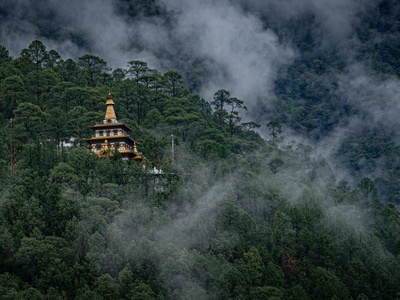
Chir pine
Long-needled pine forming large stands on drier slopes; resinous cones and flaky bark are identifying traits. Important for timber, resin extraction, and as habitat in montane landscapes.
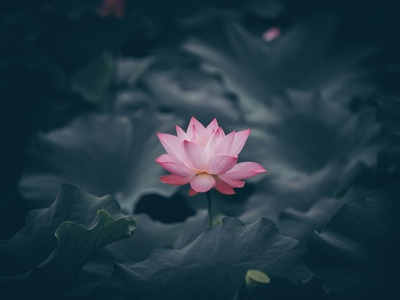
Lotus
Aquatic perennial with floating leaves and large fragrant flowers rising above water. Sacred cultural symbol, supports aquatic biodiversity and is harvested for food (rhizomes, seeds) and ornamental ponds.
Kokum
Small evergreen tree with edible sour fruits used in regional cuisine; glossy leaves and purple fruits identify it. Important native fruit tree in Western Ghats agroforestry with culinary and medicinal uses.
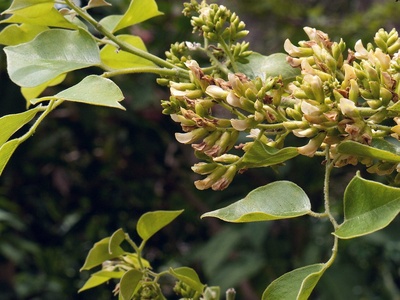
Sissoo
Fast-growing deciduous timber tree with pinnate leaves and smooth grey bark. Valuable for durable timber, fodder, and soil stabilization along rivers; supports many bird species.
Khejri
Drought-tolerant thorny tree with feathery foliage and pod-like fruits; vital source of fodder and green shade in arid systems. Central to desert agroforestry and pastoral livelihoods, with nitrogen-fixing roots.
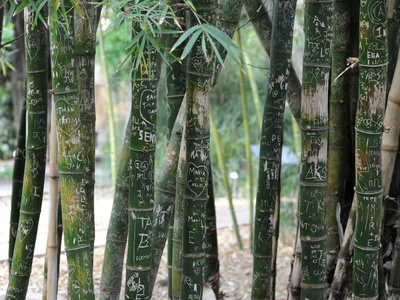
Giant bamboo
Clumping large bamboo with thick culms used in construction and crafts; identifiable by woody, tall canes. Important native bamboo for rural economies, erosion control, and wildlife habitat.
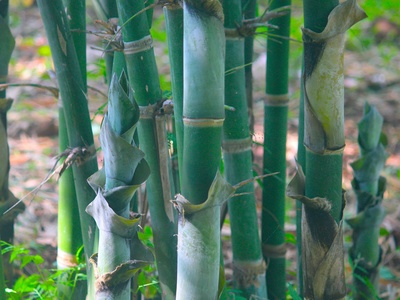
Indian bamboo
Solid-stemmed bamboo forming dense stands on drier soils; useful for construction, fencing and as a native resource for traditional crafts and habitat.
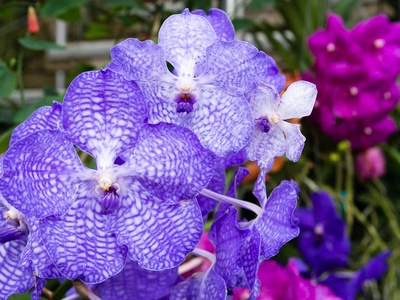
Vanda orchid
Epiphytic orchid with fleshy leaves and fragrant, whitish-lilac flowers; often on tree trunks. Valued in traditional medicine and attractive in forest canopies, indicating healthy humid habitats.
Sundari
Characteristic mangrove tree of Sundarbans with buttressed roots and dense crown. Key structural species stabilizing tidal soils, providing nursery habitat for fishes and protection against coastal erosion.
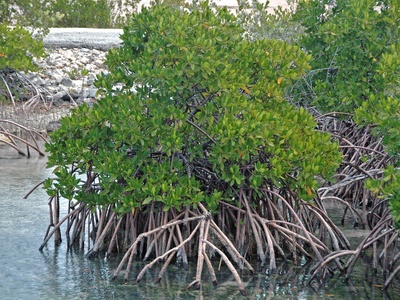
Red mangrove
Mangrove tree with stilt roots and viviparous propagules; easy to ID by arching prop roots. Critical for coastline protection, sediment trapping and as nursery habitat for marine life.
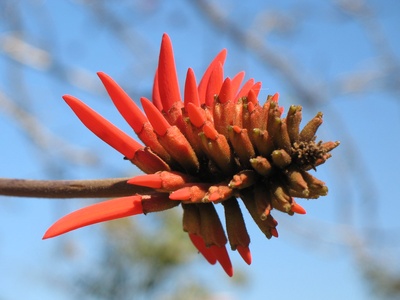
Coral tree
Deciduous thorny tree with trifoliate leaves and striking red pea-like flowers. Provides nectar for birds, used as a shade tree in agroforestry and traditional medicine for various uses.
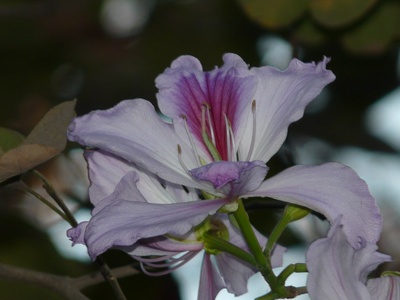
Kachnar
Medium deciduous tree with distinctive bilobed leaves and showy pink to white flowers. Used in traditional cuisine and medicine; common in secondary forests and roadside plantings.
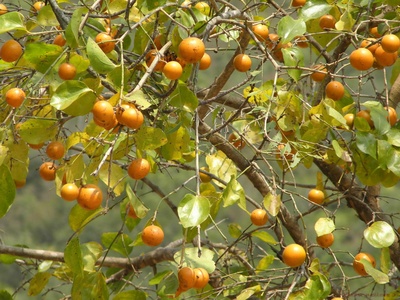
Strychnos
Small deciduous tree with glossy leaves and poisonous seeds containing strychnine; historically used in traditional medicine in controlled doses. Notable for toxic compounds and ecological occurrence in disturbed forests.
Mahua
Large deciduous tree with fragrant cream flowers used to make traditional fermented drinks and oils. Important socio-economic tree for tribal communities and supports pollinators during mass flowering.
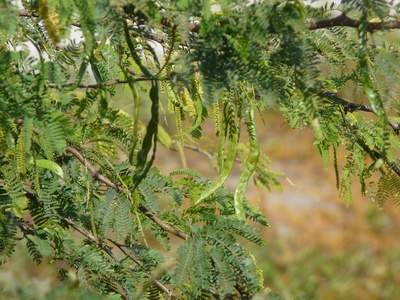
Babul
Spiny deciduous tree with bipinnate leaves and pod fruits; durable wood and tannins make it useful for fodder, fuel, and traditional uses. Common in dryland agroforestry systems.
Jamun
Evergreen to semi-evergreen fruit tree with glossy leaves and dark purple edible fruits. Important for wildlife and as a native fruit crop, used in traditional medicine for metabolic health.
Kurchi
Small to medium deciduous tree with rough bark; bark and seeds used in traditional medicine for gastrointestinal ailments. Found commonly in dry forests and secondary growth.
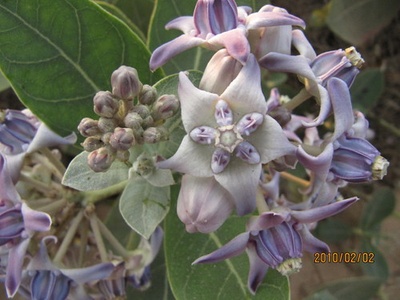
Calotropis
Robust shrub with thick milky latex and large pale flowers; leaves opposite and broad. Used in traditional medicine and fiber production, tolerates poor soils, often colonizes disturbed sites.
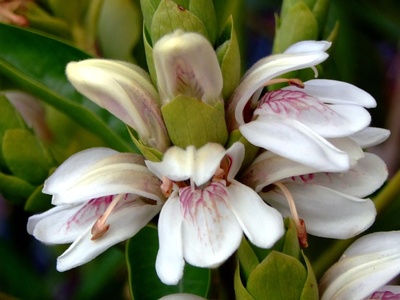
Malabar nut
Aromatic shrub with oblong leaves and tubular white flowers; leaves widely used in respiratory remedies. Attracts pollinators and common in understory and village hedges.
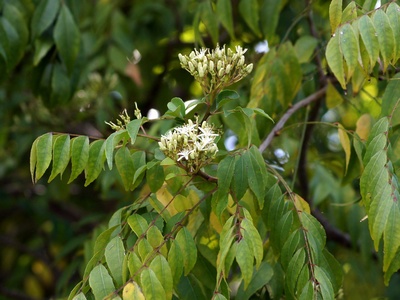
Curry leaf
Small aromatic tree with pinnate glossy leaves used extensively in Indian cuisine. Easy to identify by fragrant foliage; also used medicinally and supports local insect fauna.