If you landed here from a computer science assignment, this isn’t that kind of tree — no nodes, no root, no Big O. This is about the kind with bark, leaves, and a root system that actually grows underground. If that’s what you’re after, you’re in the right place.
Below are 20 tree species organized the way you’d actually want them sorted: by leaf habit, by what they produce, by how they’re used in a yard versus a forest. Each one gets its scientific name, its rough height at maturity, and at least one detail that separates it from every other tree on the list — because “green leaves, brown trunk” doesn’t tell you anything.
Table of Contents
- TLDR
- Deciduous Trees
- Evergreen and Conifer Trees
- Fruit Trees
- Ornamental Trees
- Trees by Region
- Comparison Table
TLDR
Twenty species across four categories: deciduous (sugar maple, white oak, river birch, American sweetgum, quaking aspen, eastern redbud), evergreen/conifer (eastern white pine, Colorado blue spruce, Douglas fir, eastern red cedar, giant sequoia), fruit (apple, sweet cherry, common fig, peach, lemon), and ornamental (flowering dogwood, Japanese maple, crape myrtle, southern magnolia). Full ID details and a side-by-side comparison table are below.
Deciduous Trees
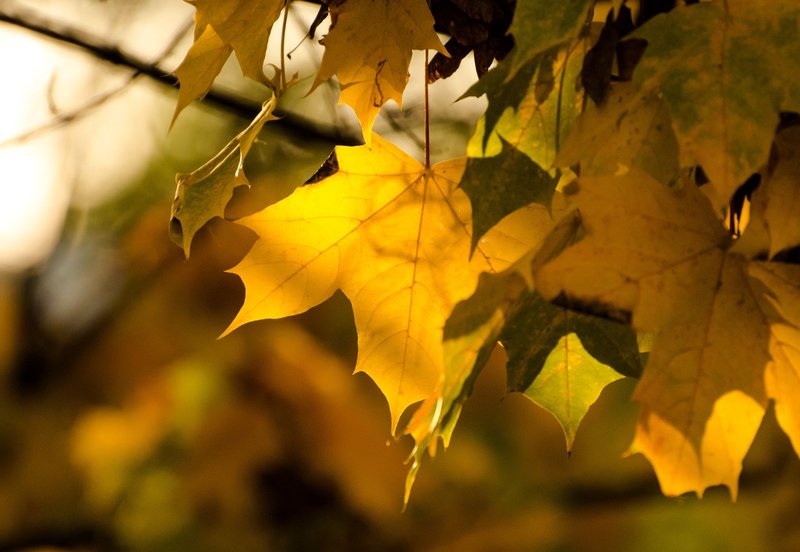
Deciduous trees drop their leaves seasonally, usually in response to shortening daylight and dropping temperatures. They’re the ones responsible for the color show every fall.
Sugar Maple (Acer saccharum) grows 60 to 75 feet tall with a dense, rounded crown. The leaves have five lobes with U-shaped notches between them, and the bark on mature trees turns dark gray and shaggy, peeling in vertical strips. It’s the tree tapped for real maple syrup — a single mature sugar maple can produce 10 to 20 gallons of sap in a season, which boils down to less than half a gallon of syrup.
White Oak (Quercus alba) reaches 80 to 100 feet with rounded, finger-like lobes on the leaves (no bristle tips, unlike red oaks). The bark is pale ash-gray and breaks into loose, flaky plates. White oak acorns mature in a single season and sprout almost immediately after falling, which is part of why they’re a favorite of squirrels racing to bury food before the ground freezes.
River Birch (Betula nigra) tops out around 40 to 70 feet and is easiest to identify from a distance by its bark — salmon-pink to reddish-brown, curling and peeling in papery sheets even on young trees. Diamond-shaped, doubly-serrated leaves. It’s one of the few birches that tolerates heat and wet soil well, which is why it shows up so often along Southern U.S. riverbanks.
American Sweetgum (Liquidambar styraciflua) grows 60 to 75 feet tall with star-shaped, five-to-seven-pointed leaves that turn a genuine mix of purple, red, orange, and yellow on the same tree in autumn. The giveaway in any season, though, is the fruit: a spiky, golf-ball-sized seed pod that people either love crunching underfoot or curse when it’s covering the lawn.
Quaking Aspen (Populus tremuloides) is a medium tree, usually 20 to 50 feet, with smooth, greenish-white bark and round to oval leaves on flattened stems — the flat petiole is why the leaves flutter and “quake” in even a light breeze. Aspens spread by root suckers, so what looks like a forest of individual trees is often a single genetic clone connected underground.
Eastern Redbud (Cercis canadensis) stays small, 20 to 30 feet, with a broad, spreading shape and heart-shaped leaves. What makes it unmistakable is timing: clusters of small magenta-pink flowers erupt directly from the bare branches and trunk in early spring, before the leaves even open.
Evergreen and Conifer Trees
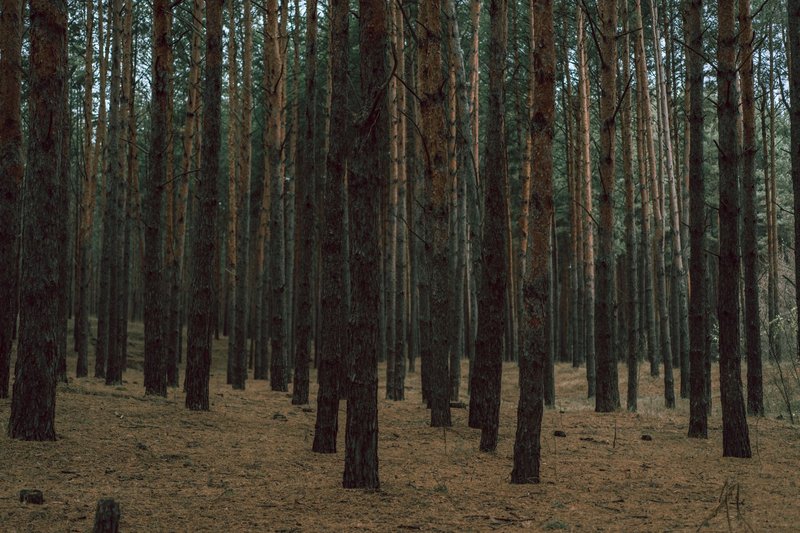
Conifers keep their needles or scale-like leaves year-round and reproduce with cones instead of flowers. Most (not all — bald cypress and larch are exceptions) are also evergreen.
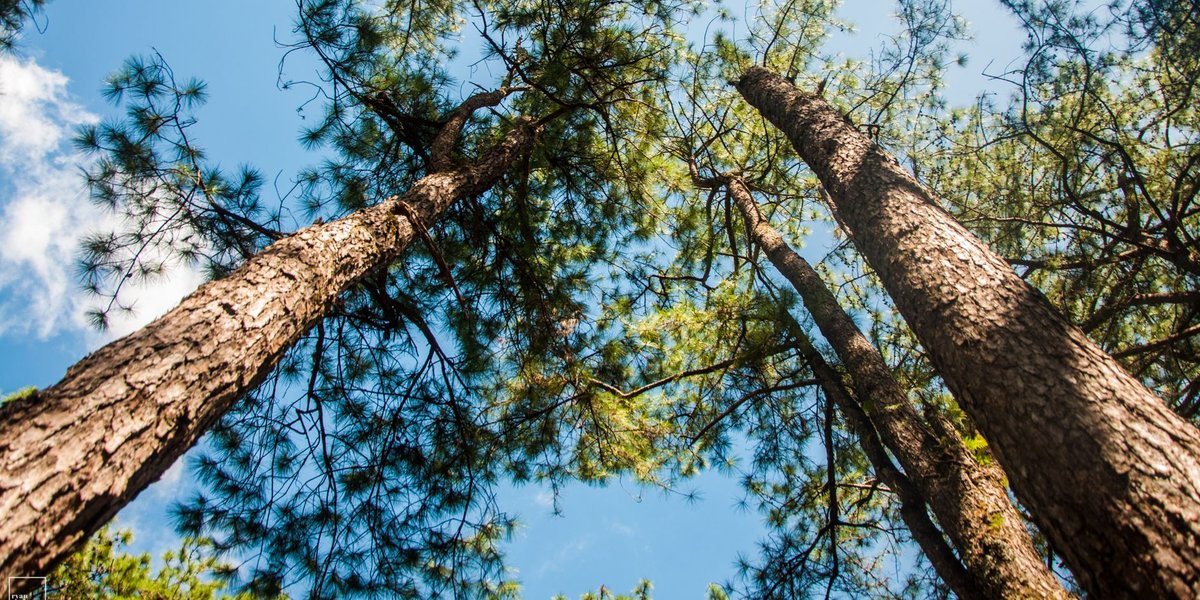
Eastern White Pine (Pinus strobus) grows fast and tall, often 50 to 80 feet, occasionally over 150. Needles come in bundles of five, soft and blue-green, which is the fastest way to separate it from other pines that bundle in twos or threes. According to the U.S. Forest Service, it was historically prized for ship masts because a single trunk could run 100 feet without a branch.
Colorado Blue Spruce (Picea pungens) reaches 50 to 75 feet with a stiff, pyramidal shape and sharp, four-sided needles that roll between your fingers (flat needles mean fir, not spruce). The blue-gray color that gives it its name comes from a waxy coating on the needles.
Douglas Fir (Pseudotsuga menziesii) grows 40 to 80 feet in yards and well over 200 feet in old-growth Pacific Northwest forests, where it’s one of the tallest tree species on the continent. Flat needles and, more distinctively, cones with three-pointed bracts sticking out between the scales — often described as tiny mouse tails and back legs poking out.
Eastern Red Cedar (Juniperus virginiana) is technically a juniper, not a true cedar, and grows 30 to 40 feet with dense, scale-like foliage instead of needles. The reddish, aromatic heartwood is why it’s the classic wood for cedar chests and closet linings — moths avoid it.
Giant Sequoia (Sequoiadendron giganteum) is the volume champion of the plant kingdom. Mature trees regularly exceed 250 feet with trunk diameters over 25 feet, and the bark alone can be 18 to 24 inches thick — a defense that lets them survive wildfires that would kill most other species. The National Park Service notes that sequoia cones actually need fire’s heat to release their seeds.
Fruit Trees
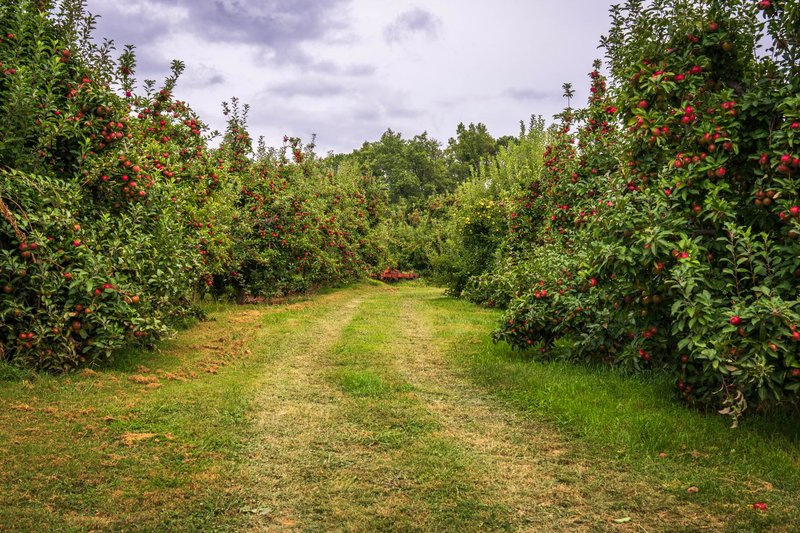
Fruit trees are cultivated primarily for edible yield, though most also flower showily enough to double as ornamentals for a few weeks each spring.
Apple (Malus domestica) trees run 15 to 30 feet depending on rootstock, with oval, serrated leaves and five-petaled white-to-pink spring blossoms. Almost no apple variety is true-to-seed — a Honeycrisp grown from seed won’t produce Honeycrisp apples — which is why commercial trees are grafted onto rootstock rather than grown from pips.
Sweet Cherry (Prunus avium) grows 35 to 50 feet, taller than most fruit trees, with glossy, elliptical leaves and clusters of white blossoms that open before the leaves fully unfurl. The bark is smooth, reddish-brown, and marked with horizontal lenticels — small breathing pores — that run in bands around the trunk.
Common Fig (Ficus carica) is a smaller tree or large shrub, typically 10 to 30 feet, with broad, deeply-lobed leaves that look almost hand-shaped. Its fruit is botanically strange: the fig itself is an inverted flower cluster (a syconium), pollinated in wild varieties by a wasp species that enters through a tiny opening and often doesn’t survive the trip.
Peach (Prunus persica) trees stay compact, usually 15 to 25 feet, with narrow, lance-shaped leaves and pink blossoms that appear before leaf-out. Peach bark develops a rough, scaly texture with age, and the trees are notably short-lived for a fruit tree — most productive lifespans run just 15 to 20 years.
Lemon (Citrus limon) is an evergreen tree, unusual on this list for holding its glossy, dark-green leaves year-round. It typically stays under 20 feet and is one of the few fruit trees that can flower and fruit simultaneously — you’ll often see blossoms, green fruit, and ripe yellow lemons on the same branch at once.
Ornamental Trees
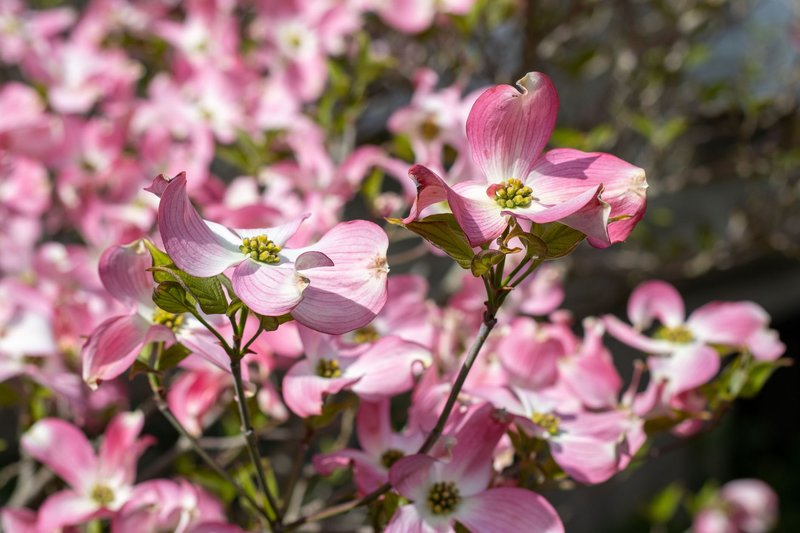
These are grown primarily for visual impact — flowers, foliage color, or form — rather than timber or food.
Flowering Dogwood (Cornus florida) stays under 25 feet with a layered, horizontal branching habit. What looks like four large white or pink petals in spring are actually bracts (modified leaves) surrounding the tiny true flowers clustered at the center.
Japanese Maple (Acer palmatum) rarely exceeds 25 feet and is prized for deeply-lobed, palm-shaped leaves in shades from burgundy to chartreuse depending on cultivar. Its slow growth rate and compact form make it one of the most common trees for small residential yards and container planting.
Crape Myrtle (Lagerstroemia indica) grows 15 to 25 feet with smooth, mottled, often multicolored bark that peels in patches — gray, tan, and cinnamon-brown all visible on the same trunk. It flowers in dense clusters of crinkled, crepe-paper-textured petals through the peak of summer heat, when most other flowering trees have finished for the season.
Southern Magnolia (Magnolia grandiflora) is a large evergreen, 60 to 80 feet, with thick, leathery, glossy dark-green leaves and enormous creamy-white flowers that can span 8 to 12 inches across. The blooms carry a strong lemon-and-vanilla scent detectable from yards away.
Trees by Region
Native range matters as much as category if you’re planting rather than identifying. A few regional standouts from the list above:
- Pacific Northwest: Douglas fir dominates old-growth forests and is the region’s most commercially logged conifer.
- Northeast and Upper Midwest: Sugar maple is both a forest staple and the backbone of the maple syrup industry.
- Southeast: Southern magnolia and eastern red cedar are both regional natives adapted to humid summers.
- Great Plains and prairie edges: Quaking aspen tolerates cold winters and poor soil better than most broadleaf species.
- California: Giant sequoias grow naturally only in a narrow band of the western Sierra Nevada, according to USDA PLANTS Database range maps.
Comparison Table
| Tree | Category | Typical Height | Leaf/Needle Type | Notable Feature |
|---|---|---|---|---|
| Sugar Maple | Deciduous | 60–75 ft | 5-lobed leaf | Source of maple syrup |
| White Oak | Deciduous | 80–100 ft | Rounded lobes | Acorns sprout same season |
| River Birch | Deciduous | 40–70 ft | Diamond, serrated | Peeling salmon-pink bark |
| American Sweetgum | Deciduous | 60–75 ft | Star-shaped, 5–7 points | Spiky seed pods |
| Quaking Aspen | Deciduous | 20–50 ft | Round to oval | Spreads via root clones |
| Eastern Redbud | Deciduous | 20–30 ft | Heart-shaped | Flowers grow on bare bark |
| Eastern White Pine | Conifer/Evergreen | 50–80+ ft | Needles in bundles of 5 | Soft blue-green needles |
| Colorado Blue Spruce | Conifer/Evergreen | 50–75 ft | 4-sided single needles | Waxy blue-gray coating |
| Douglas Fir | Conifer/Evergreen | 40–80+ ft | Flat single needles | 3-pointed cone bracts |
| Eastern Red Cedar | Conifer/Evergreen | 30–40 ft | Scale-like | Aromatic reddish heartwood |
| Giant Sequoia | Conifer/Evergreen | 250+ ft | Scale-like | Fire-adapted, 2-ft-thick bark |
| Apple | Fruit | 15–30 ft | Oval, serrated | Grafted, not grown true-to-seed |
| Sweet Cherry | Fruit | 35–50 ft | Elliptical | Lenticel-banded bark |
| Common Fig | Fruit | 10–30 ft | Lobed, hand-shaped | Wasp-pollinated syconium fruit |
| Peach | Fruit | 15–25 ft | Narrow, lance-shaped | Short 15–20 year lifespan |
| Lemon | Fruit | Under 20 ft | Glossy, evergreen | Flowers and fruits simultaneously |
| Flowering Dogwood | Ornamental | Under 25 ft | Oval, veined | Showy bracts, not true petals |
| Japanese Maple | Ornamental | Under 25 ft | Deeply lobed | Slow-growing, colorful cultivars |
| Crape Myrtle | Ornamental | 15–25 ft | Oval, glossy | Mottled peeling bark |
| Southern Magnolia | Ornamental | 60–80 ft | Leathery, evergreen | Fragrant 8–12 in. flowers |
Twenty species, four categories, and enough distinguishing detail that you should be able to walk past most of these in the wild and put a name to them — no compiler required.