Vietnam’s reptile list runs past 480 species, and a striking share of them exist nowhere else on Earth. That’s not a coincidence — the country’s mix of limestone karst, lowland floodplain, and the unbroken forest spine of the Annamite Mountains has spent millions of years quietly manufacturing new species while the rest of the world wasn’t looking. Researchers are still finding new ones, including a lizard discovered in a public park in the middle of Ho Chi Minh City.
This is a group-by-group tour of what actually lives there: the crocodiles hanging on by a thread, the geckos found on a single island, the snakes worth knowing how to identify, and the turtles so rare that losing one individual makes international news. We’ll also cover where to look for them in the wild and what to do if you cross paths with something venomous.
Table of Contents
- How Many Reptiles Live in Vietnam
- Crocodiles
- Lizards
- Snakes
- Turtles
- Where to See Them in the Wild
- Snake Safety for Visitors
- Species at a Glance
- The Short Version
How Many Reptiles Live in Vietnam
Vietnam is home to roughly 484 recorded reptile species, and reporting on the country’s captive-breeding gaps puts the number the IUCN Red List classifies as threatened at around 74. That threatened count is high for a country this size, and it tracks with why: much of Vietnam’s reptile diversity is concentrated in the Annamite Mountains, a narrow, wet, forested range along the Laos border that acts as an evolutionary island on land. Species evolve in isolated valleys and never spread far, which makes them fascinating and also means a single logging road or dam can wipe out something that lives nowhere else.
Vietnam’s reptile fauna splits into four working groups for identification purposes: crocodiles, lizards (which includes geckos and monitors), snakes, and turtles. Each one tells a different version of the same story — extraordinary diversity running headlong into habitat loss and, for several species, the wildlife trade.
Crocodiles
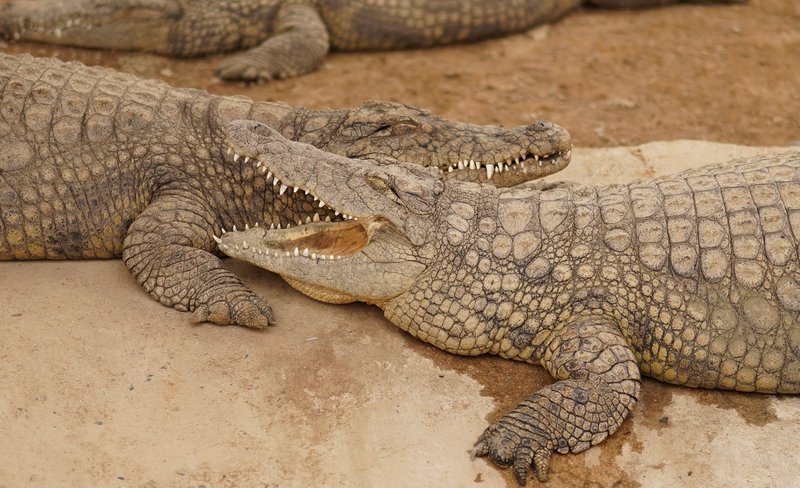
Vietnam has essentially one crocodile story left to tell, and it’s the Siamese crocodile (Crocodylus siamensis). Hunting and wetland drainage pushed it to the edge of extinction in the wild here by the late 20th century — for years, the only confirmed wild population was a handful of animals in Cat Tien National Park’s Bau Sau (Crocodile Lake) wetland. Conservation groups have since reintroduced captive-bred individuals there, and Bau Sau remains the one place in the country where you have a real shot at seeing a wild Siamese crocodile rather than a farmed one.
Crocodile farms are a different matter entirely — Vietnam raises Siamese crocodiles and hybrids commercially in large numbers for leather and meat. That’s worth knowing, because farmed animals vastly outnumber wild ones, and it’s easy to mistake the two when reading about the species’ status.
Lizards
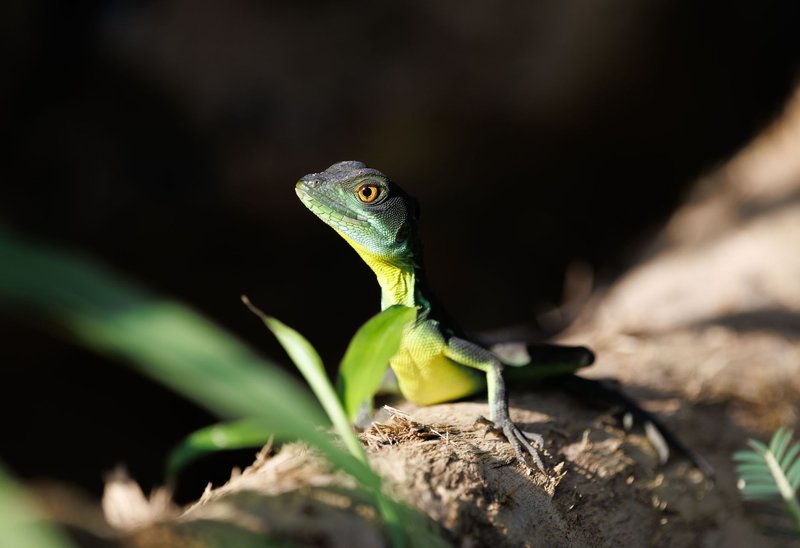
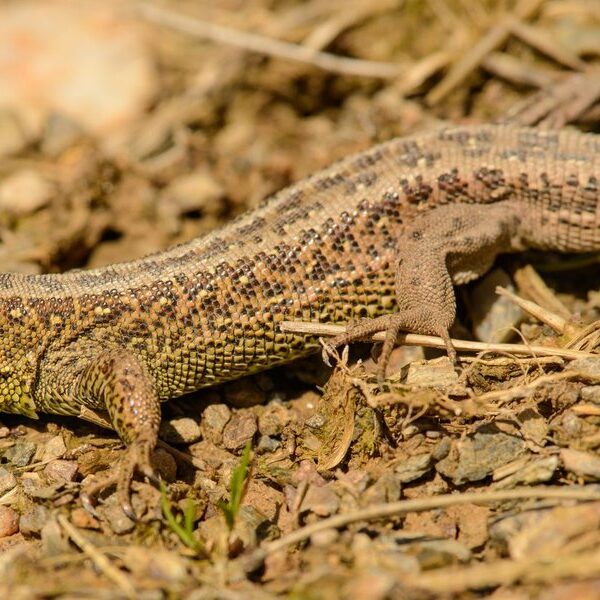
Lizards are where Vietnam’s habit of hiding new species in plain sight shows up most. In 2010, researchers described the Vietnamese blue-crested lizard (Calotes bachae) — a foot-long agamid with a body that shifts from brown to electric blue when the male gets excited — from a public park in the middle of Ho Chi Minh City. It had been living alongside joggers and street vendors the whole time.
Geckos carry a lot of the endemic diversity. Cat Ba Island, off the northeast coast, has its own leopard gecko, Goniurosaurus catbaensis, a nocturnal, banded, cave-dwelling species found only on that island and nowhere else in the world — the animal most often sold in the pet trade as the “Vietnamese leopard gecko.” Several close relatives occupy similarly narrow ranges in limestone caves elsewhere in the north. At the other end of the visibility spectrum is the Tokay gecko (Gekko gecko), a blue-and-orange-spotted gecko the length of a forearm whose two-syllable call (“to-KAY”) is one of the most recognizable night sounds in Vietnam, from city apartments to forest camps. For raw size, nothing beats the Asian water monitor (Varanus salvator), a semi-aquatic lizard that can top two meters and is common around wetlands, canals, and mangrove edges.
Snakes
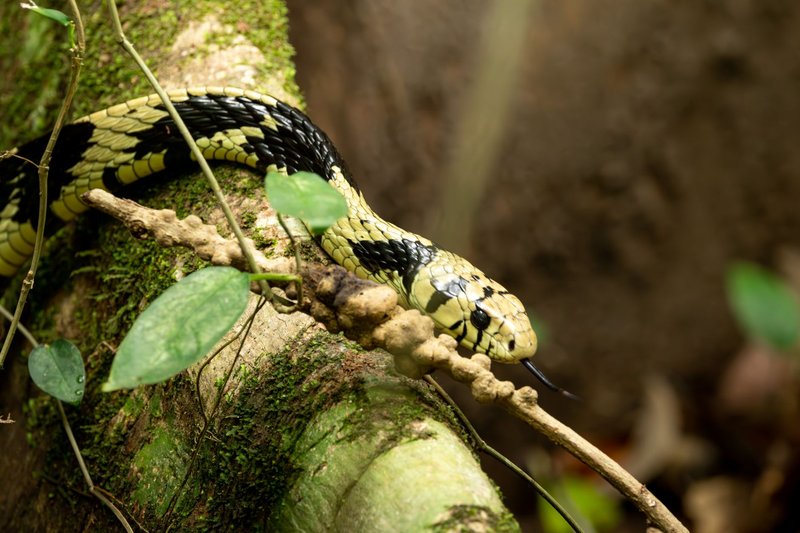
Vietnam’s snake fauna includes both the world’s longest venomous snake and some of its most dangerous small ones, and getting the two apart matters for anyone spending time outdoors.
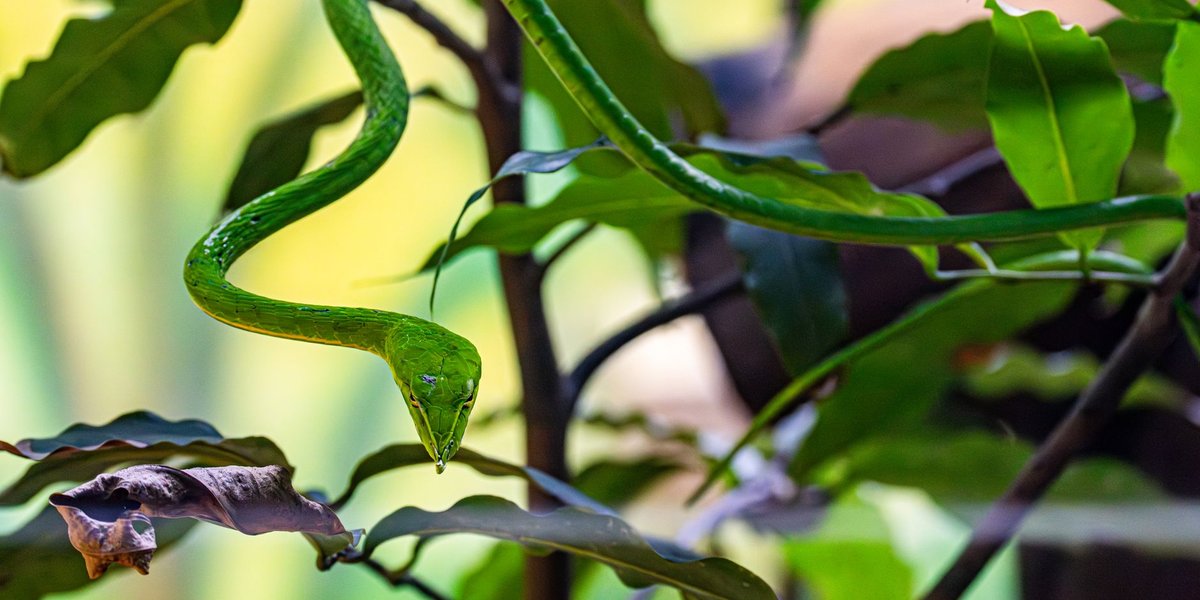
The king cobra (Ophiophagus hannah) is the headline act — the longest venomous snake on the planet, capable of exceeding five meters, and found in Vietnam’s forests from the north down through the Annamites. It’s shy by cobra standards and would rather leave than confront you. More dangerous in practice are the kraits (genus Bungarus), including the banded krait and many-banded krait, which are nocturnal, highly venomous, and sometimes wander into rural homes and gardens at night. Green pit vipers (genus Trimeresurus) are the snake most visitors are likely to actually encounter — small, well-camouflaged, and common in vegetation near forest edges and streams, including popular hiking trails.
On the harmless side, Vietnam’s forests hold Burmese pythons and several rat snake species that do useful pest control and pose no threat to people, despite frequently getting killed out of fear.
Turtles
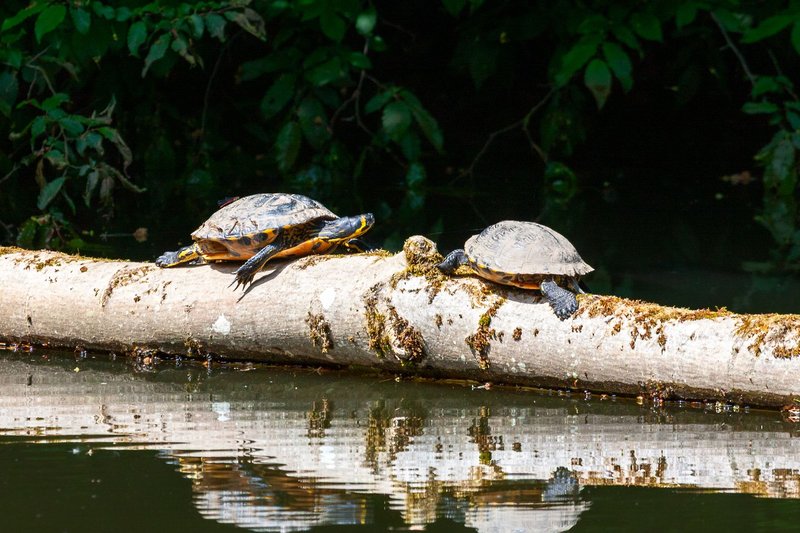
Vietnam’s turtles carry the heaviest conservation weight of any reptile group here, and one animal in particular made that visible to the world. The Hoan Kiem turtle — a Swinhoe’s softshell turtle (Rafetus swinhoei) that lived in Hanoi’s Hoan Kiem Lake and was tied to centuries of Vietnamese legend — died in January 2016. Swinhoe’s softshell turtle is now considered the rarest turtle species on Earth, with only a small number of individuals known to survive, including a wild female confirmed in Dong Mo Lake near Hanoi in recent years. It is a species that could disappear within a generation.
It isn’t the only one under pressure. The golden coin turtle (Cuora trifasciata), prized in traditional medicine markets, has been trapped and traded to the point of near-disappearance from the wild. Bourret’s box turtle (Cuora bourreti) is endemic to the forests of central Vietnam and Laos and is critically endangered from the same collection pressure. Cuc Phuong National Park runs a dedicated Turtle Conservation Center that breeds and studies several of Vietnam’s rarest turtle species — it’s one of the only places you can reliably see some of them at all.
Where to See Them in the Wild
The single best region for reptile diversity is the Annamite Mountains, the range running along Vietnam’s border with Laos — biologists treat it as an active hotspot for Southeast Asian reptiles where new amphibian and reptile species are still being described. A handful of national parks give you real access to it:
- Cat Tien National Park (south) — lowland forest and wetland; the place to look for the reintroduced Siamese crocodile at Bau Sau, plus water monitors and a wide range of snakes.
- Cuc Phuong National Park (north) — Vietnam’s oldest national park, home to the Turtle Conservation Center and strong lizard and snake diversity in limestone forest.
- Bach Ma National Park (central) — sits squarely in the Annamites, with high endemism among reptiles and amphibians due to its elevation gradient.
- Pu Mat National Park (Nghe An province) — dense, less-visited Annamite forest bordering Laos, part of the same biodiversity corridor.
- Cat Ba Island (northeast) — limestone karst and caves that host the island’s endemic leopard gecko species.
Guided night walks are the most productive way to actually see reptiles in any of these parks — most of Vietnam’s lizards and snakes are more active after dark, and a local guide knows where the geckos call from and which log to check for a coiled pit viper before you put a hand on it.
Snake Safety for Visitors
Most snake encounters in Vietnam end with the snake leaving before you’ve fully registered it was there. A few habits keep it that way:
- Wear closed shoes and watch foot placement on forest trails, especially near streams and leaf litter — pit vipers rely on camouflage, not confrontation.
- Don’t reach into rock crevices, hollow logs, or dense undergrowth without looking first.
- If you see a snake, back away slowly rather than trying to identify or photograph it up close. Green coloring, a triangular head, and heat-sensing pits near the nostrils are red flags for pit vipers; hooded, upright postures signal cobras.
- If someone is bitten, keep them calm and still, remove tight clothing or jewelry near the bite, and get to a hospital immediately — Vietnamese hospitals in reptile-heavy provinces generally stock antivenom, and outcomes are strongly tied to how fast treatment starts. Don’t cut the wound, apply a tourniquet, or attempt to suck out venom; all of that does more harm than good.
Species at a Glance
| Group | Species to know | Status |
|---|---|---|
| Crocodile | Siamese crocodile | Critically endangered; reintroduced at Cat Tien |
| Lizard | Cat Ba leopard gecko | Endemic to Cat Ba Island |
| Lizard | Vietnamese blue-crested lizard | Common, urban-tolerant |
| Lizard | Tokay gecko | Widespread, iconic call |
| Snake | King cobra | Venomous, forest-dwelling, shy |
| Snake | Green pit viper | Venomous, common near trails |
| Snake | Many-banded krait | Highly venomous, nocturnal |
| Turtle | Swinhoe’s softshell turtle | Critically endangered; rarest turtle on Earth |
| Turtle | Golden coin turtle | Critically endangered from trade |
The Short Version
Vietnam’s reptiles reward the extra effort of actually going looking for them — a night walk in Cuc Phuong or Cat Tien will get you closer to the country’s biodiversity than almost anything else on a typical itinerary. The species worth prioritizing are the ones running out of time: the Siamese crocodile clinging on at Bau Sau, the softshell turtle that may already be down to a handful of individuals, and the geckos that exist on a single island or in a single cave system. A peer-reviewed survey of central Vietnam’s herpetofauna keeps turning up species new to science in exactly these places, which says as much about how much remains unrecorded as it does about what’s already known. See the crocodile, respect the pit viper, and leave the turtles to the conservation centers built to keep them around.