Every “animals of Costa Rica” list runs through the same eight photos: sloth, toucan, red-eyed frog, howler monkey, done. Fine animals, all of them. But nobody tells you that the sloth you’ll actually see is probably in Cahuita, not Corcovado, or that the quetzal you flew here for disappears from the cloud forest by July. Costa Rica’s native animals aren’t evenly scattered across the country — they cluster by habitat, and a lot of them have a narrow window when they’re worth chasing.
This is the version organized the way you’ll actually experience it: by park, by season, with a straight answer on which species are native (found here among other places) versus endemic (found only here and nowhere else on Earth).
Table of Contents
- Quick Answer: Animal, Park, and Season Cheat Sheet
- Native vs. Endemic: What the Terms Actually Mean
- Where to Base Your Wildlife Trip
- The Animals to Look For
- The True Endemics — Found Nowhere Else on Earth
- Costa Rica’s National Animal
- Animals Worth Respecting From a Distance
- When to Go, Overall
Quick Answer: Animal, Park, and Season Cheat Sheet
| Animal | Best Park | Best Season |
|---|---|---|
| Resplendent quetzal | Monteverde / Los Quetzales NP | March–June |
| Jaguar | Corcovado National Park | December–April (dry) |
| Baird’s tapir | Corcovado National Park | Year-round, easier in dry season |
| Central American squirrel monkey | Manuel Antonio / Osa Peninsula | December–April |
| Geoffroy’s spider monkey | Corcovado / Santa Rosa | December–April |
| Mantled howler monkey | Cahuita / Palo Verde | Year-round |
| Three-toed & two-toed sloths | Cahuita / Puerto Viejo | Year-round |
| Scarlet macaw | Carara National Park | Year-round, best at dawn |
| Great green macaw | Maquenque / Boca Tapada | Year-round |
| Strawberry poison dart frog | Tortuguero / Cahuita | May–November (wet) |
| Green & leatherback sea turtles | Tortuguero / Playa Grande | July–October / October–March |
| White-tailed deer | Santa Rosa / Guanacaste dry forest | December–April |
Native vs. Endemic: What the Terms Actually Mean
Every one of Costa Rica’s native animals lives here, but “native” just means the species evolved in or naturally colonized this region — many of the same monkeys, cats, and macaws also range through Panama, Nicaragua, or the wider Amazon basin. Endemic is a stricter claim: the species exists only within Costa Rica’s borders (or, for a handful of species, only on Cocos Island) and nowhere else on the planet.
Most of what fills the postcards — jaguars, sloths, scarlet macaws — is native, not endemic. The true endemics tend to be smaller and less photogenic: hummingbirds, a couple of frogs, one very specific pit viper. Both categories matter, but they’re not the same claim, and most “wildlife of Costa Rica” content blurs the two.
Where to Base Your Wildlife Trip
Corcovado National Park, on the Osa Peninsula, is the closest thing Costa Rica has to a wildlife jackpot — National Geographic has called it one of the most biologically intense places on Earth, and it’s the one park where all four of the country’s monkey species, both sloth species, and a real (if still slim) shot at a jaguar overlap in the same forest. Manuel Antonio is smaller and far more accessible, trading a bit of density for convenience: three monkey species and two sloth species within a short walk of the entrance. Monteverde and the Los Quetzales corridor near San Gerardo de Dota are cloud forest, cooler and mistier, built around the quetzal. Tortuguero, reachable only by boat or small plane, is the turtle nesting coast. Guanacaste’s dry forest parks — Santa Rosa and Rincón de la Vieja — thin out in the dry season, which paradoxically makes animals easier to spot around shrinking water sources.
The Animals to Look For
Resplendent Quetzal
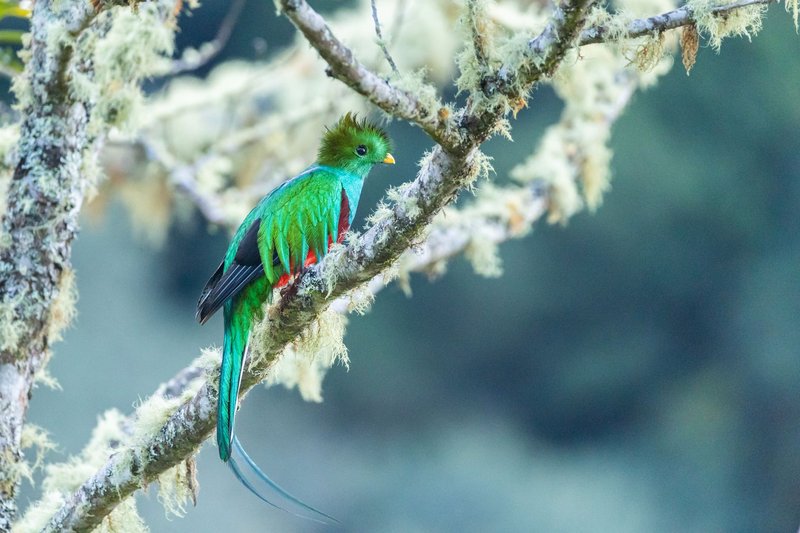
The quetzal is the reason a lot of people build a Costa Rica itinerary around Monteverde in the first place. Males grow tail streamers up to three feet long during breeding season, and they’re so unwieldy the birds sometimes leave them poking out of the nest cavity, according to National Geographic. That breeding window — roughly March through June — is when sightings spike, because the birds get territorial and vocal instead of sitting quiet and camouflaged, as National Geographic’s Costa Rica coverage notes. Outside that window, you’re hunting a green bird in a green forest. Native, not endemic — its range stretches into Panama and up through southern Mexico.
Jaguar
Corcovado is the honest answer to “where can I see a jaguar in Costa Rica,” and even there, the honest answer is: probably not, but it’s your best shot. The cats are listed as Near Threatened on the IUCN Red List, having disappeared from roughly half their historic range across the Americas. Dry season concentrates them near rivers and beaches where prey — coatis, peccaries, the odd sea turtle nest — is easier to ambush. Most visitors leave with camera-trap footage from a lodge, not a personal sighting, and that’s a realistic expectation to set.
Baird’s Tapir
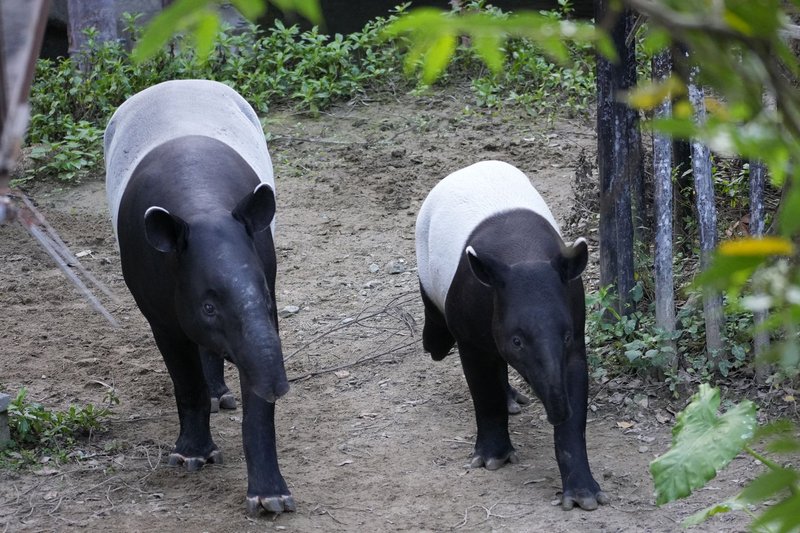
Costa Rica’s largest land mammal looks like someone crossed a pig with an elephant’s trunk, and it moves through the forest with a kind of unbothered bulk that’s genuinely startling the first time you see one. Endangered, mostly from habitat fragmentation and historic hunting pressure, with Corcovado holding one of the healthiest remaining populations in Central America. They’re most active around dawn and dusk near rivers and mud wallows — guides in the Sirena station area track them by their tracks and dung piles as much as by sight.
Central American Squirrel Monkey
The smallest and, by most accounts, most endangered-feeling of Costa Rica’s four monkey species — its range is squeezed into the Central and South Pacific coast, with the Osa Peninsula and Manuel Antonio as strongholds. They move in loud, fast troops through the mid-canopy, which makes them easier to hear coming than to spot holding still. Vulnerable, largely due to coastal development cutting up their forest corridors.
Geoffroy’s Spider Monkey
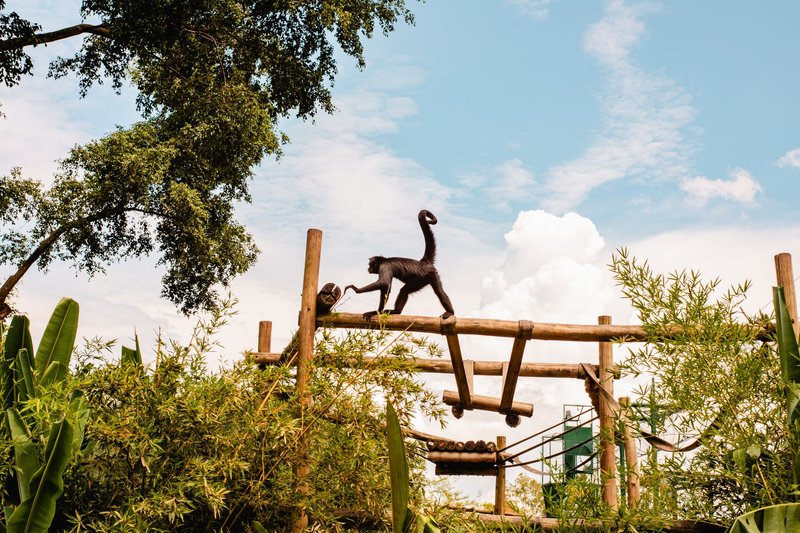
Long-limbed and built for swinging rather than climbing, spider monkeys need large, connected tracts of mature forest — which is exactly what’s disappearing. Endangered, with populations down sharply over the past few decades. Corcovado and Santa Rosa are the reliable parks; outside protected land, fragmented forest simply can’t support troops big enough to be viable.
Mantled Howler Monkey
The sound before the sighting — a howler troop’s dawn call carries for miles and gets mistaken for a jaguar by first-time visitors more often than any guide will admit. Least Concern, widespread, and genuinely one of the easiest of Costa Rica’s native animals to encounter: Cahuita, Palo Verde, and even some hotel grounds on the Caribbean coast have resident troops.
Sloths (Three-Toed and Two-Toed)
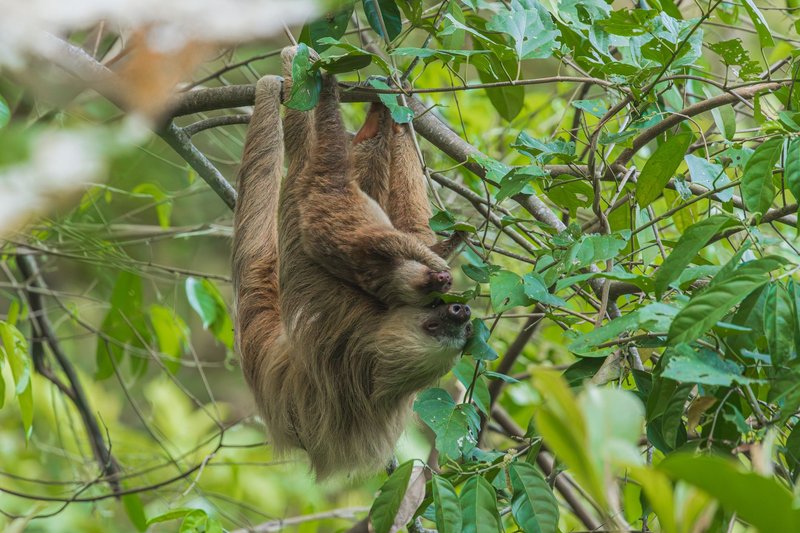
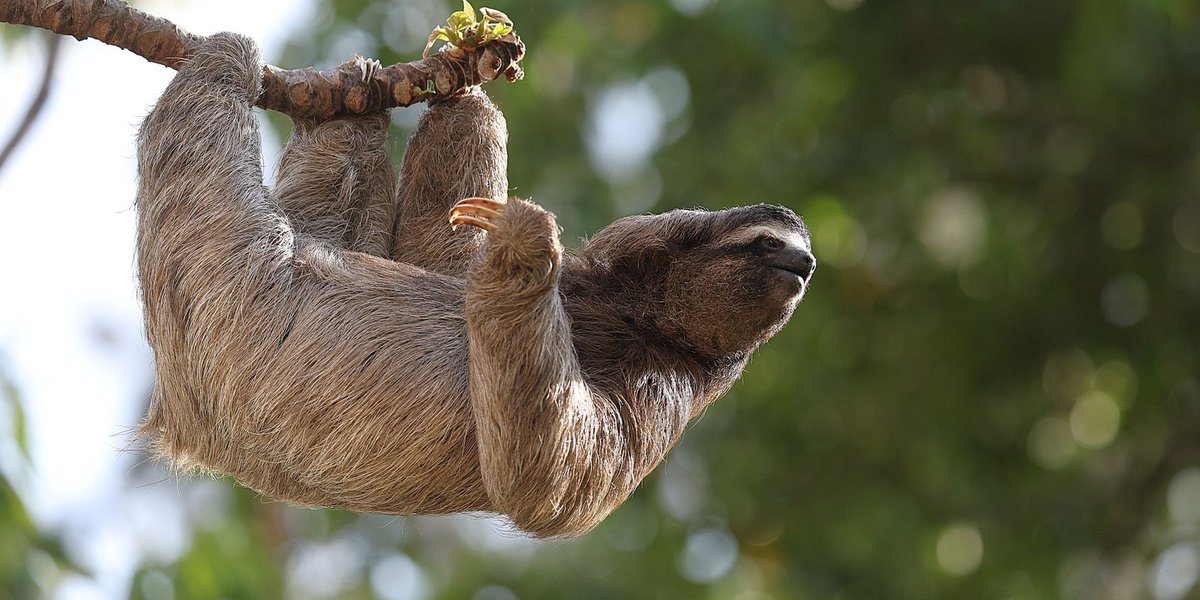
Two different species get lumped together as “the sloth”: the brown-throated three-toed sloth, active during the day and prone to that permanent half-smile expression, and Hoffmann’s two-toed sloth, nocturnal and noticeably larger. Cahuita National Park and the stretch around Puerto Viejo de Talamanca on the Caribbean coast have some of the highest sighting rates in the country, partly because the low, tangled coastal forest puts them at eye level instead of eighty feet up. Both species are Least Concern — sloths are, unusually for this list, not in trouble.
Scarlet Macaw
Carara National Park sits right at the edge of the scarlet macaw’s range, close enough to Tárcoles that you can watch pairs commute between roosting trees and feeding grounds at dawn — they mate for life and travel as couples, which is why you almost never see just one. Globally Least Concern, but regionally scarcer than that label suggests; deforestation pushed them out of large stretches of their former Costa Rican range before conservation efforts stabilized the Carara and Osa populations.
Great Green Macaw
Bigger and rarer than its scarlet cousin, and tied almost entirely to one tree: the mountain almond, which takes decades to mature and is exactly the kind of large hardwood that gets logged first. Endangered, with the northern lowlands around Maquenque and the Boca Tapada area holding most of Costa Rica’s remaining population. Numbers have ticked upward in recent years thanks to targeted almond-tree protection, but this is still the macaw you’re least likely to check off.
Strawberry Poison Dart Frog
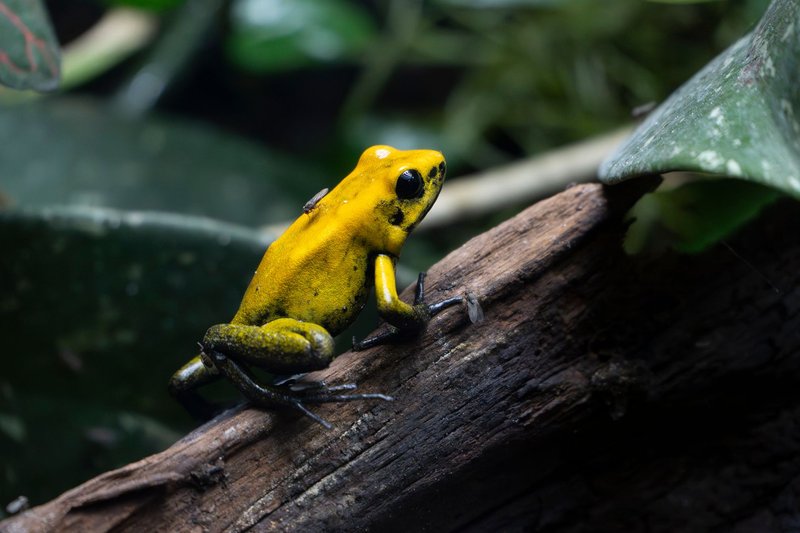
Bright red body, blue-black legs, roughly the size of a thumbnail — and yes, genuinely toxic, though only dangerous if something tries to eat it. Native rather than endemic despite the local nickname “blue jeans frog.” Wet season, May through November, is when leaf litter stays damp enough for them to be out and visible; during the dry months they retreat deeper into cover. Cahuita and the Puerto Viejo area are reliable, low-effort spots — no hike required, just patience and a slow walk.
Sea Turtles
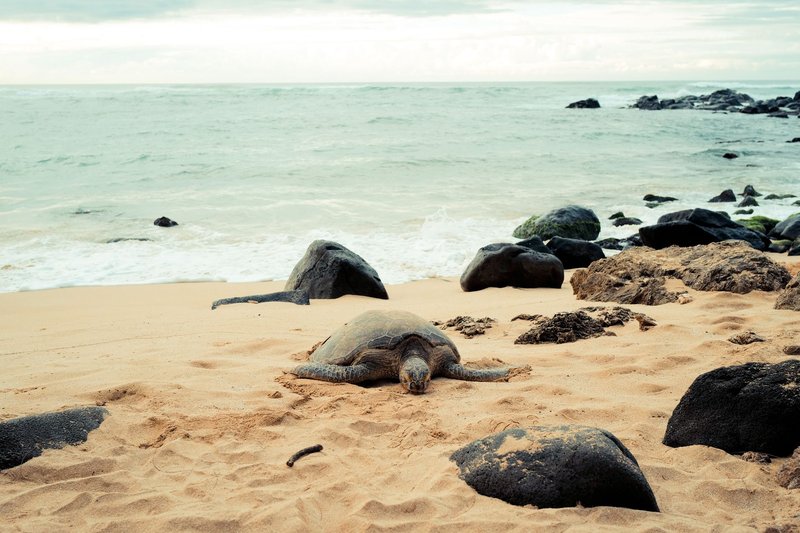
Tortuguero — the name literally means “full of turtles” — hosts the largest green sea turtle nesting population in the Western Hemisphere, concentrated from July through October. On the Pacific side, Playa Grande near Tamarindo is a leatherback nesting beach, active October through March. Green sea turtles are Endangered; leatherbacks are Vulnerable globally but critically threatened in the Eastern Pacific specifically. Nesting is nighttime-only and tightly regulated — licensed guides walk small groups to confirmed nests rather than letting tourists roam the beach with flashlights, which used to be a real problem before the rules tightened.
The True Endemics — Found Nowhere Else on Earth
If you want animals found only in Costa Rica — not just native, but exclusively here — the list skews small and specialized rather than showy. The mangrove hummingbird and the coppery-headed emerald hummingbird exist nowhere outside Costa Rica’s borders. The black-cheeked ant-tanager is confined to the Golfo Dulce lowlands in the south. The Talamancan palm pitviper, a venomous but non-aggressive snake, lives only in the cloud and montane forests of the Talamanca range. The Golfodulcean poison frog is restricted to the same Golfo Dulce region as the ant-tanager. Three more bird species — the Cocos cuckoo, Cocos flycatcher, and Cocos finch — exist only on Cocos Island, 340 miles offshore and accessible mainly by multi-day dive expedition, not a park visit.
None of these are what draws most people to book the trip. But they’re the actual answer if the question is specifically about animals unique to Costa Rica rather than animals you can also see in Panama or Nicaragua.
Costa Rica’s National Animal
The white-tailed deer holds the formal title, designated by executive decree in 1995 under then-president José María Figueres Olsen, as a symbol of gentleness balanced against strength. It’s a strange pick for a national animal in a country better known internationally for jaguars and quetzals, but the choice reflects the deer’s historical presence in Costa Rican rural and Indigenous culture rather than tourism appeal. You’ll find them in the dry forests of Guanacaste and Santa Rosa National Park, most visible in the dry season when thinning vegetation and shrinking water holes concentrate them in the open. Hunting is now illegal nationwide, a direct response to population declines from habitat loss earlier in the 20th century.
Animals Worth Respecting From a Distance
Not every native species on this list is one to approach. The fer-de-lance (terciopelo) is responsible for the majority of venomous snakebites in Costa Rica and is notoriously well camouflaged in leaf litter — most bites happen when someone steps too close without seeing it. Bullet ants deliver a sting entomologists rank among the most painful of any insect, out of proportion to their harmless appearance. American crocodiles bask openly along the Tárcoles River bridge, visible from the road, and are best appreciated from exactly that vantage point. None of these are animals to seek out up close; a decent guide will point them out from a safe distance, which is the correct distance.
When to Go, Overall
Costa Rica splits into two seasons, not four: dry (roughly December through April) and green/wet (May through November). Dry season concentrates mammals around shrinking water sources and offers the clearest trails and best visibility, which is why it lines up with peak prices and peak crowds at Corcovado and Manuel Antonio. Wet season trades some visibility for the opposite payoff — amphibians, insects, and bird activity spike, rivers run high enough for better wildlife-viewing boat trips in places like Caño Negro, and lodges cost noticeably less. Neither season is objectively better for spotting Costa Rica’s native animals; it depends entirely on which animals are on your list.
Early morning, generally 6 to 8 a.m., and the hour before sunset are the two windows when almost everything on this list is most active — worth building a trip schedule around, regardless of season or park.