The Quick Answer
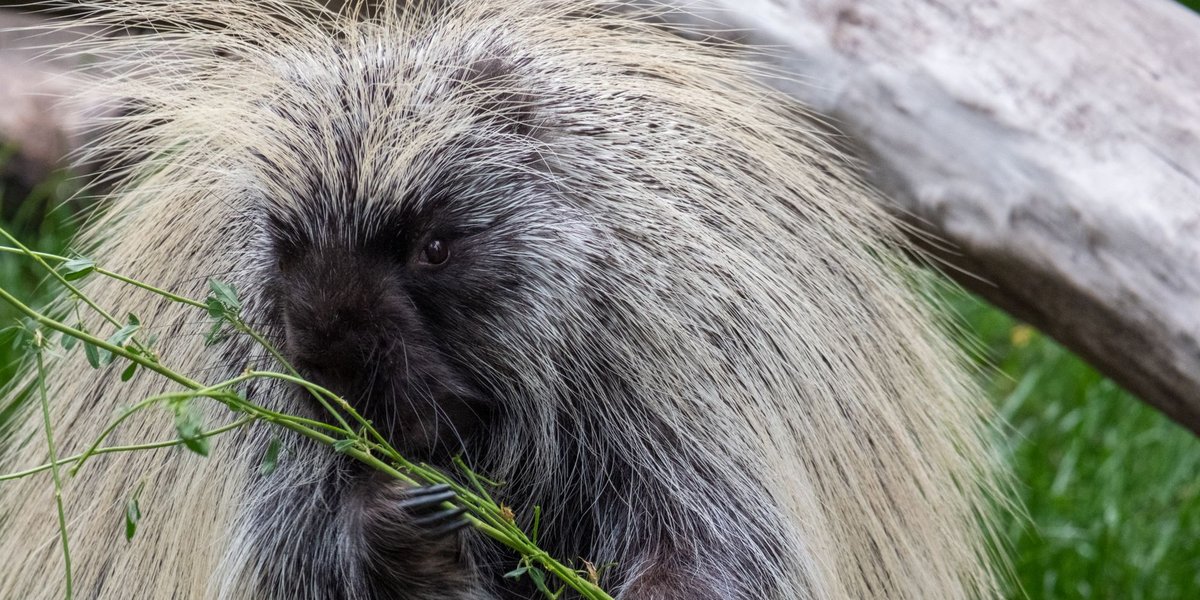
Brazilian porcupines (Coendou prehensilis) are strict herbivores. Their diet is almost entirely:
- Bark and the cambium layer just beneath it
- Fruit, especially the seeds of queen palms (also called cocos palms)
- Buds, blossoms, and unripened seeds
- Roots, stems, and leaves
- Corn and bananas, when they raid farmland near forest edges
No meat, no insects, no small animals. If you’ve seen a claim otherwise, it’s wrong, and we’ll get to why below.
Table of Contents
- No, They’re Not Omnivores
- Life in the Canopy: How They Find Food
- The Favorite Food: Palm Seeds
- Built to Eat: Claws and a Prehensile Tail
- What They Eat in Captivity
- Where This Fits Into Their Bigger Picture
No, They’re Not Omnivores
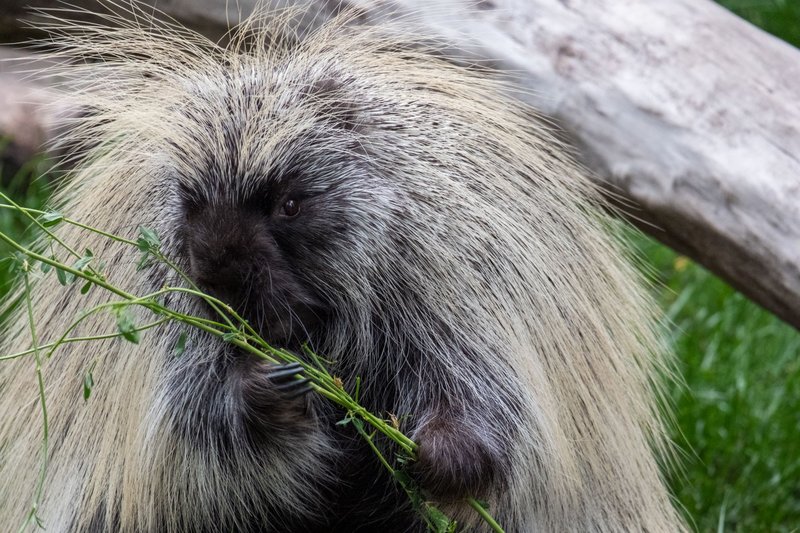
Search around and you’ll hit a roundup or two claiming porcupines eat “small animals.” That’s not accurate for this species. Coendou prehensilis is an obligate herbivore, meaning plant matter is the only thing its digestive system is built to process. The Smithsonian’s National Zoo and the U.S. Fish & Wildlife Service both describe the species this way, and it lines up with every field account of wild feeding behavior: bark, fruit, leaves, and stems, never prey.
The confusion likely comes from lumping all porcupine species together. Some rodents that look superficially similar will occasionally gnaw bone or antler for minerals, which gets reported loosely as “eating animals.” The Brazilian porcupine doesn’t do this. Its whole foraging strategy, down to the shape of its teeth and the layout of its gut, is built around trees.
Life in the Canopy: How They Find Food
This is a species that basically lives in the trees. Brazilian porcupines spend roughly 85% of their time in the forest canopy, coming down to the ground only occasionally. That number matters, because it explains almost everything else about the diet: they’re not opportunistic ground foragers picking through leaf litter. They’re specialists working a very specific food supply that grows above their heads.
They’re also nocturnal and largely solitary, which means most of that canopy foraging happens after dark, animal by animal, tree by tree. A porcupine will settle into a fruiting tree and stay there for extended periods, working through bark, buds, and fruit before moving on. It’s a slow, methodical way to eat, and it fits an animal with no real need to hurry.
The Favorite Food: Palm Seeds
If Brazilian porcupines have a favorite meal, it’s the seeds of the queen palm, Syagrus romanzoffiana (also known as the cocos palm). Where these palms grow, porcupines will target them specifically, working through the fruit to get at the seed inside. It’s a preference documented closely enough by researchers at Animal Diversity Web that it’s treated as close to a defining feature of the species’ diet, not just an occasional snack.
Outside of palm season, the diet shifts back to the staples: bark and cambium for steady nutrition, supplemented by whatever fruit, buds, or blossoms are available in that stretch of forest.
Built to Eat: Claws and a Prehensile Tail
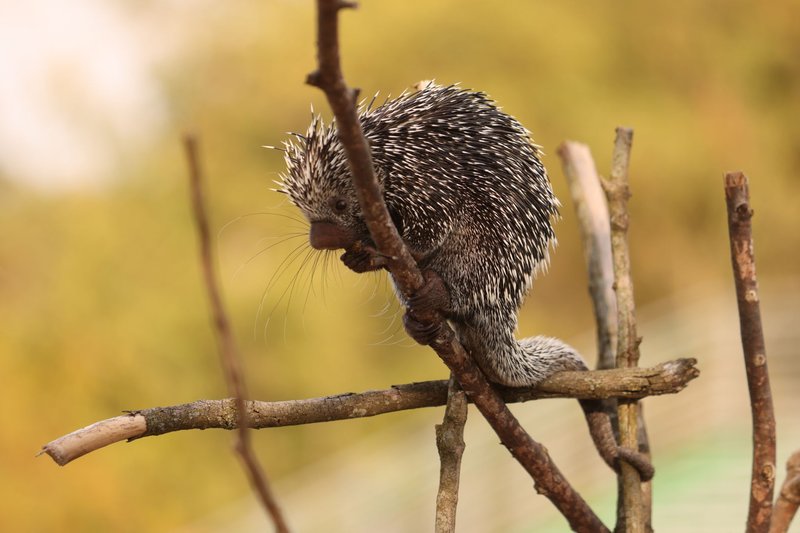
None of this canopy foraging works without the right equipment. Brazilian porcupines have long, curved claws that let them peel bark away from trunks and branches, and tear into tougher fruit husks that would stop a less-equipped animal cold.
The bigger piece is the tail. Unlike the rest of the body, it carries no spines, and it functions almost like a fifth limb. A foraging porcupine will wrap its tail around a branch and use it as an anchor, freeing both front paws to reach for food, strip bark, or hold fruit while eating. It can suspend its full body weight upside down this way for extended stretches, which is how it reaches fruit clusters and palm seeds that would otherwise be out of range at the end of a branch. Between the claws and the tail, this is an animal that rarely needs to touch the ground to eat a full meal.
What They Eat in Captivity
Zoos can’t recreate a rainforest canopy, so captive diets are built around the nutritional profile of the wild diet rather than the exact menu. A typical captive diet includes corn, dried grain, rat pellets, and a commercial primate feed called Monkey Chow, rounded out with produce like apples, oranges, sweet potato, and kale.
It’s worth noting this isn’t a perfect stand-in. A study published via PMC on captive Brazilian porcupines found that diet and enclosure conditions play a direct role in gut health, with parasitic infections showing up more readily in animals on managed diets than would be expected in the wild. It’s one more reason zoos keep tweaking the produce-to-pellet ratio rather than treating captive feeding as solved.
Where This Fits Into Their Bigger Picture
Diet and habitat are the same story here. Brazilian porcupines range across a wide swath of South America, from the Amazon basin through Brazil, Venezuela, the Guianas, Bolivia, and Paraguay, and everywhere they show up, they’re tied to forest with a real canopy. Clear a forest, and you don’t just remove shelter. You remove the bark, palms, and fruiting trees this species has no backup plan for.
That specialization is also why crop raiding happens at all. When forest edges border farmland, corn and bananas are just an extension of the same feeding strategy applied to a new food source, not a shift away from a plant-based diet. Whatever the setting, wild canopy or farm edge, the pattern holds: Brazilian porcupines eat plants, and they’ve built an entire body around reaching the ones that grow highest.