Hungary doesn’t have crocodiles, big cats, or anything that will chase you down a trail. What it does have is a short list of animals that occasionally put people in the hospital, a tick problem that’s worse than most visitors expect, and — oddly — a small but real underground market in cobras and anacondas kept in Budapest apartments. None of it should keep you off the trails. All of it is worth knowing before you go.
TLDR
Hungary’s wildlife risk is low compared to almost anywhere with forests and open grassland. The animal most likely to actually hurt you is a tick, not a snake or a boar. Wild boar cause more injuries than anything else with teeth, mostly through vehicle collisions and startled encounters rather than predatory attacks. Snakebites are rare enough that Hungarian hospitals see maybe four or five a year nationwide. Brown bears and wolves exist in the northern hills but sightings are still news-worthy events, not routine. The one genuinely under-covered risk is domestic: Hungary has a documented illegal exotic pet problem, with cobras and mambas occasionally turning up in private homes rather than in the wild.
Table of Contents
- How Real Is the Danger, Actually?
- The Animals Worth Knowing About
- The Snake You’re Least Likely to Meet
- Wild Boar
- Ticks
- Brown Bears
- Wolves
- Hungary’s Illegal Exotic Pet Problem
- Basic Safety and First Aid
How Real Is the Danger, Actually?
Compare Hungary to its neighbors and the picture is almost boring. There’s no medically significant snake population to speak of, no large predator with a track record of hunting people, and no venomous spider or scorpion that shows up in casual conversation the way they do in, say, Australia. Hungarian hospitals treat somewhere around four to five snakebites a year across the entire country — a number so low it barely registers as a public health statistic.
The actual risk profile skews toward the mundane: cars hitting boar and deer on rural roads at night, ticks picked up during a July hike, and the occasional bee sting reaction. Nothing here should change your travel plans. It should change what’s in your daypack.
The Animals Worth Knowing About
The Snake You’re Least Likely to Meet
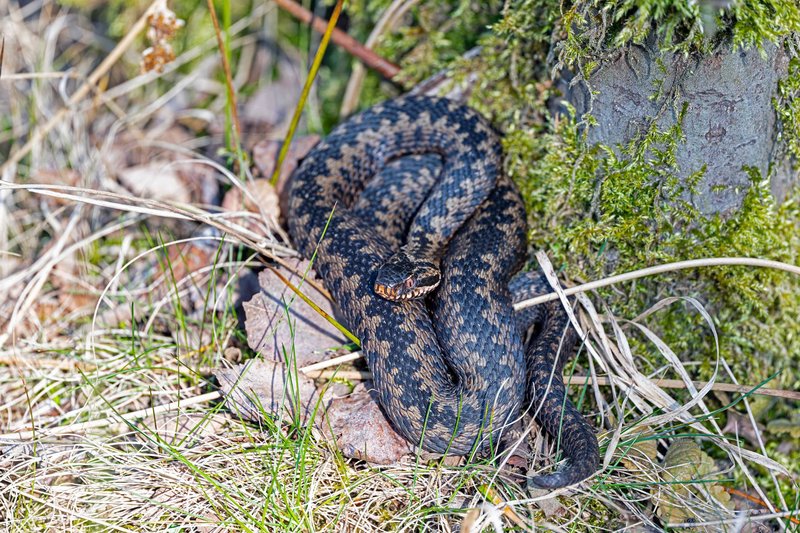
Ask a Hungarian herpetologist what to worry about and they’ll bring up the Hungarian meadow viper (Vipera ursinii rakosiensis) — and then immediately tell you that you’ll almost certainly never see one. It’s listed as Endangered on the IUCN Red List, with wild populations reduced to a handful of protected grassland reserves in Kiskunság National Park and a few sites in Transylvania. A century ago it was common across the marshlands of the Vienna Basin. Today the entire global population is small enough that conservationists breed and release captive-bred individuals just to keep the subspecies from disappearing.
Even where it survives, it’s not a real threat. Its venom is mild by viper standards, it’s shy, and it’s legally protected — killing one is a wildlife crime, not a self-defense story. The common European adder shows up in small numbers in the northern hills and carries a more typical viper bite, but bumping into either species requires deliberately searching tall grass in a handful of specific reserves during the right season. Most visitors who spend two weeks hiking in Hungary won’t see a wild venomous snake at all.
Wild Boar
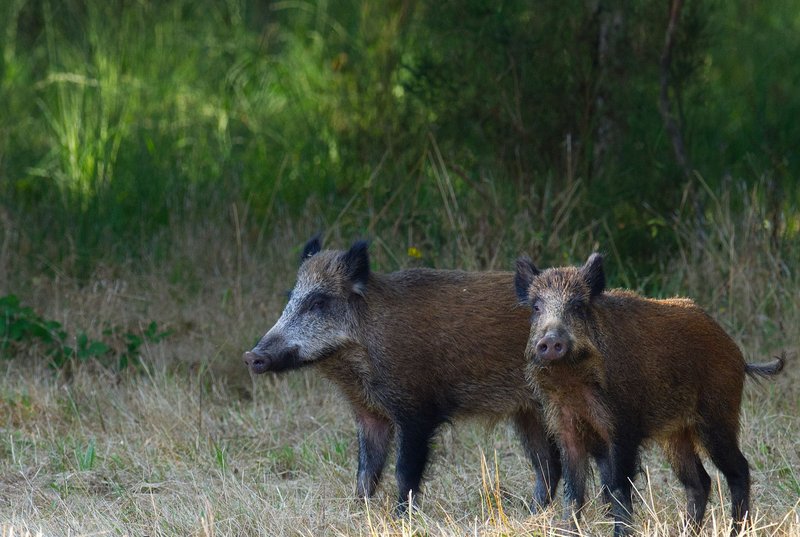
This is the animal actually causing incidents. Hungary’s wild boar population has run as high as 110,000 in the past decade, and boar have gotten comfortable enough around cities that one made it into a Budapest metro station and rode an escalator down to the platform before a hunter had to put it down. Hungary logs roughly 15,000 wildlife-vehicle collisions a year, and boar and deer make up most of them — night driving on rural roads through forest edges is where the real risk sits, not hiking trails.
On foot, the danger is almost always a surprised sow with piglets or an animal cornered near a trail. Boar aren’t predatory and won’t hunt a person, but a 200-pound animal that feels trapped will charge, and their tusks can do serious damage. Give any boar you see plenty of room, keep dogs leashed, and never get between a sow and her young.
Ticks
The least dramatic entry on this list is the one doing the most damage. Ixodes ticks are active from spring through fall across Hungary’s forests and grasslands, and they carry both Lyme disease and tick-borne encephalitis (TBE), a viral infection that can cause lasting neurological problems. According to the European Centre for Disease Prevention and Control, TBE virus is endemic across much of the country, with infection rates in ticks running notably higher in forested areas above roughly 200 meters — meaning the hilly, wooded parts of Hungary that most hikers actually want to visit carry more risk than the flat plains.
TBE vaccination is available and recommended for anyone spending real time in Hungarian forests, particularly in the north and west. Lyme disease, by contrast, has no vaccine but is treatable with antibiotics if caught early — which is the entire argument for checking yourself for ticks every evening rather than assuming you’d notice a bite.
Brown Bears
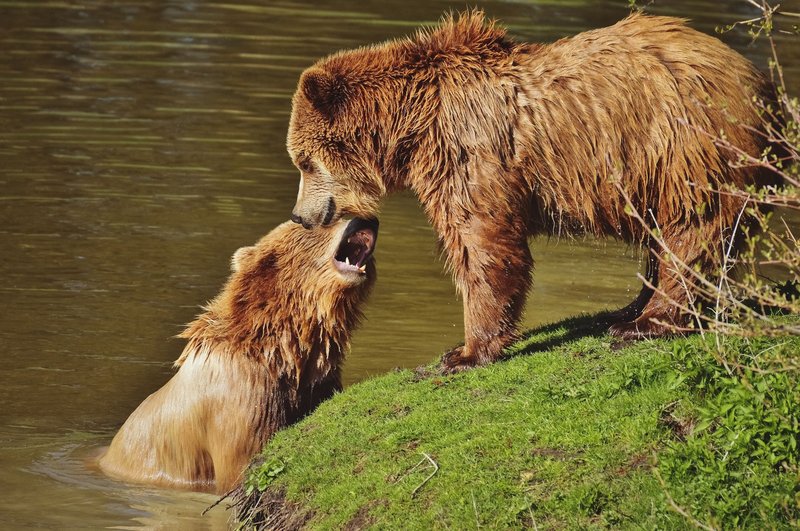
Brown bears aren’t a resident population in Hungary so much as occasional visitors. Individual bears wander south from Slovakia’s more crowded forests into the Aggtelek and Zemplén hills in the country’s northeast, and sightings have become frequent enough that national park authorities now issue advisories when one is spotted near a trail. A young bear turned up near the village of Égerszög inside Aggtelek National Park, healthy and apparently just passing through, and cases like that get logged rather than treated as an isolated fluke.
None of this makes bear attacks a realistic worry — Hungary has had no recorded fatal bear encounter in modern memory. But if you’re hiking in Borsod-Abaúj-Zemplén or Nógrád counties, know that bears are a real, if rare, possibility, and standard bear country practice applies: make noise on the trail, store food properly, and don’t approach if you see one.
Wolves
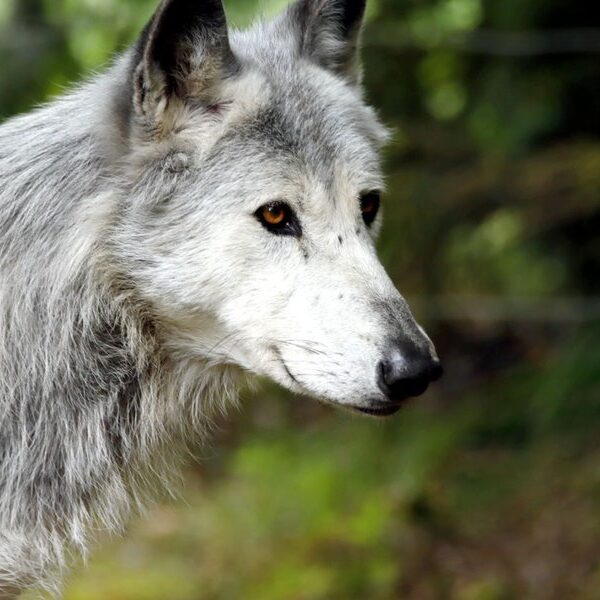
Wolves have had more success reestablishing themselves in Hungary than the country’s Eurasian lynx, which conservationists now believe has effectively vanished from Hungarian territory after camera traps in the Bükk-Aggtelek region turned up no confirmed sightings in recent years — a genuine loss the WWF has documented as part of a broader decline across Central Europe. Wolves, migrating in from Slovakia and Romania, now appear regularly in the Zemplén hills and around Aggtelek, and occasionally in the Bükk range.
They’re not a threat to hikers. European wolves are intensely wary of people and avoid contact by default; livestock, not humans, are the practical concern, which is why you’ll occasionally see guard dogs with flocks in the northern hill country. Treat a wolf sighting as a genuine wildlife privilege, not a reason to worry.
Hungary’s Illegal Exotic Pet Problem
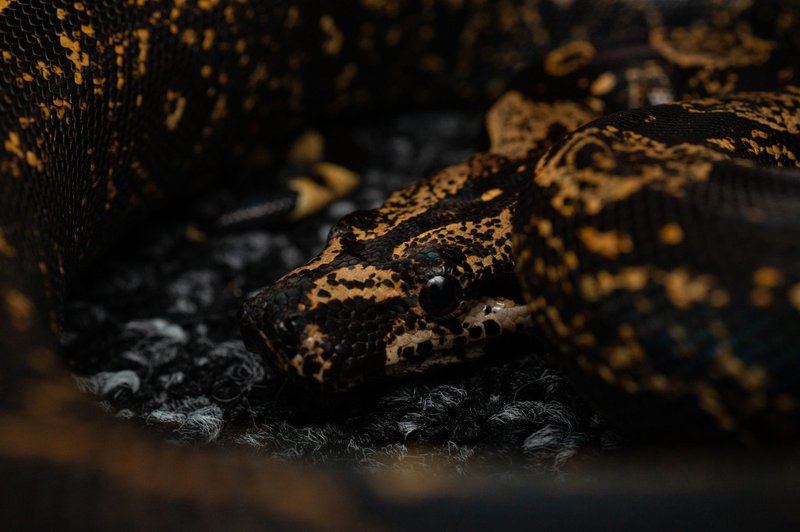
Here’s the angle most “dangerous animals in Hungary” guides skip entirely: the country’s real exotic-animal risk isn’t in the forest, it’s in apartment buildings. Hungary sits on a transit route into the western European exotic pet market, and a documented underground trade has put animals like cobras, black mambas, and anacondas into private homes — sold through German, Austrian, and Dutch sites, with a black mamba reportedly changing hands for around €400 and a cobra for as little as €100–150.
The legal framework treats this seriously on paper: keeping a moderately dangerous species in Hungary requires demonstrated expertise, secure housing, and — for venomous animals — proof that antivenom is available if something goes wrong. In practice, enforcement lags the online marketplaces driving the trade, a pattern Euronews has traced across Europe more broadly, not just in Hungary. It’s not a risk that affects tourists or hikers. It’s a genuinely strange footnote to “dangerous animals in Hungary” that most competitor guides never mention, because it has nothing to do with the wilderness at all.
Basic Safety and First Aid
Most of this comes down to a handful of habits, not gear:
- Tick checks, daily. Ticks need to be attached for hours before they transmit disease, so a nightly check catches most problems before they start. Use fine-tipped tweezers, pull straight out, and clean the site.
- Cover up in tall grass. Long trousers tucked into socks and a repellent containing DEET or picaridin cut both tick and snake encounter risk in the reserves where the meadow viper still survives.
- If a snake bites you: stay calm, keep the limb below heart level, remove tight clothing or jewelry near the bite, and get to a hospital — don’t cut, suck, or apply a tourniquet, all of which do more harm than good and are outdated advice.
- Driving at dusk or night: slow down on rural roads through forest, especially in boar season (autumn, when acorn and beechnut foraging brings them close to roads). Headlight reflections in eyes are your best early warning.
- Bear country: talk or clap periodically on quiet trails in the northeast, and if you do see one, back away slowly without running.
None of this requires special equipment or a change of itinerary. It requires paying attention, which is most of what wildlife safety ever actually is.