TLDR
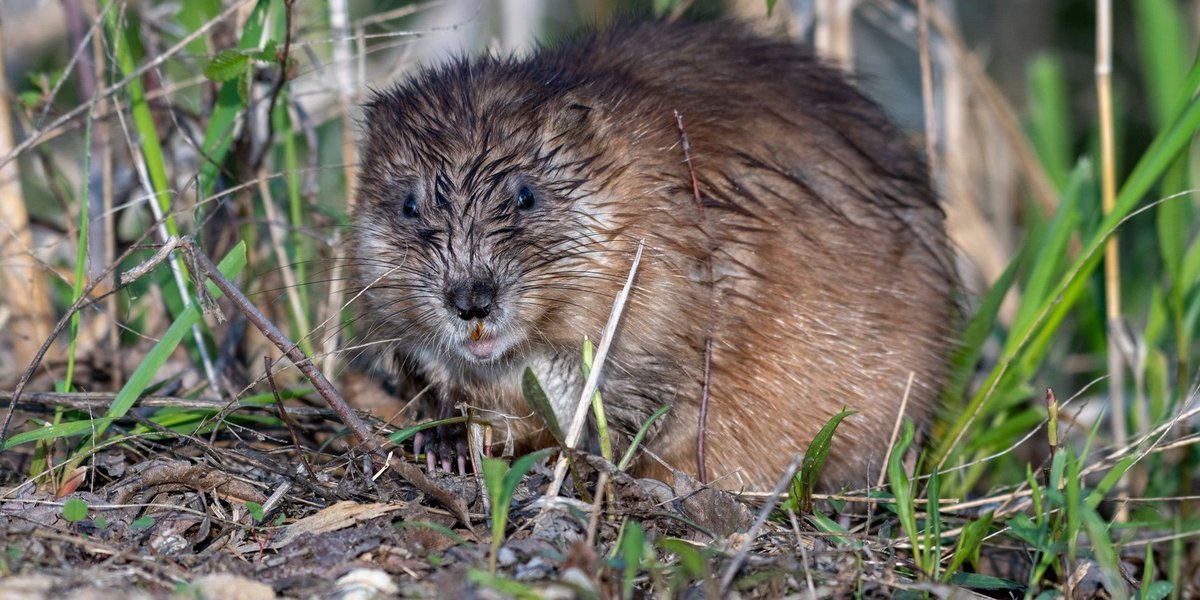
Muskrats are mostly herbivores. Cattails, rushes, water lilies, sedges, and pondweed make up the bulk of what they eat, and they’ll go after the roots and stems as readily as the leaves. When plant food runs thin — usually in late winter — they switch to clams, mussels, snails, crayfish, small fish, and the occasional frog. A muskrat eats roughly a third of its own body weight in food every day, and it does most of that eating at dawn, dusk, and through the night.
Table of Contents
- What Muskrats Actually Eat
- The Animal Protein They Add In
- How Much a Muskrat Eats in a Day
- Feeding Platforms and Why Muskrats Eat Where They Do
- What Muskrats Eat in Winter
- Muskrat Diet vs. Beaver Diet
- FAQ
A muskrat doesn’t look like it should be picky, but it is. Drop one in a marsh with cattails and open water, and it will work through a very specific menu — mostly plants, occasionally meat, and almost never far from the water’s edge.
What Muskrats Actually Eat
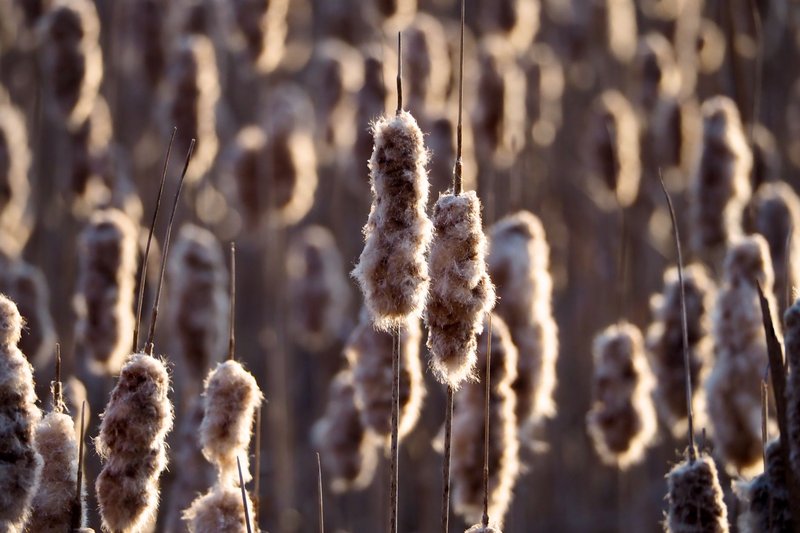
Cattails are the backbone of a muskrat’s diet almost everywhere the species lives, from Minnesota marshes to Chesapeake Bay tidal wetlands. Muskrats eat the whole plant — stems, leaves, and especially the starchy rhizomes buried in the mud, which pack more calories than the parts above the waterline. Around that cattail core, they’ll work through:
- Rushes and bulrushes
- Water lilies (both the pads and the roots)
- Sedges
- Pondweed, particularly the roots and tubers
- Arrowhead and wild rice, where available
- Corn and other crops, if a marsh borders farmland
The pattern across all of it: muskrats favor the underground or underwater parts of aquatic plants over the leafy growth above. Roots and tubers store more energy, and in a habitat where a hard freeze can lock up the surface vegetation for months, that’s a meaningful edge. It’s also why muskrat activity leaves such visible damage in a marsh — a family working through a stand of cattails will pull up rhizomes by the dozen, leaving bare patches that wetland managers use as a sign of population density.
The Animal Protein They Add In
Muskrats aren’t strict vegetarians. When plant food is scarce, or when an easy protein source is right there, they’ll take it. Freshwater clams and mussels are the most consistent animal food in a muskrat’s diet — muskrats are efficient enough at prying them open that some wetland biologists use mussel-shell piles near the water’s edge as a sign muskrats are active in the area. Beyond mollusks, muskrats eat:
- Snails
- Crayfish
- Small fish
- Frogs and tadpoles
- Occasionally young or slow-moving turtles
So yes, muskrats eat fish — but it’s opportunistic, not a hunting strategy. A muskrat isn’t built to chase fish through open water the way a mink or otter is. It’s scooping up what’s slow, stranded, or easy to catch near the den, not patrolling for prey. Animal matter typically makes up a small fraction of the overall diet; the plant material still dominates even in muskrat populations with regular access to shellfish beds.
How Much a Muskrat Eats in a Day
A muskrat eats roughly a third of its own body weight in food every single day. For an adult muskrat weighing two to four pounds, that’s close to a pound of vegetation and the occasional mollusk, day after day. That kind of intake relative to body size is why a resident muskrat family can visibly thin out a stand of cattails over a season — it’s not a handful of animals nibbling, it’s a metabolism that demands near-constant foraging.
Most of that eating happens during low-light hours. Muskrats are crepuscular, meaning they’re most active at dawn and dusk, though they’ll also feed through the night and take shorter foraging trips during the day, especially in the quieter stretches of a marsh where there’s little disturbance. Watch a muskrat-active wetland at sunset and you’ll usually see more activity in the first hour of dusk than at any other point in the day.
Feeding Platforms and Why Muskrats Eat Where They Do
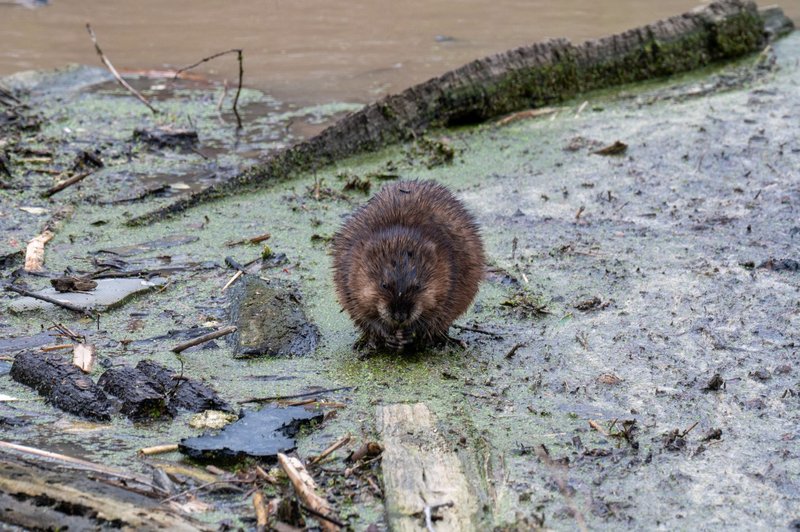
Muskrats rarely eat where they gather food. Instead, they build small feeding platforms — sometimes called “pushups” — out of piled vegetation just above the waterline, close enough to the den or a burrow entrance that they can retreat quickly. A muskrat will cut a cattail stem or pry a mussel loose underwater, swim it back to the platform, and eat there instead of out in the open.
That habit isn’t incidental. Eating in open water or exposed marsh grass leaves a muskrat vulnerable to mink, hawks, owls, and other predators that hunt wetland edges. The feeding platform solves two problems at once: it keeps the muskrat close to an escape route into water, and it lets the animal process food — shucking a mussel shell, stripping a cattail stalk — without being fully exposed. Over a season, these platforms accumulate discarded shells and plant debris, and they’re one of the more reliable signs a marsh has an active muskrat population, even when the animals themselves stay out of sight.
What Muskrats Eat in Winter
Winter forces a real shift in what’s available, not in what muskrats prefer. Once ice locks up a marsh’s surface, muskrats lose access to most standing vegetation and lean harder on two things: stored food and whatever they can reach underwater. Many muskrats cache cattail rhizomes and other roots near the den in fall, effectively stockpiling the highest-calorie parts of their usual diet before the freeze.
Underwater, muskrats keep feeding through winter by using their den’s underwater entrances and any open channels beneath the ice, going after submerged roots, tubers, and — more often than in warmer months — clams, mussels, and other slow-moving animal matter that doesn’t require ice-free water to reach. This is the point in the year where the animal-protein share of the diet climbs the highest, simply because plant options are frozen out. It’s also why muskrat activity around a partially frozen pond in late winter is worth noticing — a family running low on cached food will range farther from the den than they would in summer, and that’s when they’re most visible.
Muskrat Diet vs. Beaver Diet
Muskrats and beavers share habitat constantly, which leads to the assumption they eat the same things. They don’t, not really. Beavers are dedicated browsers of woody plants — they fell trees and eat bark, cambium, and twigs, especially from aspen, willow, and birch. Muskrats barely touch woody plants at all. Their diet is built around soft aquatic vegetation: cattails, rushes, pondweed, and the animal matter covered above.
The size difference explains a lot of it. A beaver, at 35 to 65 pounds, needs the caloric density that bark and wood provide and has the teeth and jaw strength to process it efficiently. A muskrat, at a few pounds, is better served by the water lilies and pondweed sitting right at the surface of its own marsh, foods a beaver would barely register as a meal. The two species can coexist in the same wetland precisely because their menus don’t really overlap, according to Minnesota DNR’s species profile.
FAQ
Do muskrats eat fish? Yes, occasionally — but as an opportunistic food source, not a primary one. Slow or stranded fish make up a small part of the diet compared to aquatic plants.
Do muskrats eat other animals? They eat small aquatic animals when plant food is limited: mussels, clams, snails, crayfish, frogs, and occasionally young turtles. It’s supplemental, not the main course.
What do muskrats eat in winter? Cached roots and rhizomes stored before the freeze, plus whatever submerged vegetation and slow-moving animal matter they can reach through underwater den entrances and open channels beneath the ice, per New York DEC.
How much do muskrats eat in a day? About a third of their body weight — close to a pound of food daily for an average adult.
Do muskrats damage marshes by eating so much? They can. Heavy feeding on cattail rhizomes in a small or overpopulated marsh can visibly thin vegetation, which is part of why wildlife agencies like the Chesapeake Bay Program track muskrat density in tidal wetlands.