Table of Contents
- The Quick Answer
- What “Consumer” Actually Means Here
- The Producers Footing the Bill
- Primary Consumers: The Browsers and Seed-Eaters
- Secondary Consumers: The Mid-Level Hunters
- Tertiary Consumers: The Apex Predators
- Decomposers: The Level Every Diagram Leaves Out
- A Worked Food Chain: Where the Energy Actually Goes
- How Boreal Consumers Get Through Winter
- What’s Reshaping This Food Web
The Quick Answer
Boreal forest (taiga) consumers break into three tiers. Primary consumers — snowshoe hares, red squirrels, moose, voles, spruce budworm caterpillars — eat the plants directly. Secondary consumers — Canada lynx, American marten, red fox, great grey owls — eat the primary consumers. Tertiary consumers, the apex predators like grey wolves, wolverines, and brown bears, sit at the top and often eat at more than one level. Decomposers (fungi, bacteria, detritivores) don’t fit neatly into any tier, but they’re the reason the whole system doesn’t run out of nutrients.
What “Consumer” Actually Means Here
In a food web, “consumer” just means anything that can’t make its own food and has to eat something else to get energy. Plants and lichens are producers — they pull energy from sunlight. Everything else is a consumer, ranked by how many steps removed it is from that original sunlight.
A vole that eats spruce seeds is one step removed: primary consumer. An owl that eats the vole is two steps removed: secondary consumer. A wolf that occasionally kills that owl, or more often kills a moose, is three steps removed: tertiary consumer. The boreal forest’s trophic structure is simpler than a rainforest’s — fewer species, harsher conditions, shorter growing seasons — which is exactly why it’s a useful place to learn how a food web actually works.
The Producers Footing the Bill
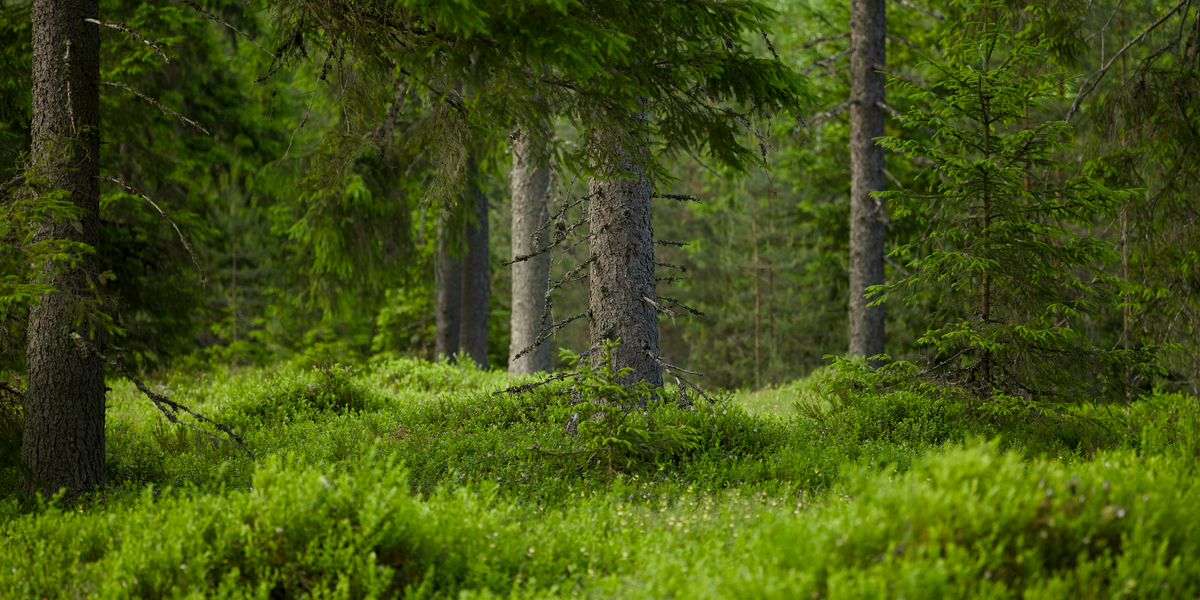
Everything downstream depends on a narrow list of cold-tolerant plants. Black spruce and white spruce dominate, along with jack pine, tamarack, and paper birch. Below the canopy: feather mosses, reindeer lichen, Labrador tea, and low bush blueberry. The taiga wraps the globe in a nearly unbroken band across Canada, Alaska, Scandinavia, and Siberia, making it the largest land biome on Earth — and one of the least diverse in terms of plant species, since only a handful of trees can survive winters that regularly drop below -40°F.
That narrow producer base matters. When one species — spruce, say — takes a hit from an insect outbreak or drought, there isn’t a deep bench of alternative producers to absorb the loss. The whole consumer chain feels it.
Primary Consumers: The Browsers and Seed-Eaters
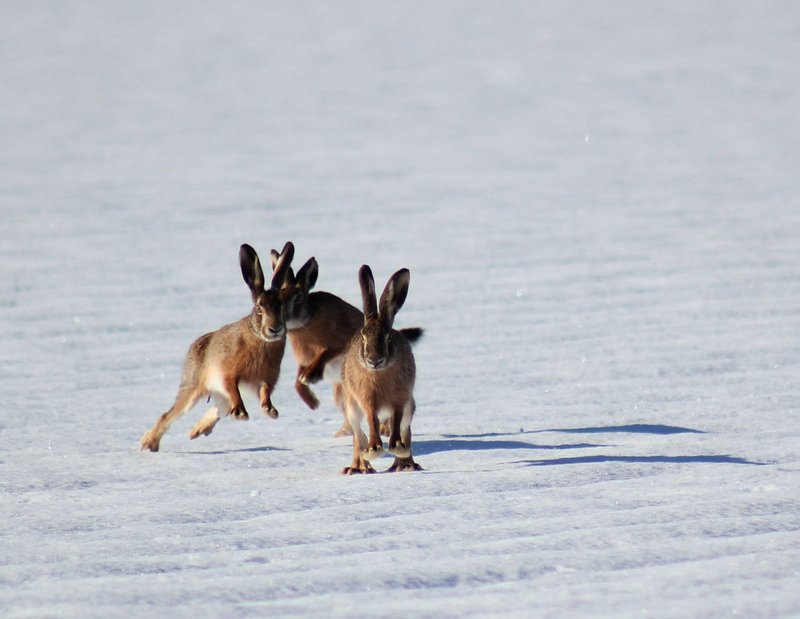
Primary consumers eat producers directly, and in the boreal forest a handful of species do most of the work.
Snowshoe hares are the engine of the whole system. They browse willow and birch twigs, bark, and buds, especially in winter when little else is exposed above the snowline. Hare populations run on a famous roughly 10-year boom-and-bust cycle, and because so many predators depend on them, that cycle ripples through the entire food web — lynx numbers track hare numbers almost exactly, with a lag of a year or two.
Red squirrels don’t cycle the same way. They cut spruce and pine cones and cache them in massive piles called middens, sometimes containing thousands of cones, which they defend year-round from a single central territory.
Moose are the biggest primary consumer in the system, browsing willow, aspen, birch, and aquatic plants like pondweed in summer. A single adult moose can eat over 40 pounds of vegetation a day during the growing season.
Spruce budworm caterpillars feed on spruce and balsam fir needles, and during periodic outbreaks — which can last years and spread across millions of acres — they defoliate and kill mature trees at a scale few other primary consumers approach.
Round out the list with red-backed voles, deer mice, and lemmings, which don’t get much individual attention but form the caloric floor that owls, foxes, and martens actually rely on day to day.
Secondary Consumers: The Mid-Level Hunters
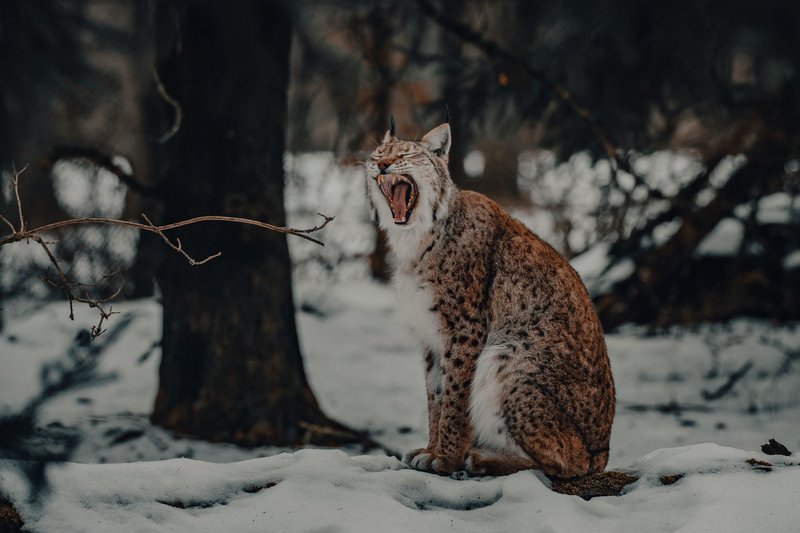
Canada lynx is the textbook secondary consumer of the taiga — its diet is close to 75% snowshoe hare, and its oversized, densely furred paws work like natural snowshoes, spreading its weight so it can chase hares across snow that would slow down other predators.
American marten, a weasel relative about the size of a housecat, hunts red squirrels, voles, and birds through the forest canopy and along the ground, and denning in old, hollow trees ties its survival directly to older, unlogged stands.
Red fox takes a broader diet — voles, hares, ground-nesting birds, berries in season — which makes it more adaptable to habitat disturbance than the lynx.
Great grey owls, the tallest owl species in North America, hunt almost entirely by sound, capable of detecting a vole moving under two feet of snow and punching through the crust to grab it. Despite the imposing size, their diet keeps them squarely at the secondary consumer level.
Tertiary Consumers: The Apex Predators
The top of the boreal food web is occupied by animals that can kill large primary consumers directly, secondary consumers opportunistically, or both — which is why apex predators don’t fit cleanly into a single tier.
Grey wolves hunt in packs and take moose, caribou, and beaver as primary targets, but will also kill competing predators like lynx or coyotes when the opportunity arises — a behavior ecologists call intraguild predation, more about eliminating competition than getting a meal.
Wolverines are scavengers as much as hunters, powerful enough to crack open frozen carcasses left by wolves, but also capable of taking down prey many times their own body weight, including young moose trapped in deep snow.
Brown and black bears round out the apex tier as omnivores — salmon where rivers allow it, berries and roots for bulk calories, and occasional predation on moose calves and caribou in spring. While these three groups represent the primary taiga tertiary consumers, they’re not the only apex predators across the vast boreal biome. Because apex predators need a large hunting range to find enough food, they exist at far lower population densities than anything below them — a pattern that becomes clearer once you look at how little energy actually survives the climb to the top.
Decomposers: The Level Every Diagram Leaves Out
Most boreal food web diagrams stop at the apex predator and never show what happens to the energy after something dies. That’s the gap decomposers fill, and it’s a big one — the boreal forest stores a huge share of its carbon not in living trees but in slowly decomposing organic matter on the forest floor.
Wood-decay fungi like Fomitopsis and honey fungus (Armillaria) break down fallen logs and standing dead trees, a process that can take decades in the cold, slow-microbial-activity conditions of the taiga. Bacteria and fungi in the soil break down needle litter, moss, and animal remains. Springtails, beetle larvae, and other soil invertebrates physically shred organic matter, speeding up what the fungi and bacteria can access.
The output of all that decomposition — nitrogen, phosphorus, and other nutrients released back into the soil — is what lets spruce, birch, and lichen keep growing in soil that’s often thin, acidic, and nutrient-poor to begin with. Draw the arrow from decomposers back to producers, and the diagram stops being a straight line and becomes an actual loop.
A Worked Food Chain: Where the Energy Actually Goes
Take a simplified four-step chain: black spruce browse → snowshoe hare → Canada lynx → grey wolf.
Ecologists use a rough guideline called the 10% rule: at each step up a food chain, only about 10% of the energy stored at the level below gets converted into new biomass at the level above. The other 90% is lost to metabolism, movement, and heat.
So if the spruce and willow in a given patch of forest capture, say, 10,000 units of energy through photosynthesis in a season, roughly 1,000 units end up as hare biomass. Of that, roughly 100 units convert into lynx biomass. And of that, only about 10 units make it into wolf biomass — assuming the wolf is even eating lynx rather than moose directly.
That’s why apex predators are rare relative to the animals below them, why boreal food chains rarely stretch past four or five levels, and why the loss of a single link — a bad hare-cycle year, a spruce budworm outbreak — shows up all the way at the top, just delayed and diluted.
How Boreal Consumers Get Through Winter
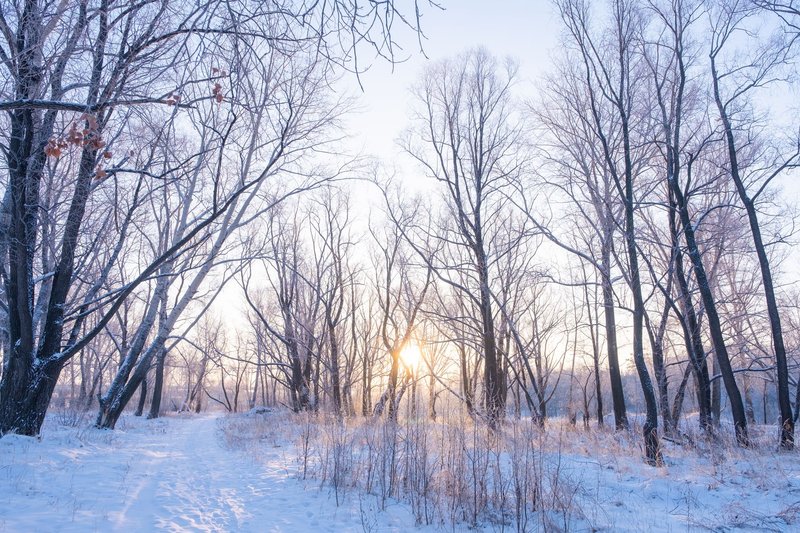
Surviving a boreal winter takes one of three strategies: cache food, migrate away, or shut the body down.
Caching is the red squirrel’s whole survival plan — a well-stocked midden can hold enough cones to last through a winter with no fresh foraging at all. Some corvids, like gray jays, also cache food, gluing it to tree bark with sticky saliva to retrieve months later.
Migration thins the boreal forest out considerably by late fall. Most songbirds — warblers, thrushes, many sparrows — leave entirely. Larger residents like moose and lynx don’t migrate long distances but do shift to lower-elevation, denser cover where snow is shallower and browse easier to reach.
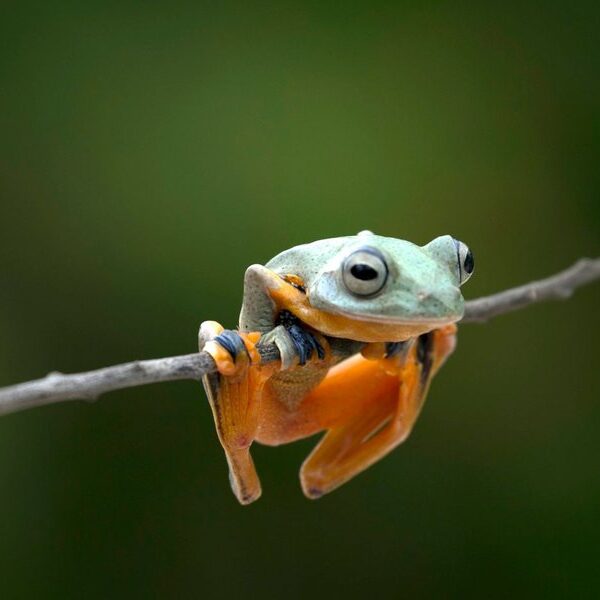
Torpor and hibernation cover everything from a light dip in metabolism to something close to suspended animation. Black bears den up and lower their metabolic rate substantially, though they can still rouse if disturbed — technically closer to deep torpor than true hibernation. Arctic ground squirrels go further, supercooling their body temperature below freezing without their tissues actually turning to ice, the most extreme mammalian hibernation on record. Wood frogs take a completely different route: they let themselves freeze solid, hearts included, protected by a natural glucose antifreeze that keeps ice crystals from shredding their cells, then thaw out and hop away in spring.
Predators adapt too. The snowshoe hare’s coat molts from brown to white, and the lynx’s oversized paws are as much a winter hunting tool as a year-round feature — both timed to a season that defines more of the boreal calendar than any other.
What’s Reshaping This Food Web
The classic textbook version of this food web — spruce, hare, lynx, wolf — is already shifting under three pressures researchers are actively tracking.
Warmer winters mean fewer hard cold snaps, and winter ticks depend on those cold snaps to keep their populations in check. Wildlife biologists in the northeastern boreal range have documented moose calves carrying tens of thousands of ticks in a single winter, leading to fatal anemia and hair loss so severe it’s earned the nickname “ghost moose.” That’s a primary consumer population under direct pressure from a warming climate, with knock-on effects for every predator that depends on moose.
Spruce budworm outbreaks — a natural part of the boreal cycle for centuries — are showing signs of shifting frequency and range as temperatures warm, according to forest researchers tracking outbreak patterns across Canada. Since budworm defoliation can kill mature spruce and fir stands outright, a change in outbreak behavior reshapes the producer base the entire chain depends on.
Logging adds a more direct pressure. American marten need old, cavity-rich trees for denning, and Canada lynx rely on the dense young-forest understory that grows in after a natural burn — not the more uniform regrowth that follows clear-cut harvesting. Both the U.S. Fish and Wildlife Service and forest researchers tracking habitat fragmentation point to logging practices as a factor in regional lynx and marten declines, separate from any climate pressure. Broader context on how the taiga functions as a biome and how the U.S. Forest Service is tracking climate impacts on managed boreal-adjacent forest land fills in the bigger picture.
None of this collapses the food web overnight. But every level covered above — producer, primary, secondary, tertiary, decomposer — is already responding to conditions that didn’t exist a generation ago, which makes the boreal forest less a fixed diagram and more a system worth watching over time.