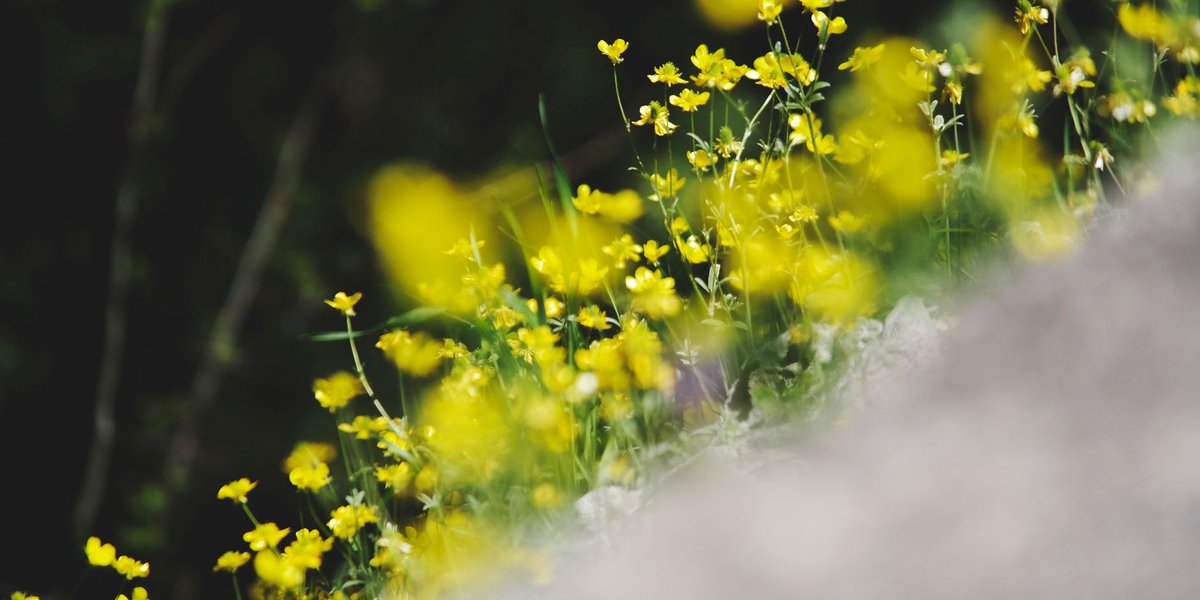
Most “yellow flowers” roundups give you sunflowers, daffodils, and a marigold, then bolt on two “unusual” picks at the end to justify the headline. Craspedia shows up in nearly every one of them. So does the Yellow Lady’s Slipper, treated as the token rarity in an otherwise ordinary list.
None of them get at what rare actually means. This list does. Every flower below is either federally or internationally listed as threatened or endangered, restricted to a native range small enough to fit inside a single county, or both. A few you can grow in a shade garden. Most you can only see by visiting the exact patch of ground they’ve clung to for thousands of years.
What “Rare” Actually Means for a Yellow Flower
Botanists use “rare” to describe three different situations, and they don’t overlap as much as you’d think.
Endemic means a species grows naturally in one place and nowhere else on Earth. The Texas Golden Gladecress exists on a handful of hillsides in East Texas and literally nowhere else. Endemism alone doesn’t mean endangered, but it means one bad wildfire season or one new subdivision can erase the entire wild population.
Endangered is a legal and conservation status, assigned by bodies like the U.S. Fish and Wildlife Service or the International Union for Conservation of Nature (IUCN), based on population counts, habitat trend, and threat level. An endangered flower can have a wide historical range but a shrinking, fragmented present-day one.
Hard-to-cultivate rarity is different from both. Some yellow flowers are common in the wild but nearly impossible to grow from seed or transplant outside their native soil chemistry and fungal partnerships, which is why you’ll never find them at a nursery no matter how badly you want one.
The list below tells you which kind of rare you’re looking at for each species, because “rare in a Kentucky glade” and “rare on a nursery shelf” are not the same claim.
Table of Contents
- Short’s Goldenrod
- Ma’o Hau Hele (Hawaiian Yellow Hibiscus)
- European Lady’s Slipper Orchid
- Yellow Lady’s Slipper Orchid
- Texas Golden Gladecress
- Yellow Waxbells
- Shimada’s Yellow Water Lily
- Cushion Bladderpod
- Dudley Bluffs Twinpod
- Golden Paintbrush
- Sonoma Sunshine
- Contra Costa Goldfields
- Spreading Globeflower
- Gaviota Tarplant
1. Short’s Goldenrod {#shorts-goldenrod}
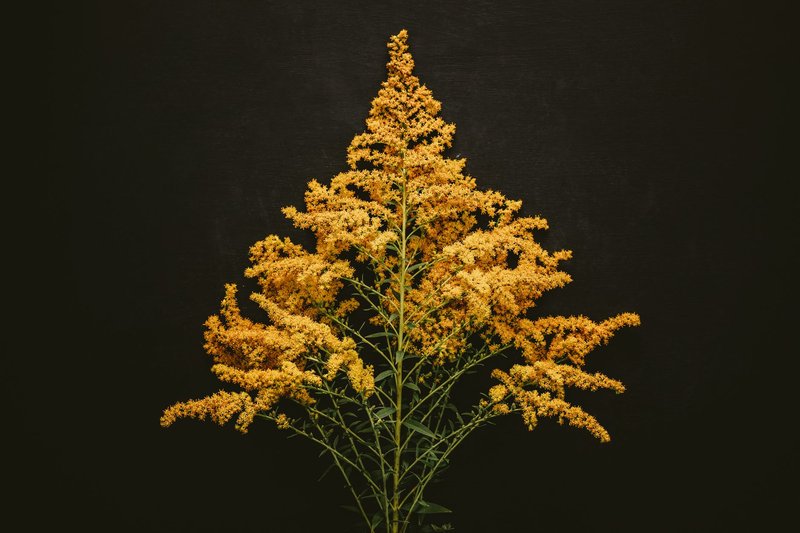
Short’s Goldenrod (Solidago shortii) grows in exactly two places: a small cluster of sites around Blue Licks Battlefield in Kentucky and a reintroduced population near the Falls of the Ohio in Indiana. It’s been on the federal endangered list since 1985, and its global conservation rank of G1 puts it among the most critically imperiled plants in North America.
The species favors cedar glades, dry pastures, and disturbed riverbank soil, thin, rocky ground most plants avoid. The Nature Conservancy, which manages part of its remaining habitat, has spent decades on prescribed burns and invasive species removal just to keep the existing colonies from shrinking further. You won’t find seed for sale anywhere, and digging one up on protected land is a federal offense. If you want to see it, you go to Blue Licks.
2. Ma’o Hau Hele (Hawaiian Yellow Hibiscus) {#maohauhele}
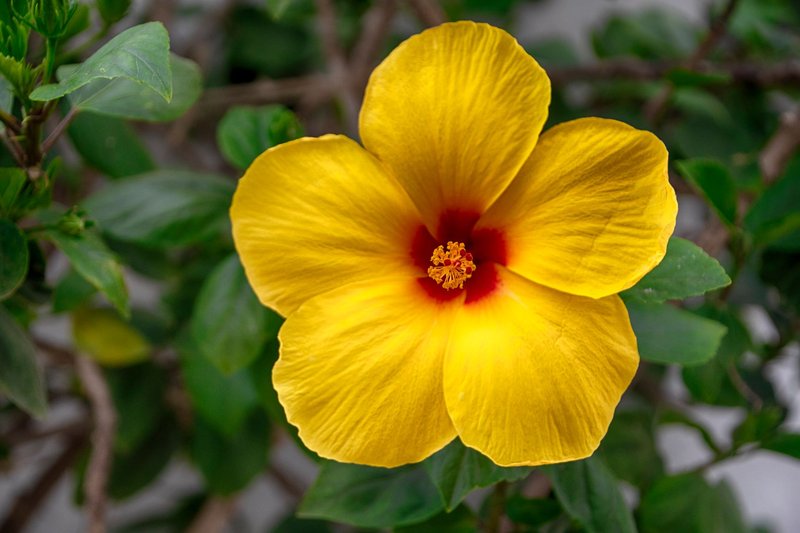
Hawaii’s state flower isn’t a common one. Hibiscus brackenridgei, known locally as ma’o hau hele, is endemic to the islands and carries an IUCN status of Critically Endangered. Wild populations survive in dry forest patches on Oahu, Molokai, Lanai, and the Big Island, habitat that’s been steadily lost to grazing, development, and invasive grasses that outcompete the seedlings.
Unlike most flowers on this list, you actually can grow this one. Hawaiian nurseries propagate it for home gardens, and it’s protected under both the state’s endangered species law and the federal Endangered Species Act. The wild flower can reach the size of a dinner plate, five inches across, with crepe-paper petals that only last a single day before closing for good.
3. European Lady’s Slipper Orchid {#european-ladys-slipper}
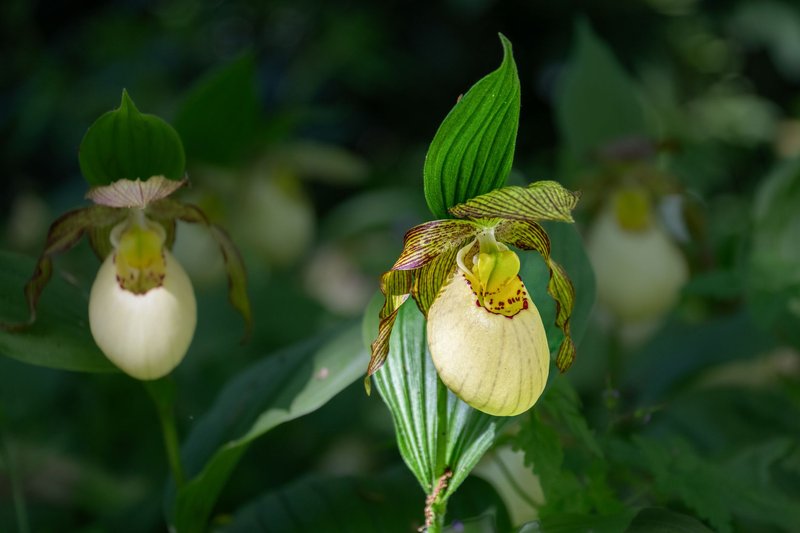
For most of the 20th century, the United Kingdom’s population of Cypripedium calceolus consisted of one plant. Over-collection by Victorian orchid hunters wiped out every other known colony, and by the 1920s the species was presumed extinct on British soil. Then a single surviving specimen turned up in a remote corner of the Yorkshire Dales in 1930.
Its location has been a closely guarded secret ever since. Plantlife, the UK conservation charity that helps protect the site, has coordinated round-the-clock volunteer monitoring during flowering season for decades, tents pitched in the field, night watches, the works. The effort paid off: a reintroduction program using cultivated offspring has since produced the first naturally occurring seedling found in the British wild in almost a century. The flower itself is a startling combination, a pouch of waxy yellow wrapped in twisted maroon-brown petals, blooming for about three weeks each spring.
4. Yellow Lady’s Slipper Orchid {#yellow-ladys-slipper}
North America’s version, Cypripedium parviflorum, has a far wider range, from Newfoundland to Alaska and south into Georgia and California, and it isn’t rare everywhere. But it’s listed as endangered under Massachusetts state law and threatened in several other states, because it suffers from the same problem as its European cousin: people dig it up.
Lady’s slippers rely on a specific soil fungus to germinate, a relationship that takes years to establish and almost never survives a transplant. A wild orchid pulled from a forest floor and replanted in a home garden will die within a season nearly every time, which means every illegal dig is a net loss for the species with nothing gained for the collector. The plant needs mesic, nutrient-rich woodland or fen habitat that a suburban yard can’t replicate.
5. Texas Golden Gladecress {#texas-golden-gladecress}
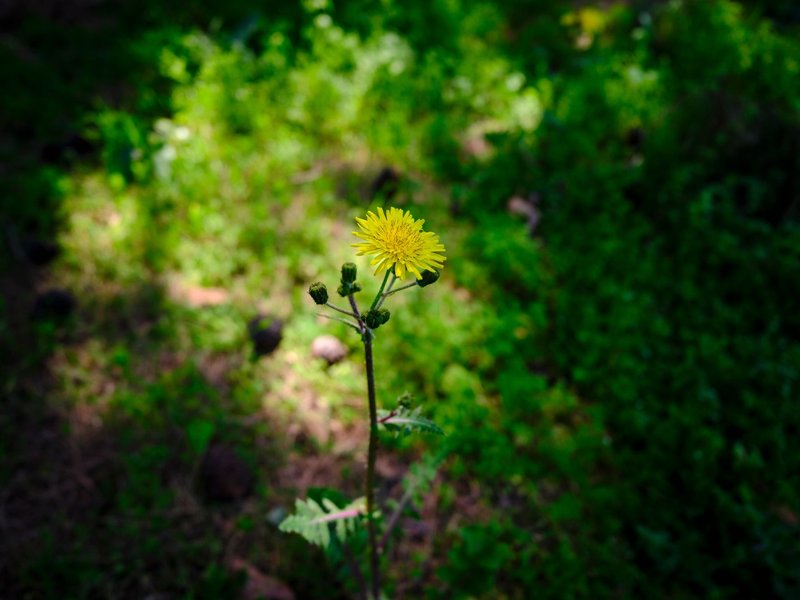
Leavenworthia texana is a mustard-family annual that grows in the open, thin-soiled glades of the Weches geological formation in East Texas, and nowhere else on the planet. The U.S. Fish and Wildlife Service listed it as endangered in 2013, citing pipeline construction, glauconite mining, and grazing pressure across its already narrow range.
The plant germinates in fall, overwinters as a low rosette, and throws up small four-petaled yellow flowers in early spring before setting seed and dying back, all within a single growing season. Because it’s an annual restricted to a specific soil type that developers and mining operations also want, its entire global population can shrink or expand dramatically from one year to the next depending on what happens to a few hundred acres of East Texas.
6. Yellow Waxbells {#yellow-waxbells}
Kirengeshoma palmata comes from the mountain forests of Japan and Korea, where the IUCN lists it as Endangered in the wild. The pale-yellow, shuttlecock-shaped flowers hang from arching stems in late summer, well after most woodland perennials have already finished blooming for the year, which makes it a genuine late-season anchor rather than a filler plant.
This is one of the rare-in-the-wild species you can actually buy. Cultivated stock has circulated through the horticultural trade for years, and it thrives in the same cool, humus-rich shade that hostas and Japanese maples want. Growing one in a garden doesn’t help the wild population directly, but it does mean the species isn’t dependent on wild collection to stay in cultivation.
7. Shimada’s Yellow Water Lily {#shimadas-water-lily}
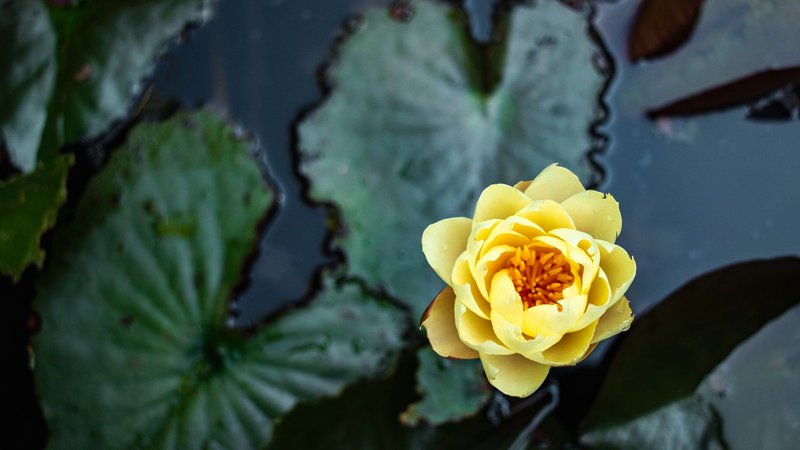
Nuphar shimadai is a freshwater aquatic plant restricted to a small number of ponds and marshes in Taiwan, and it’s classified as Critically Endangered. Its yellow, globe-shaped flowers sit just above the water’s surface, attached to heart-shaped floating leaves, in wetland habitat that’s been drained, polluted, or converted to agricultural use across most of its historical range.
Because it’s an aquatic specialist tied to specific water chemistry and depth, it can’t simply be relocated to a new pond the way a land plant might be transplanted to a new patch of soil. Conservation efforts in Taiwan now center on protecting the handful of remaining wild sites directly, since ex-situ cultivation hasn’t proven a reliable substitute for the real habitat.
8. Cushion Bladderpod {#cushion-bladderpod}
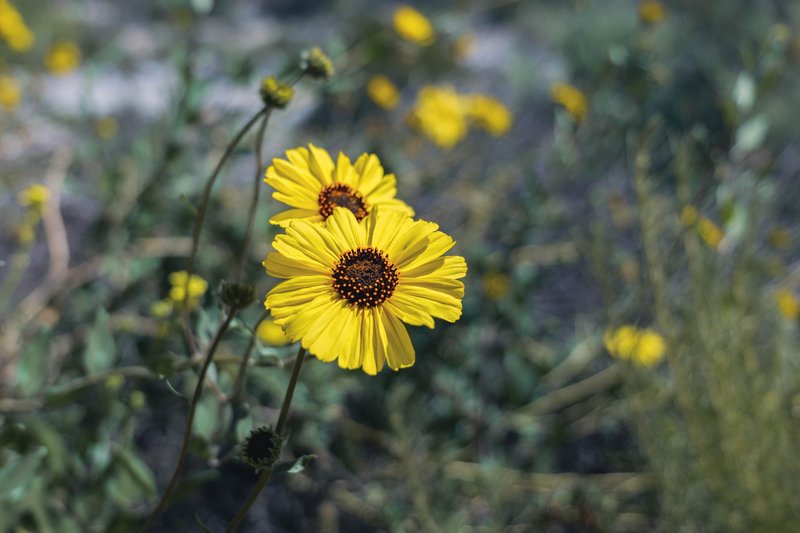
Physaria pulvinata wasn’t formally described as a distinct species until 2006. It grows in dense, low mats across the Mancos Shale barrens of Dolores and San Miguel counties in southwest Colorado, chalky, near-lifeless-looking ground that most plants can’t tolerate, and it’s ranked Critically Imperiled.
The four-petaled yellow flowers appear in tight clusters just above gray, star-shaped hairs that coat the whole plant, an adaptation that reflects sunlight and reduces water loss on exposed, shadeless slopes. Its entire known distribution fits within two counties, which makes a single change in land use, mineral exploration, off-road vehicle routes, grazing allotments, a real threat to the whole species at once.
9. Dudley Bluffs Twinpod {#dudley-bluffs-twinpod}
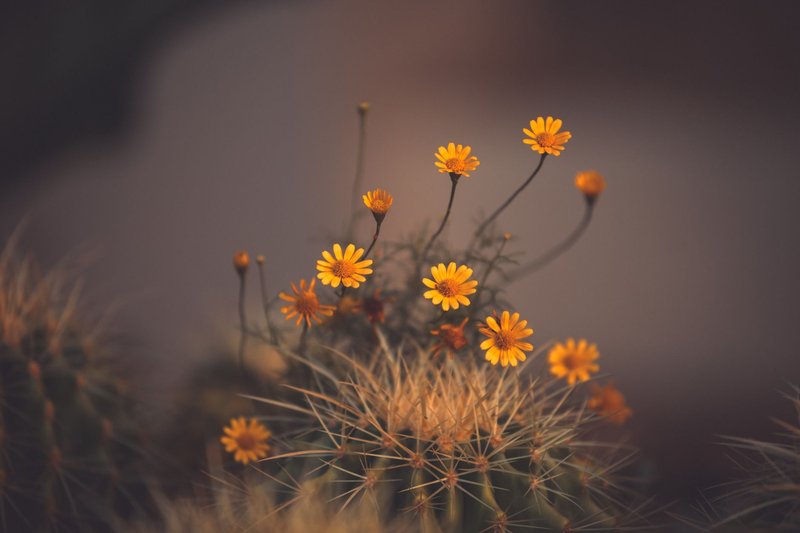
Physaria obcordata grows only on the barren white oil shale outcrops of Colorado’s Piceance Basin, at elevations between roughly 6,000 and 7,400 feet. It’s federally listed as threatened, and the reason isn’t subtle: the same oil shale, nahcolite, and dawsonite deposits that make its habitat geologically unusual also make it valuable for mining.
The plant stays low, four to seven inches tall, with small yellow flowers and distinctive heart-shaped seed pods that give the “twinpod” name its meaning. It often grows near a related threatened mustard, the Dudley Bluffs bladderpod, on the same shale slopes, two rare species sharing one narrow, mineral-rich strip of ground that energy companies have had their eye on for decades.
10. Golden Paintbrush {#golden-paintbrush}
Castilleja levisecta is the rare success story on this list. Native to the prairies of Washington, Oregon, and southern British Columbia, it was federally listed as threatened in 1997, when fewer than 20,000 plants survived across just 10 known sites.
Two decades of habitat restoration and reintroduction work changed that. By 2018, hundreds of thousands of plants were growing across 48 sites, and in 2021 the U.S. Fish and Wildlife Service proposed removing it from the endangered list entirely, a delisting that became official in 2023. The bright yellow, brush-like flower bracts also turned out to support the endangered Fender’s blue butterfly, so protecting one species ended up dragging a second one back from the brink alongside it.
11. Sonoma Sunshine {#sonoma-sunshine}
Blennosperma bakeri grows only in the vernal pools and seasonally wet grasslands of California’s Santa Rosa Plain and Sonoma Valley, and it’s federally endangered. Vernal pools are their own kind of rare habitat, shallow depressions that fill with winter rain and dry out completely by summer, and Sonoma Sunshine has adapted its entire life cycle around that flood-then-drought rhythm.
The small annual germinates as pools recede in late winter, then blooms brilliant yellow across the drying mud from February through April before setting seed and disappearing for the year. Vineyard conversion and suburban development around Santa Rosa have eliminated most of the region’s historical vernal pool network, which is why the remaining Sonoma Sunshine sites are now some of the most tightly protected wetland fragments in the county.
12. Contra Costa Goldfields {#contra-costa-goldfields}
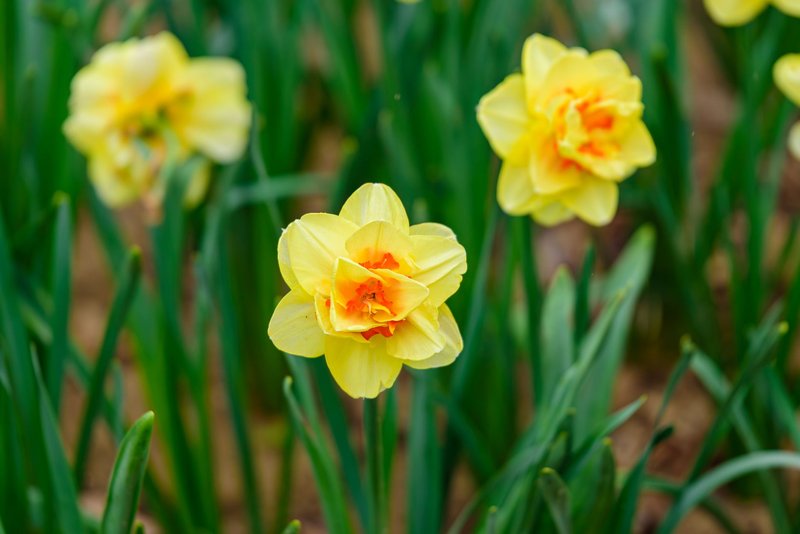
Lasthenia conjugens shares the vernal pool habitat type with Sonoma Sunshine but occupies a different, wider stretch of the San Francisco Bay Area, with only 13 known populations left across Contra Costa, Napa, Alameda, and Solano counties. It’s federally listed as endangered.
The plant is small, three to four inches tall, with finely divided pale-green leaves and golden-yellow flower heads that ring the drying edges of vernal pools each spring. Its dependence on a habitat type that requires both seasonal flooding and complete summer drying makes it one of the harder species on this list to protect through simple land preservation alone. Get the hydrology wrong on a restoration site and the flower doesn’t come back, even if the acreage is technically untouched.
13. Spreading Globeflower {#spreading-globeflower}
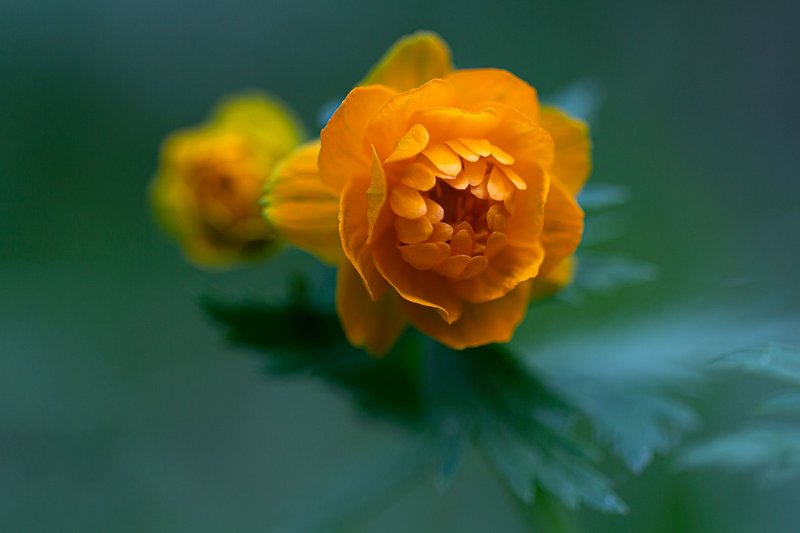
Trollius laxus is a buttercup relative confined to groundwater-fed fens across a narrow band of the northeastern United States, Connecticut, New Jersey, New York, Ohio, and Pennsylvania, where it’s ranked critically imperiled in several of those states. Its large, cream-to-yellow flowers, up to an inch and a half across, open above deeply lobed leaves in wetlands that depend entirely on a steady underground water supply.
That dependence is the whole problem. A fen isn’t just wet ground, it’s ground fed by a specific, uninterrupted groundwater flow, and anything that disrupts that flow, drainage ditches, nearby wells, upstream development, can dry out a population without a single plant ever being touched directly.
14. Gaviota Tarplant {#gaviota-tarplant}
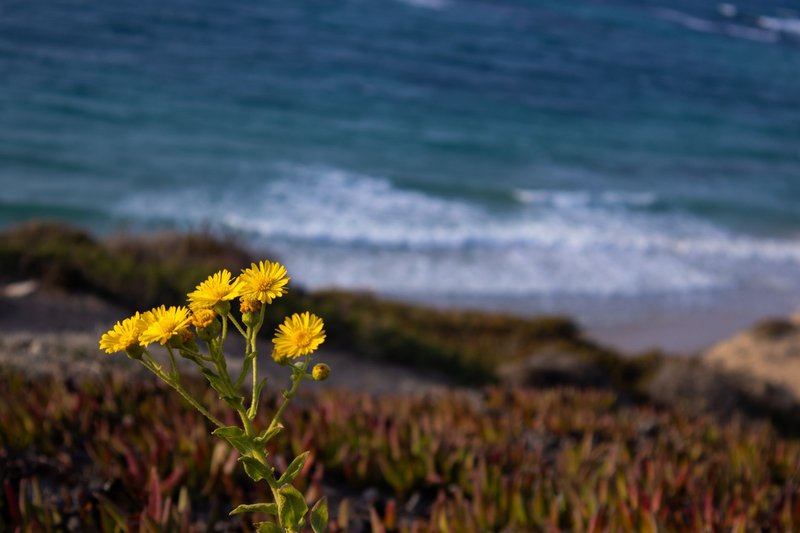
Deinandra increscens ssp. villosa is endemic to a single stretch of California’s Gaviota Coast in Santa Barbara County, and it carries both state and federal endangered status. The self-sterile annual, meaning individual plants can’t pollinate themselves and depend on insects moving pollen between separate plants, produces pale-to-deep yellow flowers from April through October, an unusually long bloom window for an annual tarplant.
Because it can’t self-pollinate, the species needs a large enough, close enough population for pollinators to keep moving genes around. Fragment the habitat into small, isolated patches and the plant can decline even in years when the weather and soil conditions are otherwise fine. The Fish and Wildlife Service designated critical habitat for it back in 2002, and its entire global range still fits along one short section of coastline.
Wild Rare vs. Garden Rare
Two flowers on this list, the Hawaiian yellow hibiscus and yellow waxbells, you can actually plant in a garden. The rest can’t be bought, transplanted, or reliably grown outside their native ground, no matter how much a determined gardener might want one.
That distinction matters more than most “rare flowers” lists let on. A flower that’s hard to find at a nursery is a shopping problem. A flower down to thirteen known populations in four counties is a conservation problem, and the two get lumped together constantly. If you’re chasing rare yellow flowers for your own yard, waxbells and hibiscus are real options. If you’re chasing them because you want to understand what genuine scarcity looks like in the plant world, the vernal pool goldfields and the shale-barren bladderpods are where that story actually lives, on a handful of acres, dependent on decisions being made about mining leases and vineyard permits right now.