TLDR
Animals that eat poisonous plants survive one of four ways: their gut bacteria break the toxin down before it reaches the bloodstream, their liver enzymes filter it out, they eat just enough to stay under the lethal dose, or they don’t neutralize the toxin at all — they store it and use it as their own defense. Deer and moose lean on gut microbes. Koalas and woodrats lean on liver enzymes. Monarch caterpillars and rattlebox moths do the fourth thing: they hijack the poison and wear it as armor.
Table of Contents
- Why Plants Fight Back — and Why Some Animals Don’t Care
- 1. White-Tailed Deer
- 2. Moose
- 3. Mountain Goats
- 4. Koalas
- 5. Bushy-Tailed Woodrats
- 6. Chuckwallas
- 7. Monarch Caterpillars
- 8. Rattlebox Moths
- 9. Eastern Lubber Grasshoppers
- 10. Tobacco Hornworms
- 11. Scarlet Macaws
- 12. Cinnabar Moth Caterpillars
Why Plants Fight Back — and Why Some Animals Don’t Care
Plants can’t run. Toxins are the next best thing. Alkaloids, cardenolides, cyanogenic glycosides, tannins — a plant that produces enough of the right chemical stops being worth the effort to eat, which is the entire point. Milkweed’s cardenolides disrupt the sodium pumps in heart muscle. Nicotine, produced by tobacco plants specifically to poison insect nerve cells, is lethal to almost anything that eats enough of it. Water hemlock contains cicutoxin, a compound potent enough that a piece the size of a walnut can kill an adult cow.
Animals that eat poisonous plants didn’t evolve immunity so much as they evolved a workaround — a specific biological trick that neutralizes, dodges, or exploits one particular toxin. That’s why a deer can strip a poison ivy hedge bare while a rattlesnake would die from the same alkaloid load a grasshopper shrugs off. The mechanism is never generic. It’s a lock-and-key arms race, one species and one toxin at a time, and the twelve animals below each solved it a different way.
1. White-Tailed Deer
Deer browse poison ivy, oak, and sumac routinely, and it doesn’t bother them. The compound that wrecks human skin — urushiol — triggers a T-cell allergic reaction unique to humans and a handful of primates. Deer don’t have that immune trigger, so the plant is just another leaf. Their rumen microbiome does the rest of the work: a dense population of bacteria ferments plant material before it ever reaches the small intestine, breaking down tannins and other defensive compounds that would otherwise cause liver damage over time.
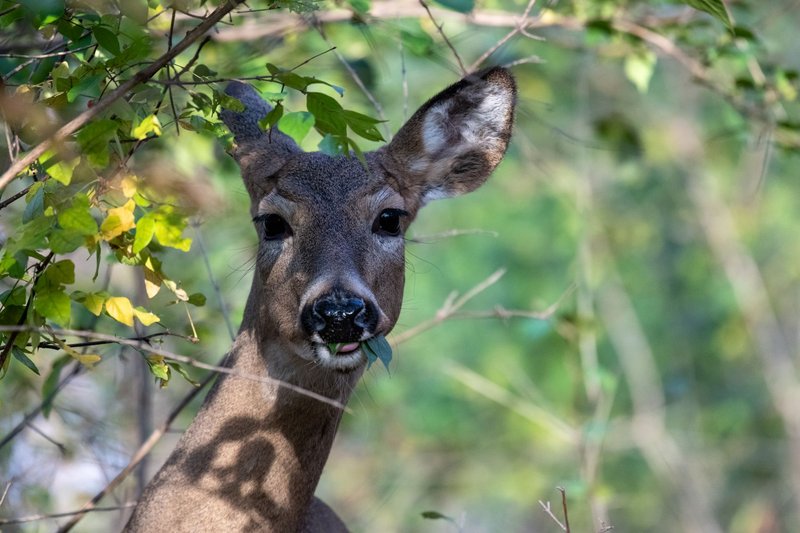
That’s also why deer overpopulation is such a headache for suburban gardeners — the plants homeowners assume are “deer-proof” because they’re toxic to dogs or humans often aren’t toxic to deer at all.
2. Moose
Moose take the deer strategy further into genuinely dangerous territory. In wetland habitat across Alaska and Canada, moose regularly browse water plants and shrubs that carry real toxicity, and wildlife managers have documented moose eating water hemlock and other alkaloid-heavy vegetation without acute poisoning. Part of the trick is volume control: a moose rarely eats enough of any single toxic plant in one sitting to cross the lethal threshold, instead grazing across dozens of species in a session. The Alaska Department of Fish and Game notes that a moose’s rumen can process an enormous range of woody and aquatic browse specifically because its gut flora is tuned to break down the tannins and alkaloids concentrated in northern wetland plants.
3. Mountain Goats
At altitude, the toxic plant of concern is usually locoweed — an alkaloid-rich legume that causes irreversible neurological damage in livestock that overgraze it. Mountain goats and bighorn sheep browse it in small amounts without the chronic staggering and weight loss seen in cattle turned loose on locoweed-infested range. Extension research on toxic rangeland plants — Cornell’s Poisonous Plants of Livestock database is the standard reference — shows that dose and diet diversity matter as much as species. Wild grazers that move constantly and mix locoweed with dozens of other forage plants dilute the alkaloid load in a way that penned livestock, eating the same few acres every day, can’t.
4. Koalas
Eucalyptus leaves are loaded with essential oils that are actively toxic to most mammals — cineole and other terpenes that damage the liver in high doses. Koalas eat almost nothing else. Their liver runs an overbuilt cytochrome P450 enzyme system, the same enzyme family responsible for drug metabolism in humans, cranked up specifically to break down eucalyptus oil as fast as the koala can eat it. That detox system is metabolically expensive, which is the real reason koalas sleep up to 20 hours a day — there isn’t much energy left over once digestion is paid for.
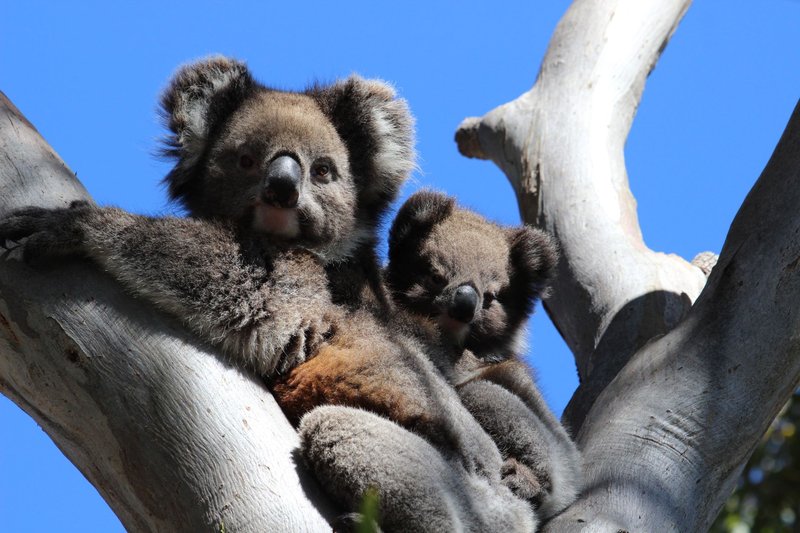
Their gut microbiome does additional work: young koalas eat a soft, partially digested substance called pap, produced by the mother, that seeds their gut with the specific bacteria needed to process eucalyptus before they can safely eat leaves on their own.
5. Bushy-Tailed Woodrats
Desert woodrats — commonly called packrats — build their diet around creosote bush, a plant so chemically defended that almost nothing else touches it. Creosote resin is packed with nordihydroguaiaretic acid, a compound that damages the kidneys of animals without the right detox pathway. Researchers studying desert woodrat populations have found their livers produce elevated levels of enzymes specifically suited to metabolizing creosote’s resin acids, and populations that live around creosote-heavy habitat show measurably better tolerance than populations from creosote-free areas — a textbook case of local diet driving local physiology.
6. Chuckwallas
Most reptiles are poor candidates for eating chemically defended plants; cold-blooded metabolism makes toxin clearance slow. Chuckwallas, plump desert lizards found across the American Southwest, are an exception. They eat creosote bush flowers and leaves alongside other toxic desert annuals, relying on an oversized hindgut where microbial fermentation breaks down plant secondary compounds much the way a cow’s rumen does. It’s a rare instance of a reptile running a fermentation strategy usually associated with hooved mammals, built to handle a diet almost nothing else in the reptile world can stomach.
7. Monarch Caterpillars
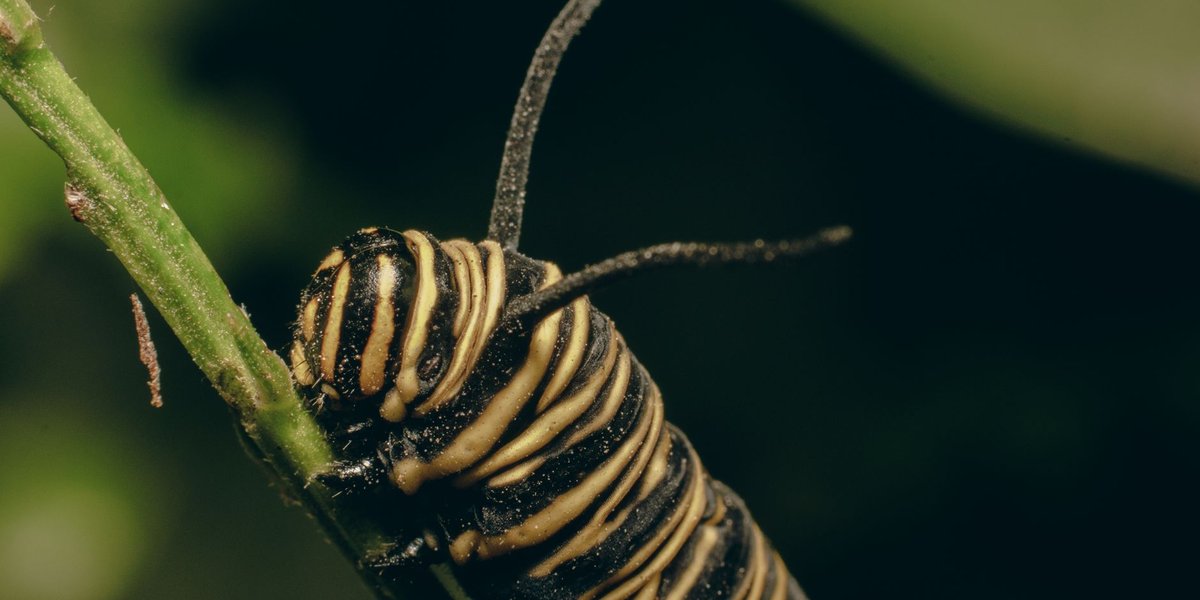
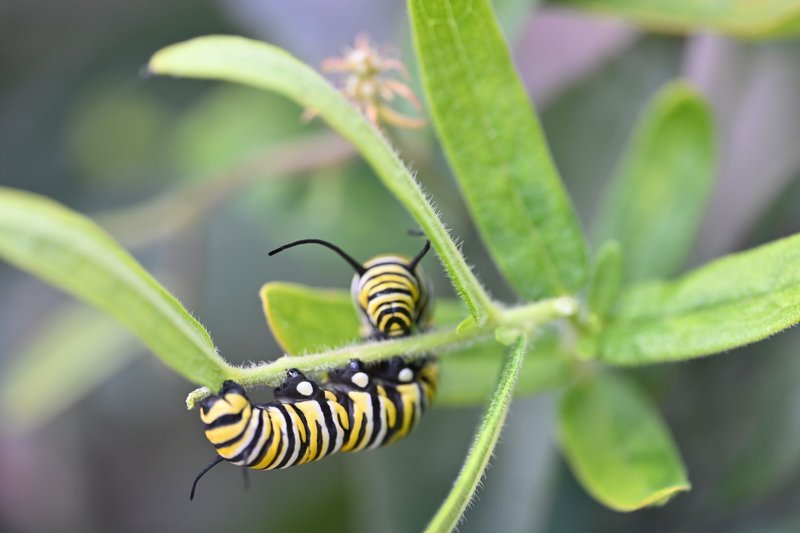
Monarchs don’t neutralize milkweed’s cardenolides — they keep them. Caterpillars sequester the toxin in their tissue as they feed on milkweed, carry it through metamorphosis, and emerge as toxic adult butterflies. A bird that eats one monarch typically vomits within minutes and avoids anything that looks like a monarch afterward, which is the entire strategy: the caterpillar’s black-yellow-white banding and the butterfly’s orange-and-black wings are both warning labels, not camouflage. The U.S. Fish and Wildlife Service notes that monarch toxicity varies by which milkweed species the caterpillar fed on, since cardenolide concentration differs sharply across the roughly 100 milkweed species in North America.
8. Rattlebox Moths
Utetheisa ornatrix, the rattlebox moth, sequesters pyrrolizidine alkaloids from rattlebox plants in a way that gets stranger the closer you look. Males store the toxin and pass a package of it to females during mating as a “nuptial gift,” alongside sperm. Females use that transferred toxin to protect their eggs from predators, and — in a detail that shows up in almost no other insect — females can assess how much toxin a potential mate is carrying before choosing him, favoring males with a bigger chemical dowry.
9. Eastern Lubber Grasshoppers
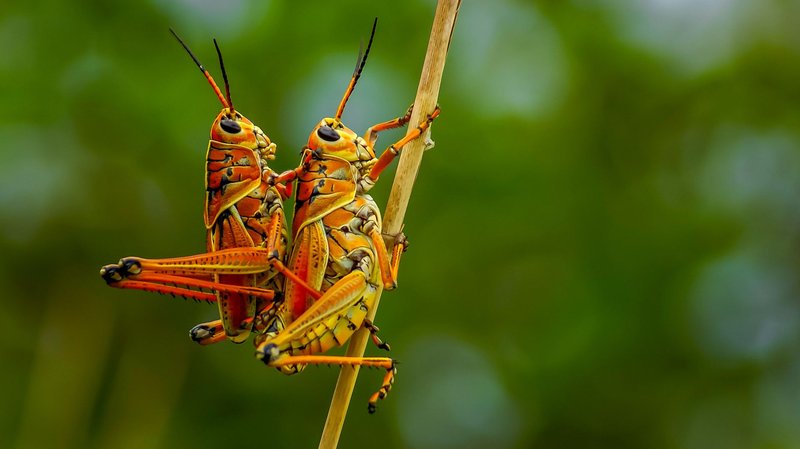
Lubbers are slow, flightless, and roughly the size of a thumb — an easy target for anything hungry enough to try. They compensate by feeding on toxic plants across their range and concentrating those compounds in their body fat, then advertising it with bright yellow, orange, and black coloring visible from across a field. A predator that ignores the warning gets a mouthful of chemicals potent enough to trigger vomiting, and lubbers reinforce the lesson further by hissing and releasing a foul-smelling foam if grabbed.
10. Tobacco Hornworms
Nicotine exists because tobacco plants evolved it as an insecticide, and it’s lethal to most caterpillars in the concentrations tobacco leaves carry. The tobacco hornworm eats tobacco leaves anyway, using a detox pathway that redirects ingested nicotine straight into its blood and out through its spiracles — the breathing pores along its sides — effectively exhaling the toxin before it reaches nerve tissue. Researchers studying the hornworm’s detox gene found that blocking it made the caterpillars dramatically more vulnerable to wolf spiders, since the diverted nicotine doubles as a defensive breath the hornworm can use against attackers.
11. Scarlet Macaws
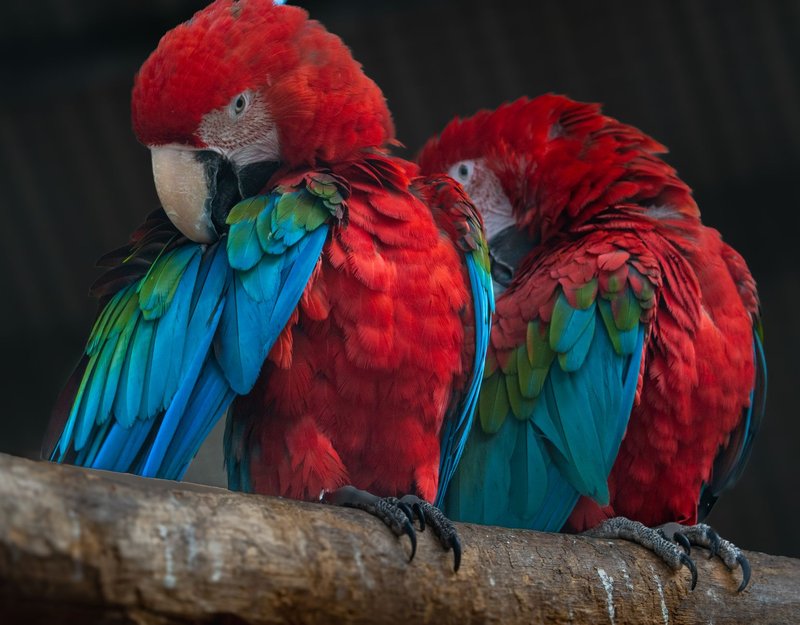
Across the Amazon and Central America, macaws and other parrots regularly gather at exposed riverbank clay licks and eat mouthfuls of clay before or after feeding on unripe fruit and toxic seeds. The clay’s mineral structure binds to plant alkaloids and tannins in the gut, neutralizing them before they can be absorbed — essentially an antacid strategy rather than an enzymatic one. It lets macaws exploit a food source — unripe, chemically defended fruit — that most competing birds have to leave alone until it ripens and detoxifies on its own.
12. Cinnabar Moth Caterpillars
Cinnabar caterpillars run the same playbook as the monarch, on a different plant. They feed on ragwort, sequester its pyrrolizidine alkaloids, and display the same aposematic yellow-and-black banding as a standing warning. The comparison to monarchs is useful because it shows the sequestration strategy isn’t a one-off fluke of milkweed and monarchs specifically — it’s a repeatable evolutionary solution that’s shown up independently in unrelated insect lineages facing unrelated toxic plants, which is a strong sign it works.
The Pattern Underneath It All
Line these twelve up and four strategies cover all of them: dilute it, ferment it, filter it, or steal it. Deer, moose, and mountain goats dilute and ferment. Koalas and woodrats filter with liver enzymes built for one job. Chuckwallas borrow the fermentation trick from mammals. And monarchs, rattlebox moths, lubbers, hornworms, and cinnabar caterpillars skip neutralization entirely and turn the plant’s weapon into their own. None of it is immunity in the human sense — it’s a narrow, hard-won answer to one specific chemical, which is exactly why a woodrat that handles creosote without blinking would get sick on milkweed, and a monarch that thrives on milkweed wouldn’t last a day on creosote.