Most “Arctic animals” lists are half ocean. Whales, walruses and seals take up the space, and the animals that actually live on the frozen ground get a paragraph at the end. This list is land only: 14 animals that spend their lives on tundra, ice-covered shores and the northern edge of the forest.
The quick comparison below covers the basics. Each animal gets its own section after that, then a short look at the tricks they share for getting through winter.
Table of Contents
- Quick Comparison
- 1. Polar Bear
- 2. Arctic Fox
- 3. Arctic Hare
- 4. Caribou (Reindeer)
- 5. Muskox
- 6. Arctic Wolf
- 7. Wolverine
- 8. Lemming
- 9. Snowy Owl
- 10. Ermine
- 11. Arctic Ground Squirrel
- 12. Dall Sheep
- 13. Moose
- 14. Brown Bear
- How Arctic Land Animals Survive Winter
Quick Comparison
| Animal | Diet | Typical adult weight | Where it lives |
|---|---|---|---|
| Polar bear | Meat (mostly seals) | 350-600 kg (770-1,300 lb) | Arctic coasts and sea ice |
| Arctic fox | Omnivore | 3-5 kg (6.5-11 lb) | Tundra across the circumpolar north |
| Arctic hare | Plants | 3-5.5 kg (7-12 lb) | Northern Canada, Greenland |
| Caribou | Lichen, plants | 80-300 kg (175-660 lb) | Tundra and northern forest, all Arctic regions |
| Muskox | Grasses, sedges, willow | 200-400 kg (440-880 lb) | Greenland, Arctic Canada, Alaska, Russia, Scandinavia |
| Arctic wolf | Meat | 30-45 kg (65-100 lb) | High Arctic Canada, northern Greenland |
| Wolverine | Meat, carrion | 10-18 kg (22-40 lb) | Tundra and boreal forest worldwide |
| Lemming | Plants | 30-110 g (1-4 oz) | Tundra across the north |
| Snowy owl | Meat (mostly lemmings) | 1.6-2.5 kg (3.5-5.5 lb) | Circumpolar tundra |
| Ermine | Meat | 100-350 g (3.5-12 oz) | Northern Eurasia and North America |
| Arctic ground squirrel | Plants, insects | 0.5-1 kg (1-2 lb) | Alaska, northern Canada, Siberia |
| Dall sheep | Grasses, sedges | 50-110 kg (110-240 lb) | Alaska, Yukon, northwestern Canada |
| Moose | Willow, birch, aquatic plants | 270-700 kg (600-1,500 lb) | Northern forest and tundra edge |
| Brown bear | Omnivore | 130-450 kg (290-990 lb) | Alaska, Canada, Russia, Scandinavia |
1. Polar Bear
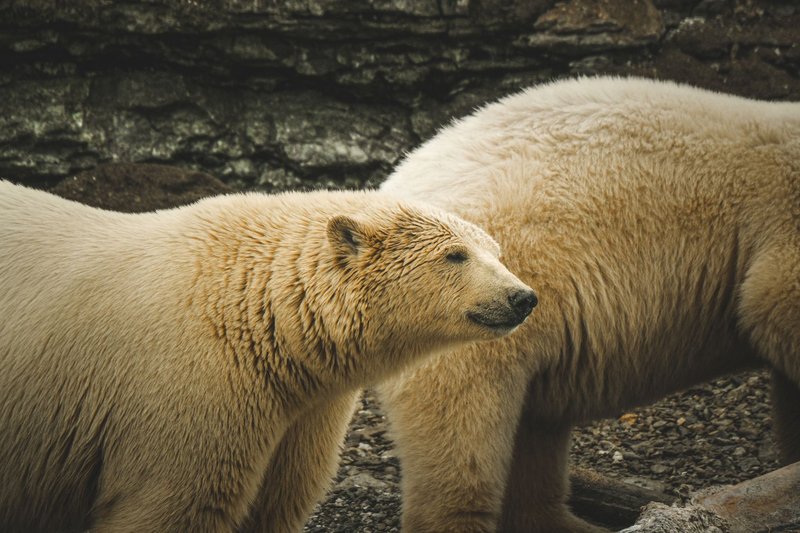
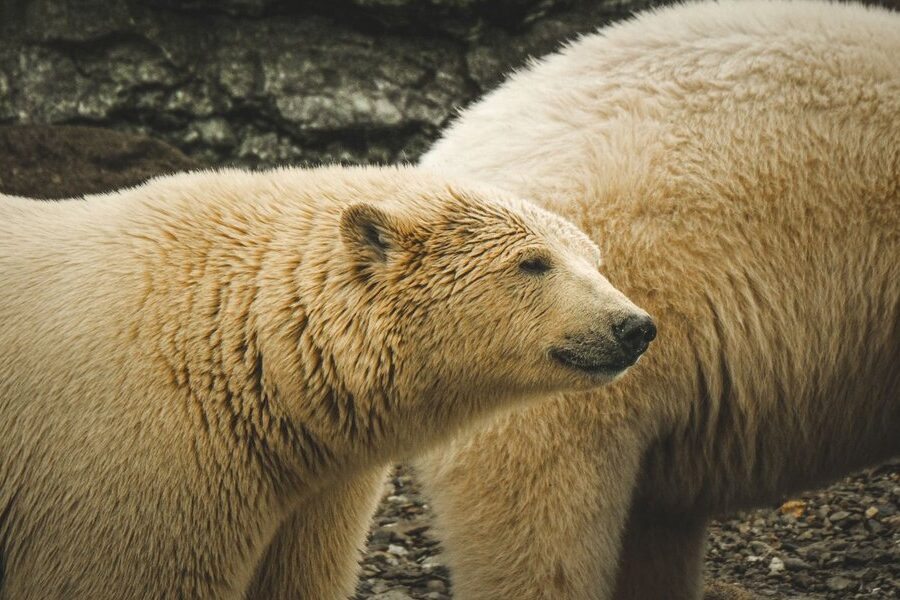
The polar bear is the largest land carnivore on Earth, and the “land” label comes with an asterisk. Biologists classify it as a marine mammal because it spends most of its life on sea ice, hunting ringed seals from the edge of a breathing hole. It still walks, breeds and dens on land, which is why it belongs here.
Its black skin soaks up heat under translucent fur, and a layer of blubber up to 10 cm thick does the rest. Males run 350-600 kg. Females den in snow for the winter and give birth to cubs there.
Range: Canada, Alaska, Greenland, Norway’s Svalbard and Russia. IUCN status: Vulnerable. Shrinking sea ice is the main threat, since a bear without ice can’t reach seals.
2. Arctic Fox
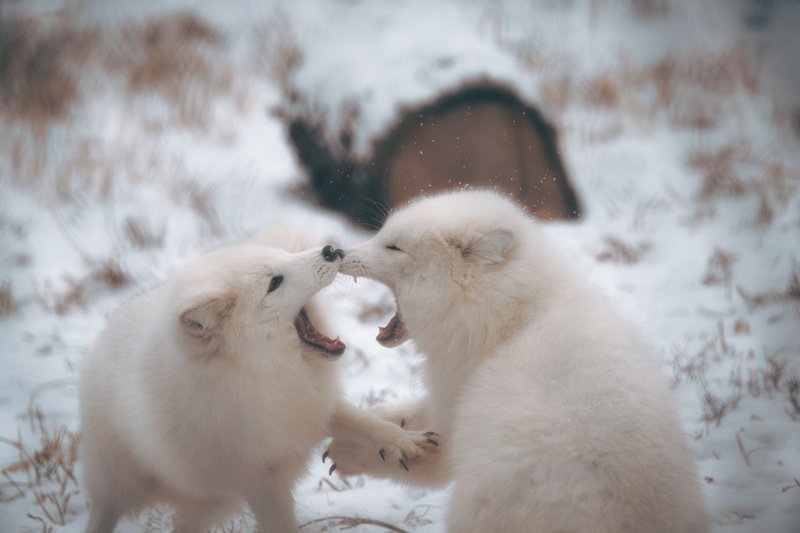
The Arctic fox changes color with the season. Its coat goes white in winter and brown-gray in summer, so it blends with snow and then with bare tundra. Its ears and muzzle are short and rounded, which cuts heat loss, and the soles of its paws are furred.
It’s a scavenger and opportunist. It eats lemmings, eggs, birds and carcasses left by polar bears, and it caches extra food for later. In bad winters it follows polar bears across the ice to scrape up their leftovers. Its winter coat protects it down to roughly -50°C, according to National Geographic.
Range: the entire circumpolar Arctic. IUCN status: Least Concern globally, though some populations, such as Scandinavia’s, are critically low.
3. Arctic Hare
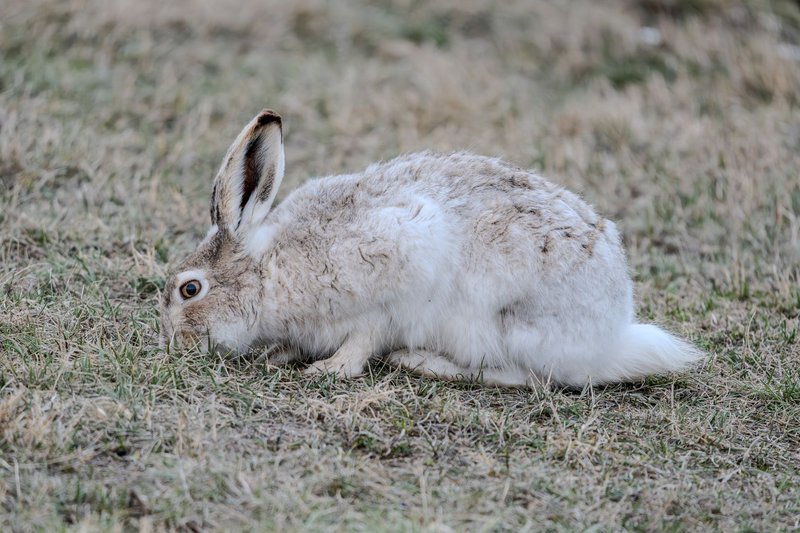
Arctic hares are large, up to 5.5 kg, and shorter-eared than hares farther south. Short ears lose less heat. In the high north their coats stay white all year, and in the far north they sometimes gather in groups of hundreds.
They can stand and hop on their hind legs, kangaroo style, and sprint at about 60 km/h to escape foxes and wolves. Their long front teeth let them dig willow twigs and roots out from under the snow.
Range: northern Canada and Greenland. IUCN status: Least Concern.
4. Caribou (Reindeer)
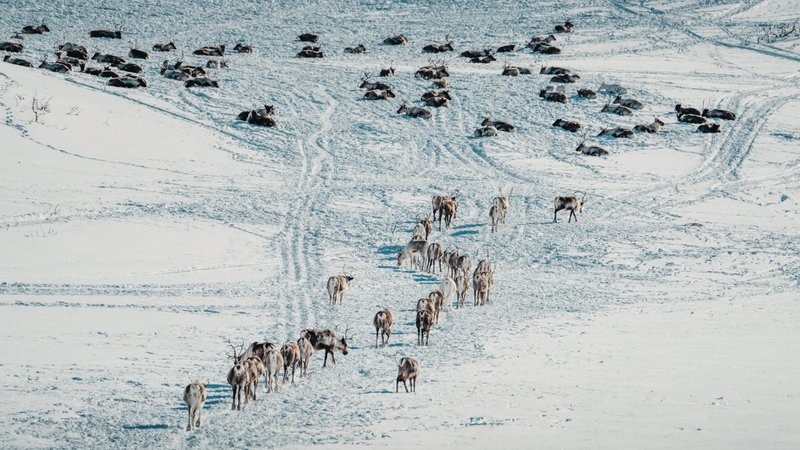
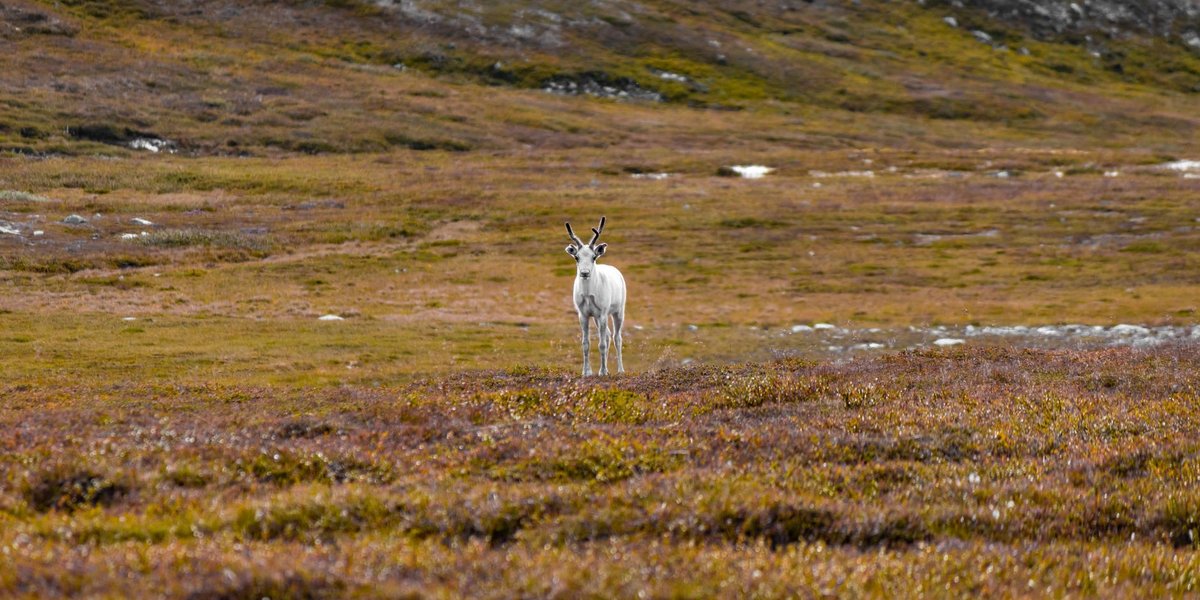
Caribou and reindeer are the same species. North Americans say caribou for wild herds, and Europeans say reindeer for wild and domesticated animals alike. It is the only deer where both sexes grow antlers.
Caribou make the longest land migration of any mammal. Some herds, such as the Porcupine herd in Alaska and Yukon, cover more than 2,400 km a year following food. Their hooves widen in summer for soft ground and shrink in winter, with sharp edges for digging through snow to lichen.
Range: tundra and northern forest across Canada, Alaska, Greenland, Scandinavia and Russia. IUCN status: Vulnerable, as many herds have fallen sharply in recent decades.
5. Muskox
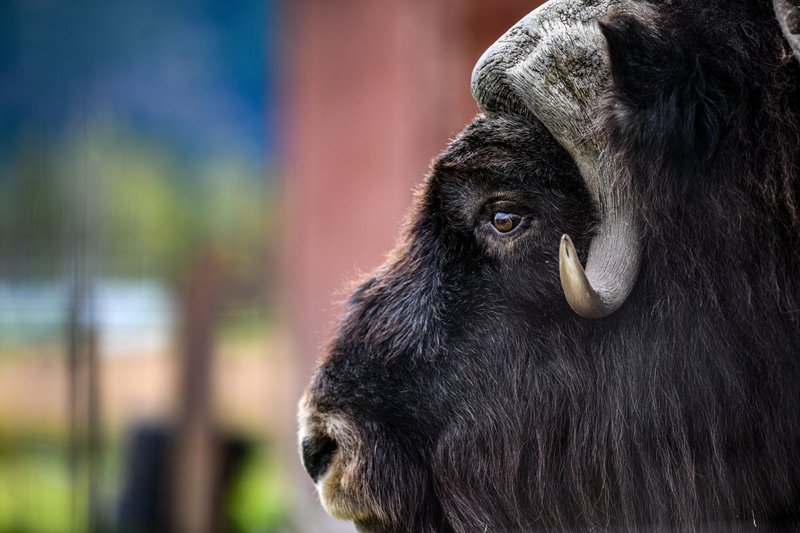
Muskoxen look like Ice Age leftovers, and they nearly are. They lived alongside woolly mammoths and survived. Their inner wool, called qiviut, is several times warmer than sheep’s wool, and a long outer coat hangs almost to the ground.
When wolves approach, the herd forms a circle or a line with calves in the middle and horns facing out. It works against wolves. It worked less well against hunters with rifles, which nearly wiped them out in Alaska by the 1860s. They’ve since been reintroduced.
Range: Greenland, Arctic Canada, Alaska, plus introduced herds in Russia and Scandinavia. IUCN status: Least Concern.
6. Arctic Wolf
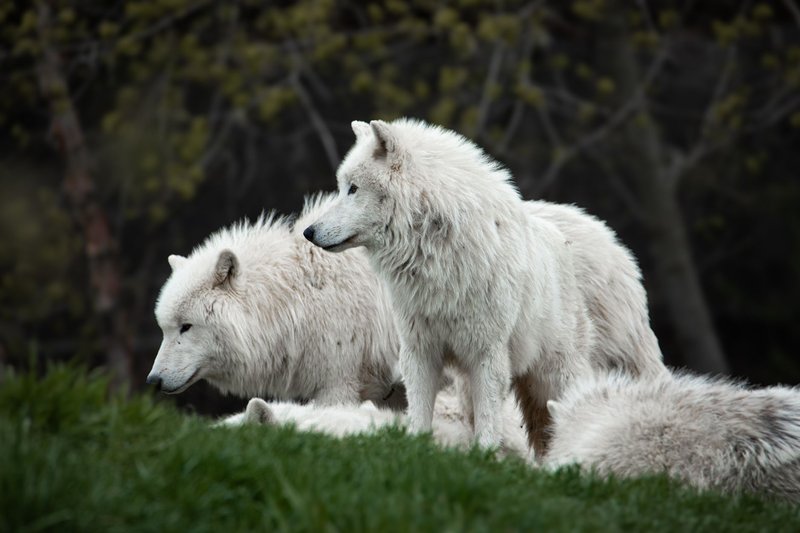
The Arctic wolf is a subspecies of gray wolf, with a white coat, shorter ears and legs and a thick undercoat. It lives in places where the sun doesn’t rise for months, on Ellesmere Island and in northern Greenland, where humans rarely go. Because it has little contact with people, it’s often unafraid of them.
It hunts muskoxen and Arctic hares. Packs are small, often 2-6 animals, since food is thin. A wolf may go a week between meals and then eat 9 kg in one sitting.
Range: High Arctic Canada and northern Greenland. IUCN status: the gray wolf is Least Concern.
7. Wolverine
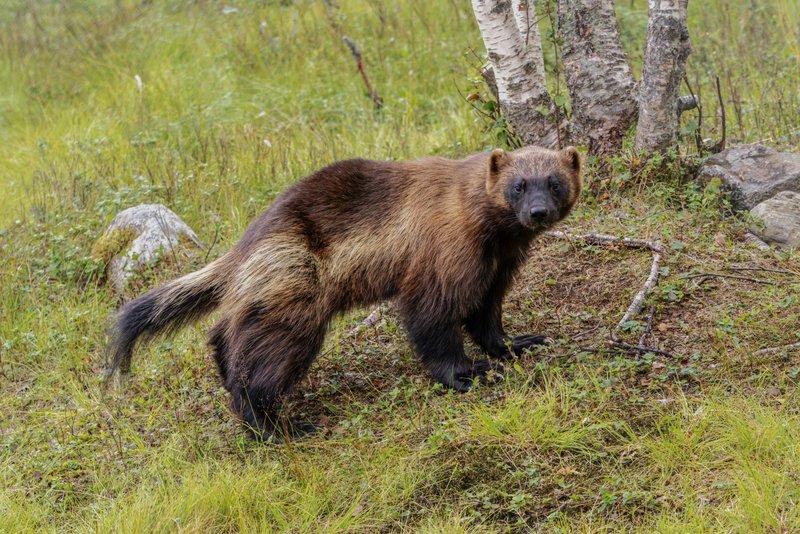
A wolverine weighs about as much as a medium dog and will chase a wolf off a carcass. It’s a weasel, the largest land member of that family, and one of the most stubborn animals in the north.
Its jaws and teeth crush frozen meat and bone, so it can eat what other predators can’t. It scavenges, caches food in the snow and can travel 30 km or more in a day. Wolverines den in deep snowpack to raise their kits, so shrinking spring snow is a concern.
Range: tundra and boreal forest across Canada, Alaska, Scandinavia and Russia. IUCN status: Least Concern, with declines in some regions.
8. Lemming
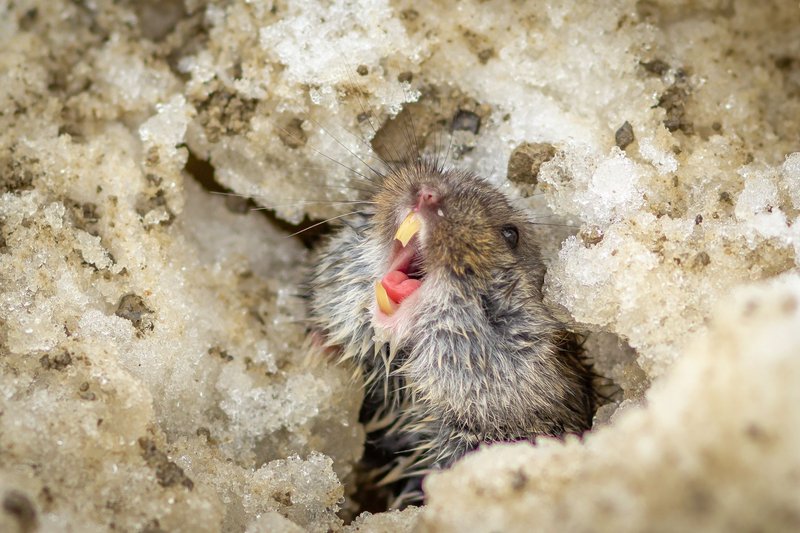
Lemmings are the base of the tundra food chain. Foxes, owls, ermines, wolverines, wolves and skuas all depend on them. Their populations boom and crash on a cycle of three to five years, and predators follow the booms.
The myth that lemmings jump off cliffs on purpose comes from the 1958 Disney film White Wilderness, which staged the scene. In reality they disperse when numbers peak, and some drown while trying to swim across water.
Lemmings stay active all winter, tunneling through the gap between snow and ground, where it stays near 0°C even when the air is far colder. Brown lemmings and collared lemmings turn white in winter.
Range: tundra across the north. IUCN status: Least Concern for the main species.
9. Snowy Owl
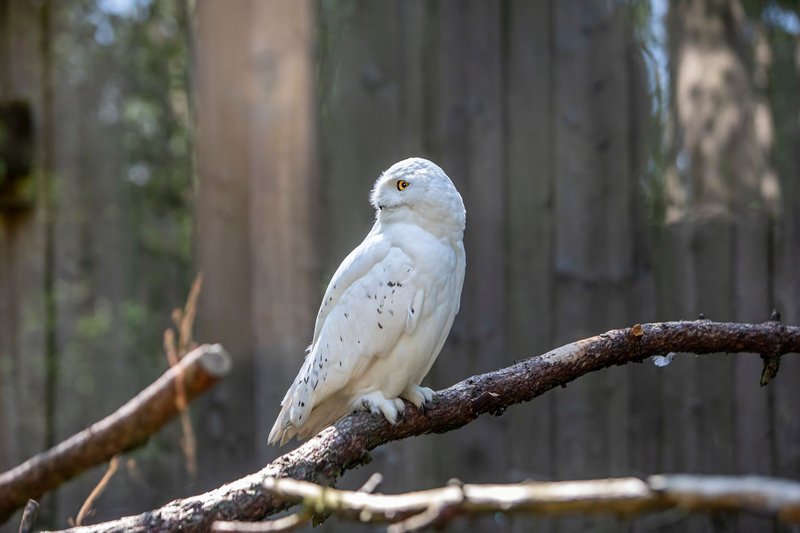
The snowy owl is a bird, but it spends its life on the ground. It nests on open tundra, hunts from low mounds and doesn’t need trees. Unlike most owls, it hunts by day, which is useful when summer sun doesn’t set.
Its feathers cover its legs and toes down to the claws. An adult can eat several lemmings a day, and in a good lemming year, a pair may raise up to a dozen chicks. In a bad year, they may not nest at all.
Range: the circumpolar tundra, with some birds moving south in winter. IUCN status: Vulnerable, since its numbers have dropped sharply in recent decades.
10. Ermine
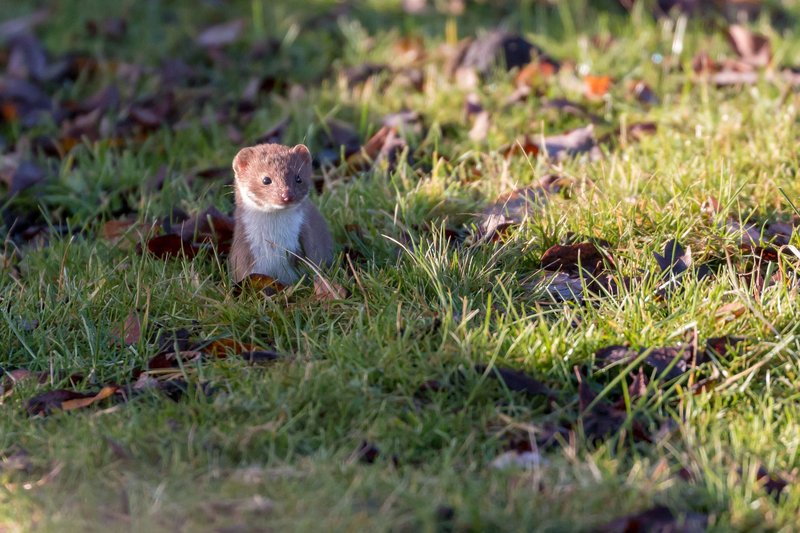
The ermine, also called the stoat, is a weasel that weighs about as much as a banana and eats animals larger than itself. It’s built like a tube, so it can follow lemmings into their burrows.
In winter its coat turns white, except for the black tip of its tail. That tail tip is a trick: a hawk or owl aims for it and often misses the body. Ermine fur was once a sign of royalty in Europe, and that history made it a popular fur-trade species.
Range: northern Eurasia and North America. IUCN status: Least Concern.
11. Arctic Ground Squirrel
This squirrel holds the record for the coldest body temperature of any mammal that survives. During hibernation, researchers have measured its body temperature at about -2.9°C, below the freezing point of water, and the animal stays alive because its blood doesn’t freeze solid.
It hibernates for seven to eight months in a burrow dug into permafrost-free ground. In its short summer it has to eat fast, since it has only a few months to build fat. It also serves as food for foxes, wolves, grizzlies and golden eagles.
Range: Alaska, northern Canada and eastern Siberia. IUCN status: Least Concern.
12. Dall Sheep
Dall sheep are the white wild sheep of the northwestern mountains. They climb steep slopes to escape wolves, using their rough hoof pads for grip on rock. Rams grow thick, curled horns that can add up to a lifetime of growth rings.
In winter, they stay on windswept ridges where the wind blows snow away and exposes forage. The trade-off is cold, and their hollow-haired white coat deals with that. Rams and ewes live in separate groups for most of the year and meet only in fall.
Range: Alaska, Yukon, the Northwest Territories and northern British Columbia. IUCN status: Least Concern.
13. Moose
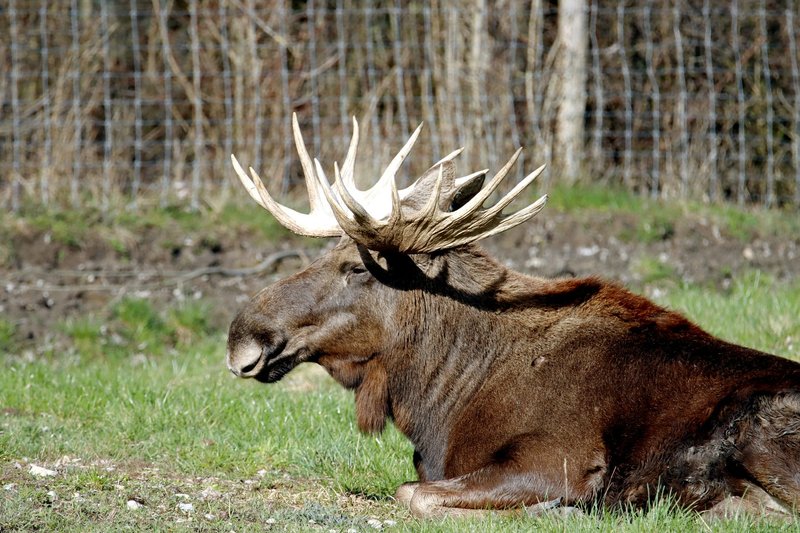
The moose is the largest deer in the world, with bulls reaching 700 kg and antlers spanning nearly 2 m. It lives where the tundra meets the forest, and in summer it wades into ponds to eat aquatic plants.
Long legs get it through deep snow. A moose can eat about 20 kg of food a day in summer, mostly willow, birch and water plants. In winter it eats twigs and bark.
Moose are one of the few species on this list that thrive near the southern edge of the Arctic rather than in the high north, and warming temperatures are pushing them farther north.
Range: northern North America, Scandinavia and Russia. IUCN status: Least Concern.
14. Brown Bear
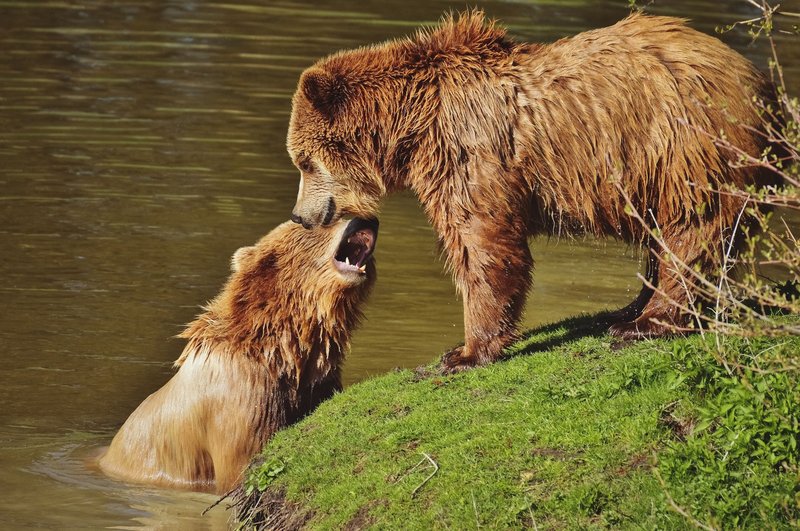
Brown bears are the same species as grizzlies, and tundra populations in northern Alaska and Siberia have moved onto the Arctic plain. They eat roots, berries, ground squirrels, caribou calves and, near rivers, salmon.
They are omnivores, which gives them an advantage over polar bears. When one food runs short, they switch to another. As the Arctic warms, brown bears are expanding north and sometimes overlapping with polar bears, which has produced rare hybrids.
Winter is spent in a den, in a hibernation-like sleep that lasts five to seven months.
Range: Alaska, Canada, Russia and Scandinavia. IUCN status: Least Concern.
How Arctic Land Animals Survive Winter
Arctic winters last about eight months and drop below -40°C. The animals on this list use four main strategies:
- Insulation. Muskoxen use qiviut, polar bears use blubber, and Arctic foxes use dense fur covering their paws. Small ears and short limbs, seen in the hare and the fox, lose less heat.
- Hiding from the cold. Lemmings and ermines work under the snow, where it’s much warmer than the surface. Ground squirrels and bears sleep through winter in dens.
- Leaving. Caribou walk hundreds or thousands of kilometers. Some snowy owls move south, depending on lemming numbers.
- Staying put and eating less. Moose, Dall sheep, Arctic hares and wolves stay active all winter, find the food that’s available and rest more to save energy.
Camouflage changes with the seasons, too. The Arctic fox, Arctic hare, ermine and lemming all grow white winter coats, and so does the wolf in the high north.
Each animal in this list depends on cold, snow and ice. Warming in the Arctic is happening much faster than the global average, so these adaptations are tested every year.