Table of Contents
- TL;DR
- The Short Answer
- Spring: Roots, Shoots, and Leftovers
- Summer: Fruit, Grubs, and Nests
- Autumn: The Mast Season That Decides Winter
- Winter: Running on Stored Fat
- The Full Wild Boar Food List
- How Boars Find Food: Rooting Behavior
- Diet by Habitat: Forest vs. Farmland vs. Suburbs
- What Boars Won’t Eat (and Captive vs. Wild Diets)
- Why This Diet Makes Boars a Farmer’s Problem
TL;DR
Eurasian wild boars (Sus scrofa) eat a diet that’s roughly 90% plant material and 10% animal matter — but that ratio hides the real story. Boars are seasonal opportunists. Spring means roots and new shoots. Summer brings fruit, insects, and the occasional raided ground nest. Autumn is mast season — acorns and beechnuts eaten in bulk to build the fat reserves that carry a boar through winter, when food gets scarce and they’ll eat almost anything that’s still there: bark, bulbs, carrion, frozen roots dug out of hard ground. That flexibility is exactly why boars do so much damage to farmland — a diet built to exploit whatever’s available doesn’t distinguish between a forest floor and a cornfield.
The Short Answer
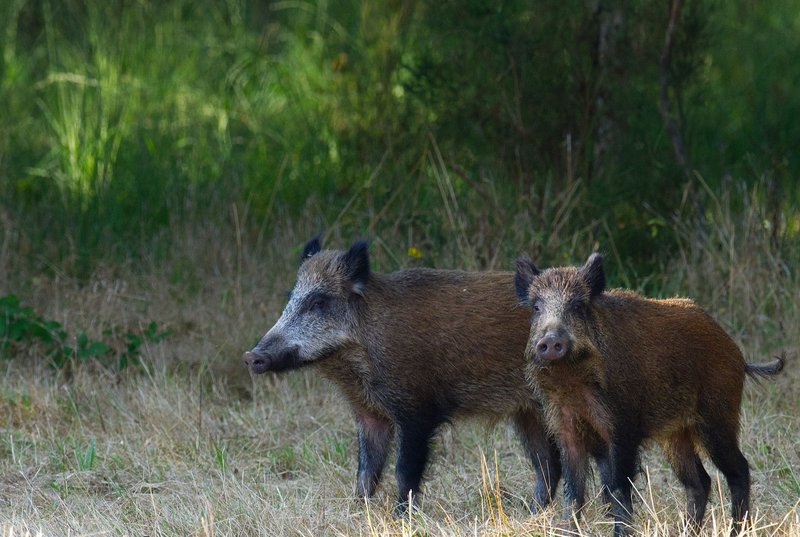
A wild boar’s stomach doesn’t care much what’s in front of it. Boars are omnivores with a strong plant bias — studies on stomach contents and, more recently, DNA metabarcoding of boar diets consistently land around 90% vegetation and 10% animal protein, though the animal share climbs in spring when invertebrates are abundant and easy calories are scarce elsewhere.
What separates boars from most other omnivores is how they get food: they don’t just graze or browse, they excavate. A boar’s snout is a purpose-built digging tool, cartilage-reinforced at the tip, and a sounder (a family group) working a hillside can turn over an acre of ground in a single night looking for anything buried — roots, bulbs, grubs, worms, fungi. According to National Geographic, this rooting behavior is so extensive that boars function as ecosystem engineers, physically reshaping the forest floor as they feed.
Spring: Roots, Shoots, and Leftovers
Spring diet is thin and improvised. Winter mast stores are gone, so boars fall back on whatever’s newly growing: tender grass shoots, sedges, emerging bulbs, and the roots of plants that haven’t fully leafed out yet. This is also the season when animal matter peaks in the diet — earthworms surface as soil warms, and insect larvae become an easy protein source right when plant food is leanest. Sows that farrowed over winter need the extra protein to nurse piglets, which pushes spring foraging toward invertebrates more than any other season.
Summer: Fruit, Grubs, and Nests
By summer, food is everywhere, and boar diet reflects it. Berries, early fruit drops, and green vegetation make up the bulk of intake, supplemented by grubs, beetles, and whatever ground-nesting birds haven’t moved their eggs in time. Boars are opportunistic nest predators — not a primary food source, but a reliable summer snack where nests are dense. This is also when boars range furthest from cover, since abundant food means they can afford to travel for it.
Autumn: The Mast Season That Decides Winter
Autumn is the hinge point of the entire year. Oak and beech mast — acorns and beechnuts — drop in bulk, and boars gorge on them almost exclusively where they’re available, sometimes putting on more body fat in six weeks than the rest of the year combined. A heavy mast year translates directly into higher piglet survival and larger litters the following spring; a mast failure year does the opposite, pushing boars into agricultural land earlier and more aggressively as they search for calories. Wildlife managers watch mast crops for exactly this reason — it’s one of the better predictors of how much crop damage a region will see the following winter.
Winter: Running on Stored Fat
Winter is survival mode. With mast gone and ground often frozen or snow-covered, boars fall back to bark, roots pried out of hard soil, bulbs, and carrion when they find it. Fat reserves built in autumn get burned down, and boars in poor mast years lose significant body condition by late winter. This is the season boars are most drawn to human food sources — compost, livestock feed, unharvested root crops — simply because natural forage is at its yearly low.
The Full Wild Boar Food List
Across the year, a Eurasian wild boar’s diet can include:
- Acorns and beechnuts (autumn staple, primary fat source)
- Roots, tubers, and bulbs
- Grasses, sedges, and green shoots
- Berries and fallen fruit
- Fungi, including species some mammals avoid
- Earthworms and soil invertebrates
- Insect larvae and adult beetles
- Bird eggs and, occasionally, nestlings
- Small vertebrates (frogs, snakes, rodents) when encountered
- Carrion
- Agricultural crops: corn, wheat, potatoes, sugar beet, vineyard fruit
- Bark and cambium in lean winters
How Boars Find Food: Rooting Behavior
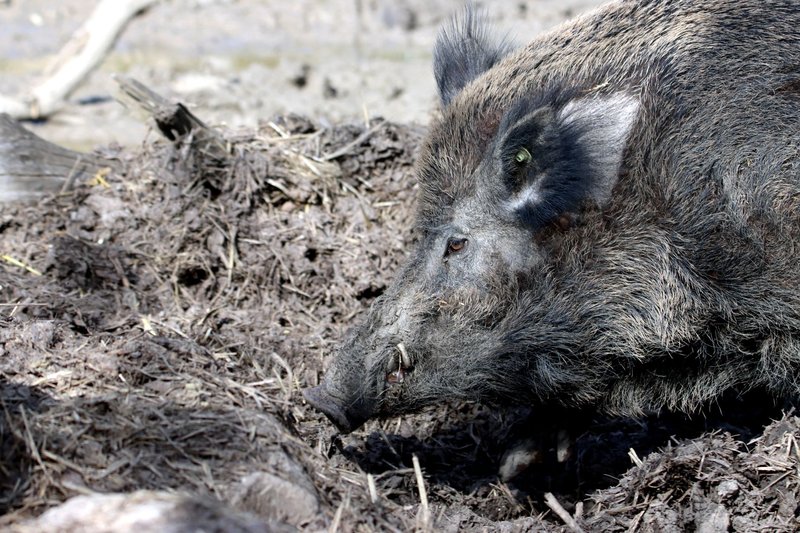
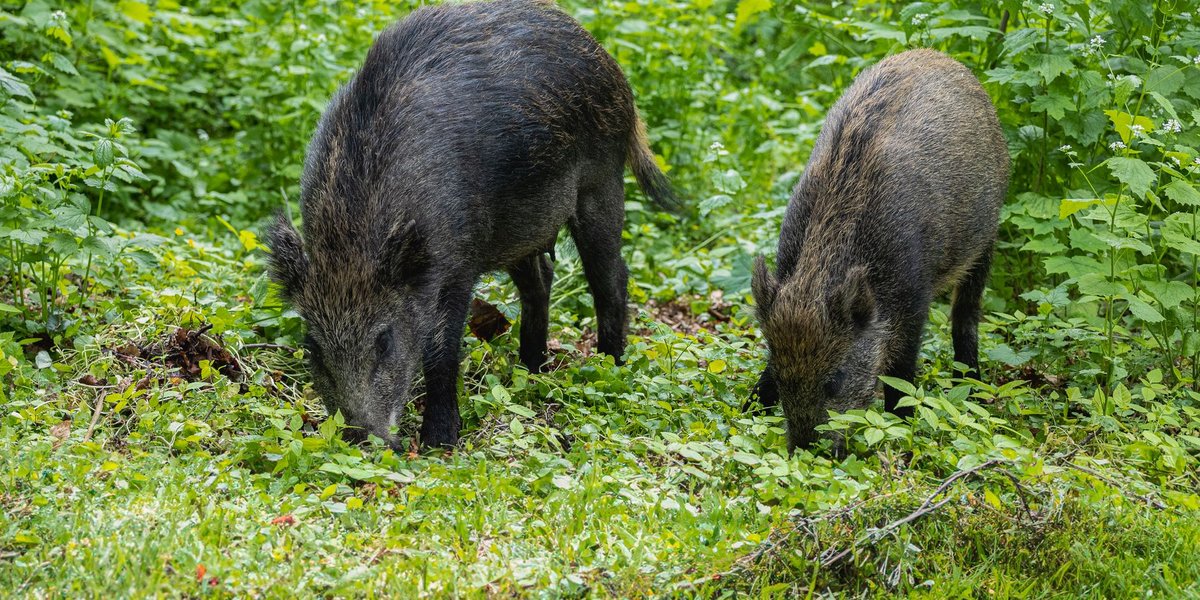
Most of what’s on that list has to be dug up, and that’s where the snout comes in. Boars root by pushing their nose into soil or leaf litter and levering upward, using the reinforced disc of cartilage at the tip like a plow blade. A single boar can turn soil down to 20 centimeters; a sounder working the same patch repeatedly can strip an area down to bare earth.
Rooting isn’t random. Boars use scent to locate buried food with precision — they’ll dig a narrow, targeted hole directly over a root or grub rather than trenching blindly. That precision is part of what makes them efficient foragers, and part of what makes rooted-up lawns, golf courses, and pasture such a recognizable sign of boar activity.
Diet by Habitat: Forest vs. Farmland vs. Suburbs
The same species eats a noticeably different diet depending on where it lives:
| Habitat | Dominant foods | Foraging pattern |
|---|---|---|
| Forest | Mast (acorns, beechnuts), roots, fungi, invertebrates | Seasonal, mast-dependent, wide-ranging |
| Agricultural land | Corn, wheat, potatoes, sugar beet | Concentrated raids timed to planting/harvest windows |
| Suburban/urban edge | Compost, garden bulbs, pet food, unsecured trash | Opportunistic, nocturnal, tolerant of human proximity |
Forest boars still show the classic seasonal pattern described above. Boars living near farmland shift that pattern toward whatever’s currently in the ground — a boar population next to a cornfield will time its heaviest feeding to just before harvest, when kernels are at peak starch content. Boars on the suburban edge, meanwhile, have effectively decoupled from seasonal wild food and forage year-round on human sources, which is part of why urban-edge boar populations tend to be denser and less migratory than their deep-forest counterparts.
What Boars Won’t Eat (and Captive vs. Wild Diets)
Boars are generalists, but not indiscriminate. They avoid plants with strong alkaloid defenses and most mature, high-cellulose bark except when nothing else is available. Wild boars also self-limit around certain toxic fungi that other foragers eat freely — a caution likely learned rather than innate, since captive-raised boars without access to wild food sources show less discrimination and will sample things wild-raised boars avoid.
That’s the other diet gap worth naming: captive and farmed boars fed commercial pig feed gain weight faster and reach maturity earlier than wild populations, but on a diet almost entirely disconnected from the seasonal foraging described above. Zoo and farm diets are formulated for consistent nutrition; wild diets are a moving target driven by what the season provides. It’s the difference between a boar’s biology and a boar’s behavior — the biology can run on pellets, but the behavior evolved for scarcity and opportunity.
Why This Diet Makes Boars a Farmer’s Problem
Put the pieces together and the crop-damage problem stops being a mystery. A boar that will eat roots, fruit, grain, eggs, and carrion with equal enthusiasm has no reason to prefer wild forage over a planted field once it finds one. Add a foraging tool built to excavate anything buried, a memory for reliable food sources, and a reproductive rate that rewards good feeding years with bigger litters, and you get an animal that treats farmland as an extension of the forest floor rather than something separate.
The IUCN Wild Pig Specialist Group and agricultural agencies across Europe and North America track this dynamic closely, because boar range expansion tracks almost exactly with agricultural land use — the same dietary flexibility that lets boars survive a lean winter in the wild is what lets them thrive next to a farm. Diet isn’t a side detail in the wild boar’s success story. It’s the whole mechanism.
Diet data drawn from stomach-content and DNA metabarcoding studies compiled by Animal Diversity Web and habitat notes from the Woodland Trust informed the seasonal and habitat breakdowns above.