Most wildlife lists for West and Central Africa funnel you toward the same handful of countries — Gabon, Cameroon, maybe the DRC. Equatorial Guinea barely gets a mention, which is strange given what’s actually living there: a volcanic island with more primate species per square mile than almost anywhere on the continent, a fog-shrouded speck in the Gulf of Guinea with birds found nowhere else on Earth, and a mainland rainforest that still holds forest elephants and lowland gorillas.
The reason it flies under the radar has more to do with visas and infrastructure than biodiversity. Equatorial Guinea has spent decades harder to visit than its neighbors, so the researchers who do get in tend to publish in dense conservation journals, not travel blogs. That’s left a real gap: nobody’s laid out what’s actually here, in plain language, with enough specifics to be useful if you’re planning a trip or just want to understand what’s at stake.
Here are twelve species — split across Bioko Island, the remote outpost of Annobón, and the mainland region of Río Muni — that make the case for Equatorial Guinea as one of the more overlooked biodiversity hotspots in Central Africa.
Table of Contents
- Quick Reference
- Pennant’s Red Colobus
- Bioko Drill
- Bioko Black Colobus
- Bioko Red-Eared Guenon
- Western Lowland Gorilla
- Central African Forest Elephant
- Mandrill
- Goliath Frog
- Leatherback Sea Turtle
- Green Sea Turtle
- Annobón Paradise Flycatcher
- Annobón White-Eye
- Seeing Them for Yourself
Quick Reference
| Species | Conservation Status | Where Found |
|---|---|---|
| Pennant’s red colobus | Critically Endangered | Southwest Bioko Island |
| Bioko drill | Endangered | Southern Bioko Island |
| Bioko black colobus | Vulnerable | Southern Bioko Island |
| Bioko red-eared guenon | Vulnerable | Bioko Island |
| Western lowland gorilla | Critically Endangered | Río Muni (Monte Alén) |
| Central African forest elephant | Critically Endangered | Río Muni (Monte Alén) |
| Mandrill | Vulnerable | Río Muni |
| Goliath frog | Endangered | Río Muni river systems |
| Leatherback sea turtle | Vulnerable | Ureca beaches, south Bioko |
| Green sea turtle | Endangered | Ureca beaches, south Bioko |
| Annobón paradise flycatcher | Vulnerable | Annobón Island only |
| Annobón white-eye | Least Concern (range-restricted) | Annobón Island only |
Pennant’s Red Colobus
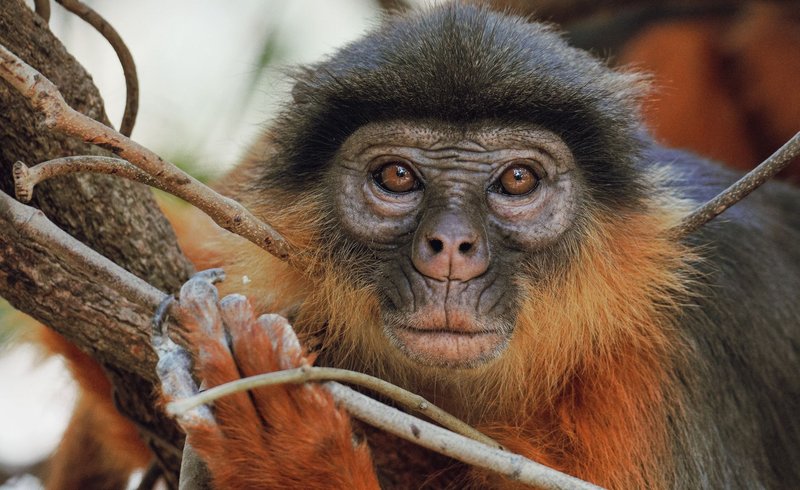
This is the animal conservationists point to first when they talk about Bioko. Pennant’s red colobus exists nowhere else on the planet, and it’s in serious trouble: the population has dropped by roughly 80% over the last three generations, and current estimates put fewer than 1,200 individuals left in the wild.
They’ve been pushed into a shrinking pocket of southwest Bioko, a range now under 500 square kilometers. The driver isn’t habitat loss so much as the bushmeat trade — colobus meat has long moved through Malabo’s markets despite legal protections on paper. If you see a red colobus troop moving through the canopy in the Gran Caldera de Luba, you’re looking at one of the rarest primates in Africa, not a common park sighting.
Bioko Drill
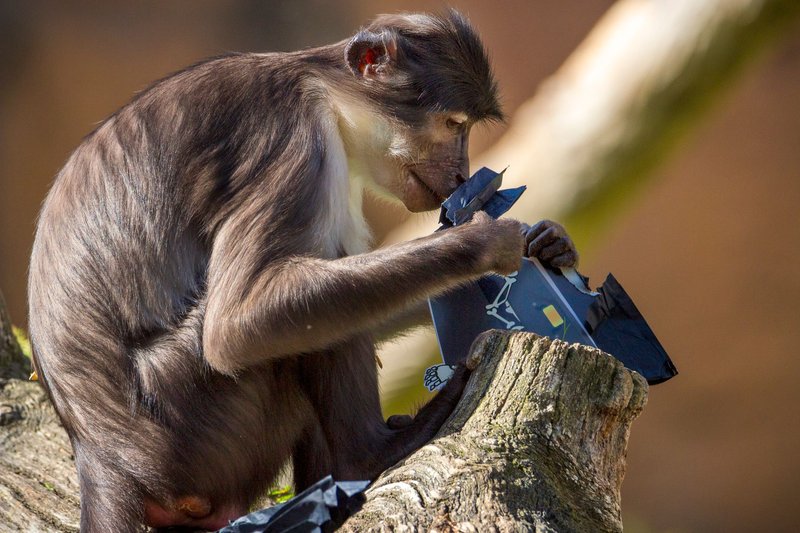
The drill is often confused with its cousin the mandrill, but it’s a distinct species, and the Bioko population (Mandrillus leucophaeus poensis) is its own subspecies found only on this island. Drills travel in large, tight-knit groups — sometimes 200 individuals — moving through the forest floor in a way that makes them easier to hear than see, a rustling wave through the underbrush well before you spot a face.
The species as a whole is Endangered, and Bioko’s drills face the same pressure as the red colobus: market hunting that has continued despite a 2007 ban, with wild-meat surveys across more than two decades logging tens of thousands of primate carcasses moving through island markets.
Bioko Black Colobus
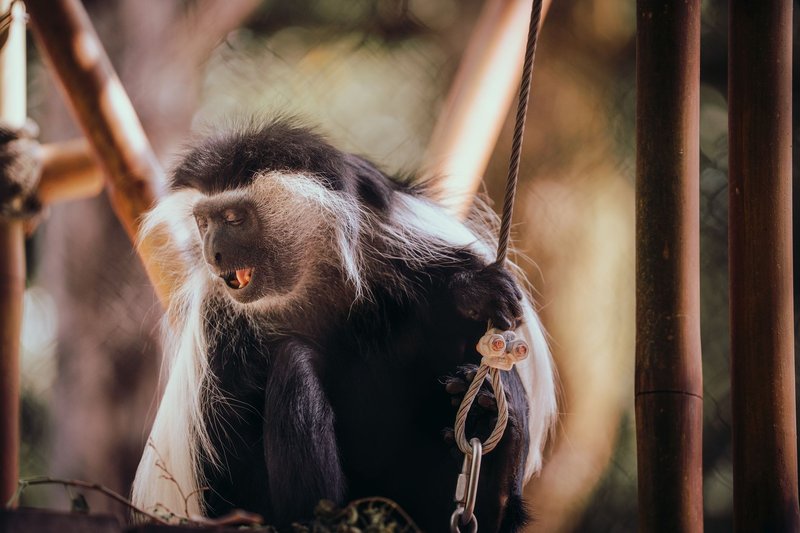
Jet-black, long-limbed, and almost entirely leaf-eating, the black colobus on Bioko shares the same southern forest with the red colobus and the drill — meaning southern Bioko is doing an outsized amount of work for Central African primate conservation in a very small area. It’s one of seven primate species crammed onto an island smaller than Rhode Island.
Unlike the red colobus, black colobus also persists on the African mainland, so Bioko’s population isn’t the last stand for the species globally. But it’s still a population under real hunting pressure, and it’s a reliable sighting for anyone doing a serious walk through the Gran Caldera reserve.
Bioko Red-Eared Guenon
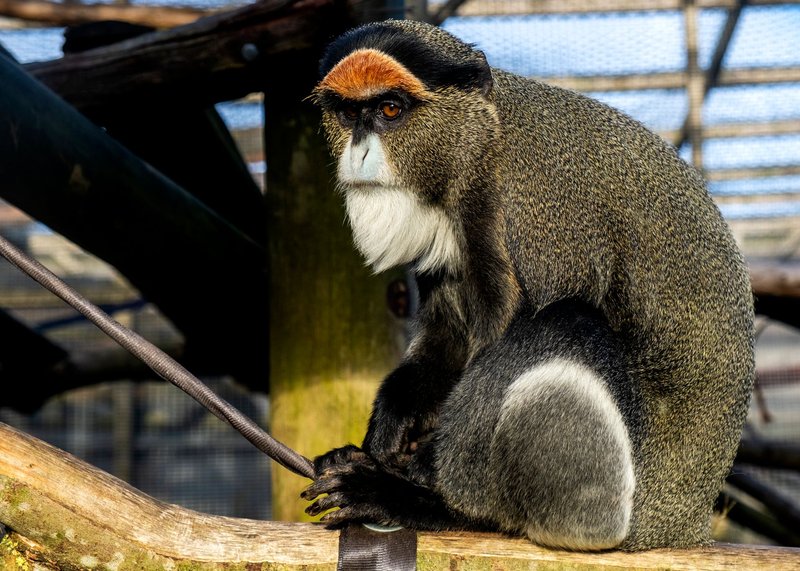
Small, quick, and marked by a rust-colored patch behind each ear, the red-eared guenon splits into two subspecies — one on the Cameroon mainland, one confined to Bioko. The U.S. Fish and Wildlife Service lists the species as vulnerable, citing habitat loss, hunting, and the pet trade as the main pressures.
Guenons are the primate you’re most likely to actually see well on Bioko — they’re more numerous and less shy than the colobus species, and they move in mixed troops with other monkeys, which makes for a livelier show if you’re on a guided forest walk.
Western Lowland Gorilla
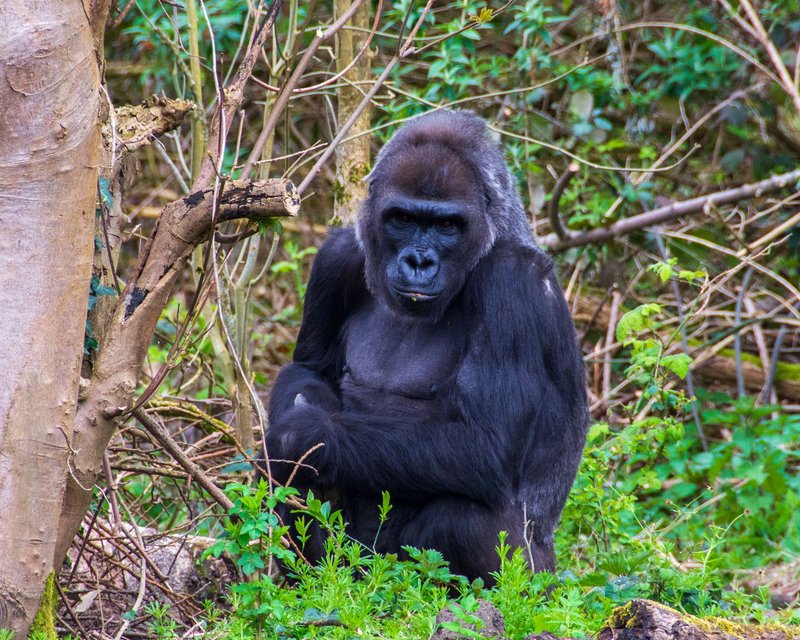
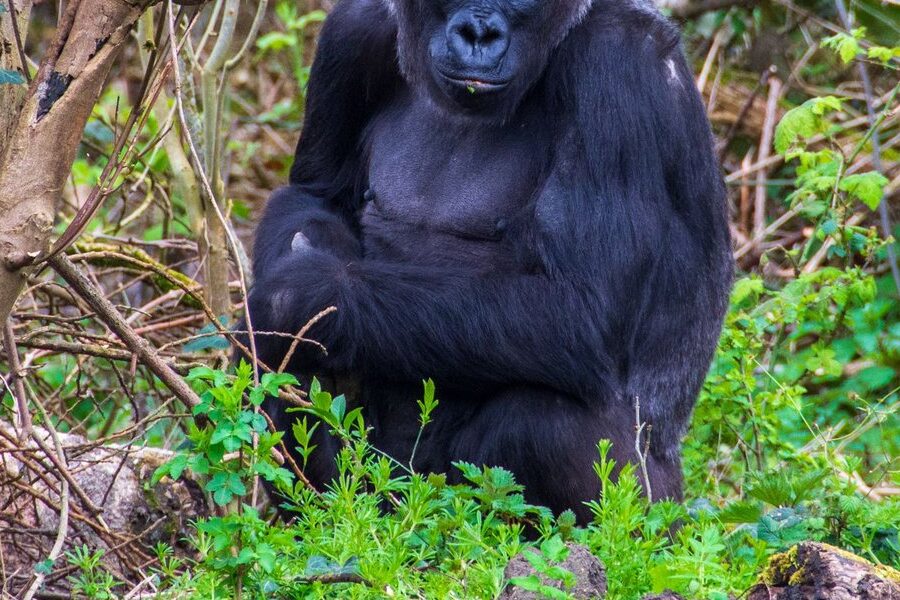
Switch from Bioko to the mainland region of Río Muni and the wildlife changes completely — this is contiguous Central African rainforest, not island forest, and it holds the same megafauna you’d associate with Gabon or the Republic of Congo. Western lowland gorillas survive here in Monte Alén National Park, though in far smaller, harder-to-monitor numbers than their better-studied populations further south.
The subspecies is Critically Endangered across its entire range, driven by a combination of hunting, habitat fragmentation, and Ebola outbreaks that have wiped out entire family groups elsewhere in the region. Monte Alén’s isolation from major research stations means there’s less recent population data here than for gorillas in Gabon’s Lopé or Congo’s Nouabalé-Ndoki — which cuts both ways: less disturbance, but also less protection infrastructure.
Central African Forest Elephant
Smaller than their savanna relatives, with straighter tusks and a build made for pushing through dense understory rather than open plains, forest elephants in Monte Alén represent one of the last mainland populations in a country where elephant numbers have collapsed across the wider region. The species was reclassified as Critically Endangered in 2021 after population surveys revealed decades of undercounting how badly ivory poaching had hit it.
Forest elephants are ecosystem engineers — the seeds they disperse and the trails they carve shape which trees regenerate where. Losing them from a forest doesn’t just mean losing elephants; it changes what grows there afterward.
Mandrill
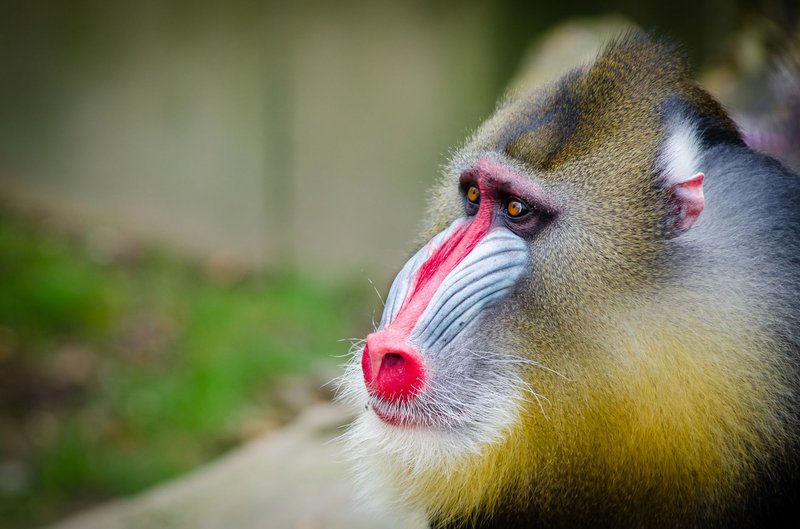
The mandrill is the animal most people picture when they think “colorful African primate,” and Río Muni sits near the edge of its range. Males carry the blue-and-red facial ridges and matching coloring lower down that make them instantly recognizable — a trait that intensifies with social rank, so the most dominant males in a troop are also the most vividly marked.
Mandrills are Vulnerable rather than Critically Endangered, largely because they range across a wider swath of Central Africa than the Bioko-endemic primates on this list. That said, Río Muni’s populations still face the same bushmeat pressure documented across the country’s forests.
Goliath Frog
At up to 3.3 kilograms and a foot long body-length, the goliath frog is the largest frog on Earth, and its entire global range is limited to fast-flowing, clear rivers in southwestern Cameroon and northern Río Muni. Researchers studying the species’ population health have documented it in exactly these river systems — clean, oxygen-rich water near waterfalls, the kind of habitat that disappears fast when rivers get dammed or logged.
The species is listed as Endangered, and its restricted range is precisely the problem: there’s nowhere else for a population to retreat to if a given river system degrades. Local hunting for food adds further pressure in parts of its range.
Leatherback Sea Turtle
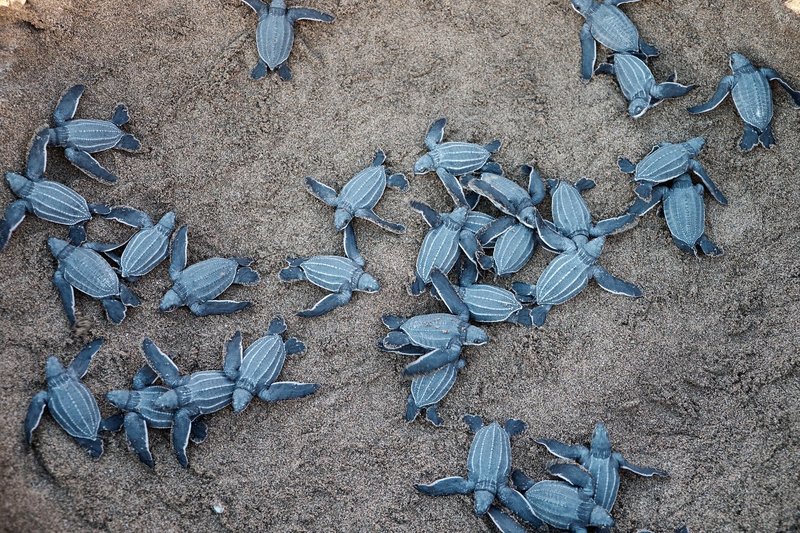
Southern Bioko’s beaches near the village of Ureca rank among West Africa’s most important nesting sites for leatherbacks, with peak nesting running from November through February. Leatherbacks are the largest sea turtles alive, distinguished from every other species by a soft, ridged carapace instead of a hard shell — an adaptation that lets them dive deeper and tolerate colder water than any other turtle.
A long-term biodiversity study of the region documents just how concentrated this nesting activity is on a small number of beaches, which makes the stretch of coast around Ureca disproportionately valuable for the species’ survival in the whole Gulf of Guinea.
Green Sea Turtle
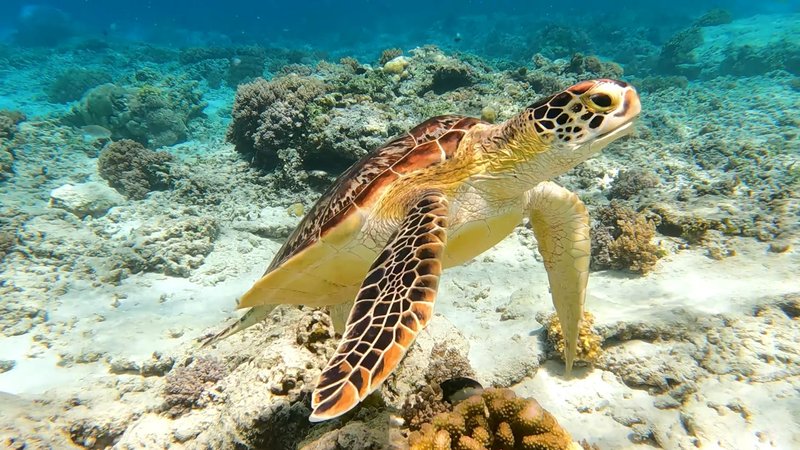
Green turtles nest on the same Ureca beaches as the leatherbacks, though in different numbers and with some seasonal overlap. They’re Endangered globally, and the Bioko population is monitored by the Bioko Biodiversity Protection Program, a joint effort between Equatorial Guinea’s national university and Drexel University that has tracked nesting patterns here for years — one of the more sustained wildlife monitoring efforts anywhere in the country, documented in the program’s own field reporting.
Unlike leatherbacks, green turtles are herbivorous as adults, grazing on seagrass beds — which means healthy nesting numbers here also say something about the condition of the marine habitat around the island, not just the turtles themselves.
Annobón Paradise Flycatcher
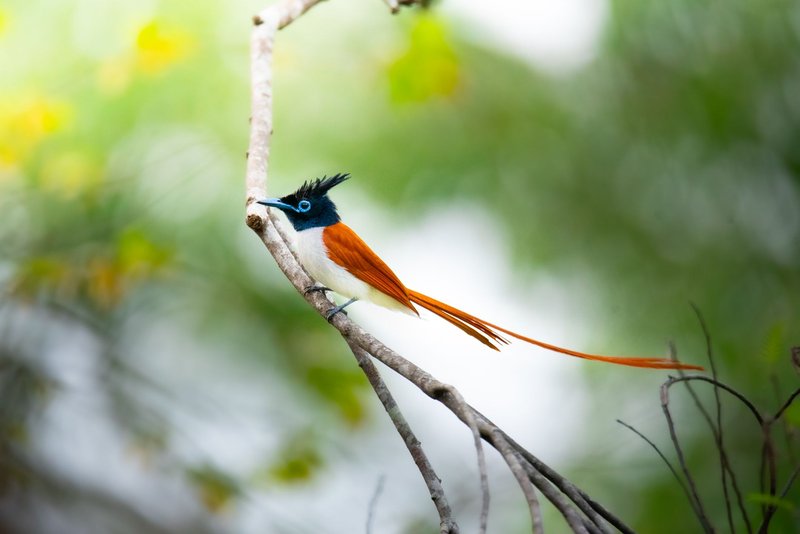
Annobón is Equatorial Guinea’s most isolated territory: a volcanic island roughly 17 square kilometers, sitting 350 kilometers southwest of Bioko in open ocean, closer to São Tomé than to the rest of the country. That isolation has done what island isolation always does — pushed local species down their own evolutionary path until they’re distinct enough to count as separate species entirely.
The Annobón paradise flycatcher is one result: a small, active insect-hunter found on this island and nowhere else. It’s listed as Vulnerable, a status that has less to do with active persecution than with the sheer fragility of having an entire global population confined to a landmass smaller than most city parks.
Annobón White-Eye
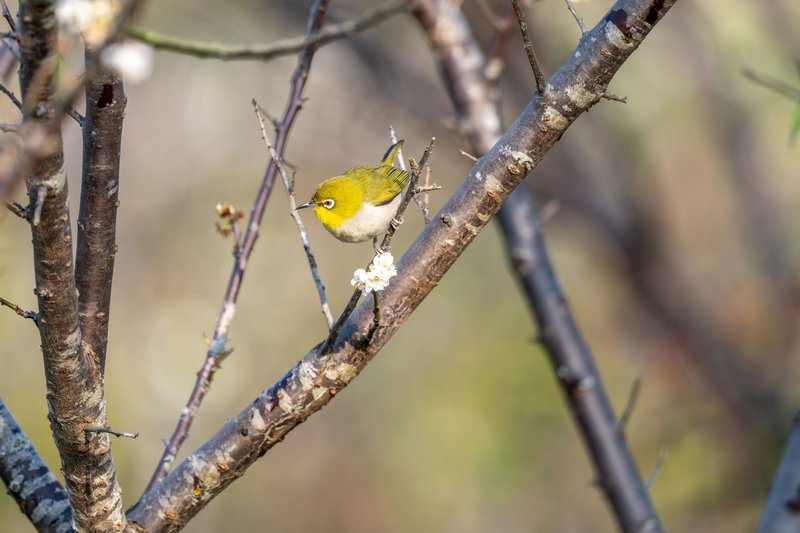
The second Annobón endemic on this list, the white-eye gets its name from the pale ring circling each eye — a feature shared across the white-eye family worldwide, but distinct enough here in plumage and song that it’s classified as its own species rather than a subspecies of a mainland bird.
It isn’t currently rated as threatened, but “not threatened” carries an asterisk when your entire population lives on one 17-square-kilometer island. A single introduced predator, disease, or major storm could do damage that a mainland species could absorb and a species like this one couldn’t.
Seeing Them for Yourself
Equatorial Guinea isn’t set up for casual wildlife tourism the way Rwanda or Kenya are, and that’s exactly the appeal for people willing to do the extra legwork. There’s no walk-in permit system — visits to Bioko’s protected south, Monte Alén, or Annobón typically get arranged through the national university’s conservation programs, a handful of specialist tour operators, or research institutions with existing field presence, and permits should be confirmed well before you book flights.
Timing matters as much as permits. For the turtle nesting beaches around Ureca, November through February is the window, with December and January the peak. For primate viewing on Bioko’s forested south, the dry season (roughly December through February, and again in a shorter window around July–August) makes the trails passable and sightings more likely, since animals aren’t scattered by heavy rain. Annobón is a different logistical challenge altogether — boat or charter access only, and infrequent at that, which is precisely why its endemic birds stay so poorly photographed.
None of this is a weekend trip. But for the kind of traveler who already has Madagascar or the Galápagos checked off, Equatorial Guinea offers something those places no longer can: forests and beaches where the wildlife hasn’t been fully catalogued, let alone crowded with tour groups.