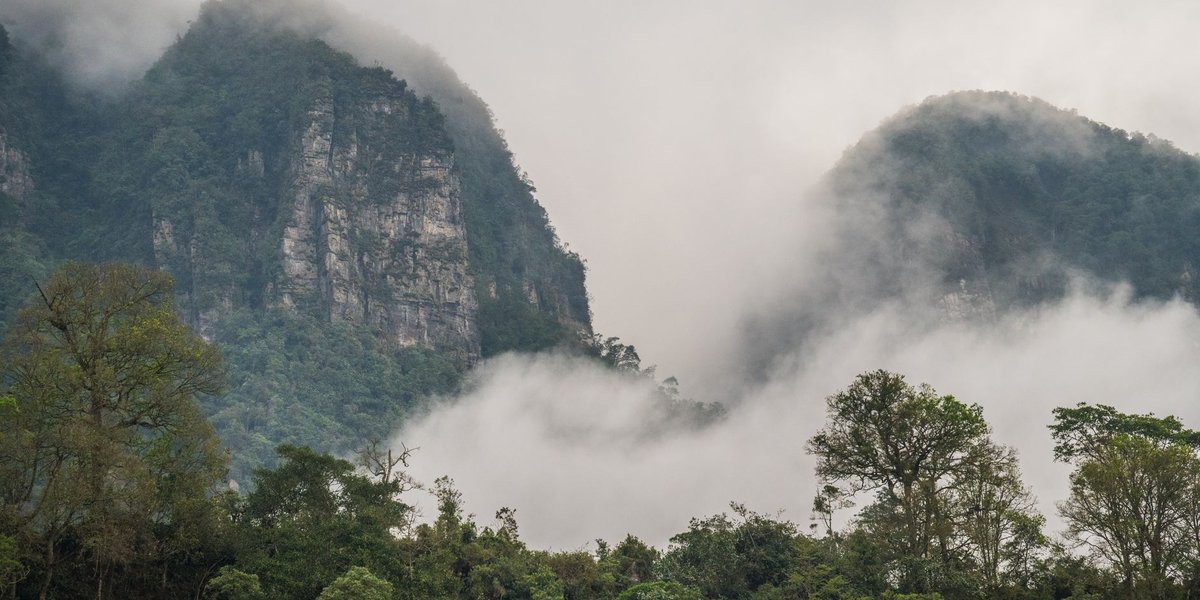
Cameroon’s coast runs into rainforest, and the rainforest runs into a chain of extinct volcanoes that climbs to nearly 4,100 meters at Mount Cameroon before flattening into savanna near Lake Chad. Geologists call that chain the Cameroon Volcanic Line. Each peak along it (Mount Oku, Mount Manengouba, Mount Kupe, the Rumpi Hills) acts like an island, except the water separating them is lowland forest and farmland instead of ocean.
Animals stranded on one of those cool, cloud-wrapped summits for a few million years stop mixing with their relatives on the next mountain over. Give that isolation enough time and you get a rat, a frog, or a bird that exists on a single mountainside and nowhere else on the planet. That’s why Cameroon carries one of the highest concentrations of true endemics in mainland Africa, packed into a handful of highland pockets most travelers never see.
Most “animals in Cameroon” roundups blur this distinction. They’ll list the African elephant, the rock python, or the Cross River gorilla right alongside genuine one-mountain endemics. That’s a stretch — elephants roam a dozen countries, and the Cross River gorilla’s entire world population is split between Cameroon’s Takamanda forest and Nigeria’s Cross River State, so it belongs to both nations, not just one. The 12 species below don’t have that asterisk. Every one of them lives in Cameroon and only in Cameroon.
TLDR
Twelve species confirmed to live only within Cameroon’s borders, drawn from its isolated volcanic highlands and one crater lake:
- Birds: Bannerman’s turaco, Mount Cameroon spurfowl, banded wattle-eye
- Mammals: Mount Oku rat, Eisentraut’s striped mouse, Oku mouse shrew
- Amphibians: Lake Oku clawed frog, Bakossi reed frog, Rumpi reed frog
- Reptiles: Perret’s chameleon, Rumpi four-horned chameleon
- Fish: the Barombi Mbo cichlids
Table of Contents
- Why the Volcanic Line Breeds Endemics
- Birds Found Only in Cameroon
- Mammals Found Only in Cameroon
- Amphibians Found Only in Cameroon
- Reptiles Found Only in Cameroon
- Fish Found Only in Cameroon
- Where to Actually See Them
Why the Volcanic Line Breeds Endemics
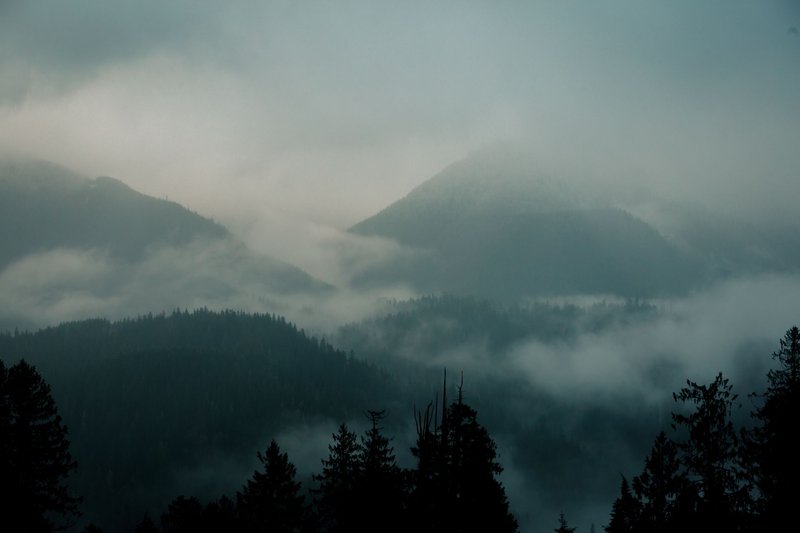
The Cameroon Highlands aren’t a single mountain range so much as a scattered archipelago of montane forest, each summit separated from the next by lowland heat these cool-adapted species can’t tolerate. Mount Oku sits at roughly 3,000 meters, wrapped in cloud forest and heather; the Rumpi Hills, 150 kilometers southwest, top out lower and wetter. A frog that needs Oku’s cold, oxygen-rich streams has no way to cross the intervening lowlands to reach Rumpi’s, and vice versa. Over geological time, that isolation splits one ancestral population into several distinct species.
The pattern shows up across every taxonomic group here — birds, rodents, frogs, chameleons, even fish trapped in a single crater lake. It’s the same mechanism that built Madagascar’s or the Galápagos’ famous endemism, just condensed onto mountaintops instead of ocean islands. The tradeoff is that a species confined to one summit has nowhere to retreat if that summit’s forest gets logged, burned, or converted to farmland. Like other endangered African rainforest animals, nearly every species on this list carries a threatened IUCN status.
Birds Found Only in Cameroon
1. Bannerman’s Turaco
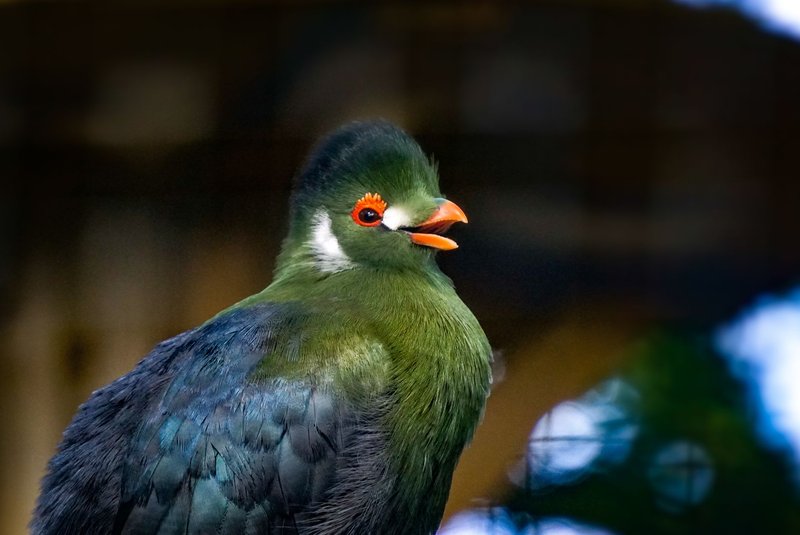
Bannerman’s turaco is a heavyset, crimson-crested bird with slate-green plumage and a wash of maroon under the wings that flashes when it flies — a color combination found on no other turaco. It sticks to the Bamenda Highlands and Mount Oku’s cloud forest between roughly 2,000 and 3,000 meters, feeding on wild figs and montane fruit trees.
The population sits somewhere between 2,500 and 10,000 birds, spread across fragmented forest patches, and BirdLife International tracks it as declining, driven mostly by wildfire and firewood collection rather than direct hunting.
2. Mount Cameroon Spurfowl
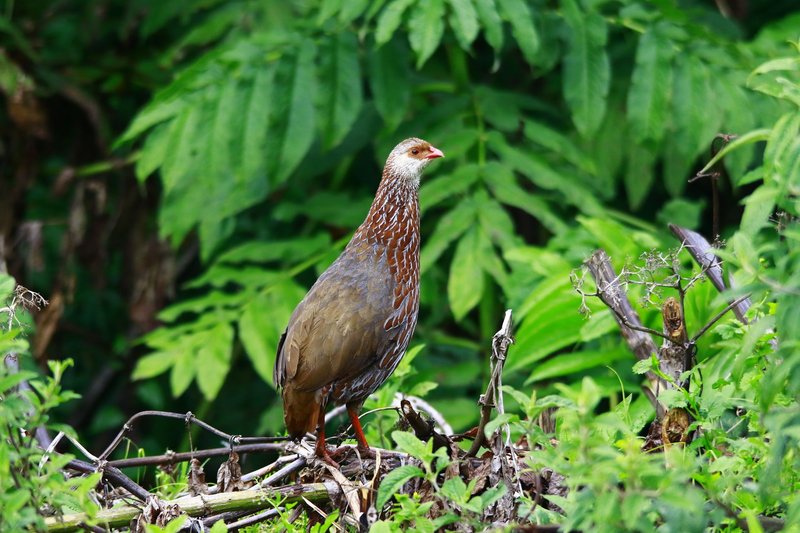
This ground-dwelling game bird lives exclusively on Mount Cameroon’s montane forest slopes, favoring the understory near stands of red stinkwood trees. It’s a heavy, secretive francolin relative — more often heard than seen, giving a harsh, repeated call at dawn from thick cover.
With an estimated 600 to 1,000 mature individuals left, the IUCN lists it as Endangered. Researchers have tied its population directly to the debarking of red stinkwood, harvested commercially for prostate medication — strip the bark for pharmaceutical export, and the bird’s food and cover disappear with it.
3. Banded Wattle-eye
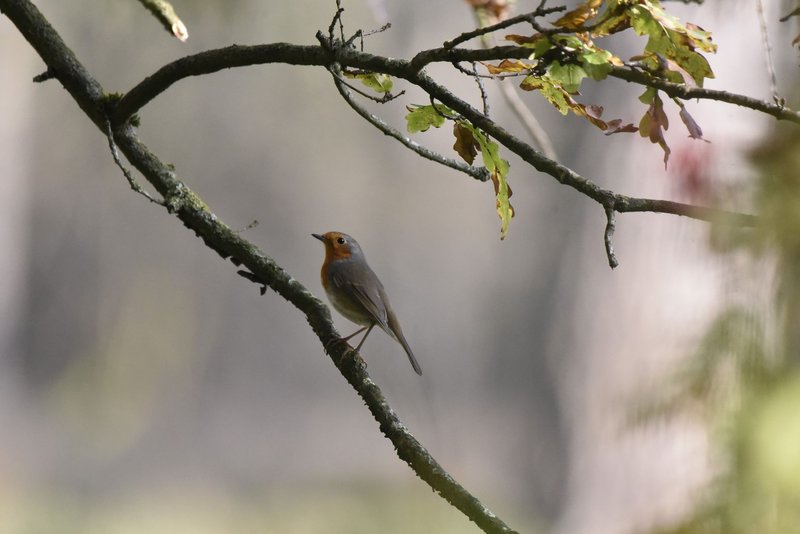
A small flycatcher with a ring of bare red skin around each eye (the “wattle”) set against black-and-white plumage. It occupies the understory of the Bamenda Highlands’ remaining forest fragments, hunting insects low in the canopy where the light is dim and the air stays cool.
The IUCN rates the banded wattle-eye Vulnerable, a status tied almost entirely to how little forest is left in its narrow highland range. Unlike some of Cameroon’s other highland birds, it doesn’t extend even marginally into neighboring Nigeria — its range stops at the edge of the Bamenda block.
Mammals Found Only in Cameroon
4. Mount Oku Rat
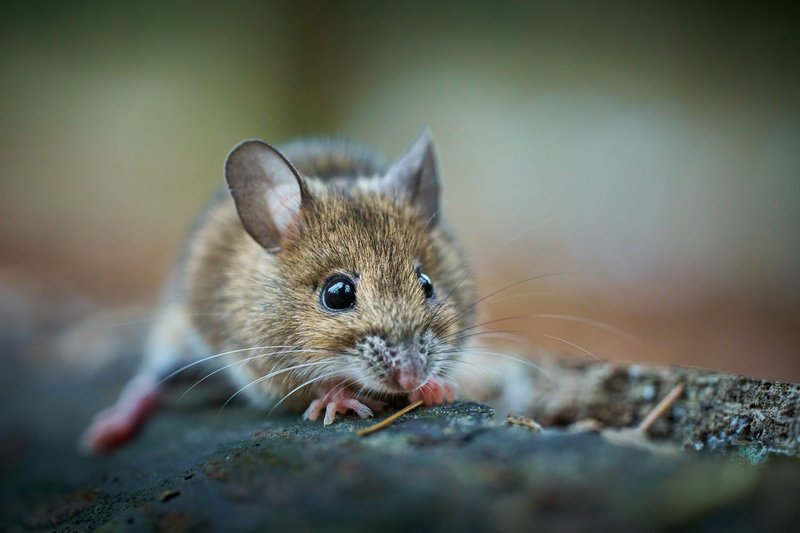
A large, dark-furred rodent known from a single mountain: Mount Oku, in the Bamenda Highlands. It’s the sole member of its genus, Lamottemys, which tells you how long it’s been evolving in isolation — long enough to diverge from every other African rat genus, not just every other species.
It lives in the leaf litter and undergrowth of Oku’s remaining montane forest, a habitat that has shrunk considerably as farmland pushes uphill. Its restricted range and ongoing habitat loss keep it flagged as one of Cameroon’s most at-risk mammals.
5. Eisentraut’s Striped Mouse
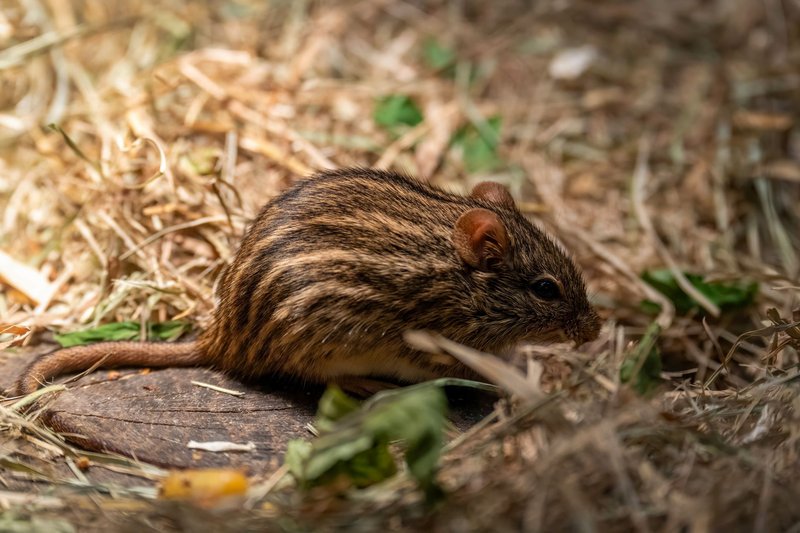
Named for the German zoologist Martin Eisentraut, who spent decades cataloging Cameroon’s highland fauna, this striped rodent is confined to the montane forests of Mount Cameroon and the Oku-Lefo massif. A pale dorsal stripe runs the length of its back, standard for the striped mouse group, but its range is anything but standard — nowhere outside these two forest blocks.
The IUCN lists it as Endangered, with ongoing forest clearance for agriculture the primary threat on both mountains.
6. Oku Mouse Shrew
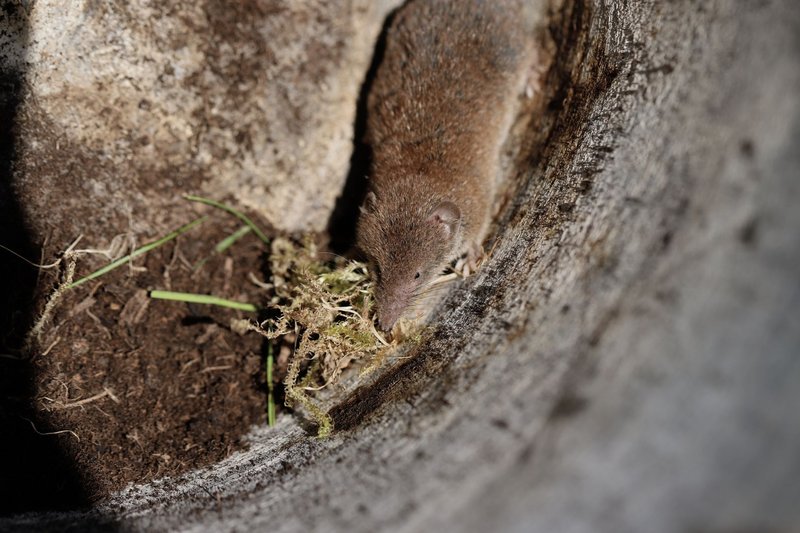
A tiny, sharp-snouted insectivore known only from the montane forest and heath zones around Mount Oku’s summit, above roughly 2,200 meters. It forages through leaf litter for beetles, larvae, and other invertebrates, rarely seen except in targeted small-mammal surveys.
Its known range is smaller than most towns — a single mountain’s upper forest belt — which makes it especially vulnerable to the wildfires that periodically sweep Oku’s grasslands and creep into adjacent forest.
Amphibians Found Only in Cameroon
7. Lake Oku Clawed Frog
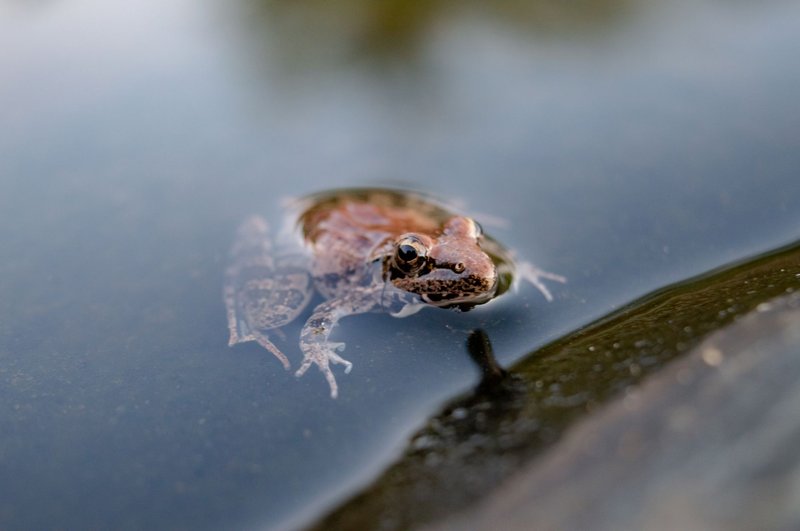
This frog lives in exactly one place on Earth: Lake Oku, a crater lake roughly 2 kilometers across at 2,200 meters elevation. It never leaves the water; even breeding happens aquatically. It has claws on its hind feet for digging through lake-bottom sediment, an adaptation no other frog species in the region shares.
It carries an unusual genetic quirk too: twelve sets of chromosomes, more than almost any other vertebrate. The IUCN rates it Critically Endangered, since a single introduced fish species or disease outbreak in that one lake could end the species outright. London and Cologne zoos now run backup breeding colonies for exactly that reason.
8. Bakossi Reed Frog
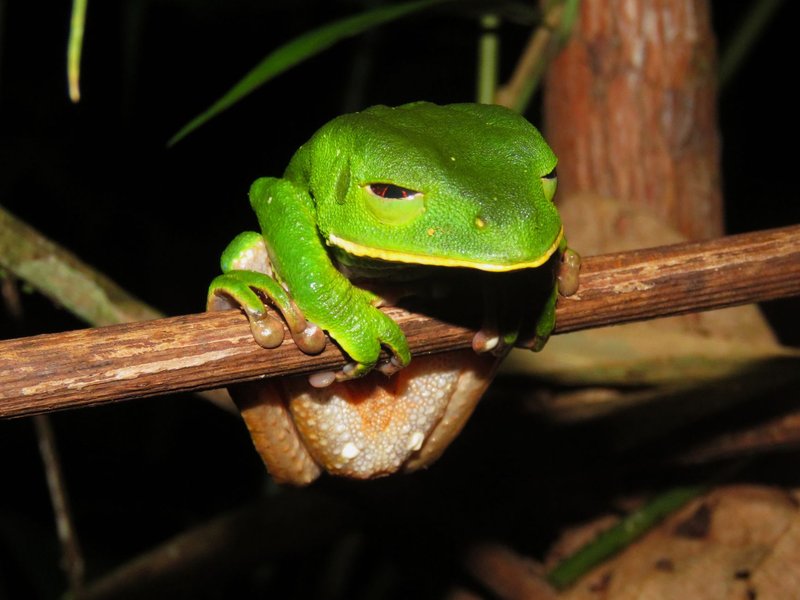
A small, slender reed frog confined to the Bakossi Mountains, Mount Kupe, and the neighboring Edib Hills in southwestern Cameroon. Like most reed frogs, it calls from vegetation at the water’s edge rather than from open water, with a high, insect-like trill that’s easier to hear than the frog itself is to spot.
Its entire known range covers a cluster of forested peaks smaller than many national parks, and ongoing clearance for farmland on the Bakossi slopes puts sustained pressure on the streams it depends on for breeding.
9. Rumpi Reed Frog
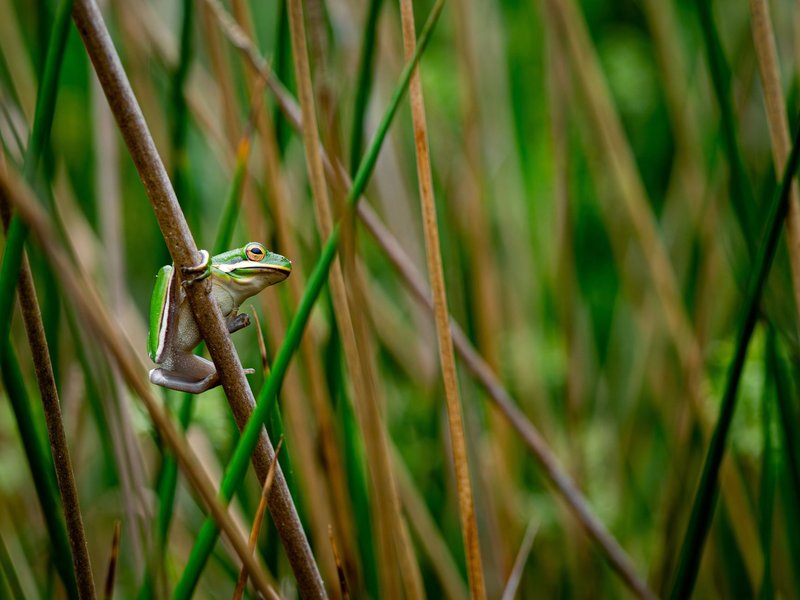
Described from the Rumpi Hills in southwestern Cameroon and known from nowhere else, this reed frog occupies the same kind of montane stream-edge habitat as its Bakossi cousin, just one mountain range over — a textbook case of the volcanic line’s isolation effect working on closely related species in real time.
The Rumpi Hills carry exceptional amphibian and reptile endemism generally, with several frog and chameleon lineages found only there, which is part of why conservation groups have pushed to formalize stronger protection for the reserve in recent years.
Reptiles Found Only in Cameroon
10. Perret’s Chameleon
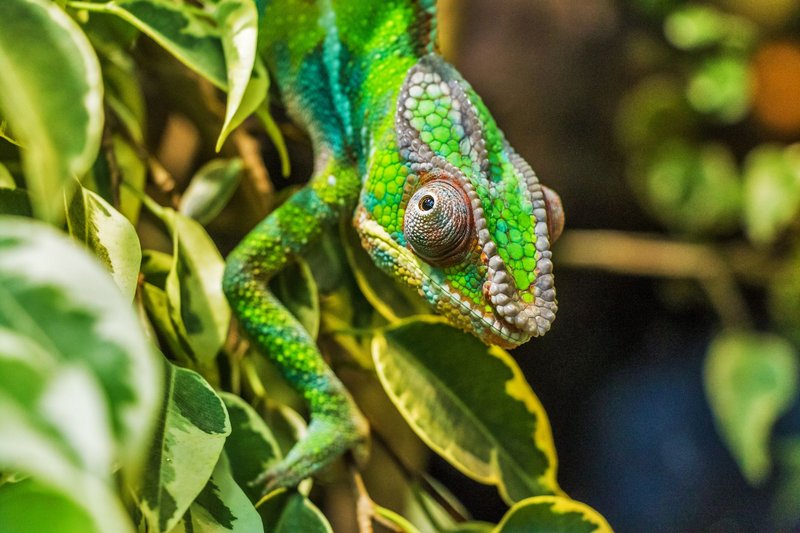
A small, vividly patterned chameleon restricted to a single peak: Mount Manengouba. Males show mottled green-and-brown coloring with a low casque and short nasal projections, camouflage suited to the mossy branches and epiphyte-heavy trees of Manengouba’s cloud forest.
Because its entire known population sits on one mountain, any large-scale disturbance there (fire, clearance, even a bad harvest of forest resources) has an outsized effect on the whole species. It’s one of the more extreme single-mountain endemics on this list.
11. Rumpi Four-Horned Chameleon
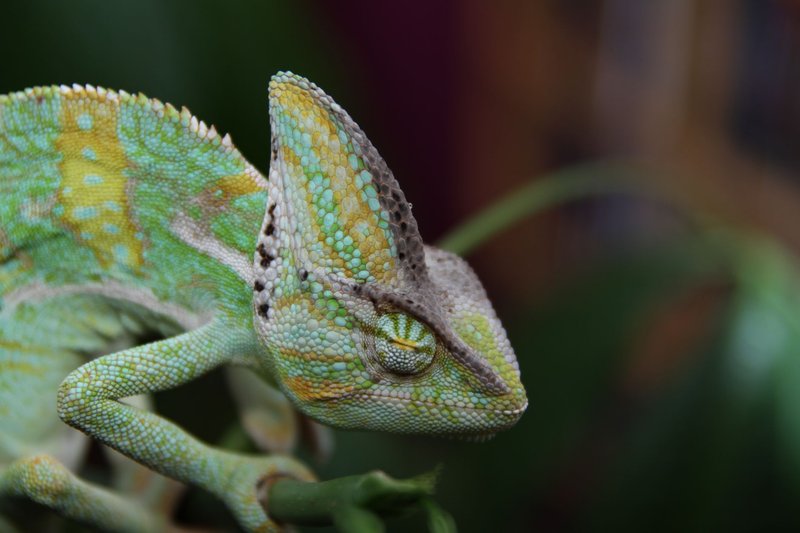
A distinct population of the four-horned chameleon group, found only in the Rumpi Hills and treated as its own subspecies for that reason. Males carry the paired brow horns typical of the group, used in head-to-head shoving contests during territorial disputes rather than defense against predators.
The broader four-horned chameleon species is rated Vulnerable by the IUCN, and the Rumpi population’s narrower range makes it more exposed to local habitat loss than relatives elsewhere on the volcanic line.
Fish Found Only in Cameroon
12. The Barombi Mbo Cichlids
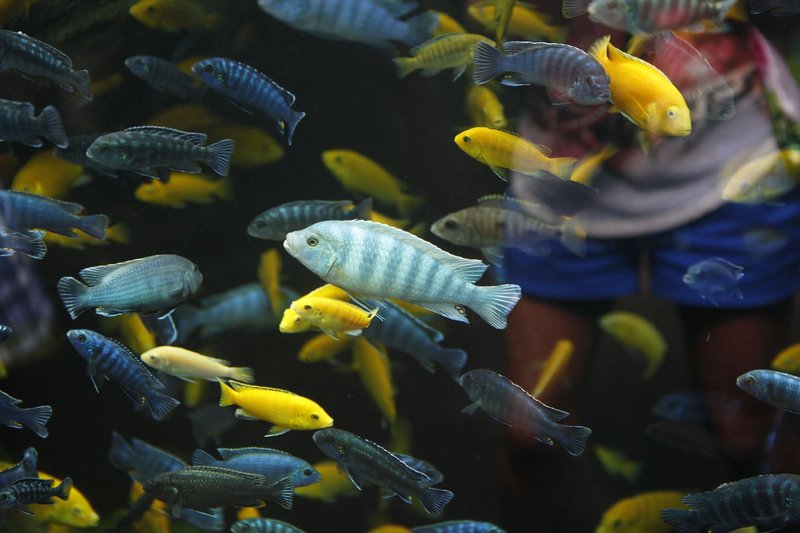
Lake Barombi Mbo, a crater lake near Kumba in southwestern Cameroon, holds eleven cichlid species found nowhere else on Earth — all descended from a single ancestor that colonized the lake roughly a million years ago and then split into distinct forms, each specialized for different food and depths. Konia, Myaka, Pungu, and Stomatepia are all genera that exist only in this one lake.
Stomatepia mongo, the rarest of the eleven, has persisted at low numbers for decades despite growing fishing pressure on the lake. Biologists treat the whole cichlid assemblage as a natural laboratory for watching evolution split one species into many — inside a single lake barely 2.5 kilometers wide.
Where to Actually See Them
Most of these animals require real effort to see, which is part of the appeal if you’re planning a trip rather than reading a list. The Kilum-Ijim Forest Reserve on Mount Oku is the single best stop — it’s the only place on the planet where you can realistically hope to see Bannerman’s turaco, the Mount Oku rat’s habitat, and Lake Oku’s clawed frog in one visit, and community-run guides operate out of the nearby village of Elak-Oku.
Mount Cameroon National Park covers the spurfowl’s entire range and is climbable via guided multi-day treks from Buea. For the reed frogs and Perret’s chameleon, the Bakossi and Manengouba areas see far fewer visitors and require a local guide with herpetological experience — these aren’t roadside sightings. Korup National Park, further west, is the easiest entry point into the Rumpi Hills region’s broader wildlife, even though the deep-forest endemics themselves stay well off the main trails.