Which Guinea? A Quick Clarification
Three countries carry the name: Guinea (capital Conakry), Guinea-Bissau, and Equatorial Guinea. There’s also the Guinea forest region, a belt of rainforest stretching along West and Central Africa. This guide focuses on the Republic of Guinea, and it flags Equatorial Guinea where a famous tree, the ceiba, belongs to its story.
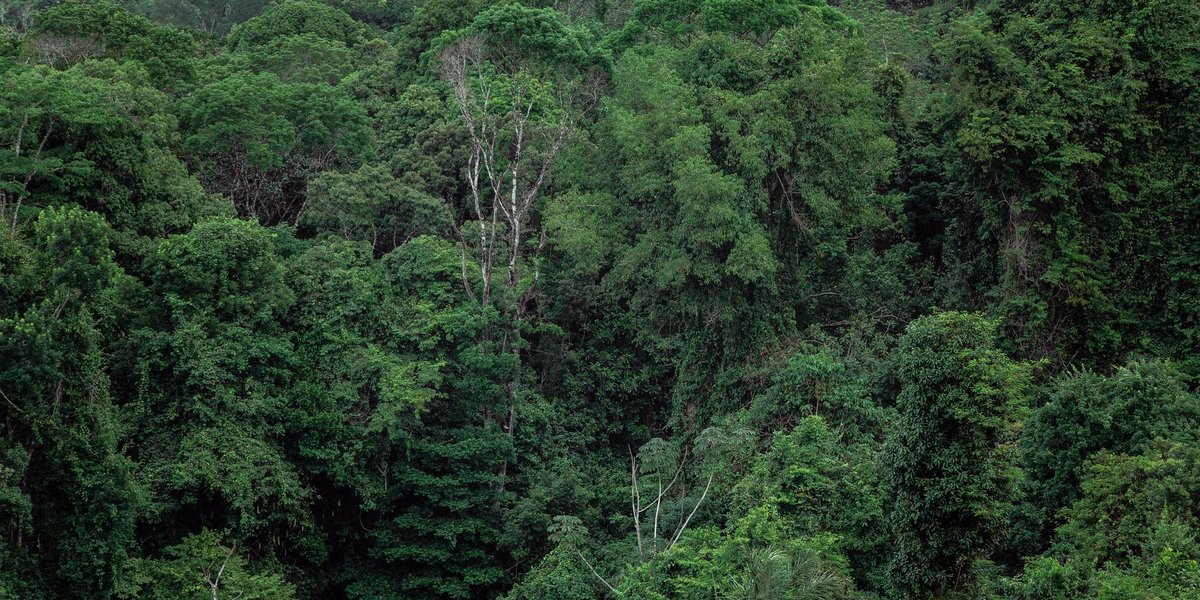
Guinea packs four habitats into a small area: mangrove coast, remnant lowland rainforest, the Fouta Djallon highlands, and wide savanna. The trees below are grouped by those habitats.
Table of Contents
- Coastal Mangroves
- Lowland and Forest Trees
- Savanna and Highland Trees
- Orchard and Village Trees
- Which Trees of Guinea Are Threatened?
- Quick Reference Table
Coastal Mangroves
Guinea’s coast, especially around Boffa and the Rio Pongo estuaries, is lined with mangrove forest. The trees hold mud in place, shelter fish nurseries, and take the hit when storms come off the Atlantic. NGO planting projects near Boffa have put thousands of young mangroves back into cleared mudflats.
1. Red Mangrove (Rhizophora racemosa)
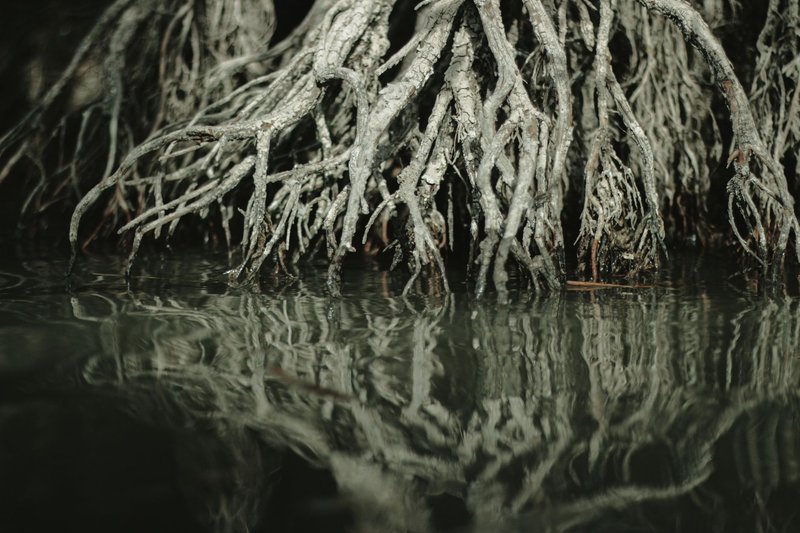
You can spot a red mangrove by its stilt roots, which arch out of the trunk and into the mud like scaffolding. The trees reach 20 to 30 m in sheltered West African estuaries. Their wood is dense and burns hot, which is exactly why villagers cut them for smoking fish and salt production. The bark is also a traditional source of tannins and medicine.
2. Black Mangrove (Avicennia germinans)
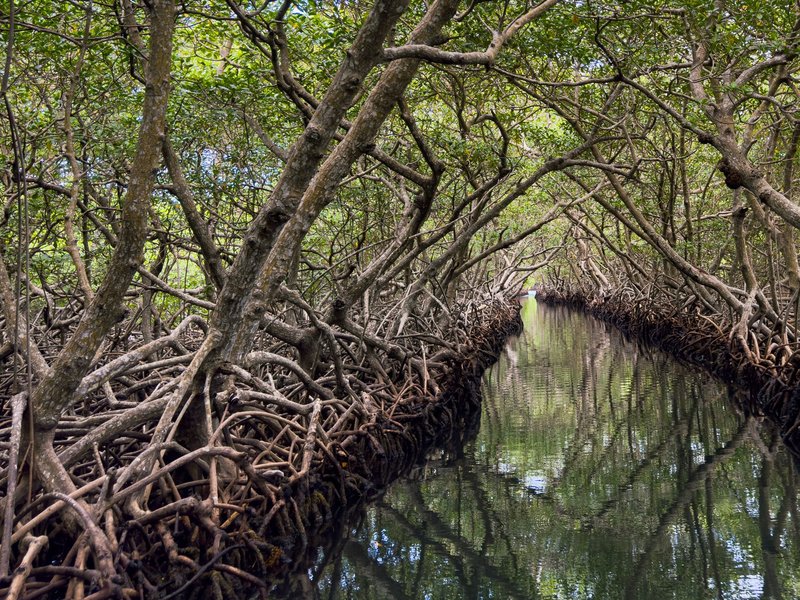
Look at the ground beneath a black mangrove and you’ll see hundreds of pencil-thin roots poking straight up through the mud. They’re breathing tubes called pneumatophores. The species tolerates saltier soil than the red mangrove, so it colonizes the higher, drier edge of the tidal zone. Leaves often show salt crystals, because the tree excretes excess salt through them.
Lowland and Forest Trees
Guinea’s southeast, around the Nzérékoré region and the Ziama and Diécké forests, holds the country’s remaining tracts of moist rainforest. This is the northwestern edge of the Upper Guinean forest.
3. Ceiba (Ceiba pentandra)
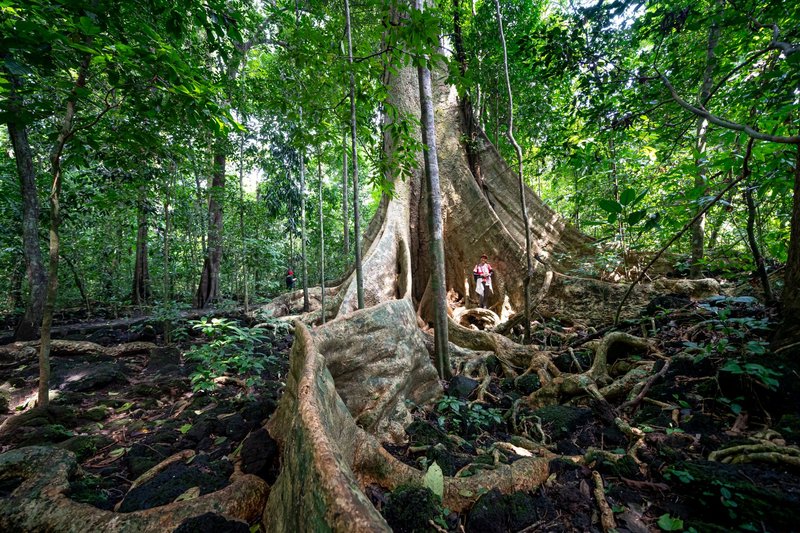
The ceiba, also called kapok or silk-cotton tree, is the emblem of Equatorial Guinea, where it is the national tree. It grows across Guinea’s forests and villages too. Mature specimens can reach around 75 m, with buttress roots wide enough to shelter a person and a crown that towers over the canopy. Seed pods release a silky fiber once used to stuff life jackets and pillows. Many West African communities treat individual ceibas as sacred and leave them standing when land is cleared.
4. Iroko (Milicia excelsa)
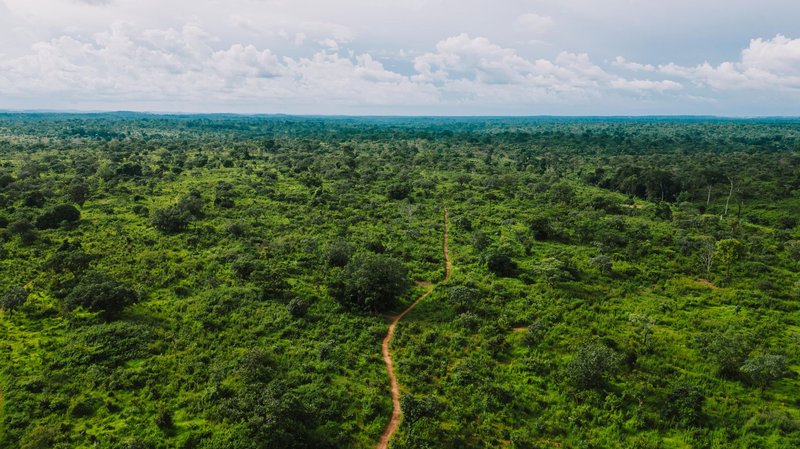
Iroko is a big timber tree, up to 50 m tall with a clear, straight trunk. The wood is golden brown, rot-resistant and often sold as “African teak.” That demand has made it a target: the IUCN Red List classifies iroko as Near Threatened. In many West African traditions, spirits are said to live in old irokos, and cutting one requires ritual.
5. African Mahogany (Khaya senegalensis)
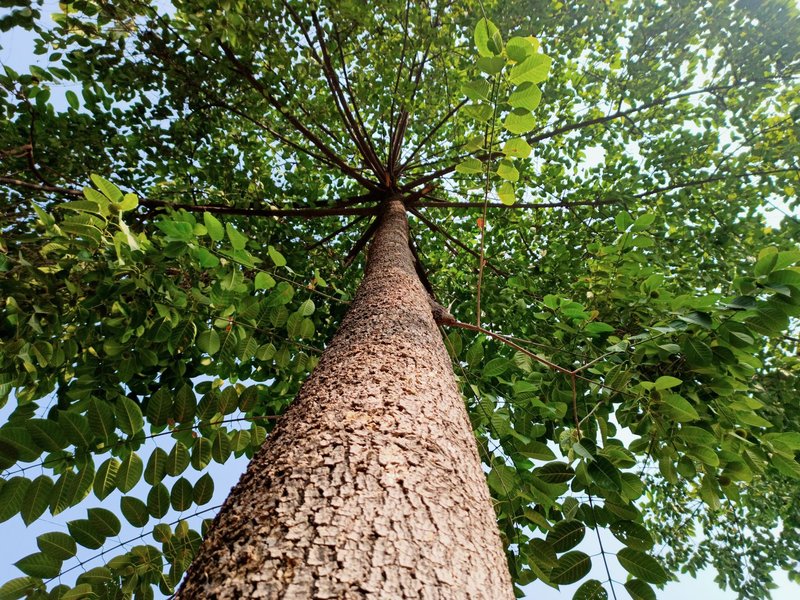
Guinea’s mahogany grows in the drier forest edges and savanna woodland rather than deep rainforest. It reaches about 30 m and has a dense, spreading crown that makes it a common shade tree. Its bark is a widely used traditional remedy for fever and stomach complaints. Heavy logging for furniture wood has pushed the species onto the IUCN’s Vulnerable list.
6. Velvet Tamarind (Dialium guineense)
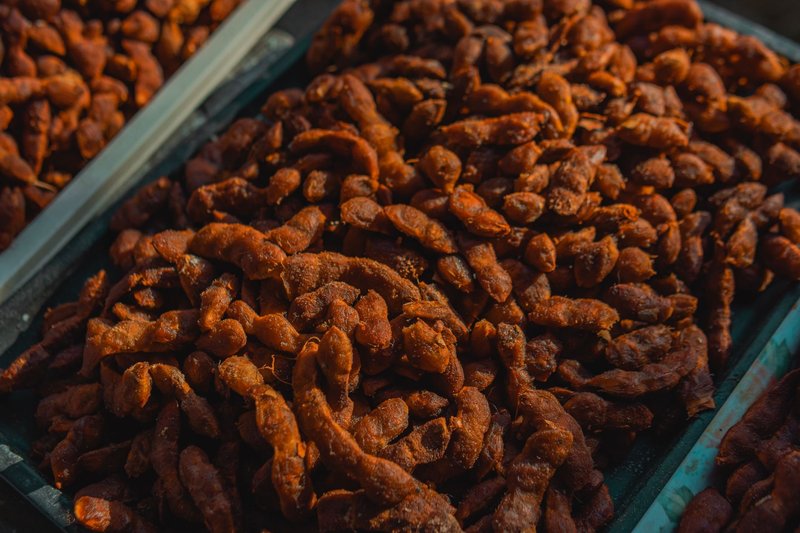
The velvet tamarind is a medium forest tree, usually 20 to 30 m tall, with dark, velvety pods. Crack one open and you’ll find a sweet, tart brown pulp, a bit like a cross between tamarind and lemon candy. Children in West Africa eat it straight off the tree, and the pulp is also used in drinks. The World Agroforestry Centre documents it as a useful species for both food and timber.
Savanna and Highland Trees
The Fouta Djallon plateau in the center-north rises to over 1,000 m and feeds the Niger, Senegal and Gambia rivers. Grassland, gallery forest along streams, and open woodland dominate. North and east of it, Upper Guinea’s savanna belt stretches toward Mali.
7. Shea Tree (Vitellaria paradoxa)
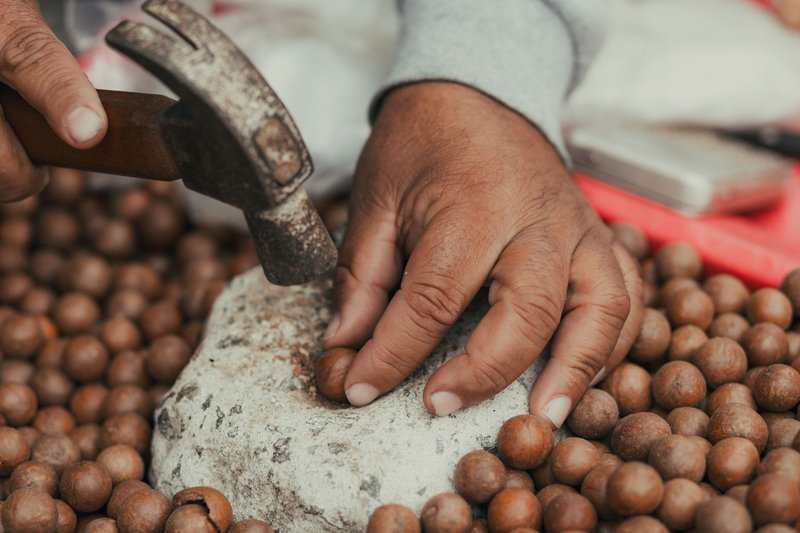
Shea is the tree behind shea butter. It grows wild across Guinea’s savanna belt, reaches about 15 m, and can take 15 to 20 years to start fruiting. It may not fully mature for 50 years. Farmers don’t plant it, they spare it when clearing fields. The nuts are boiled, dried, crushed and kneaded by hand, mostly by women, into a fat used in cooking and skin care. The IUCN Red List lists shea as Vulnerable, mainly because old trees aren’t being replaced.
8. African Locust Bean (Parkia biglobosa)
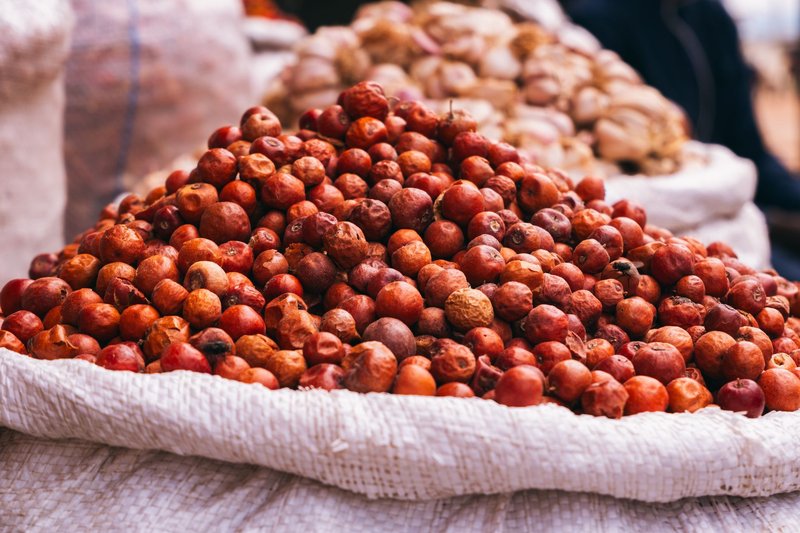
Locally called néré, this tree has a flat, spreading crown and red powder-puff flowers that hang like lanterns. The long pods contain seeds that are fermented into a pungent, protein-rich seasoning that flavors sauces across Guinea. The yellow pulp around the seeds is edible and sweet. Néré seeds are one of the most common flavoring ingredients in West African kitchens, and the tree is often left standing in fields for that reason.
Orchard and Village Trees
9. Oil Palm (Elaeis guineensis)
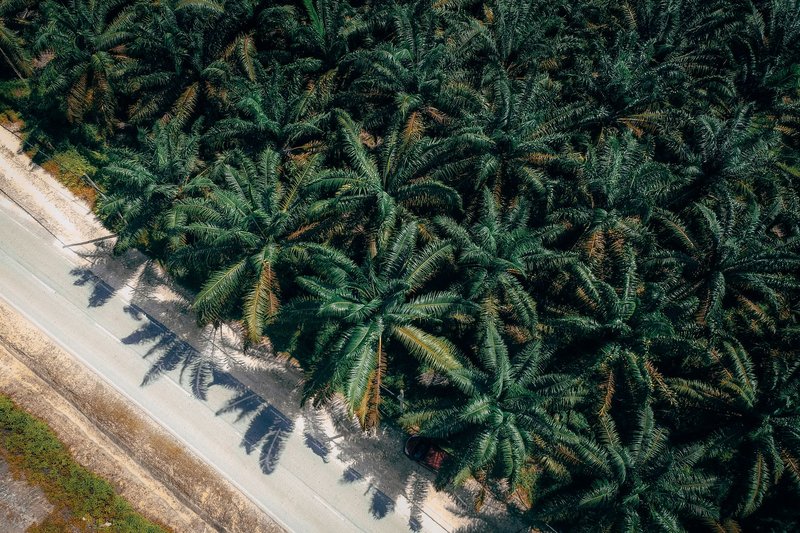
The species name says it all: Elaeis guineensis is native to the Guinea coast region, and the oil palm has been used in West Africa for thousands of years. It reaches 20 m and carries heavy bunches of orange-red fruit. Guinea’s traditional red palm oil is pressed by hand and gives many local dishes their color. The tree also produces palm wine when the trunk is tapped.
10. Mango (Mangifera indica)
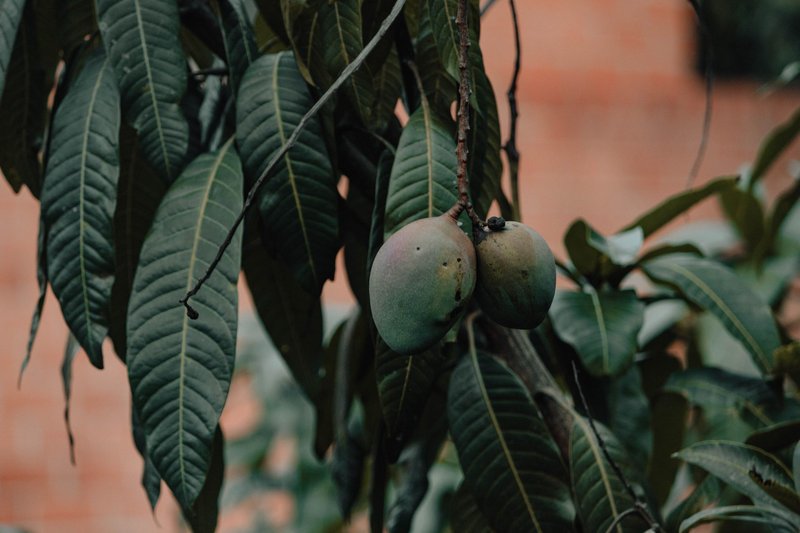
Mango isn’t native. It arrived from South Asia centuries ago, but Guinea’s Basse-Guinée and Kindia area now grows it at scale, and a mango tree shades nearly every village. A mature tree can spread wider than it is tall, at 30 m or so. In the rainy season, the fruit is cheap and everywhere, and it’s exported in small volume across the region.
Which Trees of Guinea Are Threatened?
Guinea is one of the West African countries where forests have shrunk fastest, driven by farmland expansion, charcoal production and logging. Kew botanists worked with Guinean partners on a national conservation action plan for threatened trees that identified priority species and sites for protection.
The pressure falls hardest on timber species like iroko and African mahogany, which are cut faster than they regrow. Shea is threatened by a slower problem: few young trees are surviving under grazing and fire. Mangroves face clearing for rice fields and firewood, which is why replanting projects along the Boffa coast matter.
Quick Reference Table
| Tree | Scientific name | Habitat | Approx. height | Main use |
|---|---|---|---|---|
| Red mangrove | Rhizophora racemosa | Coastal estuaries | 20-30 m | Fuel, tannins, fish nurseries |
| Black mangrove | Avicennia germinans | Upper tidal zone | 10-20 m | Coastal protection, fuel |
| Ceiba | Ceiba pentandra | Rainforest, villages | Up to 75 m | Kapok fiber, sacred tree |
| Iroko | Milicia excelsa | Rainforest | Up to 50 m | Timber |
| African mahogany | Khaya senegalensis | Woodland, savanna edge | About 30 m | Timber, medicine, shade |
| Velvet tamarind | Dialium guineense | Forest | 20-30 m | Edible fruit, timber |
| Shea | Vitellaria paradoxa | Savanna | About 15 m | Shea butter |
| African locust bean | Parkia biglobosa | Savanna, farmland | 15-20 m | Seasoning, food |
| Oil palm | Elaeis guineensis | Coast, lowlands | About 20 m | Palm oil, palm wine |
| Mango | Mangifera indica | Villages, orchards | Up to 30 m | Fruit |
What Ties These Trees Together
Most of the trees of Guinea are working trees. People eat them, cook with them, press oil from them, and treat some as sacred. That is also the case for their survival: the species that farmers spare, like shea and néré, persist, while those valued only for timber are the ones disappearing.