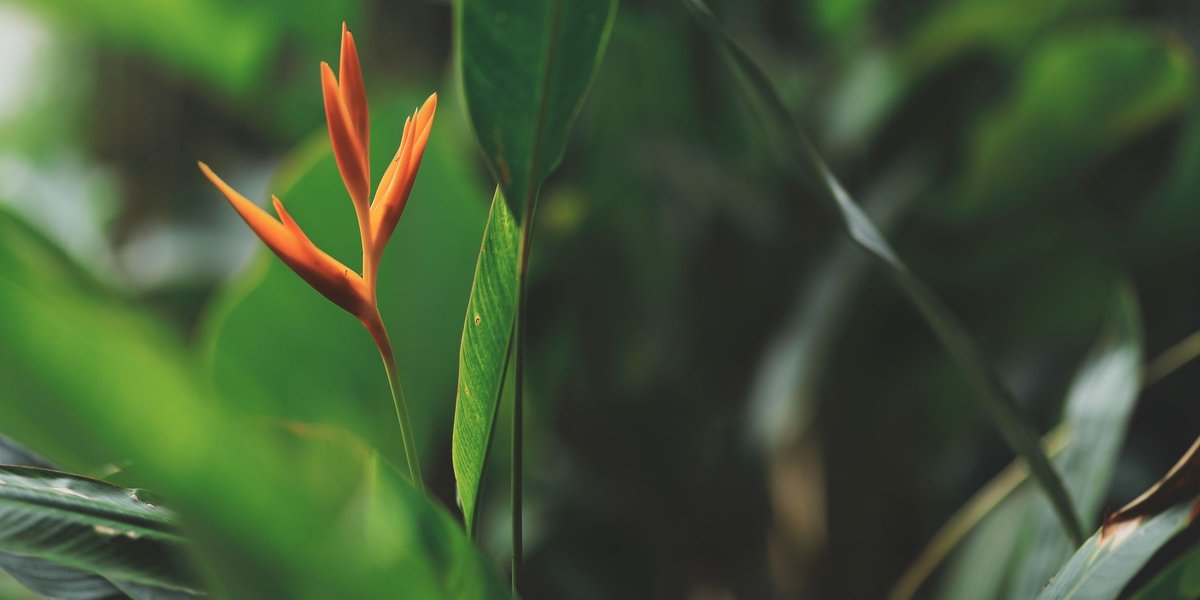
Nauru’s best-known flowers are frangipani (Plumeria), tibouk (Calophyllum inophyllum), Sida fallax, the perfume flower tree (Fagraea berteroana) and Ochrosia elliptica. Most of them grow in the narrow coastal belt that wraps around the island, because the interior was stripped by phosphate mining.
Contents
- The short answer
- Does Nauru have a national flower?
- Why Nauru’s flora is so limited
- Frangipani
- Tibouk
- Sida fallax
- Perfume flower tree
- Ochrosia elliptica
- Other coastal bloomers
- Can you see these plants as a visitor?
- FAQ
The short answer
Nauru is a single raised coral island of about 21 square kilometers, so its flower list is short. The ones people actually mean when they ask about the flowers of Nauru:
- Frangipani (Plumeria obtusa and Plumeria rubra): white and pink blossoms used in garlands.
- Tibouk (Calophyllum inophyllum): the tamanu tree, with small, fragrant white flowers.
- Sida fallax (idibin ekaura): yellow-orange flowers used to scent coconut oil.
- Perfume flower tree (Fagraea berteroana): large cream flowers with a strong scent.
- Ochrosia elliptica: white clusters followed by red fruit, a native of the coastal scrub.
Does Nauru have a national flower?
This is the question most pages dodge, and for good reason. Frangipani is the flower most often named when people talk about Nauru’s floral identity, but I couldn’t find an official government designation backing it. Treat any list that states a “national flower of Nauru” as fact with some caution. What can be said with confidence: frangipani is the flower you’ll see most in Nauruan life, from yards to garlands.
Why Nauru’s flora is so limited
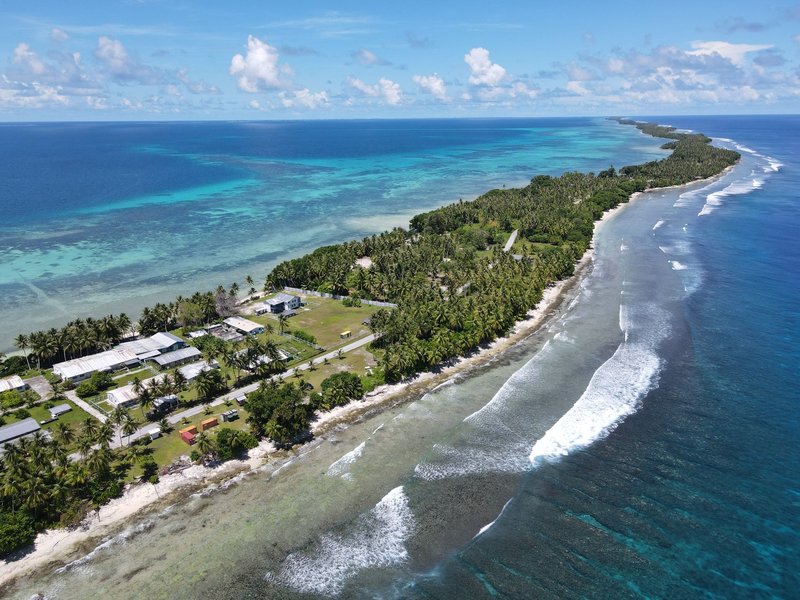
Three things shape what blooms here.
Size and isolation. Nauru sits near the equator, far from any other land, and few plant species made the crossing. Botanical surveys list only a small number of native vascular plants, far fewer than larger Pacific islands carry.
Phosphate mining. The interior plateau, known as Topside, held thick phosphate deposits. A century of mining removed the topsoil and left jagged coral pinnacles across most of the plateau. The original forest there is largely gone.
The coastal belt. The ring of land around the edge, only a few hundred meters wide in places, is where the surviving plants grow. It’s also where nearly everyone lives, which is why the flowers in this guide are as much garden plants as wild ones.
Rehabilitation work on mined land is ongoing, and native and useful species are part of it. Progress is slow because the coral pinnacle terrain has almost no soil to plant in.
Frangipani
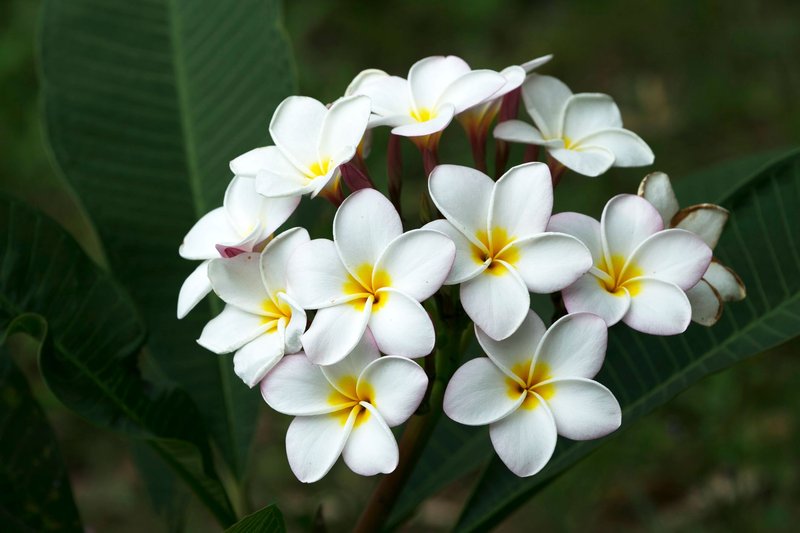
Scientific name: Plumeria obtusa and Plumeria rubra
Frangipani is the flower of Nauru’s yards, churchyards and garlands. The petals fan out in a spiral, white with a yellow throat on P. obtusa and pink to red on P. rubra. Blooms are waxy, thick enough to survive being threaded onto a string.
It flowers through much of the year on a warm island like this, with heaviest bloom in the wetter months. The scent is strongest in the evening. That’s the practical reason frangipani garlands are worn at celebrations: the flowers last for hours without wilting.
Neither species is native. Both came from tropical America and spread across the Pacific through cultivation, which makes frangipani a good example of a plant that feels local because people made it so.
Tibouk
Scientific name: Calophyllum inophyllum
Tibouk is the tamanu tree, found on tropical coastlines from East Africa to Polynesia. It’s a coastal native, and it’s tough: glossy, leathery leaves, a twisting trunk, and salt tolerance that few other trees match.
The flowers are small, white with a yellow center, and held in loose sprays. They smell sweet, and the tree can bloom more than once a year. The round green fruit contains a seed whose oil is used across the Pacific on skin and in traditional medicine. If you only see one tree in Nauru’s coastal belt that looks older than the island’s mining history, it’s probably this one.
Sida fallax
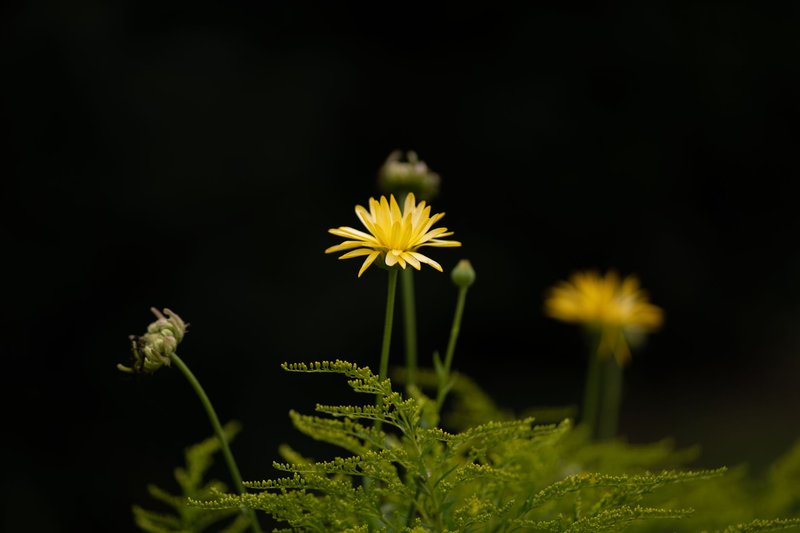
Scientific name: Sida fallax | Nauruan name: idibin ekaura
A low, sprawling shrub with yellow to orange flowers, found on coastal sands and coral rubble across the Pacific, including Hawaii, where it’s called ilima. In Nauru the flowers are used to scent coconut oil. Pick them, steep them in the oil, and the oil carries a light floral smell used on skin and hair.
It’s the least showy plant on this list and arguably the most useful. It grows in places where almost nothing else does, which makes it one of the better candidates for planting on degraded ground.
Perfume flower tree
Scientific name: Fagraea berteroana
The common name tells you its main trait. The flowers are large, cream to white, and trumpet-shaped, and the perfume is noticeable from several steps away, especially at night. Across Pacific islands the flowers are strung into garlands and the wood is used for tools and construction.
On Nauru it grows as a small tree in the remaining coastal and lowland vegetation. If you can smell something sweet and heavy under a tree after dark, check the flowers above you.
Ochrosia elliptica
Scientific name: Ochrosia elliptica
A small coastal tree with glossy leaves, clusters of small white flowers, and pairs of bright red fruit that stand out against the green. The fruit and bark are toxic, so this is a plant to look at, not use. It’s found on rocky shores and coral soils across the Pacific and Australia, which suits Nauru’s terrain.
Other coastal bloomers
A few more plants appear on island plant lists and are worth a mention:
- Hibiscus (Hibiscus tiliaceus and cultivated Hibiscus rosa-sinensis): yellow flowers that turn orange-red by evening, or showy cultivated red blooms in gardens. Which species grows where depends on whether it’s wild or planted.
- Beach naupaka (Scaevola taccada): white fan-shaped flowers on salt-sprayed shorelines.
- Cordia subcordata: a coastal tree with bright orange trumpet flowers.
Check local sources like this comprehensive list of Nauru’s plants before assuming a specific species is present at a specific site, as plant lists for small islands often differ.
Can you see these plants as a visitor?
Yes, though you won’t need a botanical garden. Walk or ride the coastal ring road and you’ll pass frangipani in gardens, tibouk and other trees along the shore, and coastal shrubs at the edge of the beach. Buada Lagoon, the only freshwater lagoon on the island, is ringed with greenery and is the most vegetated area on Nauru.
Topside shows the opposite side of the story: pinnacle fields where mining ended and plants are slowly returning. Both views are part of understanding the island’s plants.
For background on how plant conservation is assessed worldwide, the IUCN Red List tracks the status of threatened species, and Plants of the World Online, run by the Royal Botanic Gardens, Kew, is a reliable place to verify scientific names and native ranges. For basic facts on the island itself, the CIA World Factbook entry for Nauru covers geography and land use.
FAQ
What is the national flower of Nauru? No official designation could be confirmed. Frangipani is the flower most often associated with the country.
What flowers are used in Nauruan garlands? Frangipani and the perfume flower tree are the best-known garland flowers across the region, because their blooms are sturdy and fragrant.
What is idibin ekaura? It’s the Nauruan name for Sida fallax, whose flowers are used to scent coconut oil.
Does Nauru have native wildflowers? A few, mostly coastal plants such as tibouk, Sida fallax and Ochrosia elliptica. The number of native species is small compared with larger Pacific islands.
How did mining affect Nauru’s plants? Phosphate mining removed soil and vegetation from most of the interior plateau. Plants now concentrate on the coastal belt and around Buada Lagoon.