TLDR
Pantropical spotted dolphins eat mostly small fish and squid that live in the deep scattering layer, a band of ocean life that rises toward the surface after dark. Lanternfish are the most common fish in their stomachs and flying squid are the most common cephalopod. They hunt mainly at night.
Contents
- What the research found
- The main prey at a glance
- Why they hunt at night
- A day in the life of a spotted dolphin’s stomach
- How diet shifts by place, season, and age
- How the diet compares to other dolphins
- What threatens the menu
What the research found
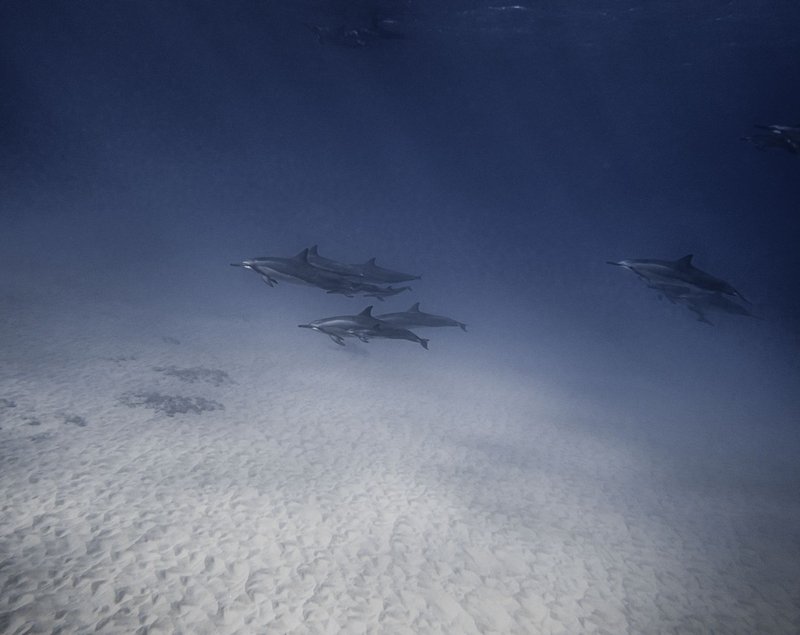
Nobody has watched a pantropical spotted dolphin eat its way through a full night. What we know comes from stomach contents, the unglamorous method marine biologists have used for decades on animals that died in fishing gear or stranded.
The numbers are large. Studies of these dolphins in the eastern tropical Pacific identified 56 fish species and 36 cephalopod species in their diet. That’s a generalist menu, but a lopsided one. A handful of prey groups show up again and again.
Lanternfish (family Myctophidae) are the most frequent fish, turning up in roughly 40% of the dolphins examined. Among cephalopods, flying squid (family Ommastrephidae) lead, at about 65%.
A study of dolphins around Taiwan, published in Zoological Studies, sharpened the picture. Lanternfish and enoploteuthid squid together made up 78.3% of the prey there. The single biggest item was the squid Enoploteuthis chunii, at 25.8%.
The main prey at a glance
| Prey group | Type | What the data show |
|---|---|---|
| Lanternfish (Myctophidae) | Fish | Most frequent fish, about 40% of dolphins |
| Flying squid (Ommastrephidae) | Cephalopod | Most frequent cephalopod, about 65% of dolphins |
| Enoploteuthid squid | Cephalopod | With lanternfish, 78.3% of prey in the Taiwan-area study |
| Enoploteuthis chunii | Cephalopod | Top single prey in that study, 25.8% |
| Other fish | Fish | 56 species identified across studies |
| Other cephalopods | Cephalopod | 36 species identified across studies |
Lanternfish are small, usually finger-length, and covered in light-producing organs. Squid in this group are small too. Nothing on this list is large. A spotted dolphin is a light-bodied animal that makes its living on mouthfuls, not trophies.
Why they hunt at night
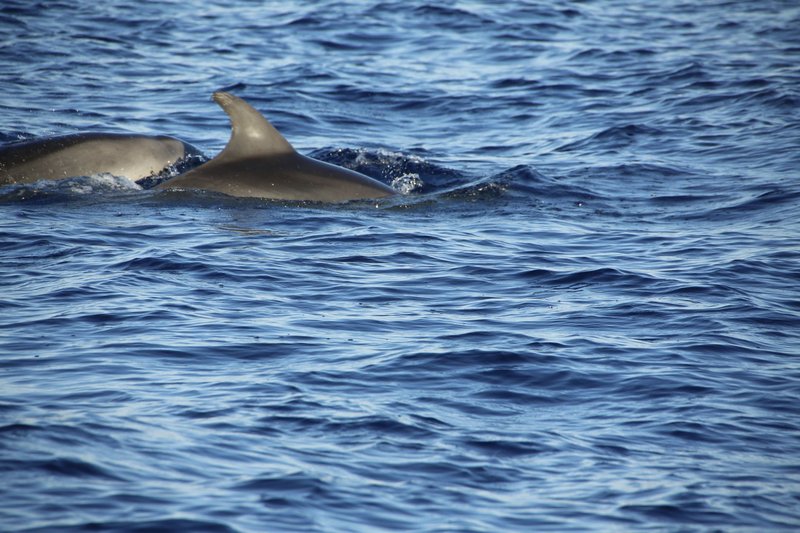
Lanternfish and many of these squid spend the day deep, well below where sunlight reaches. At dusk they swim up toward the surface to feed on plankton, then sink back at dawn. This daily commute is called vertical migration, and the crowded layer of animals making it is the deep scattering layer.
For a dolphin, that’s a delivery service. Prey that sits hundreds of meters down at noon is within diving range after dark. So the dolphins hunt at night, often in the dark, using echolocation to find fish and squid they can’t see.
The evidence sits in their stomachs. Dolphins sampled in the morning tend to have the fullest stomachs, because they’ve been feeding through the night. By afternoon the contents are mostly digested.
A day in the life of a spotted dolphin’s stomach
| Time | What’s happening |
|---|---|
| Dusk | Lanternfish and squid rise toward the surface; dolphins begin to feed |
| Night | Peak hunting, with prey concentrated near the surface |
| Dawn | Prey sinks back down; stomachs are at their fullest |
| Daytime | Dolphins rest, travel, and socialize; stomach contents are mostly digested |
Daytime isn’t idle, though. Spotted dolphins are active animals, and groups often travel and play near the surface. They just aren’t doing most of their eating.
How diet shifts by place, season, and age
The diet isn’t identical everywhere. Fish and squid communities change with ocean region and with the season, and the dolphins eat what’s available. That’s why a Taiwan-area study and an eastern Pacific study can agree on the main players while disagreeing on the percentages.
Life stage matters too. Lactating females eat more squid than other adults. Squid are energy-rich, and a mother producing milk has the highest energy demand in the group. Calves, meanwhile, nurse for a long stretch before shifting to solid food, so their stomachs hold milk before they hold lanternfish.
How the diet compares to other dolphins
The pantropical spotted dolphin is an open-water, deep-prey specialist, and the closest comparison is the spinner dolphin, which also feeds at night on small fish and squid from the same migrating layer. Coastal cetacean species such as the bottlenose dolphin take a wider mix of reef and shallow-water fish.
The International Whaling Commission notes that spotted dolphins range widely in tropical and warm temperate waters, which is part of why their menu is so broad. An animal that crosses open ocean can’t afford to depend on one prey species.
What threatens the menu
Because the prey comes from the deep ocean, it’s hard to fish out directly, but it isn’t untouched. Commercial fisheries targeting squid and small pelagic fish overlap with the places these dolphins feed. Warming water can shift where prey layers sit and how dense they are. A dolphin hunting a layer that has moved farther away spends more energy for the same meal.
The practical takeaway is simple. Spotted dolphins eat small, abundant, deep-living prey, and they time their meals to the night migration. If you see them off Hawaii, in the Gulf of Mexico, or in the Pacific, the best viewing is daytime, when they’re resting and traveling. The feeding happens after you’ve gone to bed.