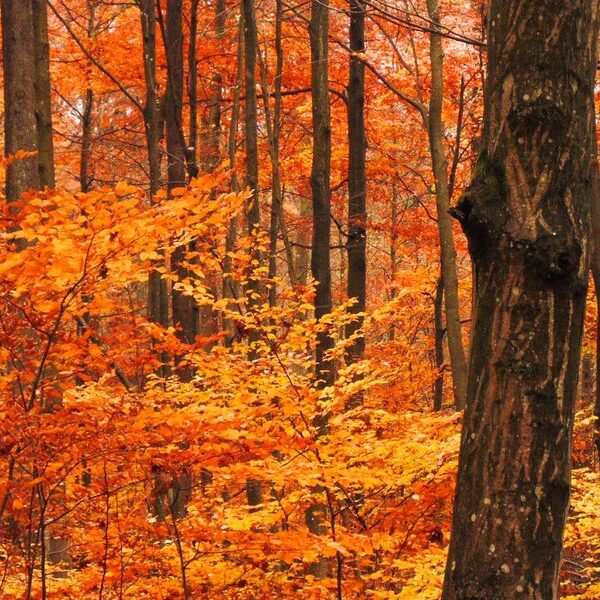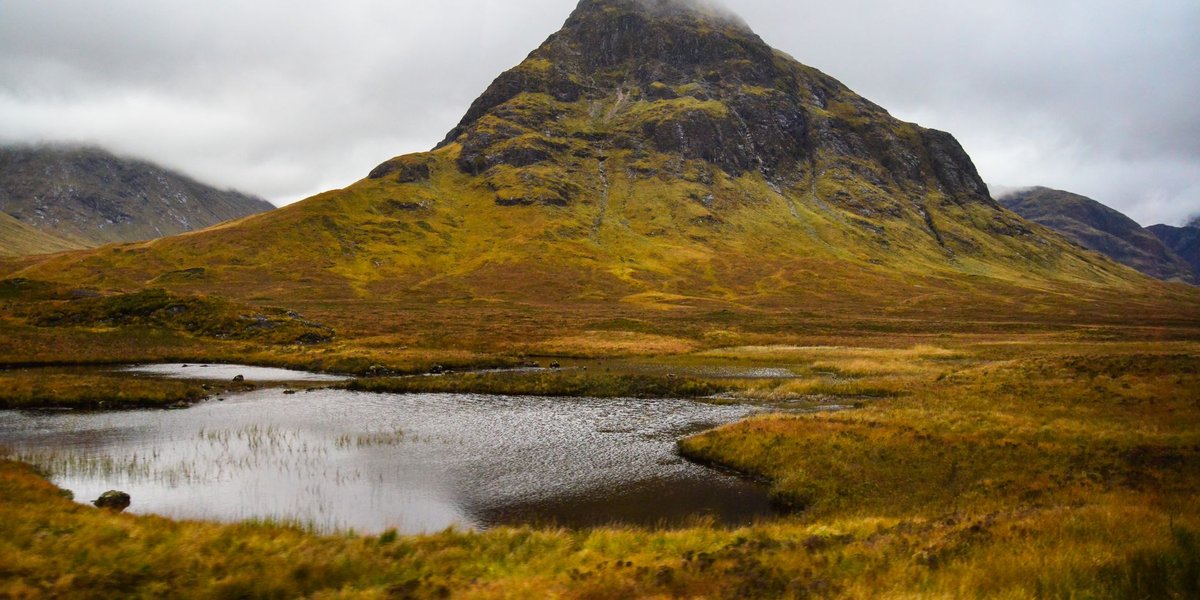
Scotland has roughly 1,600 vascular plants, around 1,000 bryophytes (mosses and liverworts) and about 1,500 lichens. That’s a lot of plant life for a country of cold winters and thin soils, and the reason is geography: mountains, bogs, sea cliffs, sand dunes and ancient forest all sit within a few hours of each other. The easiest way to understand the plants of Scotland is to go habitat by habitat, because each one grows its own cast.
Contents
- Quick reference: the iconic species
- Highland and mountain plants
- Caledonian pinewood
- Heather moorland
- Machair and the coast
- Bogs and lochans
- Woodland and urban plants
- Scotland’s endemic plants
- Folklore and culture
- Native vs. invasive
- Where and when to see them
- Summary
Quick reference: the iconic species
| Plant | Habitat | Best time to see it |
|---|---|---|
| Heather (Calluna vulgaris) | Moorland, pinewood floors | August to September |
| Scottish thistle (Cirsium vulgare or Onopordum acanthium) | Pasture, roadsides, waste ground | July to September |
| Scottish primrose (Primula scotica) | Coastal grassland, north coast and Orkney | May to June, again July to August |
| Bluebell (Hyacinthoides non-scripta) | Broadleaf woods | Late April to May |
| Harebell (Campanula rotundifolia) | Dry grassland, dunes, rock ledges | July to September |
| Bog myrtle (Myrica gale) | Wet heath, bog edges | Leaves April to September |
| Scots pine (Pinus sylvestris) | Caledonian pinewood | Year-round |
| Rowan (Sorbus aucuparia) | Glens, hillsides, gardens | Berries August to October |
Highland and mountain plants
Above the tree line, the Highlands run a different botanical program. Plants here stay low, hug the ground and flower fast, because the growing season at 1,000 metres can be a matter of weeks.
Look for moss campion, a flat green cushion dotted with pink flowers that can take decades to reach the size of a dinner plate. Purple saxifrage flowers early, sometimes while snow is still melting around it. Mountain avens, with its white eight-petalled flowers and curling seed heads, grows on limy rock. Ben Lawers in Perthshire is the classic site for it because its mica-schist rock is richer in minerals than most Scottish hills.
Then there’s the tiny twinflower, Linnaea borealis, a creeping evergreen with paired pink bells that nod on a single thread-thin stalk. It was the favourite plant of Carl Linnaeus, who named it after himself. You’ll find it in old pine and birch woods, usually in July.
Caledonian pinewood
The Caledonian Forest once covered much of the Highlands. What’s left is a small fraction of it, scattered in fragments such as Glen Affric, Abernethy and Rothiemurchus. The tree that defines it is the Scots pine, Britain’s only native pine, recognisable by its orange-pink upper bark and flat-topped crown on older trees.
The understorey matters as much as the canopy. Juniper grows in thickets, blaeberry (bilberry) carpets the floor, and in the shade you’ll find creeping lady’s-tresses, a small orchid, and the rare one-flowered wintergreen. Thick moss layers and lichens drape the older trunks. Walk in on a damp day and the whole place smells of resin and wet peat.
Heather moorland
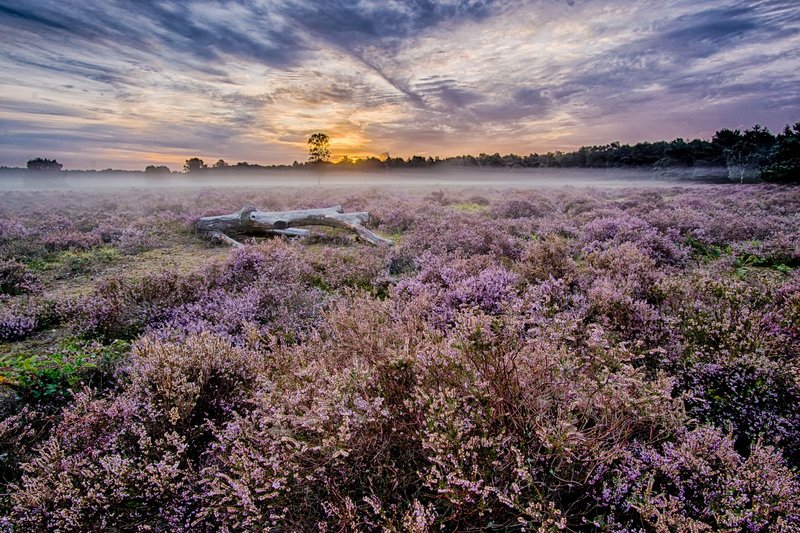
Heather is the plant most people picture when they think of Scotland, and it earns the reputation. Ling heather (Calluna vulgaris) blooms from August into September and turns hillsides purple. Bell heather, which flowers earlier, in July, has deeper magenta bells and prefers drier slopes. Cross-leaved heath, a paler pink, grows in the wetter patches.
Moorland isn’t wild in the strict sense. Most of it is maintained by grazing and rotational burning to feed red grouse, which eat young heather shoots. Without management, birch and pine would creep back in. So the purple hills are, in part, a working landscape.
Machair and the coast
Machair is a Gaelic word for a low-lying grassy plain formed on shell-sand, and it’s found almost only on the Atlantic edges of Scotland and Ireland, with the best examples in the Outer Hebrides. The sand is rich in lime from crushed shells, so it supports a flower meadow that looks closer to southern Europe than to the rest of the Highlands.
In June and July, machair turns into a patchwork of yellow, white, pink and blue: bird’s-foot trefoil, red clover, daisies, eyebright, orchids, silverweed, and wild pansy. Traditional crofting rotates crops and grazing across it, and that pattern keeps it diverse. Hebridean visitors in midsummer often walk straight off a beach into what feels like a hay meadow.
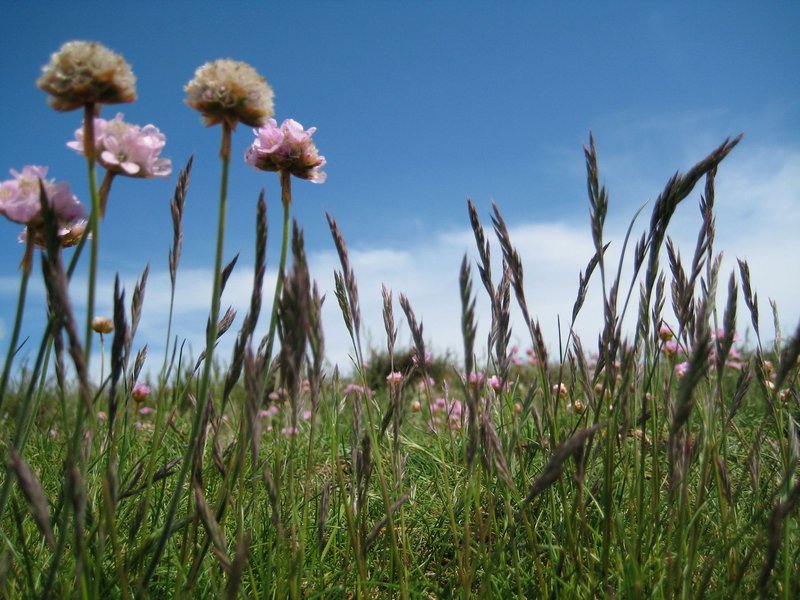
On the cliffs and rocky shores, you’ll meet thrift (sea pink), sea campion, scurvy-grass and, in the far north, roseroot. The Scottish primrose lives here too, which brings us to the rarities below.
Bogs and lochans
Peatland covers a large share of Scotland, with the Flow Country of Caithness and Sutherland one of the largest blanket bogs in the world. Its star is Sphagnum, the bog moss, which holds many times its own weight in water and builds peat over thousands of years.
Walk the edge and watch for:
- Round-leaved sundew, a carnivorous plant with sticky red hairs that trap midges.
- Butterwort, with greasy yellow-green leaves and violet flowers on slim stalks.
- Cotton grass, whose white tufts blow like small flags in June.
- Bog asphodel, yellow spikes that turn orange as seed forms.
- Cloudberry, a low plant of high wet moor with amber fruit in late summer.
Bog myrtle (sweet gale) grows along the bog edges. Its crushed leaves smell resinous and sharp, and the plant has an old reputation as a midge repellent. Rub a handful on your skin and you’ll get a pleasant smell, whether or not it keeps off the clouds.
Woodland and urban plants
Lowland Scotland has temperate woodland built from native trees such as oak, ash, birch, hazel, alder and rowan, and the best of it in the west gets so much rain that ferns, mosses and liverworts cover every surface. Scientists call these Atlantic woods “temperate rainforest”. Their moss and lichen collections are of international importance.
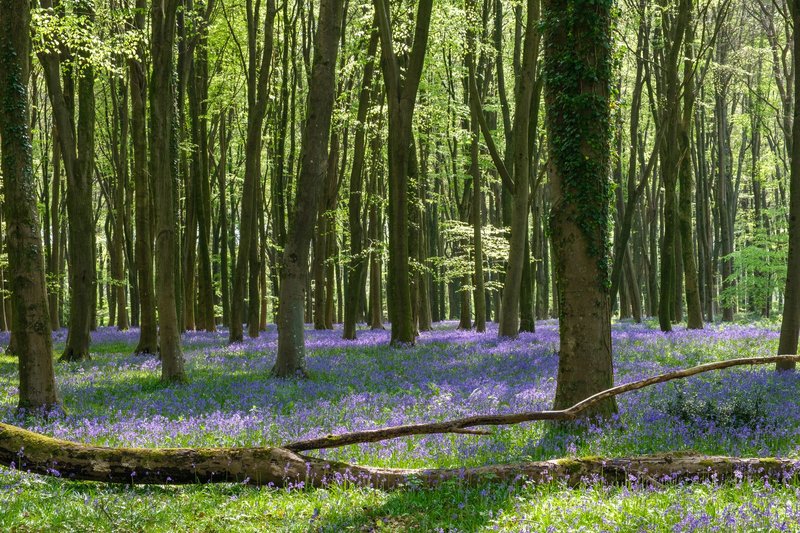
In spring, the woodland floor flushes with wood anemone, primrose, wild garlic (ramsons) and, from late April, bluebells. Scots call the native bluebell the wild hyacinth, while in Scotland “bluebell” often means the harebell, the thin-stalked blue flower of summer grassland. Same word, two plants. Context decides.
Cities have their own lists, too. Rosebay willowherb colonises railway cuttings and waste ground in July, and buddleia, though introduced, clings to brickwork. Edinburgh’s Arthur’s Seat, an old volcano within the city limits, supports rare grassland plants within a short walk of the Royal Mile. Edinburgh also hosts the Royal Botanic Garden Edinburgh, one of the world’s major botanical research centres.
Scotland’s endemic plants
Few plants live nowhere else on Earth, and the Scottish ones are worth knowing by name.
- Arran whitebeams. Sorbus arranensis and Sorbus pseudofennica grow wild only on the Isle of Arran, in the glens of the north. They’re among the rarest trees in the world, with only a few hundred of one of them left in the wild, and conservation groups have planted seedlings to protect them.
- Scottish primrose. Primula scotica is a tiny purple-pink primrose with a yellow eye, found only on the north coast of mainland Scotland and in Orkney. It flowers twice, in May and June and again in late summer.
- Shetland mouse-ear. Cerastium nigrescens is a small white-flowered plant found at the Keen of Hamar on Unst, on serpentine rock with unusual chemistry that few other plants tolerate.
Strictly, some of these are “near-endemic” or restricted to Britain, depending on the taxonomy used. What matters for a visitor is that none of them is easy to find, and none should be picked or dug up. NatureScot is the government body responsible for protecting Scotland’s flowering plants, and it lists the legal protections.
Folklore and culture
Scotland’s national flower is the thistle, though botanists argue about which one. Candidates include the spear thistle, the cotton thistle and the musk thistle. The legend says a barefoot Norse raider stepped on one and yelped, alerting sleeping Scots. History says the thistle was on Scottish coins by the late 15th century.
The Fortingall Yew in Perthshire is said to be between 2,000 and 3,000 years old, which would make it one of the oldest living things in Britain. Its age is hard to confirm because the heartwood has decayed, so most estimates are guesses. Pontius Pilate is said, with little evidence, to have played there as a child.
Gorse and heather have practical histories as well. Gorse provided fuel and its flowers smell like coconut on warm days. Heather was used for thatch, rope, bedding and dye, and brewed into ale. Scottish botanist Mark Elliot, in the Flora Celtica tradition, documented many such uses.
Native vs. invasive
Not everything purple or bright in Scotland belongs there.
| Plant | Status | Problem |
|---|---|---|
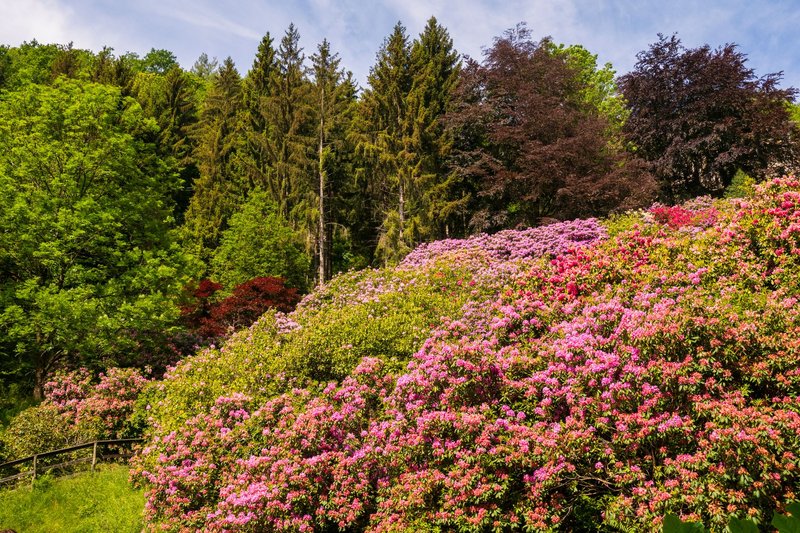
| Rhododendron ponticum | Invasive, introduced from Iberia | Shades out native woodland floor, poisons soil for others |
| Giant hogweed | Invasive, from the Caucasus | Sap causes burns on skin in sunlight |
| Japanese knotweed | Invasive, from East Asia | Damages riverbanks and building foundations |
| Himalayan balsam | Invasive, from the Himalaya | Takes over riverbanks, then leaves them bare in winter |
Rhododendron is the one you notice in western glens: dense, dark and nearly empty beneath. Removing it is a major woodland restoration job.
Where and when to see them
- April to May: bluebell woods, wood anemones and the first Scottish primroses in the north.
- June to July: machair in the Hebrides, twinflower in pinewoods, cotton grass on the bogs.
- August to September: heather in full bloom, harebells, rowan berries.
- Year-round: Scots pine and juniper in Cairngorms forests; the fragments at Glen Affric.
For mountain plants, Ben Lawers is the reliable choice. For machair, aim for South Uist, Benbecula or Tiree. For endemics, visit Arran’s glens or the Keen of Hamar, but keep to paths.
Summary
The plants of Scotland divide cleanly by habitat: low cushions on the mountains, pine and juniper in the Caledonian remnants, heather across the moors, flower meadows on the machair, sundews and sphagnum in the bogs, and moss-draped Atlantic woods in the west. A handful of species, from the Arran whitebeams to the Scottish primrose, grow almost nowhere else. Learn the habitats first and the species follow, and time your trip to the month, since a plant that’s invisible in March can be the best thing on the hill in July. Take photos, leave the flowers, and report invasive species when you see them.