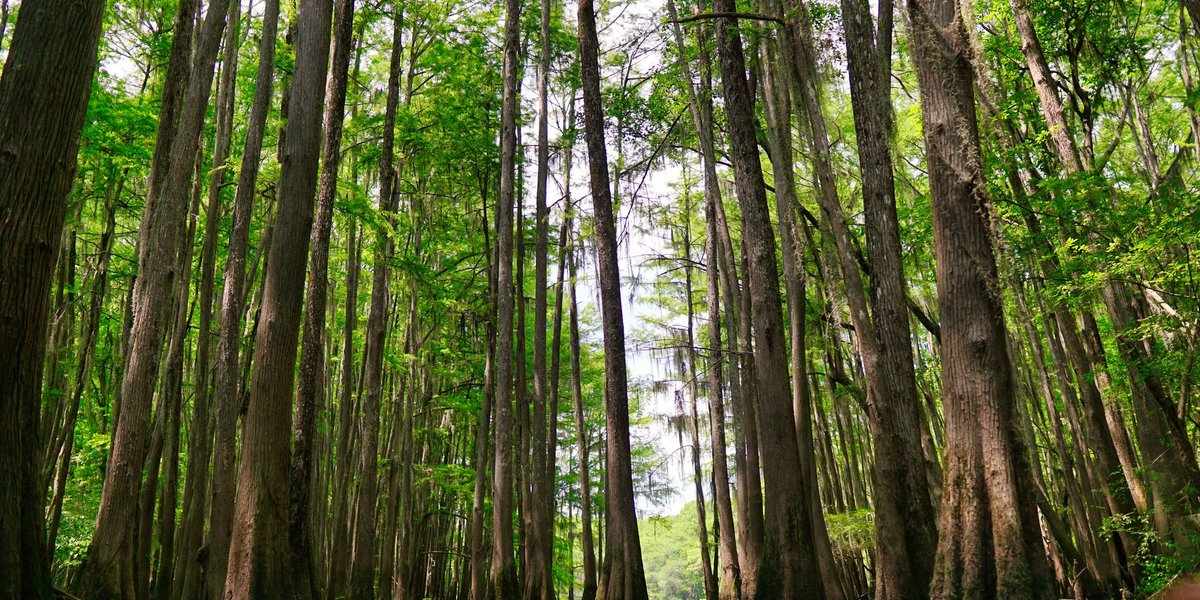
Walk into any Florida swamp and the first tree you notice is almost always a cypress. It’s also the one most visitors assume is the only tree there. It isn’t. A single boardwalk can pass a dozen species, and once you know what to look for, they stop blurring into one green wall.
This guide covers the 12 Florida swamp trees you’re most likely to meet, with a quick ID tip for each, how tall they get, and where to see them. It also settles the bald cypress versus pond cypress question, flags the invasive trees that crowd out the natives, and lists the places where the viewing is best.
Table of Contents
- TLDR: three ID shortcuts
- Why these trees can stand in water
- Bald cypress vs pond cypress
- The 12 Florida swamp trees
- Invasive trees that look like they belong
- North Florida river swamps vs South Florida cypress domes
- What changes through the year
- Where to see Florida swamp trees
TLDR: three ID shortcuts
- Flared base plus knees poking out of the water: bald cypress. If the knees are missing or stubby and the needles hug the twig, it’s pond cypress.
- Swollen trunk base and big, glossy, oval leaves: a tupelo. One large fruit on a long stalk means water tupelo, small paired fruits mean swamp tupelo.
- Evergreen with leathery leaves: check the underside. Silvery white is sweetbay, rusty fuzz and a spicy smell is swamp bay, red berries are dahoon holly, and fragrant white fringed flowers mean loblolly bay.
Why these trees can stand in water
Most trees drown in saturated soil because roots need oxygen. Swamp trees have workarounds, and those workarounds are also your identification clues.
- Buttressed trunks. Water tupelo, bald cypress and pop ash swell at the base. The flare spreads weight over soft, waterlogged ground and gives shallow roots more surface to hold on with.
- Knees. Bald cypress sends up woody knobs from its roots, anywhere from a few inches to several feet high. Their job is still argued over. Anchoring is the likely one, and gas exchange has never been convincingly shown.
- Shallow, spreading roots. Red maple and pond cypress keep their roots near the surface, above the lowest water, rather than reaching down into oxygen-poor muck.
- Floating seeds. Cypress cones and tupelo fruit float, so the water moves the next generation downstream or across the swamp.
Water level shapes which trees show up. Roots that sit in flowing, oxygen-rich river water support different species than the still, tea-colored water of a cypress dome. The University of Florida’s river swamp overview breaks down how flooding patterns sort these forests.
Bald cypress vs pond cypress
The two cypresses are the most confused pair in Florida. Some botanists treat pond cypress as a variety of bald cypress, but in the field they look and behave differently.
| Feature | Bald cypress (Taxodium distichum) | Pond cypress (Taxodium ascendens) |
|---|---|---|
| Needles | Flat, feathery, arranged in two rows along the twig | Short, scale-like, pressed against the twig and angled upward |
| Knees | Common, often tall and pointed | Rare, short and rounded when present |
| Trunk base | Wide, fluted flare | Swollen but less flared |
| Bark | Fibrous, stringy, reddish-brown | Rougher and more furrowed |
| Typical height | 80 to 120 feet, more in old growth | 50 to 80 feet |
| Crown | Broad, often irregular | Narrow, often flat-topped |
| Habitat | River floodplains, lakeshores, flowing water | Still, acidic ponds, domes and strands |
The fastest test is the twig. Pull one toward you. A flat, ladder-like spray is bald cypress. A feathery, bottlebrush-looking twig is pond cypress.
The 12 Florida swamp trees
1. Bald cypress (Taxodium distichum)
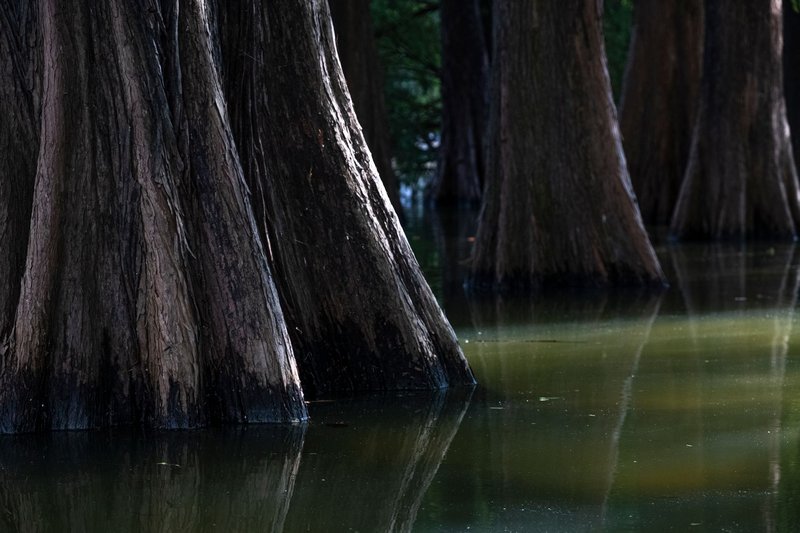
The tree that defines the Florida swamp. The trunk flares into a fluted base, knees rise around it, and the flat needles drop each winter, which makes it one of the few deciduous conifers. The oldest trees in the state are centuries old, with some stands in southwest Florida holding giants well past 100 feet.
- Height: 80 to 120 feet, taller in old growth
- ID tip: Flat two-ranked needles, knees, fibrous reddish bark
- See it: Corkscrew Swamp Sanctuary, Wakulla Springs, rivers across north and central Florida
2. Pond cypress (Taxodium ascendens)
The cypress of still water. Pond cypress grows in dome-shaped stands, where trees in the deeper center grow tallest and the edges stay short, giving the dome its profile. Its needles are tiny, scale-like and held tight against the twig, so the foliage looks fuzzy rather than flat.
- Height: 50 to 80 feet
- ID tip: Awl-shaped needles pressed to the twig, few or small knees, flat-topped crown
- See it: Cypress domes throughout the peninsula, Big Cypress National Preserve
3. Water tupelo (Nyssa aquatica)
Look for the trunk first. Water tupelo swells at the base like a bowling pin, sometimes twice the width of the trunk higher up. The leaves are large, up to about seven inches, often with a few coarse teeth. The fruit is a single dark purple drupe about an inch long on a long stalk. It’s mainly a north Florida river tree, living in deep water that would kill most others.
- Height: 80 to 100 feet
- ID tip: Swollen base, big leaves, one fruit per stalk
- See it: Apalachicola and Choctawhatchee river swamps in the Panhandle
4. Swamp tupelo (Nyssa biflora)
Swamp tupelo looks like a smaller, tidier version of its cousin. The leaves are narrower, usually smooth-edged, and glossy dark green, turning red in fall. The fruit is the giveaway: small, bluish-black and carried in pairs, which is where biflora (“two-flowered”) comes from. It grows throughout the state in shallow swamps, bayheads and wet flatwoods.
- Height: 50 to 80 feet
- ID tip: Narrower leaves, paired small fruits, less swollen base than water tupelo
- See it: Wet forests and bayheads across Florida, including state park boardwalks
5. Red maple (Acer rubrum)
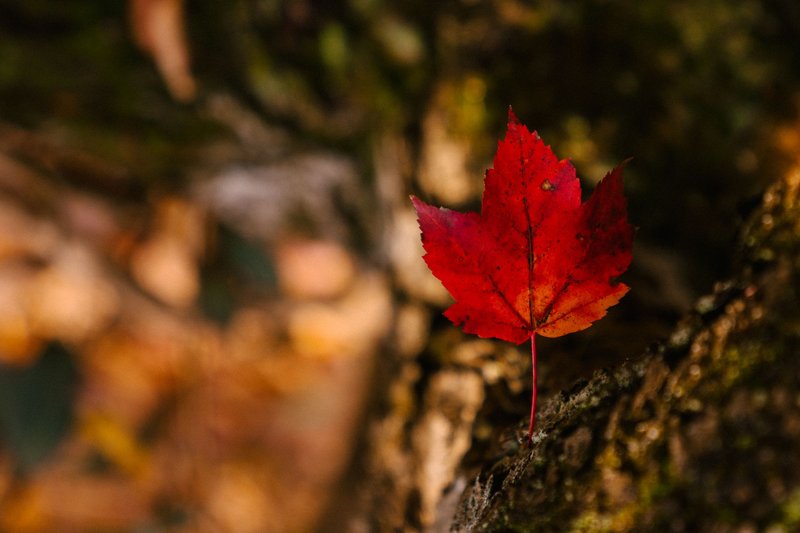
Florida’s most widespread swamp hardwood, and the first tree to announce the changing season. Red maple flowers, twigs and winged seeds are all red in late winter. Leaves are three-lobed with toothed edges and whitish undersides. Its roots stay shallow, which is how it holds up in seasonally flooded ground that stays wet for months.
- Height: 50 to 90 feet
- ID tip: Opposite branching, three-lobed leaves, red twigs and seeds
- See it: Nearly every freshwater swamp in the state
6. Pop ash (Fraxinus caroliniana)
Also called Carolina ash, this is a small, slender tree with a swollen, buttressed base. The leaves are compound, with five to seven leaflets arranged oppositely along a central stem, and the seeds hang in clusters of flat, paddle-shaped wings. The tree is easy to overlook next to a cypress, but it’s a reliable sign of a wet, nutrient-rich floodplain.
- Height: 25 to 40 feet
- ID tip: Opposite compound leaves, winged seeds, swollen trunk base
- See it: Edges of rivers, sloughs and hardwood swamps, often along the St. Johns and Suwannee systems
7. Pond apple (Annona glabra)
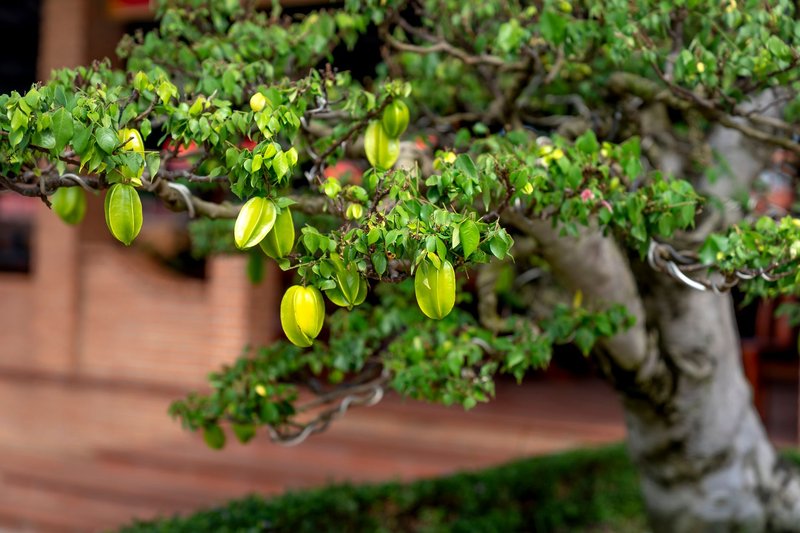
A South Florida specialist related to custard apple and soursop. Pond apple has smooth, glossy oval leaves and a heart-shaped yellow-orange fruit about the size of a fist. It once formed a dense ring of forest around the south shore of Lake Okeechobee, much of it cleared for farmland. Today it survives in the Everglades and Big Cypress region.
- Height: 25 to 40 feet
- ID tip: Glossy oval leaves, large heart-shaped fruit, flared trunk
- See it: Everglades National Park, Big Cypress and the southern edge of the peninsula
8. Water hickory (Carya aquatica)
Also known as bitter pecan, and the name tells you about the nut. Water hickory has compound leaves with 7 to 13 narrow leaflets and bark that peels in shaggy plates. The nuts are flattened and four-ribbed, with kernels too bitter for people. It grows in north Florida river swamps and floodplain forests, where its crown rises above the tupelos.
- Height: 60 to 80 feet
- ID tip: Shaggy bark plates, many narrow leaflets, flattened bitter nuts
- See it: Panhandle river bottoms along the Apalachicola and Escambia
9. Loblolly bay (Gordonia lasianthus)
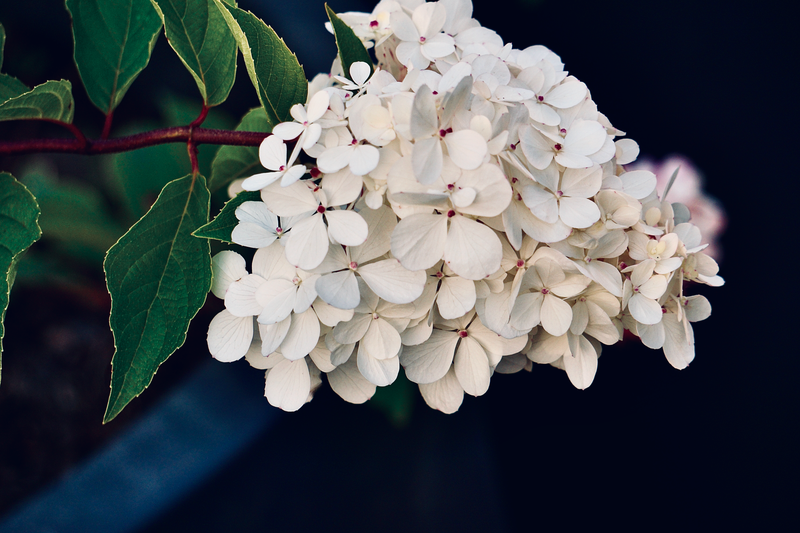
Easy to spot in July through September. Loblolly bay is an evergreen with glossy, finely toothed leaves that turn scarlet before they drop, and white camellia-like flowers with fringed petals. It grows in bayheads and wet pine flatwoods, where acidic soil keeps it company with sweetbay and swamp bay. It belongs to the tea family, and the flowers show it. Its relative, the Franklin tree, is extinct in the wild.
- Height: 50 to 70 feet
- ID tip: Evergreen, toothed leathery leaves, white fringed flowers in summer
- See it: Bayheads and pine flatwoods in north and central Florida
10. Dahoon holly (Ilex cassine)
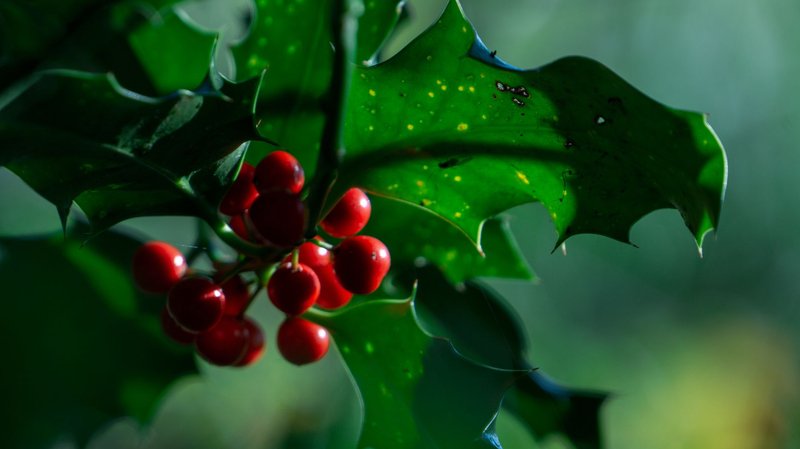
A small evergreen tree with narrow, oblong leaves that are leathery, smooth-edged or nearly so, and tipped with a tiny bristle. Female trees carry bright red berries from fall through winter, and birds strip them fast. Dahoon shows up in cypress swamp edges and bayheads, and it tolerates both flooding and drier ground.
- Height: 20 to 40 feet
- ID tip: Narrow leaves with few or no teeth, red berries on females
- See it: Swamp margins and bayheads across Florida
11. Swamp bay (Persea palustris)
Crush a leaf and you smell bay, like the dried leaves in a spice rack. The leaves are narrow and evergreen, with rusty, fine hairs underneath, which separates swamp bay from sweetbay’s silvery undersides. Swamp bay has lost heavily to laurel wilt, a fungal disease spread by the redbay ambrosia beetle. Large mature trees are now much rarer than they were a few decades ago, and swamp bay is one of many wetland plants under pressure.
- Height: 30 to 50 feet
- ID tip: Aromatic leaves, rusty fuzz underneath, dark furrowed bark
- See it: Wet flatwoods, bayheads and swamp edges statewide, though many are dead or dying
12. Sweetbay (Magnolia virginiana)
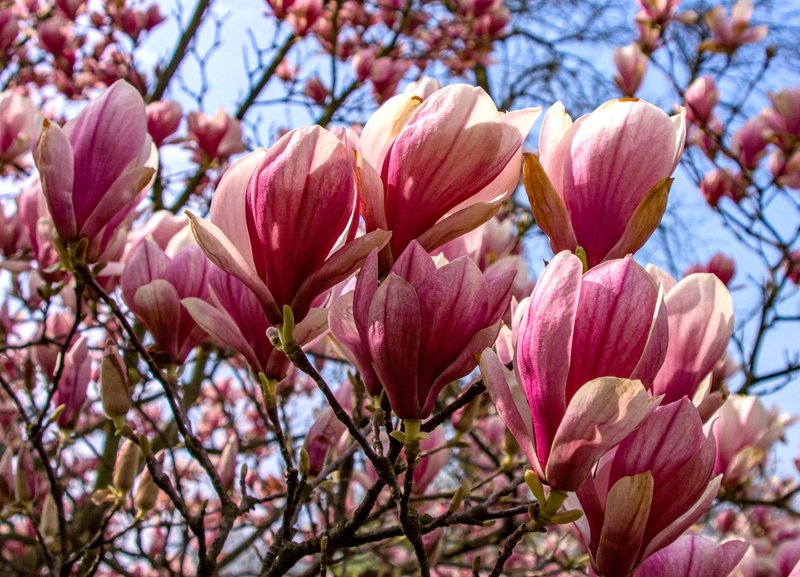
A magnolia that doesn’t look like one at first. The leaves are smaller than a southern magnolia’s, and the underside is silvery white, flashing in even a light breeze. In late spring the tree produces creamy white flowers about three inches across with a lemon-like scent. Sweetbay is semi-evergreen in the north and fully evergreen in South Florida.
- Height: 30 to 60 feet
- ID tip: Silvery white leaf undersides, lemon-scented white flowers, smooth gray bark
- See it: Bayheads, swamp edges and wet flatwoods statewide
Invasive trees that look like they belong
Not every tree in a South Florida swamp is native. Two are worth recognizing.
Melaleuca (Melaleuca quinquenervia) has pale, papery bark that peels in thin layers, like a stack of tissue paper. It was brought from Australia in the early 1900s and spread across the Everglades, where it forms dense stands that shade out native plants and can change how water moves through the marsh. The University of Florida keeps a species profile with identification photos.
Earleaf acacia (Acacia auriculiformis) has curved, sickle-shaped leaf-like structures and twisted seed pods. It spreads along disturbed wet edges and is a common escapee from landscaping. If a South Florida wetland tree has papery bark or curved, one-veined foliage that doesn’t match anything above, it’s probably one of these.
North Florida river swamps vs South Florida cypress domes
The two regions share some trees but feel different underfoot.
North Florida river swamps sit along rivers such as the Apalachicola, Suwannee and St. Johns. Floods bring in moving, nutrient-rich water. Expect bald cypress, water tupelo, swamp tupelo, water hickory and pop ash, with high canopies and mud banks.
South Florida cypress domes and strands sit in shallow depressions, filled by rain and slow surface flow rather than rivers. Pond cypress, pond apple, red maple, swamp bay and dahoon holly dominate, along with bromeliads and orchids perched on the trunks. Fakahatchee Strand is the best example, a slough about 20 miles long that runs through the Big Cypress region.
What changes through the year
- Late winter: Red maples flush with red flowers and seeds. Cypress and tupelo are bare or just starting to leaf out.
- Spring: Cypress needles return in a pale, almost yellow-green, and sweetbay opens its first flowers.
- Summer: Loblolly bay flowers. Water levels rise, so knees and trunk bases vanish underwater.
- Fall and winter: Cypress needles turn rusty orange-brown, usually from November into January in Florida. Dahoon berries ripen and the knees reappear as the water drops.
Where to see Florida swamp trees
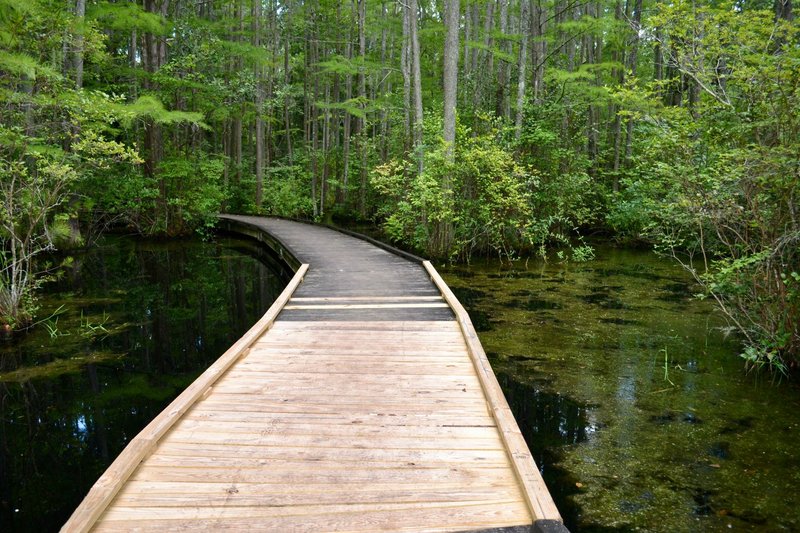
- Corkscrew Swamp Sanctuary (Naples): The Audubon sanctuary protects one of the largest remaining old-growth bald cypress stands in the world, along a boardwalk of roughly two and a quarter miles. Pond cypress, red maple and pond apple sit nearby.
- Big Cypress National Preserve: The National Park Service preserve covers more than 700,000 acres, with pond cypress domes and strands visible from the Tamiami Trail and the scenic loop road.
- Fakahatchee Strand Preserve State Park: The Florida state park is known for its cypress, royal palms and orchids. Janes Scenic Drive and the Big Cypress Bend boardwalk give the easiest access.
- Arthur R. Marshall Loxahatchee National Wildlife Refuge: A short cypress swamp boardwalk near Boynton Beach shows pond cypress, red maple and dahoon holly in a compact walk.
- Highlands Hammock State Park (Sebring): A cypress swamp trail on elevated boardwalk, with bald cypress and strangler figs.
- Apalachicola and Wakulla Springs: North Florida’s river swamps hold water tupelo, swamp tupelo and large bald cypress.
Bring bug spray, go early, and look up as much as down. The best clue to what you’re standing under is often hanging from the branches.