Vascular plants have xylem and phloem, internal tubes that move water and sugar around the plant. Non-vascular plants don’t, so they stay small and live where water is always close. That one difference explains almost everything else on the list: size, roots, habitat, even how they reproduce.
Table of Contents
- TLDR: The Short Answer
- Vascular vs Non-Vascular Plants Side by Side
- Non-Vascular Plants: Mosses, Liverworts and Hornworts
- Vascular Plants: Ferns, Conifers and Flowering Plants
- Why Vascular Tissue Changed Everything
- Edge Cases That Trip People Up
- How to Tell Them Apart in the Garden
- Quick Quiz
TLDR: The Short Answer
- Vascular plants (ferns, horsetails, clubmosses, conifers, flowering plants) have xylem and phloem, true roots, stems and leaves, and can grow very tall.
- Non-vascular plants (mosses, liverworts, hornworts) have no xylem or phloem. They absorb water across their surface, anchor with rhizoids, and rarely top a few centimeters.
- Algae are neither. Seaweed and pond scum are not plants in the strict sense, so they don’t belong on either list.
Vascular vs Non-Vascular Plants Side by Side
| Feature | Vascular plants | Non-vascular plants |
|---|---|---|
| Transport tissue | Xylem (water and minerals up) and phloem (sugars around) | None; water moves cell to cell and over the surface |
| Anchoring structures | True roots | Rhizoids, thin hair-like filaments |
| Stems and leaves | True stems and leaves with veins | Stem-like and leaf-like parts without true vascular tissue |
| Typical size | Centimeters to over 100 meters | Usually under 10 cm |
| Habitat | Nearly everywhere on land, plus some water | Damp, shaded or wet places; some tolerate dry spells by going dormant |
| Dominant life stage | Sporophyte (the leafy plant you see) | Gametophyte (the green mat you see) |
| Reproduction | Seeds (conifers, flowering plants) or spores (ferns and relatives) | Spores only |
| Water needed for fertilization | Ferns and relatives: yes. Seed plants: no | Yes, sperm swim through a film of water |
| Examples | Ferns, pines, oaks, grasses, roses | Sphagnum moss, liverworts, hornworts |
Non-Vascular Plants: Mosses, Liverworts and Hornworts
Biologists call this group the bryophytes. There are three kinds, and the roughly 20,000 species are almost all mosses and liverworts, with hornworts a small third group. The UC Berkeley Museum of Paleontology has a clear overview of the group if you want the taxonomy.
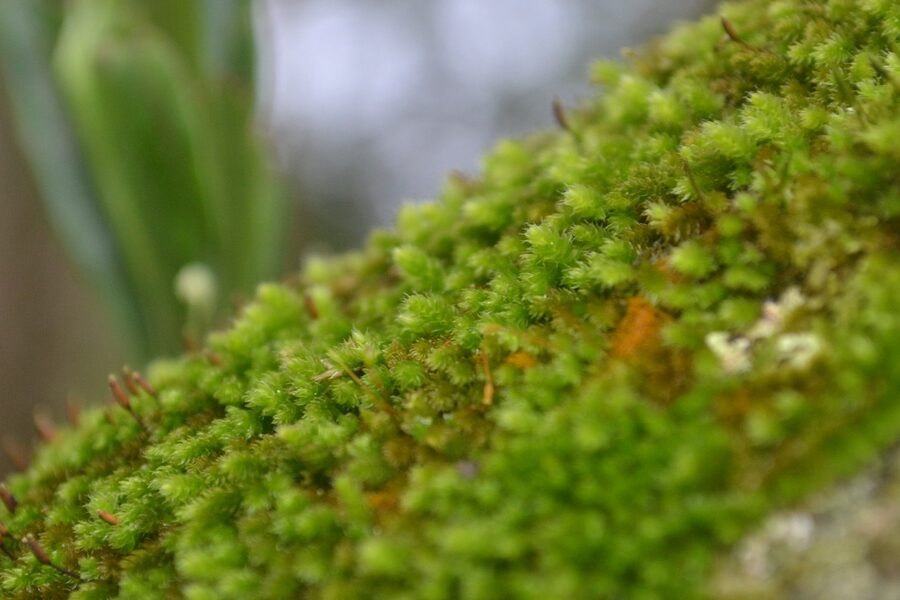
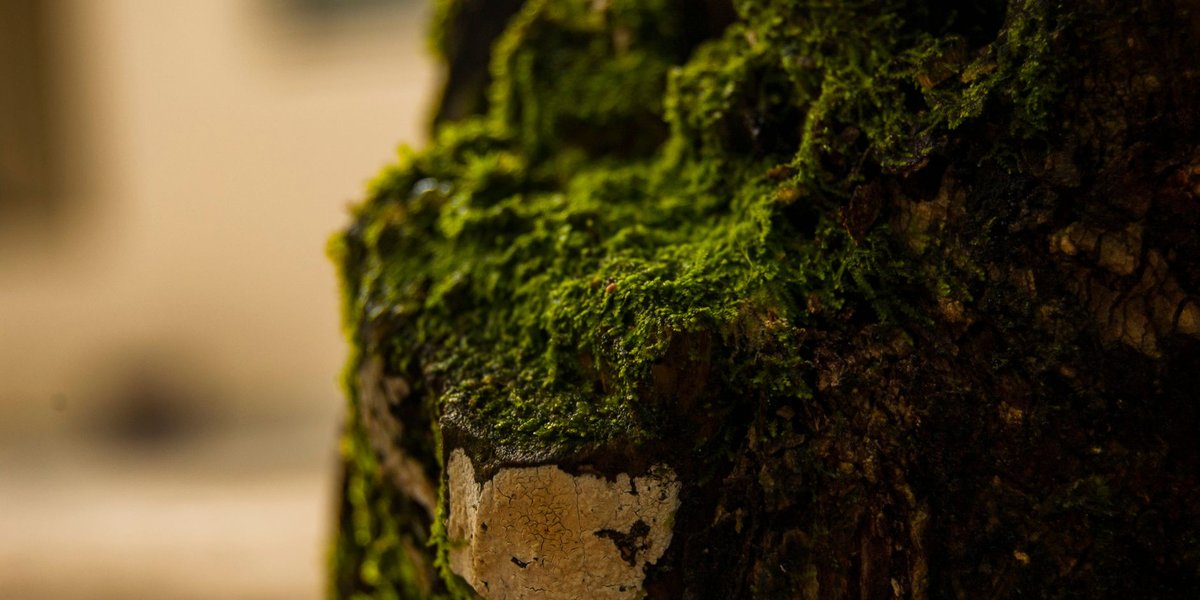
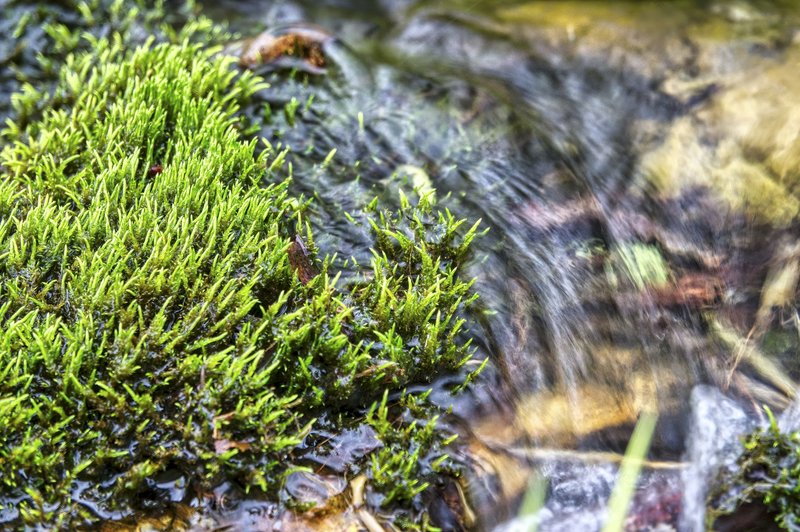
Mosses are the ones you know: cushions on rocks, carpets on forest floors, fuzzy lines in sidewalk cracks. Each tiny stem carries small leaves one cell thick, which is why a moss dries to a crisp brown in a dry week and greens up within minutes of rain. It isn’t dead. It paused.
Liverworts come in two shapes. Some are flat, lobed ribbons that hug wet soil or stream banks. Others look like mosses with neater, flatter leaves. The name comes from the lobed shape of the common liverwort Marchantia, which medieval herbalists thought resembled a liver.
Hornworts are the oddballs. The green body is a flat rosette, and the spore capsules rise from it as thin horns. Their cells usually hold a single large chloroplast, which is unusual for any plant.
All three share the same limits. No vascular plumbing means no way to haul water upward, so they stay low. Rhizoids hold them in place but don’t pull water from deep soil the way roots do. And their sperm have to swim, so reproduction needs liquid water at the right moment.
The life cycle is the part textbooks gloss over. In a moss, the leafy green plant is the gametophyte, the generation that makes eggs and sperm. The sporophyte is the thin stalk with a capsule on top, and it never leaves its parent. It stays attached, takes nutrients from the gametophyte, and exists mainly to release spores. In vascular plants, that arrangement is flipped.
Vascular Plants: Ferns, Conifers and Flowering Plants
Vascular plants split into two practical groups.
Seedless vascular plants include ferns, horsetails and clubmosses. They have xylem, phloem, true roots and real leaves, but they reproduce with spores. Flip over a fern frond and the brown dots on the underside are clusters of sporangia, the spore factories. Like mosses, their sperm need water to reach the egg, so ferns favor damp ground even though they stand much taller than any moss.
Seed plants are everything else you picture when you think “plant”: conifers, cycads, ginkgo, and flowering plants. A seed packages the embryo with food and a protective coat, and pollen delivers sperm without any need for a water film. That freedom is a large part of why seed plants dominate dry land today.
In all vascular plants, the sporophyte is the dominant generation. The oak tree in your yard is a sporophyte. Its gametophyte is microscopic, tucked inside the flower or cone.
Two tissues do the work:
- Xylem moves water and dissolved minerals from roots to leaves. Its cells are reinforced with lignin, a stiff compound that also holds the plant upright. Wood is mostly old xylem.
- Phloem carries sugars made in leaves to growing tips, fruit, and roots. It’s a two-way street, unlike xylem.
Why Vascular Tissue Changed Everything
Early land plants were stuck at ground level. Without a way to move water up, a plant couldn’t grow taller than the distance water can travel by seeping cell to cell.
Fossils show the shift. Cooksonia, one of the earliest known vascular plants, appears in rocks about 425 million years old, as covered in the Silurian record at Berkeley. It was a few centimeters of branching stem with spore capsules at the tips. Small, but it had conducting cells and lignin.
Once a plant could carry water upward, height became an advantage. Taller plants win the competition for light, and a tall plant can drop spores or pollen from higher up, where wind carries them farther. Roots could go deeper, so plants could leave the water’s edge. Over the next 100 million years or so, those traits produced the first forests.
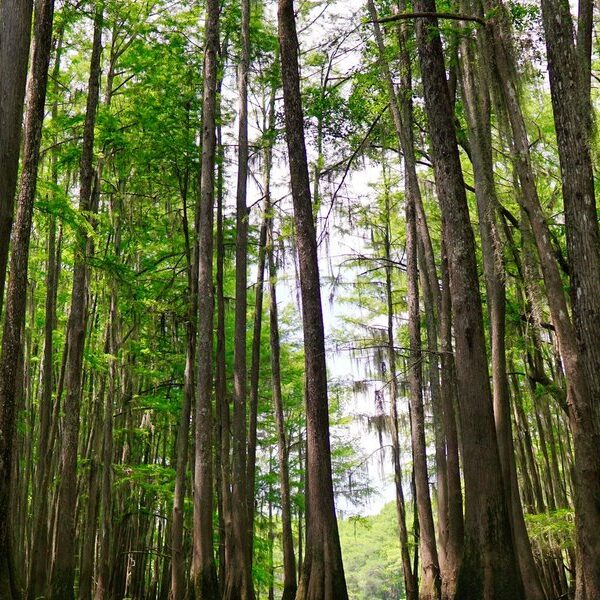
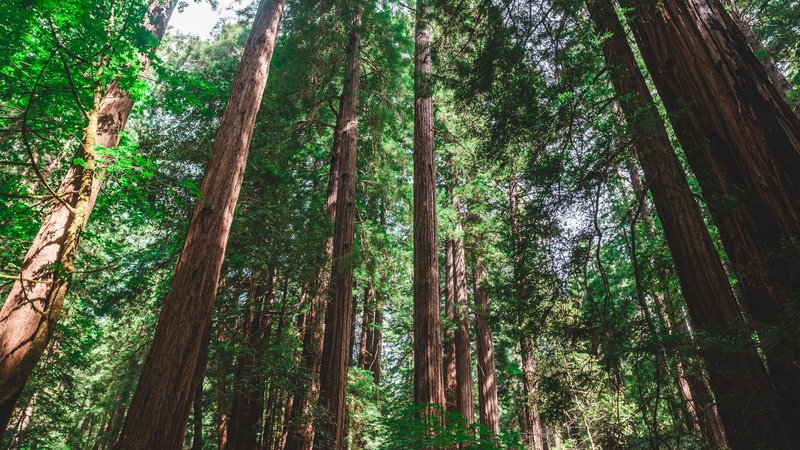
The record holder today is a coast redwood, which grows past 110 meters. Redwood National and State Parks protects the tallest living trees on Earth. Getting water to the top of a tree that size is a plumbing problem that no moss has ever had to solve, and none could.
Edge Cases That Trip People Up
Algae. Many study sheets list algae as non-vascular plants. Algae lack xylem and phloem, but most are not classed as plants at all. Green algae are close relatives of land plants, and land plants arose from them, but kelp and pond algae sit outside the plant kingdom in most modern classifications.
Mosses with primitive tubes. Some mosses, such as Polytrichum (haircap moss), have simple water-conducting cells called hydroids and sugar-moving cells called leptoids. They resemble xylem and phloem in function but lack lignin, so they aren’t true vascular tissue. Haircap mosses also grow taller than most mosses, reaching around 10 to 20 cm.
Ferns are vascular but seedless. “Seedless” and “non-vascular” are not synonyms. A fern has vascular tissue and no seeds. A moss has neither.
Small isn’t the test. A tiny fern can be shorter than a tall moss. The test is whether xylem and phloem exist, not how big the plant is.
Cuticles. You’ll see claims that non-vascular plants have no waxy cuticle. Some do have a thin one, and some lack it. The thing that reliably separates the groups is vascular tissue.
How to Tell Them Apart in the Garden
Checking one plant against a few clues is faster than memorizing the table.
- Look at the height. If it’s taller than your hand and standing upright, it’s almost certainly vascular.
- Look for veins. A leaf with visible veins, such as a grass blade or a maple leaf, points to vascular tissue. Moss leaves are one cell thick and show no veins under normal inspection.
- Look for real roots. Pull up a small plant gently. Branching roots mean vascular. Fine hair-like threads that barely hold soil mean rhizoids.
- Check the habitat. Dense green carpets on shaded bricks, wet rock faces, or tree trunks are probably bryophytes.
- Look for stalks with capsules. Tiny stalks rising from a green mat with a small capsule at the tip are moss sporophytes.
- Flip a fern frond. Spore dots on the underside confirm a seedless vascular plant.
Quick Quiz
Try these before looking at the answers.
- Which tissue carries sugars from leaves to the rest of the plant?
- What are the three groups of bryophytes?
- In a moss, is the leafy green plant the gametophyte or the sporophyte?
- Are ferns vascular or non-vascular? Do they make seeds?
- Why do mosses stay so short?
Answers:
- Phloem.
- Mosses, liverworts and hornworts.
- The gametophyte.
- Vascular, and no, they reproduce by spores.
- They have no xylem or phloem to lift water, so they rely on absorbing it directly and passing it from cell to cell.