TLDR
- The Everglades holds roughly 100 freshwater and freshwater-tolerant fish species. Add Florida Bay and the mangrove estuaries and the total passes 300.
- Natives to know: Florida gar, bowfin, largemouth bass, bluegill, Everglades pygmy sunfish and eastern mosquitofish.
- Coastal fish that push into brackish water: snook, tarpon, redfish (red drum) and mangrove snapper.
- Invaders: Mayan cichlid, black acara, oscar, walking catfish, Asian swamp eel, peacock bass and tilapia.
- Large predators such as bass and gar carry the most mercury. Check Florida’s advisories before you keep anything for dinner.
Contents
- Why every list gives a different number
- Native freshwater fish
- Brackish and coastal fish
- Invasive fish
- Everglades fish species at a glance
- How fish survive the wet and dry seasons
- Where and when to catch them
- Can you eat Everglades fish?
Why every list gives a different number
Search for Everglades fish species and you’ll see “about 50,” “close to 100,” and “more than 300,” sometimes on the same afternoon. None of those is wrong. They count different water.
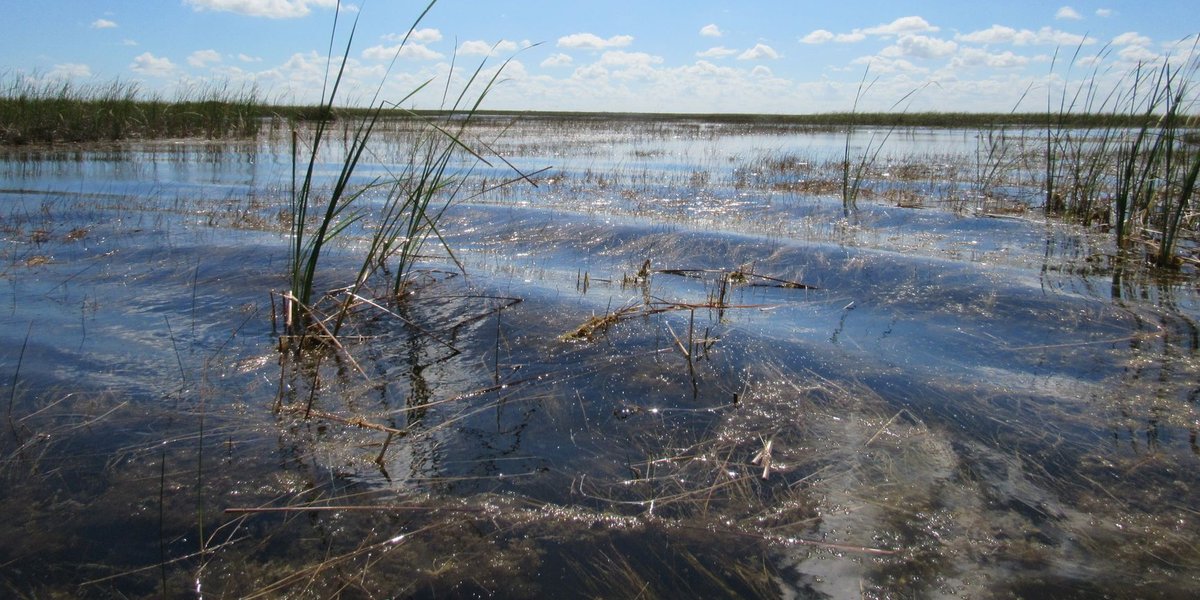
The strict freshwater marsh, the sawgrass and slough habitat most people picture, has a few dozen native fish. Count every species that tolerates fresh water, including the introduced ones and the marine fish that run up creeks, and you land near 100. Include Florida Bay, the Ten Thousand Islands and the mangrove estuaries along the coast, and the list passes 300. The Florida Museum’s South Florida freshwater fish pages mix all three groups under one “freshwater” label, so tarpon and gray snapper show up beside bluegill without comment.
This guide sorts them the way the ecosystem does: native freshwater fish, brackish and coastal fish, and invaders.
Native freshwater fish
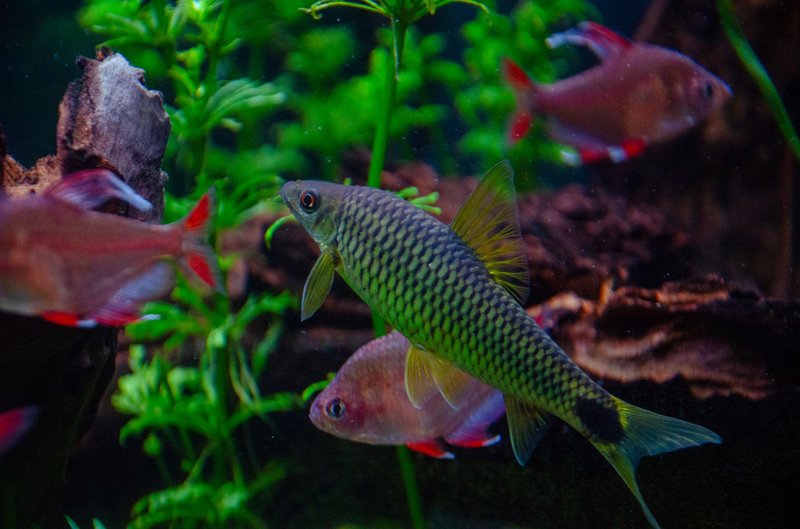
The native marsh community is built from tough, small, air-tolerant fish. Water here is shallow, warm and low in oxygen by midsummer, and the species that thrive have workarounds.
Florida gar. Look for a long, narrow snout full of needle teeth and olive-brown skin spotted with black on the head, fins and body. Adults commonly reach 2 to 3 feet. Gar float motionless just under the surface, then gulp air at the top. Their swim bladder works as a lung, which is why they thrive in stagnant, low-oxygen water.
Bowfin. A bowfin is a thick, rounded fish with one long dorsal fin running most of the way down its back. Males carry a black eyespot ringed in orange at the base of the tail. They reach about 2 feet in most marsh water and also breathe air. Bowfin are ambush predators and a living fossil lineage, almost unchanged for tens of millions of years.
Largemouth bass. The upper jaw extends past the back of the eye, and a dark stripe runs along the side. This is the Everglades’ top freshwater game fish and a top predator in canals and gator holes. Most are 1 to 5 pounds.
Bluegill and other sunfish. Bluegill have a dark flap on the gill cover (the “ear”) and a deep, flat body, usually 6 to 8 inches long. Redear sunfish, spotted sunfish and warmouth share the same water and the same body plan. Sunfish are the food base for herons, otters and bass.
Everglades pygmy sunfish. The smallest sunfish here is barely an inch long. Breeding males turn iridescent blue-black with bright flecks. They live in thick vegetation in shallow marsh and are almost never seen unless someone drags a dip net through the weeds.
Eastern mosquitofish. Two inches or less, gray-olive, upturned mouth, and live-bearing, so females give birth to free-swimming young. Mosquitofish are among the first fish to recolonize a marsh after it reflooded, and they sit near the bottom of nearly every Everglades food chain.
Other natives worth knowing: flagfish (males with a bold stripe pattern and a dark spot on the dorsal fin), sailfin molly (males with a tall, sail-like dorsal fin), golden topminnow, lake chubsucker and yellow bullhead.
Brackish and coastal fish
Where the freshwater sheet flow from the north meets Florida Bay, the water turns brackish and a different set of fish moves in. Many of these are the fish people are really asking about when they search for Everglades species.
Snook. The identification is easy: a black lateral line from gill to tail, a sloping forehead, a protruding lower jaw and yellow-tinged pelvic fins. Adults average 20 to 30 inches, and the biggest top 40. They hold along mangrove shorelines, creek mouths and the passes of the Ten Thousand Islands. Snook can’t take cold. A hard freeze in January 2010 killed a large share of Florida’s snook, and the species is still managed with that in mind.
Tarpon. Huge, mirror-sized scales, an upturned mouth and a fin ray trailing from the dorsal fin. Adults run 4 to 6 feet and over 100 pounds. Tarpon also gulp air, which lets juveniles live in stagnant backcountry pools, mosquito ditches and brackish ponds where almost nothing else can breathe.
Redfish (red drum). Copper-bronze with one or more black spots near the base of the tail. Juveniles and slot-sized fish work oyster bars and mangrove edges, and in Florida Bay they cruise the shallow flats.
Mangrove (gray) snapper. Typically 10 to 16 inches, gray to brownish with a reddish tint, and a dark stripe through the eye on younger fish. The tangle of mangrove roots is its nursery, and juveniles stay in the shallows for their first couple of years.
A few more you’ll run into: sheepshead (black-and-white vertical bars and human-looking teeth), spotted seatrout over the seagrass in Florida Bay, jack crevalle, Atlantic needlefish and the occasional great barracuda.
Invasive fish
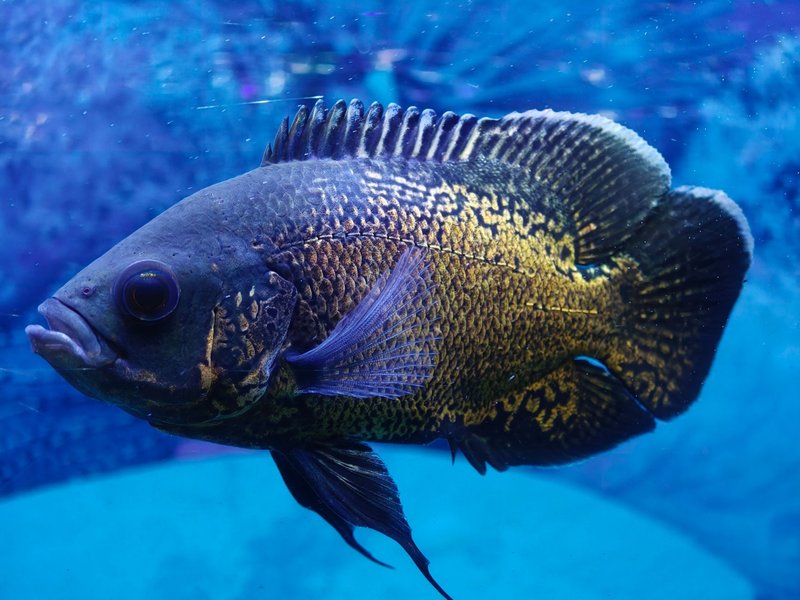
Roughly 20 nonnative fish species now breed in South Florida waters. Warm canals, a pet trade a short drive from the water and a mild climate made it easy. The Florida Museum’s introduced-species page lists the established ones. These are the ones you’ll meet most.
Mayan cichlid. A stocky, spiny-finned fish with dark vertical bars, a dark spot near the base of the tail and an orange-red wash on the belly and fins in breeding colors. Adults reach about 10 to 12 inches. They thrive in both fresh and salty water, which let them spread through the park’s coastal marshes.
Black acara. A smaller cichlid, up to about 8 inches, with a dark horizontal band, scattered dark blotches and blue-green flecks on the gill cover. It’s common in canals and ditches.
Oscar. A thick-bodied fish with orange-red marbling over a dark body and an orange-ringed eyespot at the base of the tail. Oscars grow to 12 to 16 inches and 2 to 3 pounds.
Walking catfish. Eel-like, dark gray, with a long dorsal fin, four pairs of barbels and a flat head. It grows to about 20 inches. An air-breathing organ lets it crawl overland on wet nights, using its stiff pectoral spines to move between ponds. It has been established in Florida since the 1960s.
Asian swamp eel. A smooth, snake-like fish without pectoral fins, mud-brown and up to about 3 feet long. It burrows into canal banks and marsh mud and breathes air, so a drying pool doesn’t kill it. It has spread into Everglades National Park, where it eats native fish and invertebrates.
Peacock bass. The butterfly peacock bass is the invader with a sponsor: Florida wildlife managers stocked it in Miami-Dade canals in 1984, partly to eat other nonnative fish. You can identify it by the vertical dark bars on the sides and a ringed eyespot on the tail. It has become a sportfish in its own right.
Tilapia. Blue and spotted tilapia are mouthbrooders, with females carrying eggs and fry in their mouths. They build crowded nests in shallow water, and the bare circular depressions they leave in canal bottoms are easy to spot.
Also established: African jewelfish, brown hoplo, Midas cichlid and pike killifish.
Everglades fish species at a glance
| Species | Status | Typical size | Habitat | ID cue |
|---|---|---|---|---|
| Florida gar | Native | 2 to 3 ft | Marsh, canals, sloughs | Long, narrow snout; spotted body |
| Bowfin | Native | 1.5 to 2 ft | Vegetated marsh, canals | Long dorsal fin; eyespot on male’s tail |
| Largemouth bass | Native | 1 to 5 lb | Canals, gator holes, sloughs | Jaw extends past eye; dark side stripe |
| Bluegill | Native | 6 to 8 in | Ponds, canals, marsh | Dark ear flap |
| Everglades pygmy sunfish | Native | Under 1.5 in | Dense marsh vegetation | Tiny; males iridescent |
| Eastern mosquitofish | Native | 1 to 2 in | Everywhere shallow | Tiny live-bearer; upturned mouth |
| Snook | Native (coastal) | 20 to 30 in | Mangrove creeks, passes | Black lateral line; sloping head |
| Tarpon | Native (coastal) | 4 to 6 ft | Estuaries, backcountry pools | Giant scales; upturned mouth |
| Redfish | Native (coastal) | 18 to 30 in | Flats, oyster bars, mangroves | Black tail spot |
| Mangrove snapper | Native (coastal) | 10 to 16 in | Mangrove roots, Florida Bay | Dark stripe through eye (young) |
| Mayan cichlid | Invasive | 10 to 12 in | Fresh and brackish marsh | Dark bars; spot near tail |
| Black acara | Invasive | Up to 8 in | Canals, ditches | Dark band; blue-green flecks |
| Oscar | Invasive | 12 to 16 in | Canals, ponds | Orange marbling; eyespot at tail |
| Walking catfish | Invasive | Up to 20 in | Ditches, ponds | Eel-like; barbels; flat head |
| Asian swamp eel | Invasive | Up to 3 ft | Mud, canals, marsh | Snake-like; no pectoral fins |
| Peacock bass | Invasive (stocked) | 1 to 3 lb | Miami-Dade canals | Vertical bars; ringed tail spot |
How fish survive the wet and dry seasons
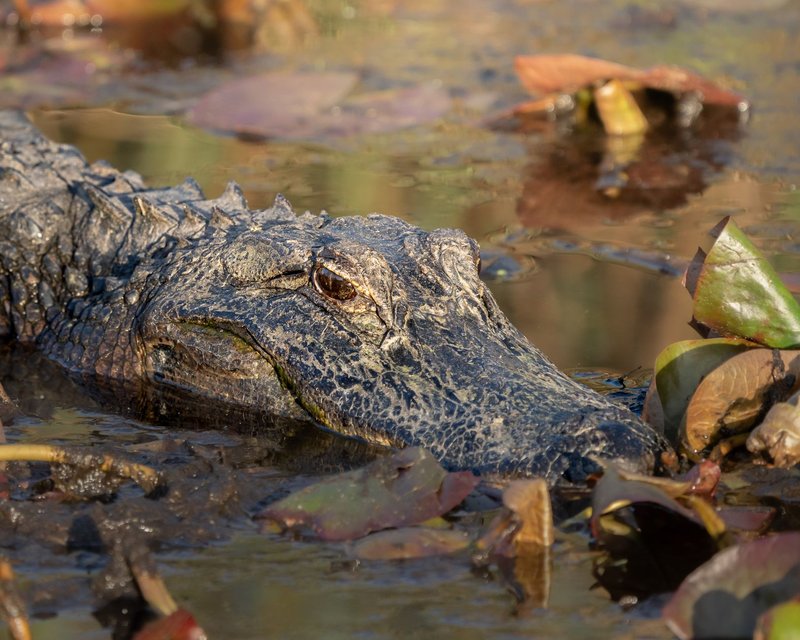
The Everglades is two ecosystems on a six-month cycle. The wet season runs roughly May through October and spreads water across the whole marsh. The dry season, November through April, pulls it back until fish are packed into whatever holds water.
Fish respond in a few ways. Most small native fish, including sunfish and mosquitofish, don’t wait out drought in the mud. They retreat to refuges: alligator holes, deep canals and sloughs. Alligators dig these depressions and keep them open, which makes each hole a lifeboat. When the rains return, survivors spread back through the marsh. Mosquitofish and pygmy sunfish reproduce quickly enough that the marsh is repopulated within a season or two.
Air-breathers get a second option. Gar, bowfin and tarpon gulp air at the surface, so they tolerate warm, oxygen-poor pools that would kill a bass. Walking catfish breathe air and can walk to the next pond. Asian swamp eels survive in burrows, which is a big part of why they’re hard to remove from a drying canal.
Drought concentrates predators and prey in the same shrinking pools, and it feeds the wading birds. Wood storks and herons time their nesting to the dry-season fish concentrations. The fish aren’t just in the Everglades; much of the food chain depends on them being trapped in small, dense pools every winter.
Where and when to catch them
Anglers should read the park’s rules first. A Florida fishing license is required for most anglers, and Everglades National Park adds its own regulations, listed on the National Park Service fishing page. Size limits, bag limits and closed seasons for species like snook and redfish change often, so check the Florida Fish and Wildlife Conservation Commission (FWC) before the trip.
Largemouth bass and sunfish. Dry season, roughly January through April, is the best window. Fish gather in canals and deeper pools along the Tamiami Trail and in the park’s freshwater interior. Soft plastics along weed edges and small spinners for bluegill both work.
Snook. Mangrove shorelines and creek mouths in the Ten Thousand Islands and Whitewater Bay. In summer they gather near the passes to spawn. During cold snaps they move up warmer creeks and rivers. Snook seasons are closed for stretches of the year, and slot limits apply.
Tarpon. Spring into early summer is the peak. Anglers fish the passes, channels and bays for adults, while juveniles hold in backcountry pools. Tarpon are typically catch-and-release.
Redfish. Year-round, with cooler months putting fish on the shallow flats and around oyster bars. A black spot at the tail is the cue to check the slot limit before keeping one.
Mangrove snapper. Warm months, around mangrove roots, docks and channel edges. Smaller fish stay in the shallows, while bigger ones hold on deeper structure in Florida Bay.
Invasive species. Peacock bass and Mayan cichlids are good fly-rod or light-tackle targets in warm canals, especially from late spring through fall. Anglers can legally remove nonnative fish in many places. The FWC nonnative species pages explain what’s prohibited. Walking catfish, for example, are a prohibited species that can’t be kept alive. Don’t release any invasive fish back into the water.
Can you eat Everglades fish?
Some, with limits. Mercury accumulates up the food chain, so the big predators carry the most: largemouth bass, gar, bowfin and warmouth. The Florida Department of Health publishes water-body-specific advisories for the Everglades region, and the consumption advice for the large predators is the strictest. Check it before you keep fish from the canals or Water Conservation Areas.
Smaller sunfish, tilapia and marine fish like mangrove snapper are generally lower in mercury than large freshwater predators, but advisories vary by location and species, so check the current guidance rather than assuming.
Eating nonnative fish, where legal, is one of the few ways an angler can help. Oscar, tilapia and peacock bass are all caught and eaten across South Florida. Species like walking catfish and Asian swamp eel are prohibited or regulated, so confirm the rules before taking either one home.