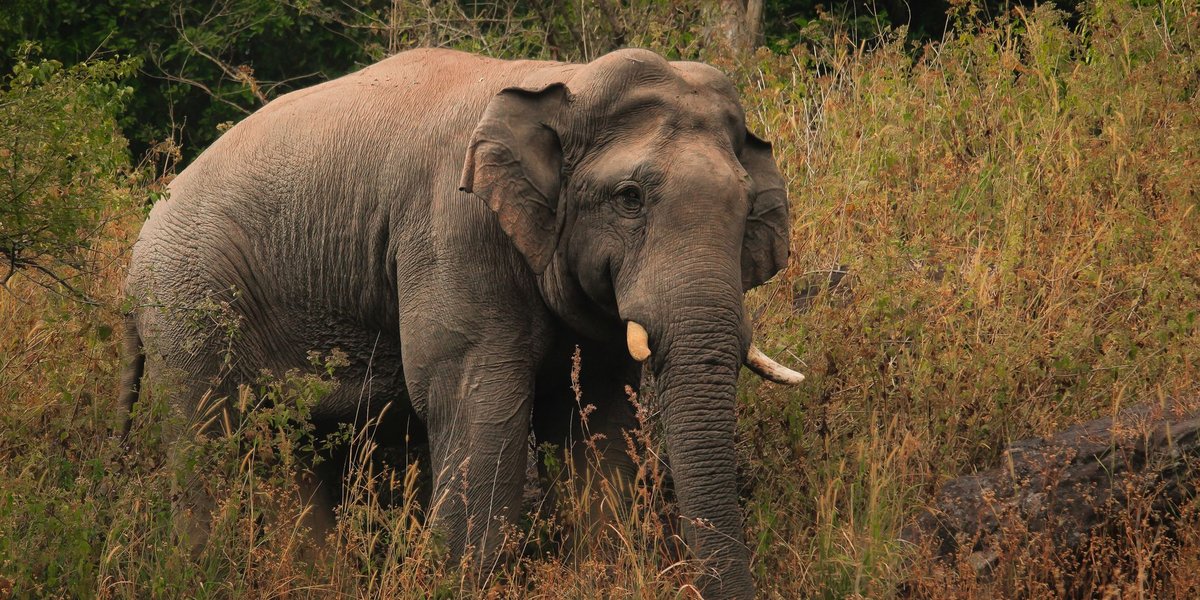
Laos was once called Lan Xang, the Land of a Million Elephants. The nickname is still on every tourist brochure, but the real wildlife story is stranger and smaller. Some of the world’s rarest mammals were first described here in the last three decades, and a few were found on a market stall before anyone saw them alive.
Two terms get blurred in most lists, so here they are. A native animal lives in Laos naturally, whether or not it lives anywhere else. An endemic animal lives only here, or in a tiny range that Laos shares with Vietnam. Water buffalo and sarus cranes show up on plenty of “animals of Laos” lists, but they’re widespread across Asia. This guide splits the animals into two groups: the near-endemics you can’t find anywhere else, and the famous residents that make Laos worth the trip.
Table of contents
- Native vs. endemic: what counts
- The endemics and near-endemics
- The famous residents
- Fish, newts and other overlooked natives
- The wildlife trade problem
- Where to see wildlife in Laos
- Ethical sanctuaries
Native vs. endemic: what counts
Most of Laos’ unique animals are Annamite endemics. The Annamite Range runs along the Laos–Vietnam border, and its isolated, humid forest produced a cluster of species that evolved nowhere else. Much of the range is steep, wet and barely surveyed, which explains why new large forest mammals kept turning up there into the 1990s.
So “endemic to Laos” usually means “endemic to the Annamites or the limestone karst of central Laos.” That’s the standard used below.
The endemics and near-endemics

Saola
Scientific name: Pseudoryx nghetinhensis Where to look: Annamite forests along the Laos–Vietnam border (realistically, nowhere)
The saola is the animal conservationists mean when they talk about the Annamites. It’s a forest bovid, about the size of a goat on long legs, with two straight, parallel horns and white markings on its face. Scientists described it from a set of horns found in a hunter’s house in Vietnam in 1992, the first large mammal new to science in over 50 years.
It’s listed as Critically Endangered, and WWF notes it hasn’t been observed in the wild since 2013. The main killer is snaring. Saola aren’t the target, they just walk into wire loops set for muntjac and wild pigs. Anyone who tells you they’ve seen one on a trek is guessing or selling something.
Laotian rock rat
Scientific name: Laonastes aenigmamus Where to look: Limestone karst of Khammouane Province; a second population exists in Vietnam
In 2005 researchers spotted a squirrel-sized rodent with a rat-like head, long whiskers and a furry tail, being sold as food at a market in central Laos. It looked like nothing on the books. Locals called it kha-nyou.
The twist came later: its skull and teeth matched a family, the Diatomyidae, known only from fossils and assumed extinct for around 11 million years. That makes it a Lazarus taxon, an animal that “returned from the dead” in the fossil record. National Geographic covered the discovery when the find was first announced. Despite the name, it’s not a close relative of rats or mice. It lives among boulders and crevices in limestone towers, which is also why it’s almost never seen.
Annamite striped rabbit
Scientific name: Nesolagus timminsi Where to look: Annamite forests; nearly all records come from camera traps
This rabbit has dark stripes across its back and a reddish rump, and it behaves nothing like the cottontail in your head. It’s forest-dwelling, shy and nocturnal. It was only described in 1999, and for years researchers knew it mostly from carcasses at hunters’ markets. It’s a good example of how little we know about the Annamite fauna.
Truong Son muntjac
Scientific name: Muntiacus truongsonensis Where to look: Annamite hill forest on both sides of the Laos–Vietnam border
A small, dark barking deer described in 1997, found in the same mountains as the saola. Muntjac are the animals snares are actually set for, so every muntjac in this range lives next to the main threat to its rarer neighbors. If you hear a sharp, dog-like bark in the forest, a muntjac is the likely source.
Bare-faced bulbul
Scientific name: Pycnonotus hualon Where to look: Limestone scrub and forest in central Laos, around Khammouane
This bird was found in 2001 by a survey team in Khammouane, and it’s unusual for a songbird: its head is bald, in a species otherwise full of crests and feathered caps. The species name, hualon, is Lao for “bald head.” Its range is tiny and tied to the same karst landscape as the rock rat, which makes protection of that limestone the whole conservation plan.
The famous residents
Asian elephant
Scientific name: Elephas maximus Where to look: Nam Et-Phou Louey, the Nakai-Nam Theun area, and the sanctuaries around Sayaboury
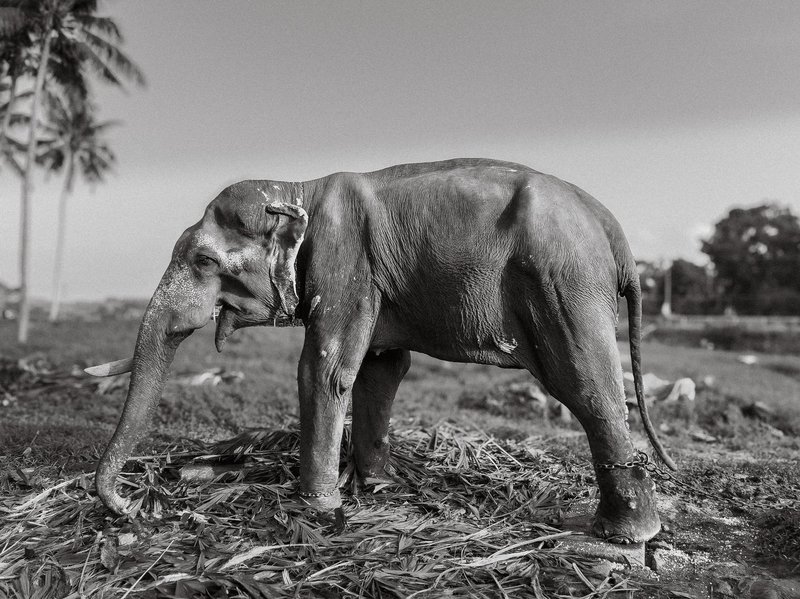
Laos is still one of the few places where wild Asian elephants live in forest rather than only on paper. The “million elephants” figure is long gone: wild numbers are estimated in the hundreds, with a similar number in captivity, many used in logging and tourism. The species is Endangered. Habitat loss from dams, roads and plantations is the main driver, and conflict with farmers is rising.
Indochinese tiger
Scientific name: Panthera tigris corbetti Where to look: Don’t plan around it
Laos had one of mainland Southeast Asia’s last tiger strongholds in Nam Et-Phou Louey National Protected Area. Camera-trap surveys there recorded fewer and fewer animals over the last two decades, and no breeding population has been confirmed in recent years. Snares and the loss of prey, mainly deer and wild pigs, did the damage. The tiger story is a warning about what happens when you protect a forest but not the animals inside it.
Gibbons
Scientific name: several species of Nomascus, including the northern white-cheeked gibbon (N. leucogenys) Where to look: Nam Ha, Nam Et-Phou Louey, and southern forests around the Bolaven Plateau
Laos has several gibbon species, and they’re easier to hear than see. A pair’s duet at dawn carries across valleys for a kilometer or more, and the male and female sing different parts. The northern white-cheeked gibbon is Critically Endangered. Gibbon trekking programs in northern Laos, where guides track the calls before sunrise, give you a reasonable shot at hearing one and a lesser shot at seeing one.
Sun bear
Scientific name: Helarctos malayanus Where to look: Forests statewide, but almost never seen in the wild; rescued animals are at Kuang Si
The sun bear is the world’s smallest bear, with a golden crescent on its chest and a tongue long enough to reach into bee nests. It’s classed as Vulnerable. Laos’ bears are heavily hunted for the bile and paw trade, so many of the animals tourists meet here are rescues from that industry.
Clouded leopard
Scientific name: Neofelis nebulosa Where to look: Camera traps in Nam Et-Phou Louey and other large reserves
Clouded leopards have the longest canine teeth relative to body size of any living cat, and they climb head-down along branches. They’re recorded in Laos mostly by camera traps, and survey teams treat each new image as news. Vulnerable on the IUCN list.
Mekong Irrawaddy dolphin
Scientific name: Orcaella brevirostris (Mekong subpopulation) Where to look: Khone Falls area for history; the Cambodian side for dolphins
The blunt-headed freshwater dolphins of the Mekong once reached up into southern Laos. The IUCN assessment lists the Mekong subpopulation as Critically Endangered and treats Laos as possibly extinct for it. The remaining animals, counted at 89 in a 2020 census, live in a stretch of the Mekong in Cambodia between Kratie and the Khone Falls on the Lao border. Gillnets, electrofishing and dams are the threats.
Fish, newts and other overlooked natives
Birds, reptiles and fish are the weak spot in most “animals of Laos” lists, so a few belong here.
The Mekong giant catfish (Pangasianodon gigas) can reach about 3 meters and 300 kilograms, which makes it among the largest freshwater fish on Earth. It migrates up the Mekong to spawn and is Critically Endangered. Fishers in northern Thailand and Laos have long treated a catch as a major event.
The Laos warty newt (Laotriton laoensis) is a stocky, dark newt with orange-red blotches that lives in cool mountain streams in the north of the country. It’s endemic to Laos, and its small range and popularity in the pet trade put it under pressure. It’s one of 97 amphibian species recorded in the country.
The wildlife trade problem
Almost every species above has the same enemy: demand. Laos sits between China, Thailand and Vietnam, which makes it a supply source and a transit route for pangolins, bear parts, turtles, ivory and big cat products. Weak enforcement, open borders and a few special economic zones with lax oversight keep that trade running. Snares make it worse inside the forests, because they kill indiscriminately and cost almost nothing.
Two practical rules for travelers: don’t buy wildlife products, and don’t eat wild meat in restaurants even when it’s on the menu. Both feed the same supply chain that’s emptied the forest of large animals.
Where to see wildlife in Laos

Be realistic. Laos isn’t an African safari. Forest wildlife here is shy and hunted, so expect birds, gibbon calls, butterflies, fresh tracks and camera-trap photos shown to you by guides, not elephants wandering across the road.
- Nam Et-Phou Louey National Protected Area (Houaphan): The largest protected area in Laos and the best-run for wildlife. Guided treks run through forest where clouded leopards, gibbons and Asian elephants are all on record.
- Nam Ha National Protected Area (Luang Namtha): The ecotourism model for the country. Community-led multi-day treks, a decent chance of gibbon calls, and good birding.
- Bolaven Plateau (Champasak): A cool, fertile plateau with coffee farms, waterfalls and surrounding forests with southern gibbons. Better for landscapes and day hikes than big animals.
- Khone Falls and Si Phan Don (the Four Thousand Islands): The southern Mekong at its widest. This is the Lao end of the Mekong dolphin’s historic range, and the best place to understand the species even though dolphins are now a bigger bet from Kratie in Cambodia.
- Khammouane karst (Hin Nam No area): If limestone cliffs, caves and forests are your thing, this is where the rock rat and bare-faced bulbul live. You won’t see the rock rat. You may see the landscape that explains why it survived.
Hire guides from the village or protected-area office rather than a roadside tout. The fee funds patrols and gives locals a reason to keep animals alive.
Ethical sanctuaries
Laos has plenty of animal attractions and not all of them are good. A rough filter: avoid anything that offers hands-on contact with wild animals, photos with tranquilized cats, or elephant rides with a chair.
- Free the Bears at Kuang Si (Luang Prabang): A rescue center for sun bears and Asiatic black bears taken from the bile and pet trade. The bears can’t be released, and visitors watch from a distance.
- Elephant Conservation Center (Sayaboury): Combines elephant care, forest conservation and research, and doesn’t run rides. Check current rules before visiting, since policies change.
- Mandalao and similar observation-based programs: Look for places where you watch, feed from a distance if allowed, and never ride.
Laos’ native animals are a short list of extraordinary survivors and a long list of species in decline. The endemics are the ones the world will lose first if the forest keeps getting snared out, and the dolphin and the tiger show how fast it can happen. Visit the parks, hire local guides, and leave the wildlife products alone.