As an Amazon Associate we earn from qualifying purchases. Disclosure
My first ball python came home in a 40-gallon glass tank with a screen lid and a heat lamp, the kit most pet stores still sell. By his first January the hygrometer (a humidity gauge) read 30% every morning and he shed in pieces, with rings of old skin stuck to his tail tip.
The best ball python enclosure is a 4x2x2 PVC terrarium (48 x 24 x 24 inches, about 120 gallons) with front doors. PVC walls hold the 60-80% humidity and the warmth this snake needs, and a 4x2x2 fits almost every adult for life. Our top pick is the Reptile Habitats 4x2x2 PVC Enclosure. Glass works too, but only once you cover most of the screen top.
Best ball python enclosures at a glance
Sellers call these terrariums, cages, vivariums or tanks. For a ball python they all need the same thing: a closed box that holds heat and humidity. Every pick below opens from the front. Snakes read anything coming from above as a predator, so a top-opening tank makes every feeding and cleaning more stressful.
| Enclosure | Size (inches) | Material | Best for |
|---|---|---|---|
| Reptile Habitats 4x2x2 | 48 x 24 x 24 | PVC | Most adults (top pick) |
| Zen Habitats 4x2x16 | 48 x 24 x 16 | PVC | Low enclosure, warranty |
| ToxiRium 4x2x2 | 48 x 24 x 24 | PVC | Second 4x2x2 option |
| REPTI ZOO 50 Gallon PVC | 36 x 18 x 18 | PVC | Juveniles and small males |
| Reptile Habitats 36x18x12 | 36 x 18 x 12 | PVC | Hatchlings |
| REPTI ZOO 34 Gallon Black-Sided | 36 x 18 x 12 | Glass | Hatchlings on a budget |
| Carolina Custom Cages 48x24x18 | 48 x 24 x 18 | Glass | Adults, if you want glass |
| New Age Pet ECOFLEX Mojave 72 | 72 x 24 x 23 (inside) | Composite | Big females |
What size enclosure does a ball python need?
An adult ball python needs at least 48 x 24 x 24 inches of space (a 4x2x2, about 120 gallons). A rule I trust: the enclosure should be at least as long as the snake. Most adult males reach 3 to 4 feet. Females often hit 4 to 5 feet and are much heavier.
| Stage | Typical length | Enclosure |
|---|---|---|
| Hatchling (0-12 months) | 10-30 in | 36 x 18 x 12 in, or a 4x2x2 packed with cover |
| Juvenile (1-2 years) | 2-3 ft | 36 x 18 x 18 in at least |
| Adult male | 3-4 ft | 48 x 24 x 24 in (4x2x2) |
| Adult female | 4-5 ft and up | 4x2x2; a 6x2x2 (72 x 24 x 24 in) gives a big one more room |
The old 40-gallon tank (36 x 18 x 16 inches) is a fine first home for a young snake and too small for an adult. If you are not sure how old your snake is, its length tells you more than its age.
The best ball python enclosures for adults
For an adult, buy a PVC 4x2x2 once and stop shopping. These are the three I would choose between, plus one glass terrarium for owners who want glass.
Best overall
1. Reptile Habitats 4x2x2 PVC Enclosure
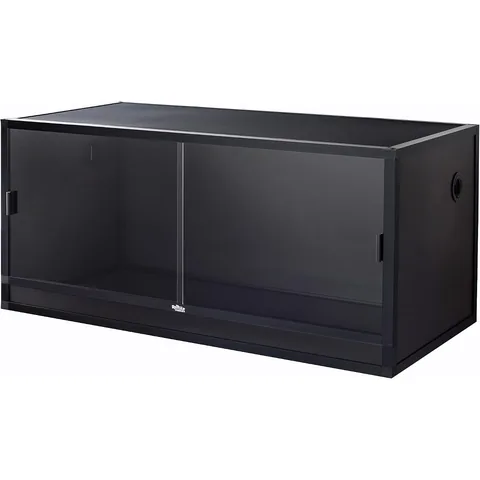
This is a 120-gallon PVC enclosure with front access and room for any adult. Solid PVC on the back, sides and floor keeps humidity in, and the screen top lets heat and light in from above. If I were setting up an adult ball python tomorrow, this is the size and layout I would start with.
- Exterior 48 3/16 x 24 3/16 x 24 3/16 in, listed at 120 gallons
- PVC bottom, back and sides, acrylic front panel, glass door, aluminum frame
- Cord ports with covers for heat panel and thermostat wires
- Ships flat with a mallet; assembly video and PDF on the maker’s page
Good: holds humidity, room for any adult, simple heat mounting. Not great: you assemble it on the floor with a mallet, and the screen-top support bars are fiberglass and not meant to carry weight.
Best low-profile PVC
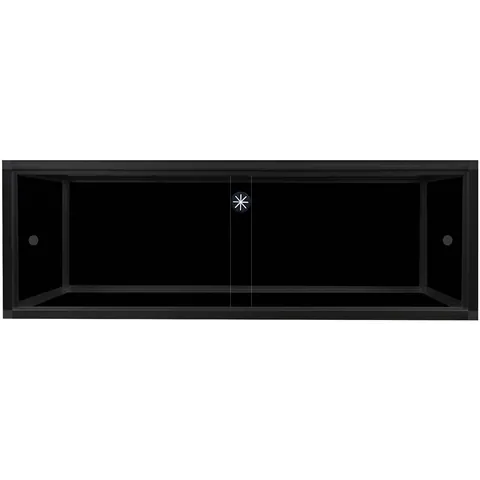
2. Zen Habitats 4x2x16 PVC Enclosure (3.0)
Ball pythons live on the ground, so a 16-inch ceiling costs them less than it would cost a climbing snake. Zen backs it with a 5-year limited warranty and ships the screws and tool in the box.
- Exterior 48 x 24 x 16 in, listed at 80 gallons
- PVC panels the maker rates for 0-100% humidity
- Sliding, removable acrylic doors with a wire door lock
- Includes a 6 in clear substrate shield and two grommet plugs; 8 screws and the tool in the box, no mallet
Good: easy screw-together build, deep substrate shield, long warranty. Not great: little room for branches, and the doors are acrylic, not glass.
Another 4x2x2 PVC option
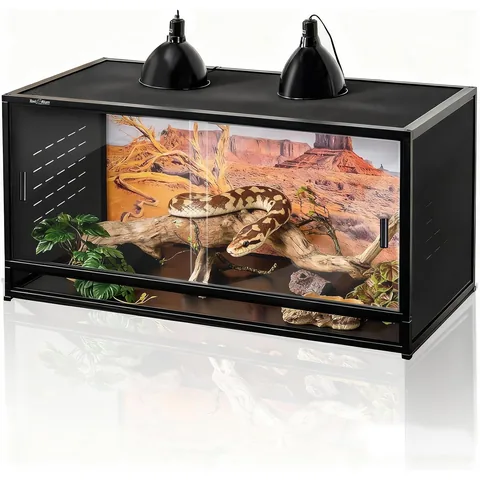
3. ToxiRium 4x2x2 PVC Enclosure
If the Reptile Habitats build is out of stock, this is the 4x2x2 I would look at next. It is the only 4x2x2 PVC listing we found that offers top covers to hold in more heat. The listing does not say whether the covers ship in the box.
- Exterior 48 x 24 x 24 in, listed at 120 gallons; 50 lb
- PVC panels, aluminum frame, steel mesh top
- Tempered-glass sliding doors with a lock
- Raised base and support bars for heat fixtures
Good: lockable glass doors, optional top covers. Not great: a new brand with little track record.
Best glass terrarium for adults
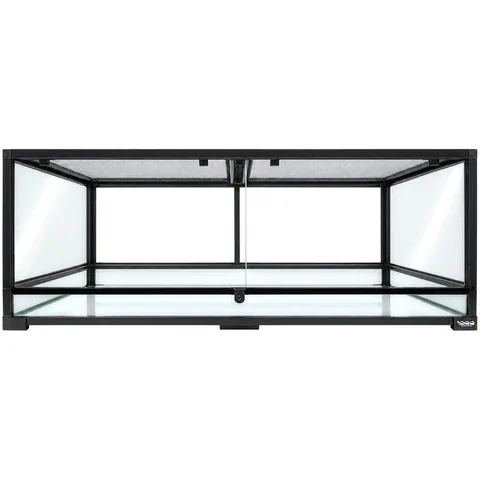
4. Carolina Custom Cages 48x24x18 Glass Terrarium
If you want an all-glass terrarium, get one with a deep, waterproof base. The 4-inch tray on this one holds a deep layer of damp substrate (the bedding on the floor) and keeps it out of the door tracks. Plan to cover most of the screen top on day one.
- 48 x 24 x 18 in, all tempered glass; 73 lb
- Waterproof base tray 4 in deep
- Sliding doors with a key lock
- Full steel mesh screen top
Good: four-foot footprint, key lock, deep base for damp substrate. Not great: heavy, and the open screen top loses humidity until you cover it.
Best enclosures for hatchlings and juveniles
A young ball python does well in a smaller enclosure for its first year or two, as long as the space is warm, humid and full of places to hide. Buy one of these if you plan to upgrade later, or skip straight to a 4x2x2 and fill it with cover.
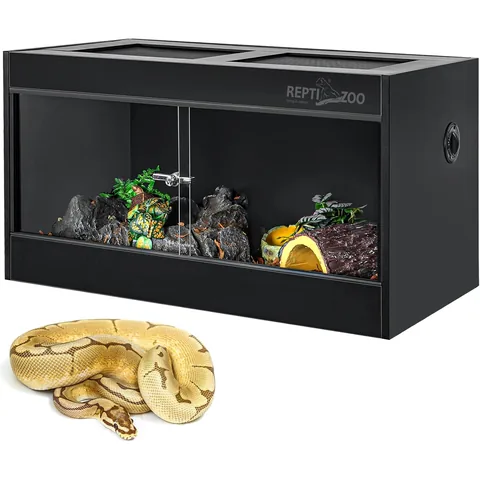
Best for juveniles and small males
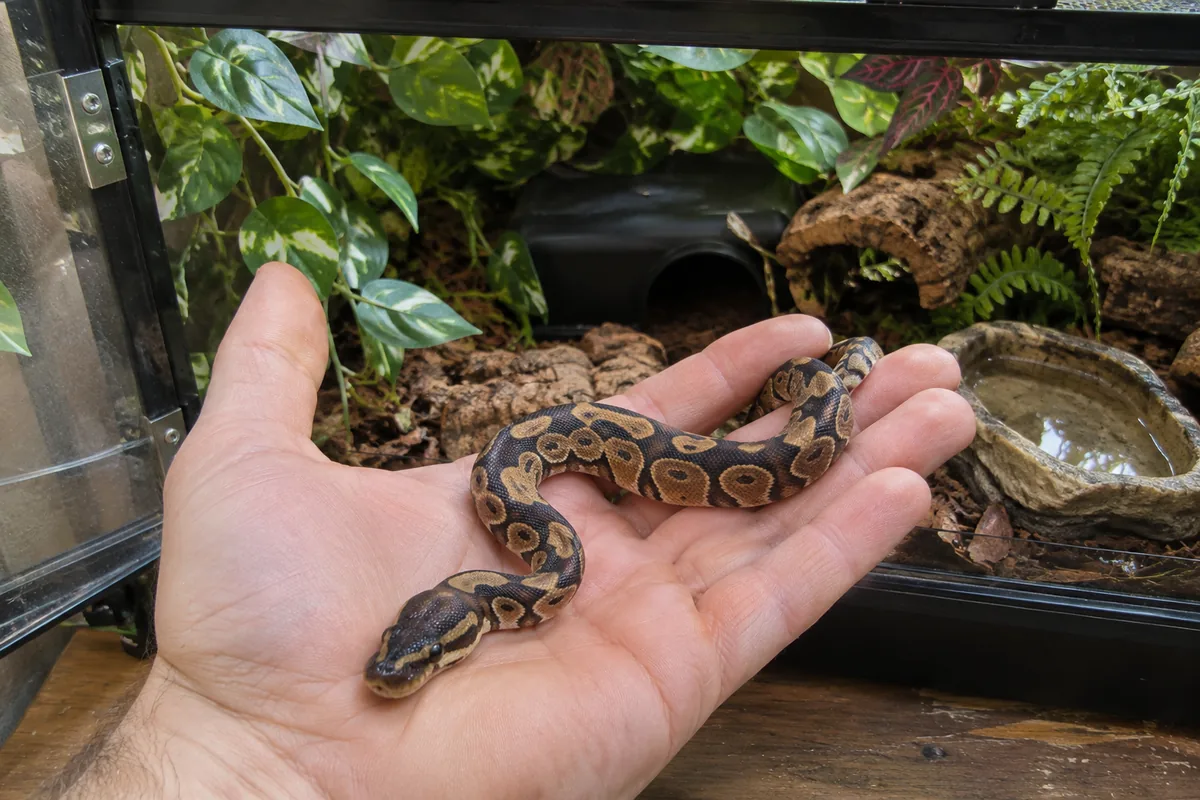
5. REPTI ZOO 50 Gallon PVC Enclosure 36x18x18
This is the size between a hatchling setup and a 4x2x2. I would use it for a juvenile of 2 to 3 feet. A full-size female will outgrow it quickly.
- 36 x 18 x 18 in, listed at 50 gallons; 39.85 lb
- PVC body
- Removable tempered-glass sliding door with a safety lock
- Detachable mesh screen top
Good: PVC humidity in a smaller footprint, lockable door. Not great: too short for most adults, and the warranty is only 90 days.
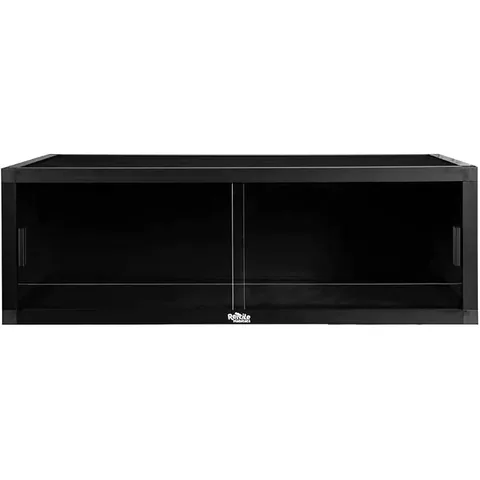
Best hatchling enclosure
6. Reptile Habitats 36x18x12 PVC Snake Terrarium
The maker lists this low 33-gallon size for ball pythons. Twelve inches of height is plenty for a young snake that rarely climbs, and the PVC sides give a hatchling the closed-in feel it looks for. At 15 lb it is also the easiest pick here to move.
- Exterior 36 3/16 x 18 3/16 x 12 3/16 in, listed at 33 gallons
- PVC bottom, back and sides, acrylic front, glass door, screen top
- Ships flat with a mallet; 15 lb
Good: PVC walls, light, right height for a young snake. Not great: a starter size; your snake will need a 4x2x2 later.
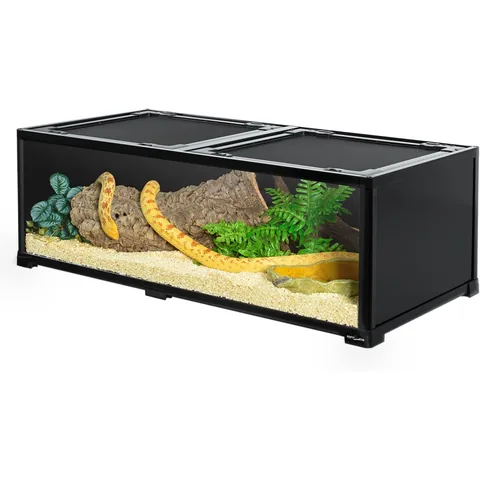
Best budget glass for hatchlings
7. REPTI ZOO 34 Gallon Black-Sided Glass Terrarium 36x18x12
Clear glass on four sides leaves a nervous young snake nowhere to feel hidden. This one has black glass on three sides and a clear front, which gets you most of that closed-in feel at a glass price.
- 36 x 18 x 12 in tempered glass; 33 lb
- Black opaque glass on three sides, clear front door
- Two openable mesh top covers and a cable hole
- Raised bottom frame for a substrate heater
Good: dark sides, front access, lower cost. Not great: the mesh top loses humidity, and the snake will outgrow it.
Best enclosure for a large female ball python
A female over 5 feet is better off with 6 feet of floor. Most 6x2x2 PVC builds cost noticeably more than a 4x2x2. The Mojave below gets you the length for less money, as long as you accept its humidity trade-off.
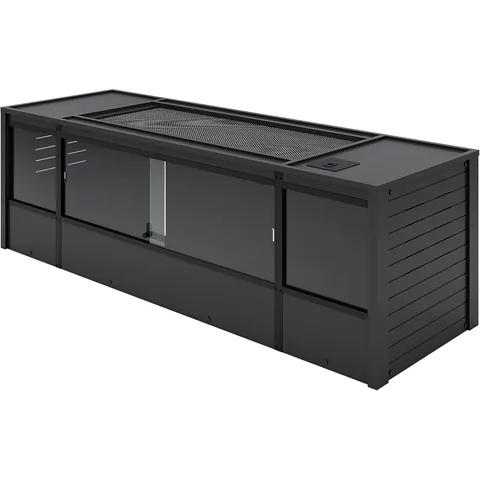
Best for big females
8. New Age Pet ECOFLEX Mojave 72 in Enclosure
Six feet of floor inside gives a big female room to stretch out fully. The catch is the vented ECOFLEX composite body: the 48-inch version of this line says it is not waterproof and is best for low to moderate humidity. I would only choose it for a snake kept in a humid room, with a hygrometer on the cool side to prove the numbers hold.
- Interior 72 x 24 x 23 in; 78 lb
- ECOFLEX composite body, vented side panels, mesh screen top
- Sliding glass doors with a lock
- 10-year limited warranty
Good: full 6-foot length, long warranty. Not great: harder to keep at 60-80% humidity than PVC; keep water off the panels.
PVC vs glass: which holds humidity better?
PVC holds humidity and heat far better than glass because the walls are solid and insulated, and the only big opening is the front door. A glass tank with a full screen top loses warm, moist air through the lid all day. Ball pythons need 60-80% humidity, and a heated glass tank in a dry house can drop below 40% overnight.
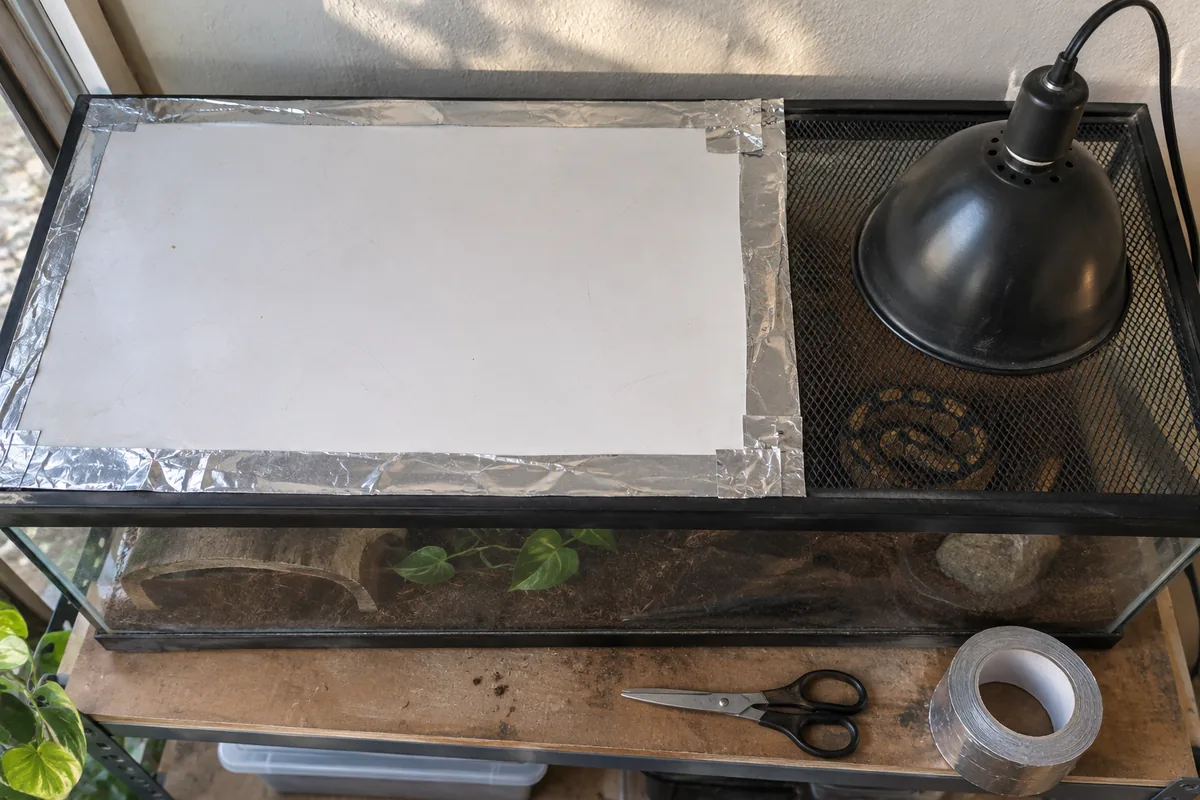
Glass is not a dead end. That first winter I cut a plastic cutting board to fit two-thirds of the screen lid and sealed the edges with foil tape, leaving only the strip under the heat lamp open. The overnight reading climbed into the 60s and stayed there.
| PVC | Glass | Wood or composite | |
|---|---|---|---|
| Holds humidity | Very well | Poorly until you cover the top | Moderately; water can swell or stain the panels |
| Holds heat | Well | Poorly | Moderately (vented models less) |
| Weight (4 ft) | About 35-50 lb | About 70-90 lb | About 50-80 lb |
| Arrives | Flat-packed | Assembled | Flat-packed |
| Cost | Budget to premium | Budget to premium | Budget to mid-range |
The most common beginner mistake is buying a glass tank with a screen lid and then fighting humidity for a year. If your budget allows PVC, buy PVC. If it does not, put a hygrometer on the cool side the day you set up the glass tank and cover the lid before the snake moves in.
Can a ball python enclosure be too big?
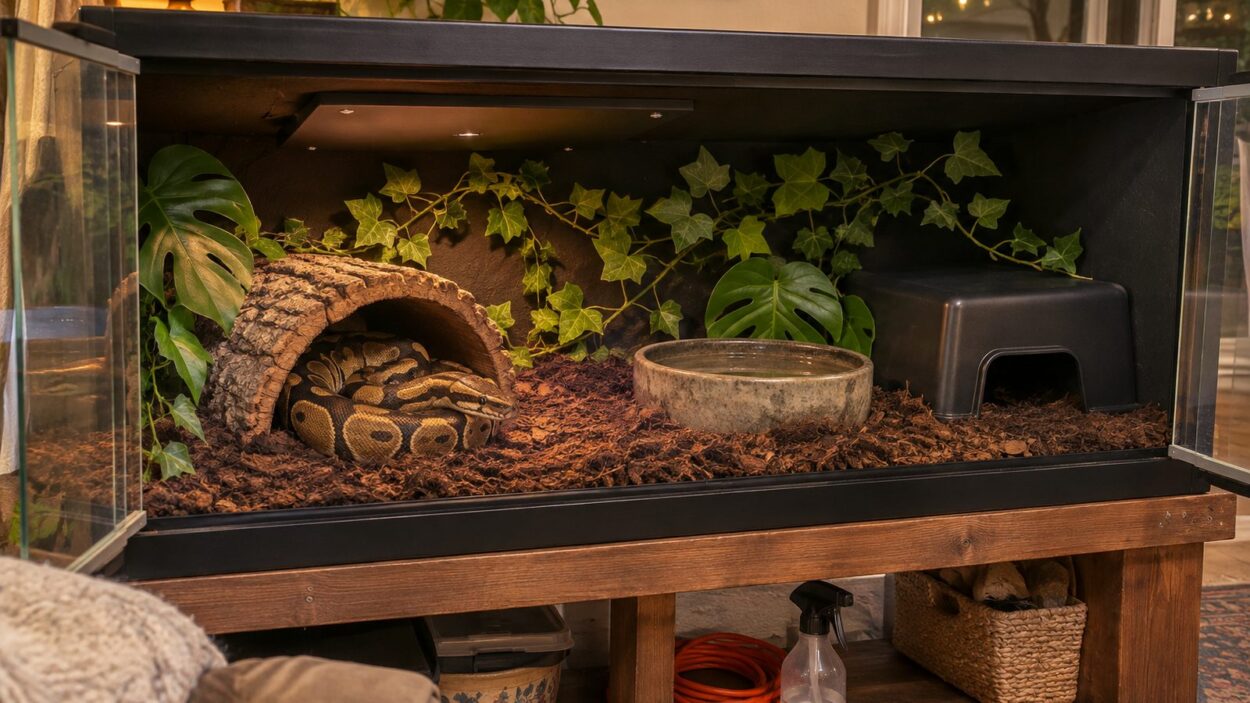
No. An enclosure is only too big when it is empty. Ball pythons feel safe when their bodies touch something on most sides, so a bare 4x2x2 with two hides feels like an open field.
I learned that the year he moved from glass into his first 4x2x2. He wedged himself into one hide and refused two meals. I added cork rounds, a third hide, and a tangle of fake vines and leaves until you could not see across the floor. Within a week he was cruising the full length at night.
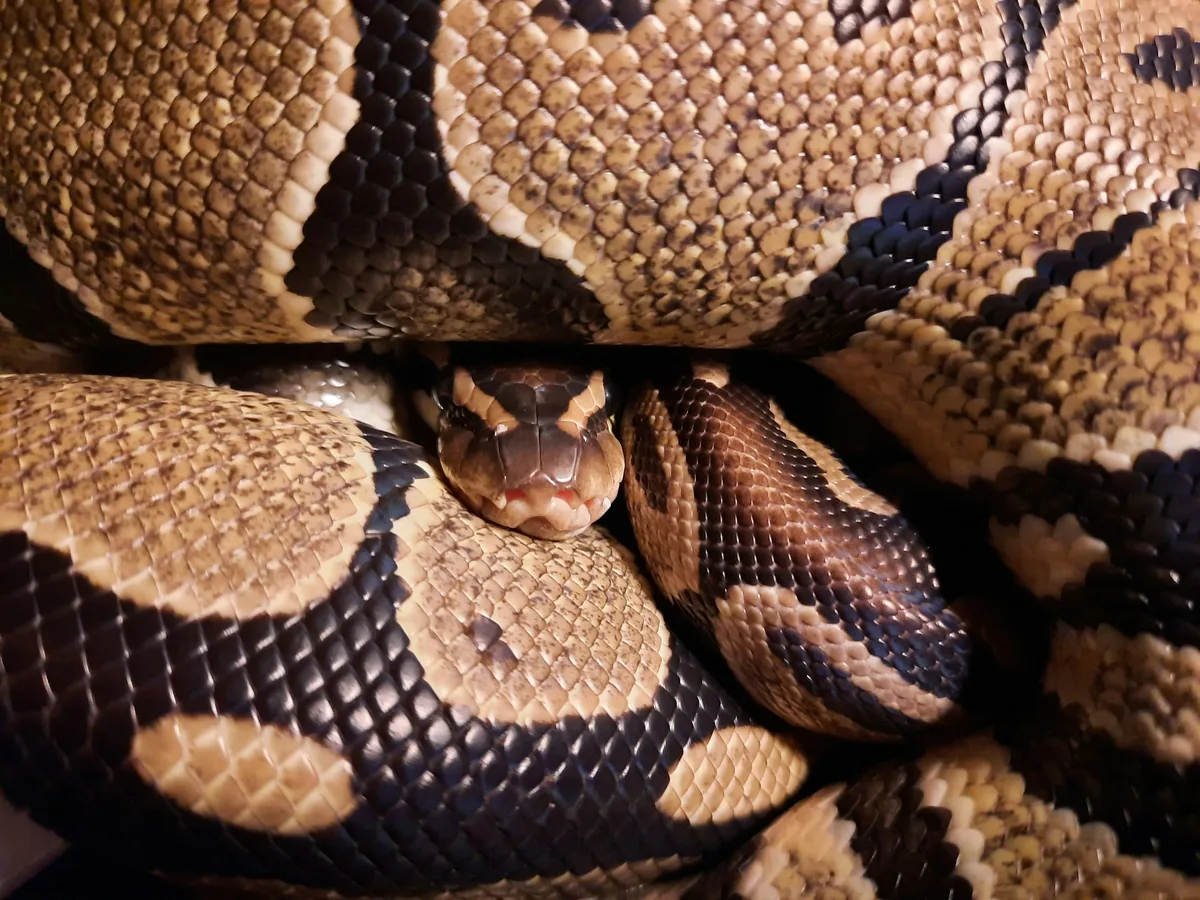
Fill the space with at least two identical hides (small dark caves, one on the warm side, one on the cool side), cork bark or branches, and enough plants that the snake can cross the enclosure without being out in the open.
Heat, humidity and locks: what every enclosure needs
An enclosure does not come with heat. A ball python needs a warm spot of 88-92°F (31-33°C) on one end and 75-80°F (24-27°C) on the other, and every heat source has to run through a thermostat.
I skipped the thermostat once, with a dome lamp on a glass tank. On a July afternoon my infrared thermometer read 104°F on the tile under the lamp. Every heat source I have set up since runs through a thermostat, with the probe on the surface where the snake lies.
In a PVC enclosure, the safest option is a radiant heat panel screwed to the ceiling inside, over the warm end. With a glass tank you can also use a ceramic heat emitter (a bulb that gives off heat but no light) in a dome above the screen.
Heat source for a 4×2 enclosure
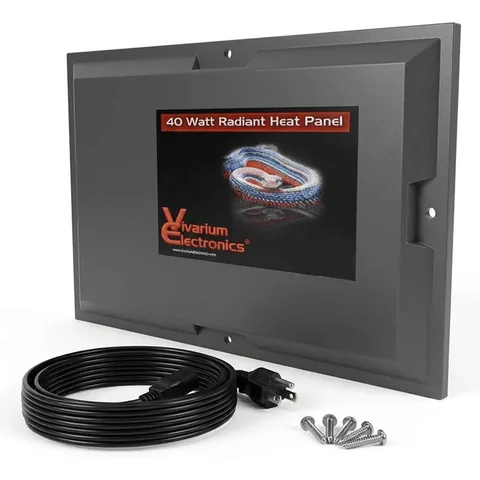
9. Vivarium Electronics 40W Radiant Heat Panel
A radiant panel mounts on the ceiling inside the enclosure, out of reach, and warms the floor and the snake below it rather than the air. That leaves the cool end cool.
- 12.5 x 12.5 x 1.75 in, 2.27 lb
- Heats the basking area; most effective within 16 in below the panel
- Sized for enclosures 2×4 ft or smaller in rooms above 75°F
- Thermal fuse; made to run with a thermostat; lifetime maker warranty
Good: no bulb to burn out, thermal fuse, mounts out of the way. Not great: needs a thermostat, and a cold room may need the 80W size.
Thermostat
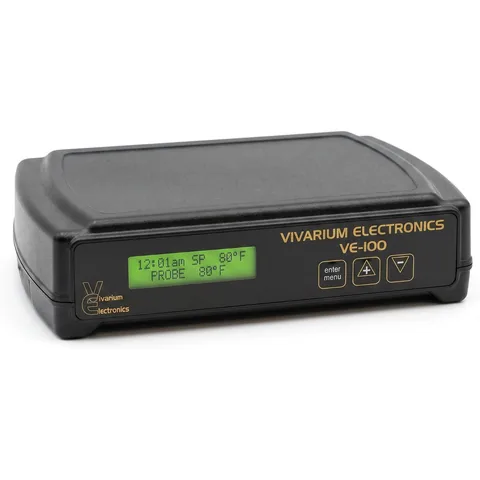
10. Vivarium Electronics VE-100 Thermostat
This switches the heat source on and off around the temperature you set, read from a probe at the basking spot. It remembers its settings after a power cut, which matters when you are away for a weekend.
- On/off digital control with probe, 700 W capacity (far above a 40W panel)
- Back-lit display, locking probe cord, user-replaceable fuse
- Keeps settings through a power failure
Good: simple, keeps its settings. Not great: on/off only, so a lamp will flick on and off instead of dimming.
Add a digital hygrometer with a probe on the cool side, and a substrate that holds moisture, such as cypress mulch or coconut husk, 3-4 inches deep. Raise humidity by mixing water into the bottom layer, not by spraying the snake.
Doors, locks and escape-proofing
Ball pythons are strong for their size and test every gap. Buy an enclosure with a door lock, or add one, and use it every time.
The one escape I had came from a sliding door left a finger-width open after a feeding. I found him two days later behind a bookshelf. Every door I own has a lock pin in it now.
- Sliding doors: easy to leave slightly open. Use the lock or a pin through the track.
- Hinged doors: check the gap where the doors meet. A hatchling can push through a gap you would not notice.
- Screen tops: make sure every clip is closed, and never leave a heavy lamp resting on mesh that sags.
- Cord ports: use the covers or grommets, so the opening is no bigger than the cords.
If you are still choosing a species and not sure a ball python fits your space, our snake quiz matches snakes to your home and experience.
FAQ
Is a 40 gallon tank big enough for a ball python?
A 40-gallon tank suits a hatchling or young juvenile, not an adult. Plan the move to a 4x2x2 by the time the snake is about 3 feet long.
Can a ball python live in a plastic tub?
Breeders keep ball pythons in plastic tubs on rack systems, and tubs hold humidity well. A tub works for a hatchling or as a temporary home, but it gives an adult no room to move or explore. For a pet you keep for 20 or more years, an enclosure of at least 4 feet is the better home.
Can you keep a ball python in a bioactive enclosure?
Yes. A bioactive ball python enclosure uses live plants, a drainage layer and cleanup insects such as isopods and springtails. PVC suits it best because the panels do not rot. Some makers recommend sealing the inside seams with silicone first.
How many hides does a ball python need?
A ball python needs at least two hides, so it never has to choose between feeling safe and the right temperature. Make each hide snug enough that the coiled snake touches the walls.
Can two ball pythons live in the same enclosure?
No. Ball pythons live alone in the wild, and two in one enclosure compete for the best hides and heat. Housing them together also hides which snake is not eating, refuses food or is ill. Give each snake its own enclosure.
Do ball pythons need UVB lighting?
UVB lighting is optional for ball pythons, which are mostly active at night. Many keepers now add a low-output UVB tube over part of the enclosure. If you do, keep the hides in the shade, and put the light on a day and night timer.
How do you clean a ball python enclosure?
Remove waste and soiled substrate as soon as you see it, and change the water daily. Every month or two, replace the substrate and wipe the PVC or glass with a reptile-safe disinfectant, then rinse and dry it before the snake goes back in.
Where should you put a ball python enclosure in the house?
Put the enclosure in a room that stays between 68 and 80°F, away from windows, heating vents and air conditioners. Direct sun through glass can overheat it within an hour. A quiet room with little foot traffic also helps a nervous snake settle.