England has roughly 1,400 native flowering plants and ferns, and well over a thousand more that have settled in from elsewhere. Nobody needs to memorise that list. What you need is a handful of plants that explain the landscape: why a chalk down looks nothing like a Pennine moor, and why an April woodland turns blue overnight.
This guide covers 15 plants of England, grouped by the habitat where you’ll find them. Each entry gives the common and Latin name, what to look for, where to see it and when it flowers. For the full scientific record, the BSBI Plant Atlas 2020 maps every species down to the square kilometre.
Contents
- Woodland plants of England
- Meadow and hedgerow plants
- Heath and moorland plants
- Coast and chalk grassland plants
- Wetland plants
- Quick-reference table
- What is England’s national flower?
- Seeing wild plants responsibly
Woodland plants of England
Woodland plants run on a tight schedule. Many flower in March to May, before the tree canopy closes and shuts out the light. A field guide to temperate forest flora, layer by layer shows how the same wood changes through the year.
1. Bluebell (Hyacinthoides non-scripta)
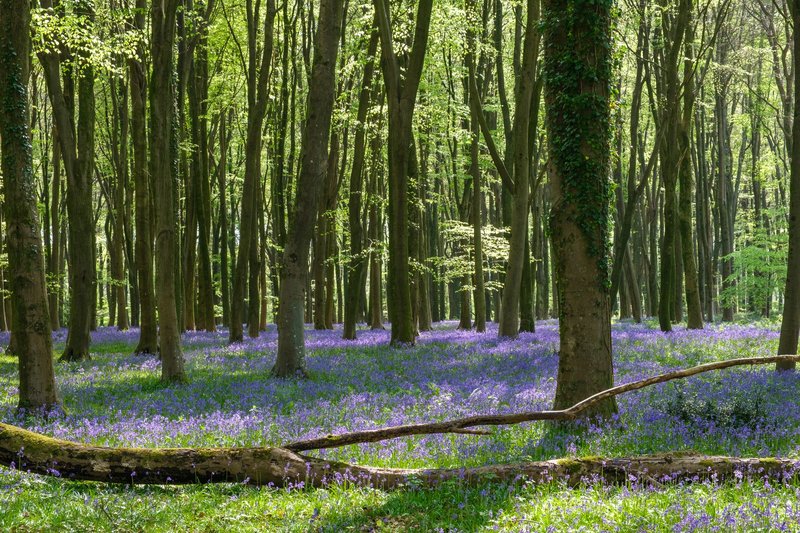
Flowers: April to May. See it: ancient woods across England, especially in the south and west.
Britain holds around half of the world’s bluebells, which is why a wood in full bloom is a national event. The native species has narrow, drooping flowers hanging on one side of an arching stem, with cream pollen. The Spanish bluebell, a garden escape that hybridises with it, has upright stems, flowers all the way round and blue pollen. Check the stem and you’ll know which you’re looking at.
Under the Wildlife and Countryside Act 1981 it’s an offence to sell wild-collected bluebell bulbs or seeds. Stay on the path, because trampled leaves can take years to recover.
2. Wild garlic or ramsons (Allium ursinum)
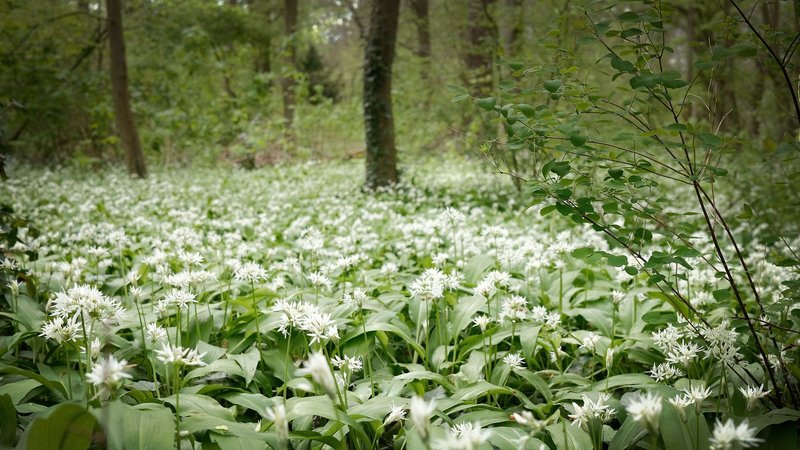
Flowers: April to June. See it: damp, shady woodland, stream banks and old hedgerows.
You’ll smell it before you see it. Broad, bright green leaves carpet the ground and white starry flowers open above them. Crush a leaf: if it doesn’t smell strongly of garlic, don’t eat it. Lords-and-ladies (arrow-shaped leaves, no smell) and lily of the valley are both toxic and grow in the same places.
3. Foxglove (Digitalis purpurea)
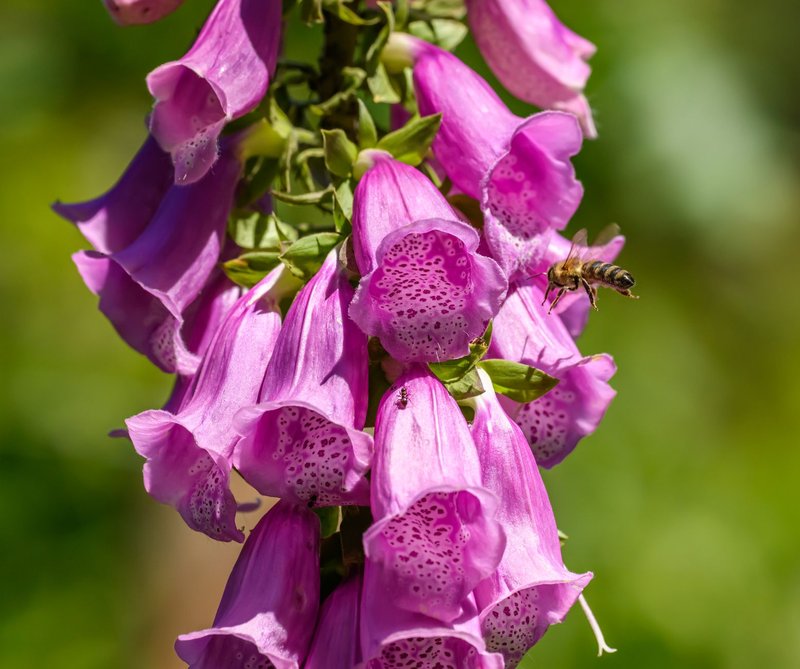
Flowers: June to September. See it: woodland clearings, hedgebanks and acidic heath, especially in Devon, Cornwall and the north.
A biennial: the first year is a leaf rosette, the second a 1.5 metre spire of purple bells with spotted throats. Bumblebees crawl right inside them. Every part of the plant is poisonous, and it’s the original source of digoxin, still used in heart medicine.
4. English oak (Quercus robur)
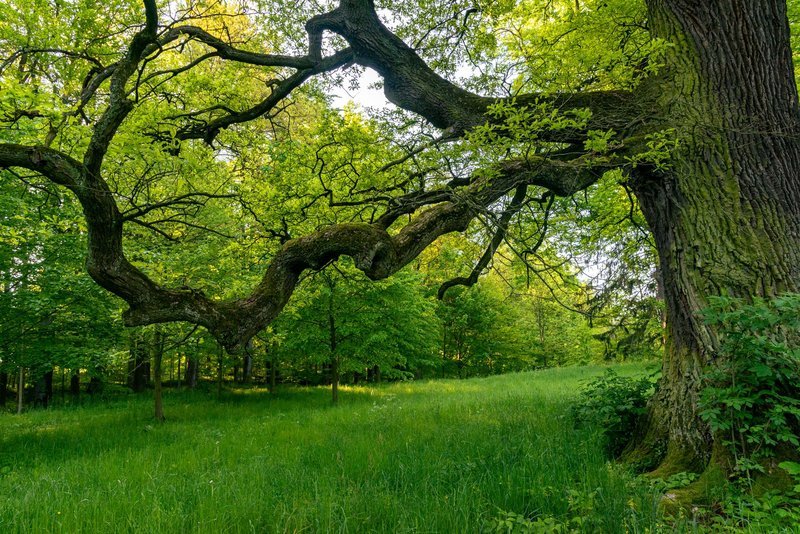
Flowers: April to May (catkins). See it: hedgerows, parkland and lowland woods, especially on heavy clay.
The “robur” oak has leaves with almost no stalk and acorns on long stalks, the reverse of its cousin the sessile oak. It supports more insect species than any other native tree, with the Woodland Trust counting more than 2,300 species of wildlife that use it. The Major Oak in Sherwood Forest, Nottinghamshire, is thought to be 800 to 1,000 years old.
Meadow and hedgerow plants
Most of England’s meadows were ploughed or reseeded in the twentieth century. What’s left is patchy, and it’s worth finding.
5. Cowslip (Primula veris)
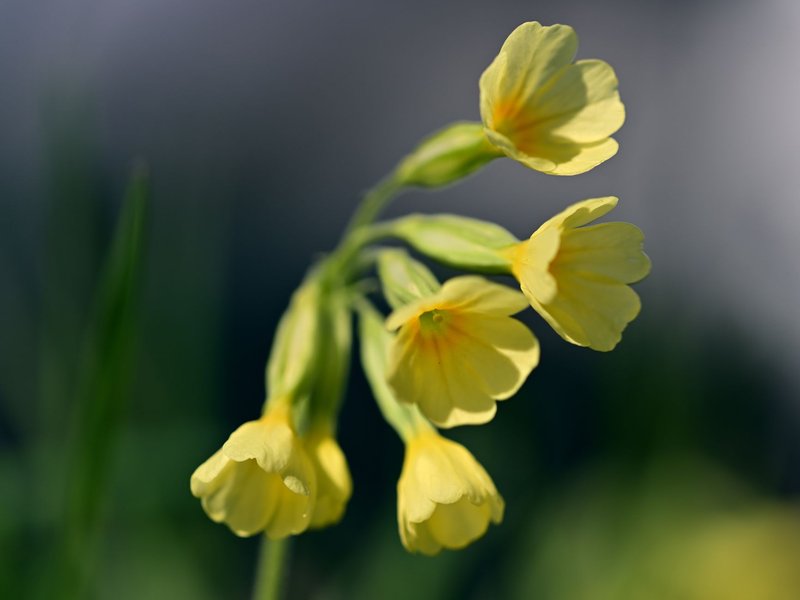
Flowers: April to May. See it: lime-rich meadows, chalk grassland and road verges.
Small, nodding clusters of deep yellow flowers with a faint sweet scent. Cowslips crashed in numbers as old pastures were improved, then partly recovered on roadside verges left uncut until summer. They’re close relatives of the primrose, which has single, pale flowers.
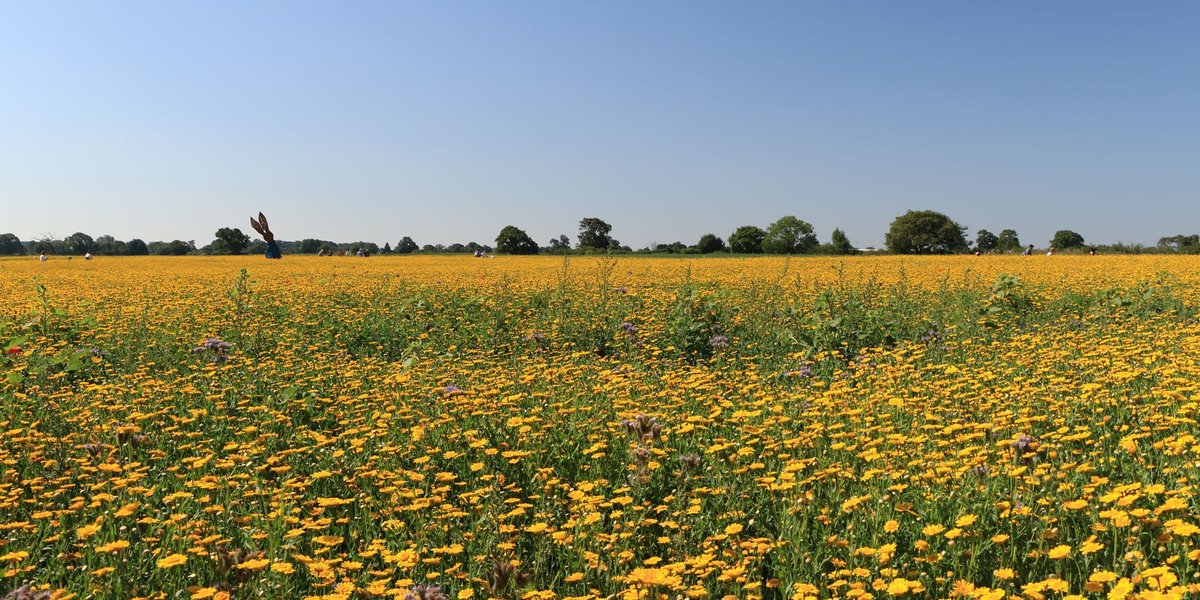
6. Oxeye daisy (Leucanthemum vulgare)
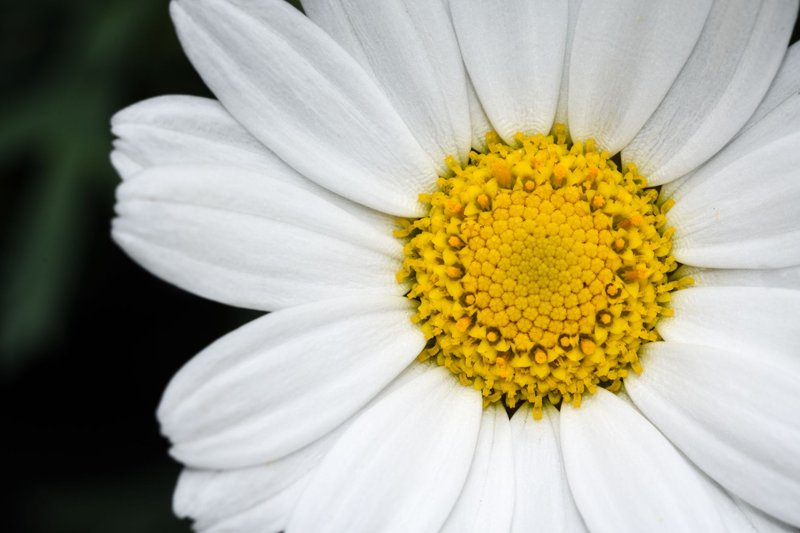
Flowers: June to August. See it: unimproved meadows, verges and railway embankments.
The big daisy, with flower heads up to 5 cm across, standing knee-high or taller. It’s often confused with the smaller scentless mayweed and with garden Shasta daisies. The oxeye’s basal leaves are spoon-shaped with rounded teeth, which separates it from both.
7. Common poppy (Papaver rhoeas)
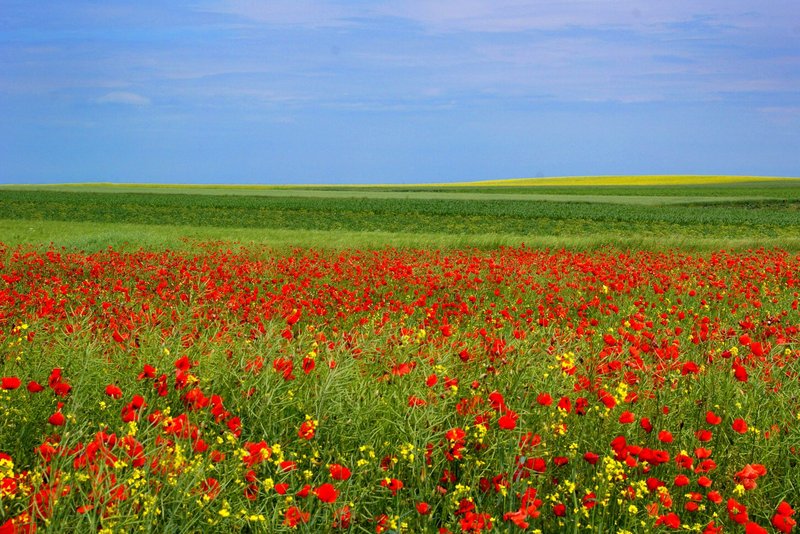
Flowers: June to August. See it: arable field edges, new road verges and any ground that’s been recently disturbed.
Technically an archaeophyte: it arrived with the first farmers, thousands of years ago, which makes it as English as wheat. The seeds can lie dormant in soil for decades, then germinate in thousands when the ground is turned. A field of poppies means the soil was disturbed last year.
8. Hawthorn (Crataegus monogyna)
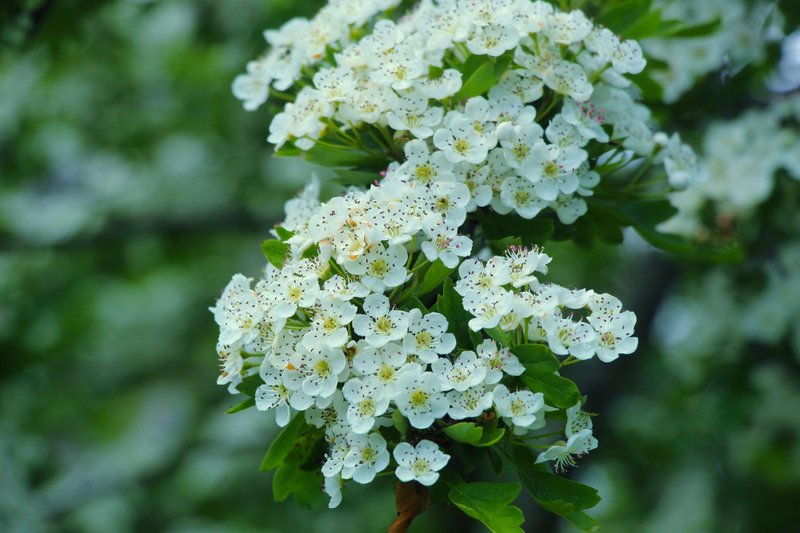
Flowers: May. See it: hedgerows in every English county.
Hawthorn is the hedge plant. Huge lengths of it were planted during the Enclosure Acts of the eighteenth and nineteenth centuries, and it’s why May is nicknamed “may blossom” month. The white flowers turn into red haws by autumn, a major food for thrushes and redwings. Midland hawthorn (C. laevigata) is similar but has rounded leaf lobes and two to three styles per flower, instead of one.
Heath and moorland plants
Acidic, peaty uplands and sandy lowland heaths support some of England’s most distinctive and most threatened vegetation.
9. Heather or ling (Calluna vulgaris)
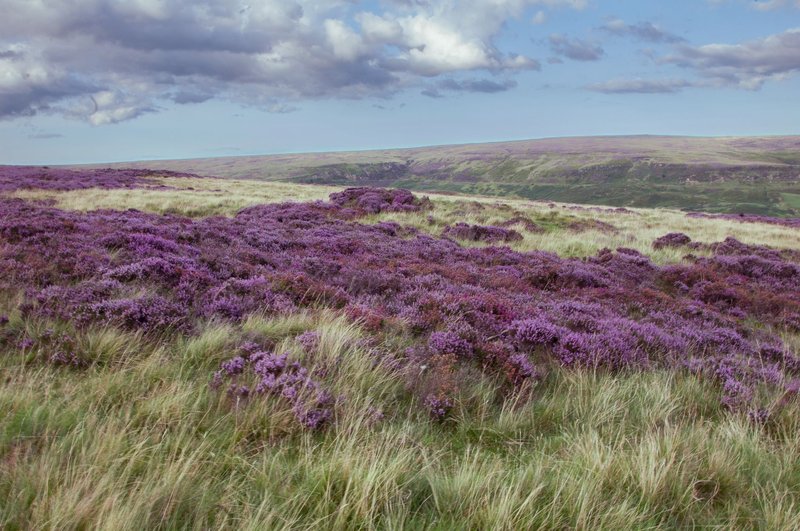
Flowers: August to September. See it: North York Moors, Peak District, Dartmoor, Exmoor, and lowland heaths such as the New Forest.
The plant that turns the moors purple. Ling flowers late, with tiny pale-mauve bells packed along the stem. Bell heather (Erica cinerea) flowers earlier, in July and August, and is a deeper purple. A large share of the world’s remaining heather moorland is in Britain, which gives England some responsibility for it. The habitat-by-habitat guide to Scotland’s plants covers the moors further north.
10. Round-leaved sundew (Drosera rotundifolia)
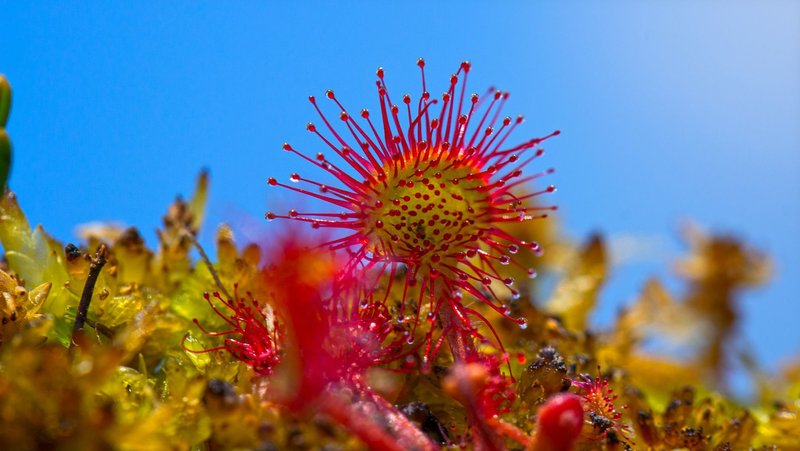
Flowers: July to August. See it: wet heath and bog pools in the New Forest, Dartmoor and the Lake District.
A carnivorous plant that grows in England. Each leaf is under 1 cm wide and covered in red hairs tipped with sticky droplets. A midge lands and the hairs slowly curl around it. It grows in nutrient-poor bogs where it needs to eat insects to get nitrogen. The flower is tiny, white and only opens in sunshine.
11. Common cottongrass (Eriophorum angustifolium)
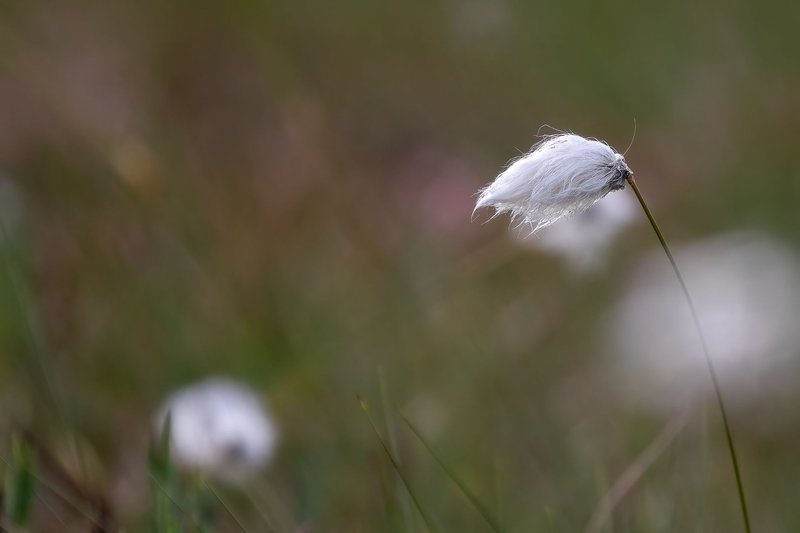
Fruiting: May to July. See it: blanket bog on the Pennines, Dartmoor and the North York Moors.
It’s a sedge, not a grass. The white tufts are seed heads and they turn bog surfaces into something that looks like it’s been snowed on in June. The Pennine blanket bogs around Kinder Scout and Bleaklow are some of the best places to see it. The upper Teesdale area in County Durham also holds rare arctic-alpine plants such as spring gentian that survived here since the last ice age.
Coast and chalk grassland plants
Chalk and limestone downs and sea cliffs both have thin, poor soil. That keeps coarse plants from taking over, so smaller wildflowers get their chance.
12. Sea thrift (Armeria maritima)
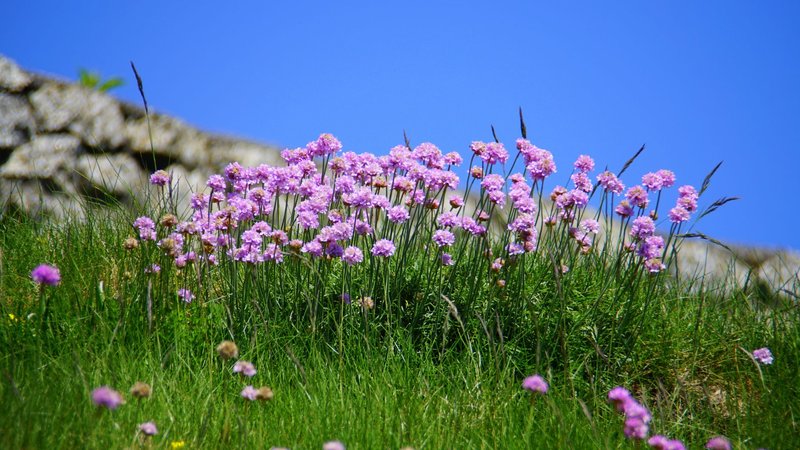
Flowers: April to August, peaking in May and June. See it: sea cliffs and salt marshes, especially in Cornwall, Devon and the north-east coast.
Pink pompoms on short stalks, growing in dense cushions on cliff edges where almost nothing else will. It tolerates salt spray and wind that flattens other plants. It appeared on the old twelve-sided threepenny bit, struck from 1937 to 1952.
13. Bee orchid (Ophrys apifera)
Flowers: June to July. See it: chalk downland such as the South Downs and the North Downs, disused quarries and sometimes lawns.
The lip of the flower looks like a bumblebee, pink petals above, fuzzy brown body below. Its pollinating bee doesn’t occur in Britain, so English plants mostly pollinate themselves. Orchids can’t be transplanted because they depend on soil fungi, so never dig one up.
Wetland plants
Ponds, ditches, fens and wet meadows are among the most altered habitats in England, because so much of it was drained for farmland.
14. Yellow flag iris (Iris pseudacorus)
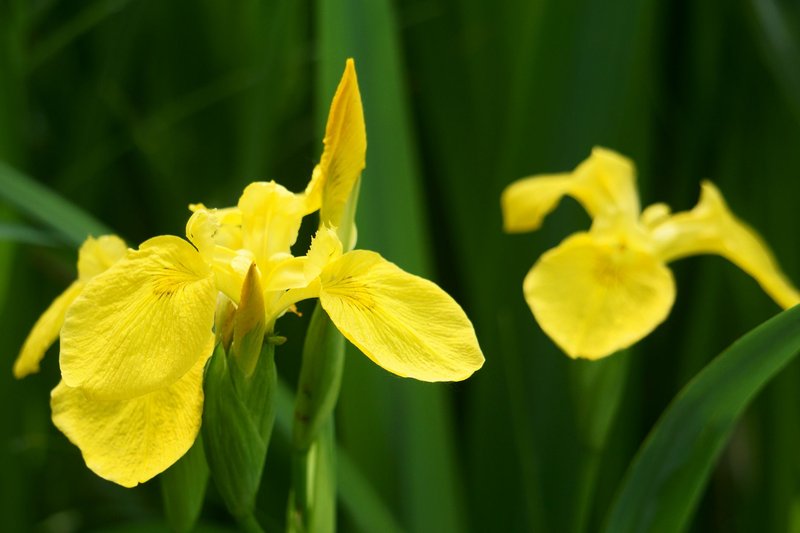
Flowers: May to July. See it: pond edges, ditches, river banks and marshes.
Tall, sword-shaped leaves and bright yellow flowers. It’s England’s only native yellow iris. The sap irritates skin, so wear gloves if you’re clearing it from a garden pond. Its roots were once used to make a black dye and ink.
15. Ragged-robin (Silene flos-cuculi)
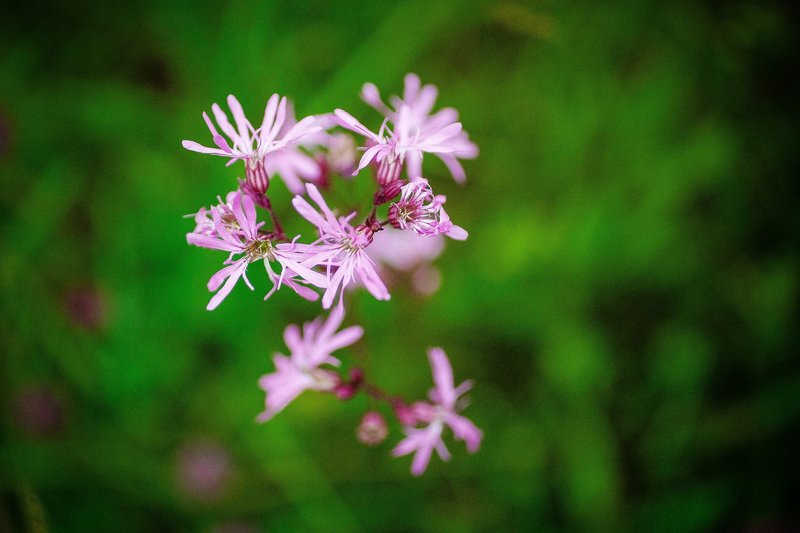
Flowers: May to August. See it: damp meadows, fen edges and marshy grassland.
Pink petals cut into four narrow, ragged lobes, which looks like a flower that’s been through the shredder. It lost many English sites as wet meadows were drained, which makes it a good indicator of surviving old meadow. If you find it, you’ve found a good field.
Quick-reference table
| Plant | Latin name | Habitat | Flowers |
|---|---|---|---|
| Bluebell | Hyacinthoides non-scripta | Ancient woodland | Apr to May |
| Wild garlic | Allium ursinum | Damp woodland | Apr to Jun |
| Foxglove | Digitalis purpurea | Clearings, heath | Jun to Sep |
| English oak | Quercus robur | Woodland, hedgerow | Apr to May |
| Cowslip | Primula veris | Lime-rich meadow | Apr to May |
| Oxeye daisy | Leucanthemum vulgare | Meadow, verge | Jun to Aug |
| Common poppy | Papaver rhoeas | Arable edges | Jun to Aug |
| Hawthorn | Crataegus monogyna | Hedgerow | May |
| Heather | Calluna vulgaris | Moor, heath | Aug to Sep |
| Round-leaved sundew | Drosera rotundifolia | Bog, wet heath | Jul to Aug |
| Common cottongrass | Eriophorum angustifolium | Blanket bog | May to Jul (fruiting) |
| Sea thrift | Armeria maritima | Cliffs, salt marsh | Apr to Aug |
| Bee orchid | Ophrys apifera | Chalk grassland | Jun to Jul |
| Yellow flag iris | Iris pseudacorus | Ponds, ditches | May to Jul |
| Ragged-robin | Silene flos-cuculi | Wet meadow | May to Aug |
What is England’s national flower?
The Tudor rose. It’s a heraldic emblem, not a wild plant: a red rose of Lancaster layered over the white rose of York, created after Henry VII ended the Wars of the Roses. The closest living match is the dog rose (Rosa canina), a pale pink, five-petalled climber you’ll find in hedgerows in June.
Seeing wild plants responsibly
The plants above aren’t equally safe. England’s flora is under pressure: Natural England’s 2014 Red List found that one in five native vascular plants in England is threatened with extinction, mainly from habitat loss. A few rules cover most situations:
- Photograph, don’t pick. Uprooting any wild plant without the landowner’s permission is an offence.
- Forage only what you can identify with certainty. Wild garlic is safe; its look-alikes are not.
- Stick to paths in woodland and meadow. Trampling does more damage than picking.
- Support the groups doing the work, such as Plantlife, which manages reserves and campaigns for the species on this list.
The best of the plants of England are rarely in a garden. They’re in a bluebell wood in April, on a chalk down in June, or on a Pennine bog in July, and all of them are better seen in place.