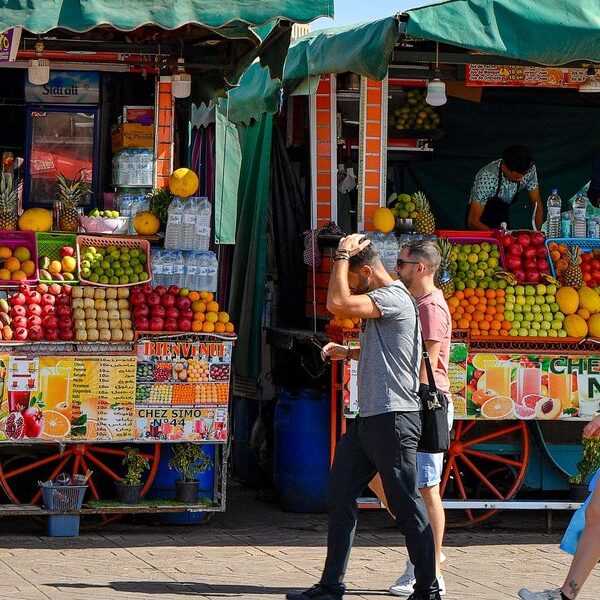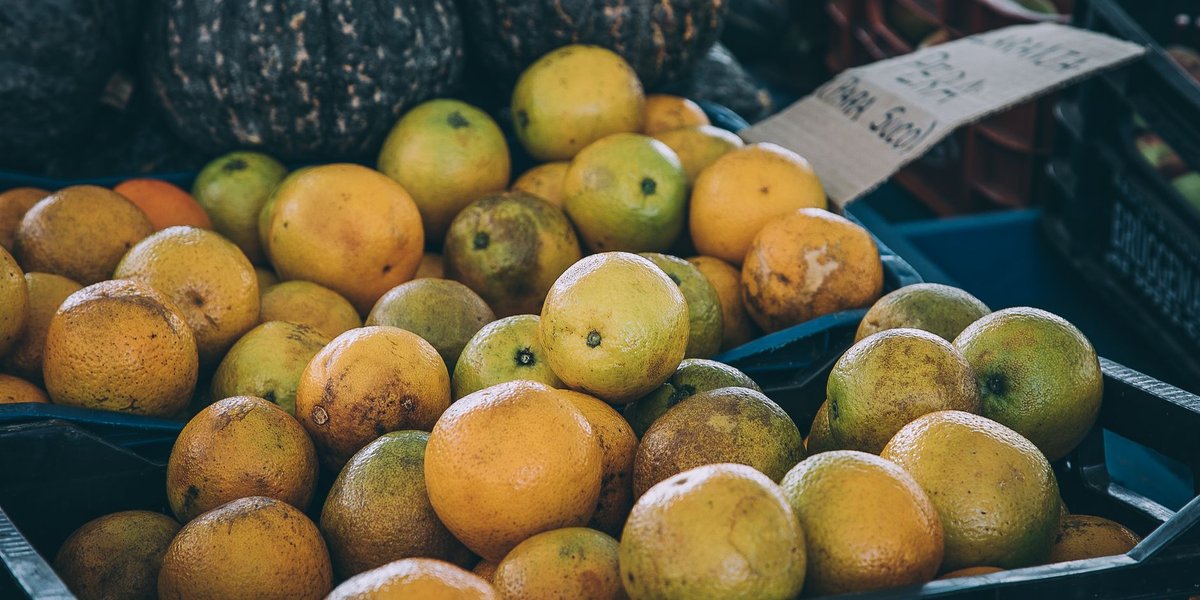
Thailand grows hundreds of edible fruits, and most visitors meet about five of them. The usual suspects, mango, pineapple, watermelon, and whatever the smoothie cart is selling, are good. But the interesting stuff sits two stalls down: the hairy red ball that peels like a grape, the brown fruit that tastes like a malted caramel, the one that smells like a gym bag and eats like custard.
This guide covers 15 fruits of Thailand, ranked by how easy they are to enjoy on a first try. Start at the top and work down. Each entry gives the Thai name with a rough pronunciation, what it tastes like, how locals eat it, when it’s at its best, and one tip that will save you a bad purchase.
Table of Contents
- TL;DR: The Short List
- The 15 Fruits, Easiest First
- Thai Fruit Season Calendar
- How to Pick a Ripe Durian
- Where to Buy Fruit: Markets vs. Street Carts
- Etiquette and Food Safety
- FAQ
TL;DR: The Short List
If you only have a week, eat these:
- Safest first bite: mango (with sticky rice), pineapple, dragon fruit
- Best “I can’t believe this is a fruit” moment: mangosteen, rambutan, longan
- Worth hunting down: rose apple, sugar apple, sapodilla
- Only if you’re curious: salak, santol
- The final boss: durian
Buy whatever is in season. Fruit that’s out of season in Thailand is usually shipped, waxy, or both.
The 15 Fruits, Easiest First
1. Mango (มะม่วง, ma-MUANG)
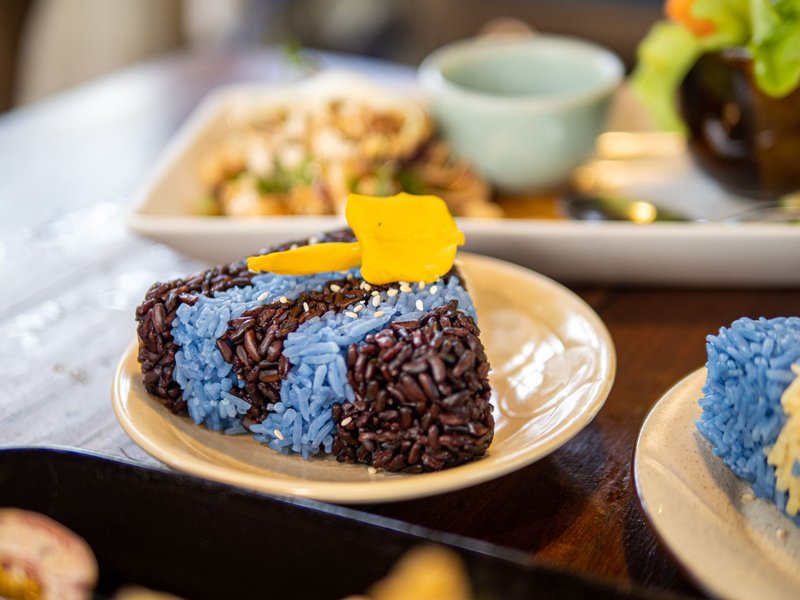
Thailand eats mango at every stage. Green and crunchy, it goes into a salad or gets dunked in a sugar, salt, and chili mix. Ripe and yellow, it gets sliced over warm sticky rice with sweet coconut cream: khao niao mamuang, the dessert nearly every visitor ends up eating twice.
The varieties matter. Nam dok mai is the classic sweet, fragrant ripe mango. Ok rong is milder and good raw. Mahachanok is a firm, sweet-tart favorite.
Peak months: March to June, with the heart of the season in April and May. Tip: A ripe mango smells sweet at the stem end and gives slightly under your thumb. Skip any that smell fermented.
2. Pineapple (สับปะรด, sap-pa-ROT)
Thai pineapple is smaller, sweeter, and less acidic than the big supermarket kind, and it won’t scrape your tongue raw. The Phuket variety is the one vendors brag about, and the small Nang Lae from Chiang Rai is crisper and sweeter still.
Street carts sell it cut into a spiral, speared on a stick, often with a little bag of chili-salt-sugar powder on the side. Try the powder at least once. The salt makes the sweetness louder.
Peak months: Available year-round, best in the hot season, roughly March to June. Tip: A good pineapple smells sweet at the base. If the skin is entirely green and it smells like nothing, it’s not ready.
3. Dragon Fruit (แก้วมังกร, kaew mang-GON)
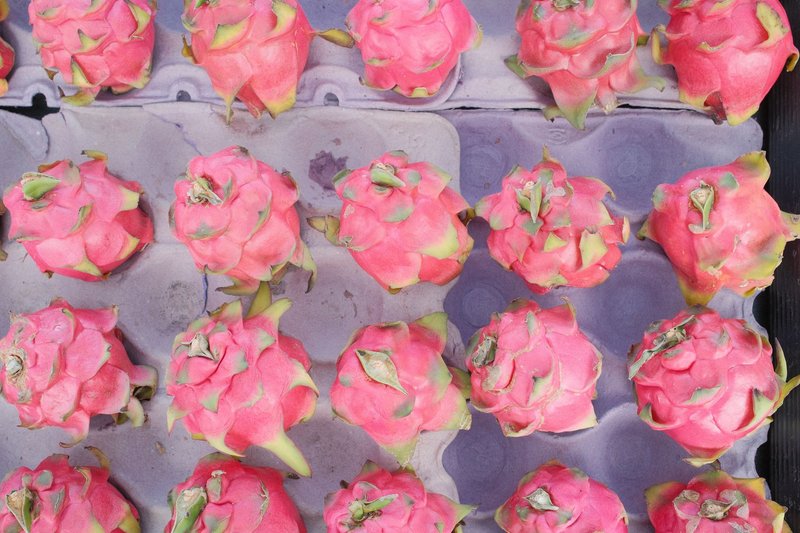
Dragon fruit is the fruit people most often misjudge. The pink skin and green scales promise something dramatic, and the flesh delivers a faint, watery sweetness, a bit like a very mild kiwi without the tang. Red-fleshed varieties are sweeter than white-fleshed ones and will dye your fingers and your napkin magenta.
It’s rarely the star of a fruit plate, but it’s refreshing in the heat, and it’s at its best served ice cold.
Peak months: June to October. Tip: Pick red-fleshed if you can. Press the skin: it should give a little, and the “scales” should still be green, not brown.
4. Rambutan (เงาะ, ngaw)
The name comes from the Malay word for “hair,” and the spiky red shell earns it. Squeeze the sides until the shell cracks, peel it back, and you get a translucent white globe that tastes like a grape crossed with a lychee, with a hint of floral sweetness.
Thai rambutan has a seed inside, and in the best varieties the flesh pops off it cleanly. Sellers often hand out samples. Take one.
Peak months: May to September, with the southern crop running a little later. Tip: Look for bright red shells with green-tipped hairs. If the hairs are black and dry, the fruit has been sitting.
5. Longan (ลำไย, lam-YAI)
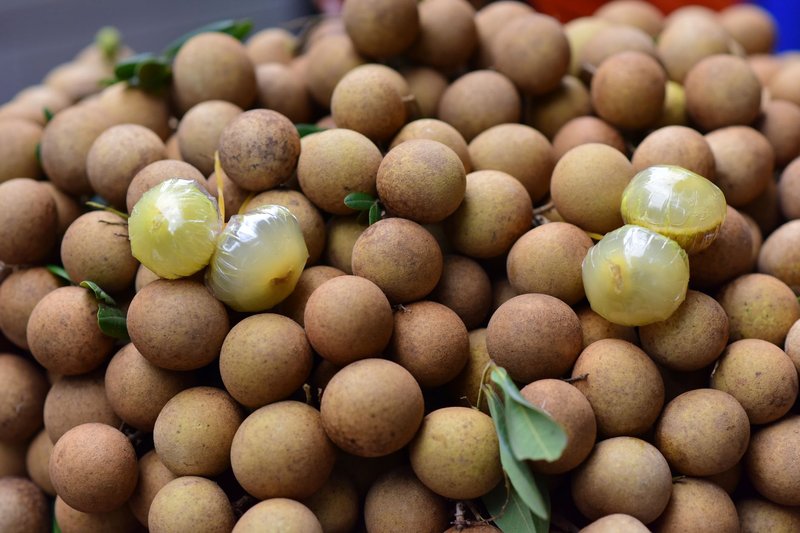
Longan means “dragon’s eye”: a thin brown shell, a clear white ball of flesh, and a black seed in the middle that looks like a pupil. The taste is sweet and musky, closer to a lychee but less perfumed and less sharp.
Northern Thailand, around Chiang Mai and Lamphun, is longan country. Vendors sell it in bunches by the kilo, and it’s easy to eat standing up: crack the shell with your thumbnail, pop the flesh into your mouth, spit out the seed.
Peak months: July to September. Tip: The shell should be dry, tan to light brown, and unbroken. Wet or sticky shells mean old fruit.
6. Mangosteen (มังคุด, mang-KHUT)
Mangosteen is the “queen of fruits” in Thailand, set against durian as king. The shell is thick and purple-black and nothing like what’s inside: six or so snow-white segments that taste sweet, slightly tart, and a little like peach and lychee at once. Twist it open with both hands; don’t cut it, because the juice stains.
Count the lobes in the white flesh and you’ll find the same number as the petal-shaped marks on the bottom of the shell. Locals will tell you the large lobe has a seed you shouldn’t chew. They’re right.
Peak months: April to August, strongest in May and June. Tip: Press the shell. It should have a little give, like a ripe avocado. A rock-hard shell means the flesh inside is translucent and gummy.
7. Pomelo (ส้มโอ, som-OH)
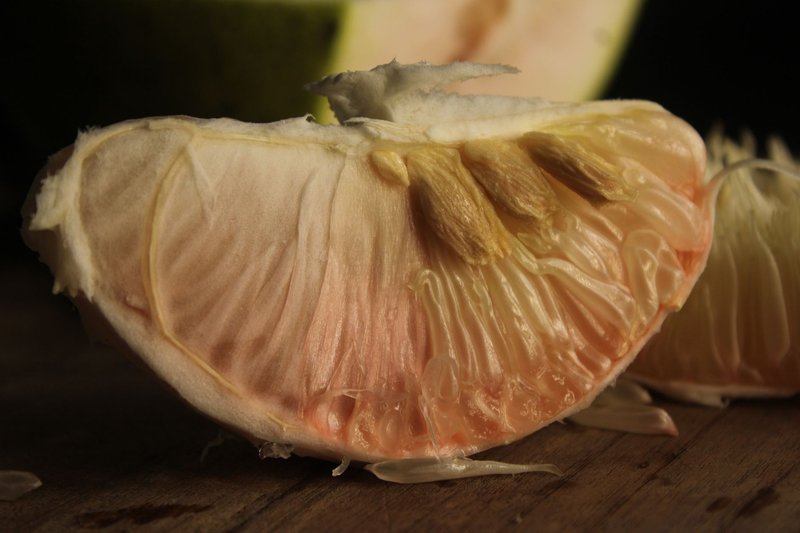
A pomelo is a giant citrus the size of a small bowling ball. Peeling one takes some effort. Once inside, you have to strip the bitter membrane off each segment to reach the juicy sacs, which taste like a mellow, sweet grapefruit with none of the bitterness.
Vendors sell it already peeled, in plastic boxes, which is how most Thais buy it. It also goes into yam som-o, a salad with shrimp, coconut, and chili. Nakhon Chaisi and Chainat are the famous growing areas.
Peak months: August to October, though it’s sold most of the year. Tip: Heavy for its size means juicy. Buy it pre-peeled if you don’t have a knife.
8. Rose Apple (ชมพู่, chom-POO)
Rose apples look like small, waxy, bell-shaped apples in pink, red, or white. The flesh is crisp and watery, with a very faint floral sweetness, and the taste is much closer to a cucumber with sugar than to an apple. That’s the point: it’s a thirst-quencher, not a dessert.
The tabtim chan variety, a deep ruby, is the one to look for. Vendors sell it by the bag, often with a salt-sugar-chili dip.
Peak months: Available for most of the year, with the best quality in the hot season. Tip: Eat it cold and soon after buying. It bruises easily and goes soft fast.
9. Guava (ฝรั่ง, fa-RANG)
Thai guava is crunchy, not soft, and is eaten while still firm, with the skin on. The flavor is light, a little sour, and closer to a pear with a tropical twist. It’s usually served sliced, with a dip of sugar, salt, and chili (prik kleua) that locals treat as part of the fruit.
The word farang also means “foreigner” in Thai, so you may hear a joke when you ask for it by name. It’s the same word, and the story is the fruit arrived from abroad.
Peak months: Year-round. Tip: Buy guava that’s been cut in front of you. Cut fruit that has been sitting in the sun gets mushy and bacteria love it.
10. Sapodilla (ละมุด, la-MOOT)
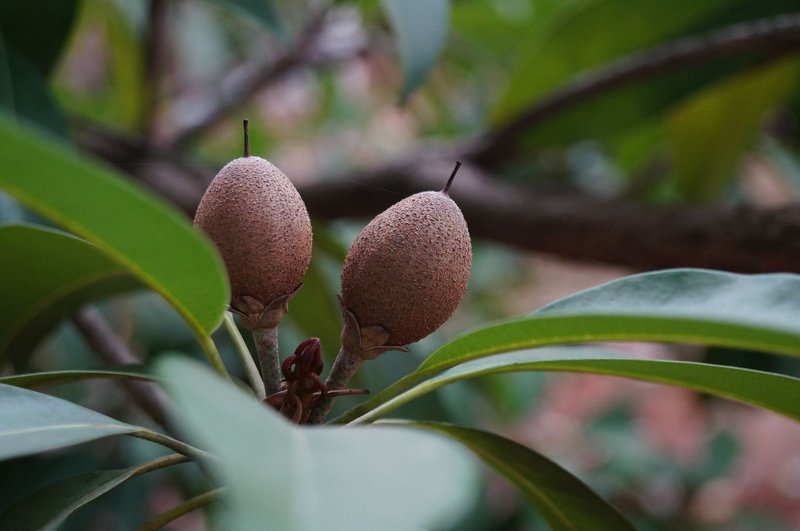
Sapodilla looks like a small potato and tastes like a pear dipped in brown sugar and malt. The flesh is soft and slightly grainy in the best way, closer to a very ripe pear than to a custard. It’s one of the sweetest fruits in Thailand and almost nobody outside Southeast Asia has heard of it. For more of the same, see 24 rare fruits worth hunting down.
Eat it only when it’s soft. An unripe sapodilla is full of sticky latex and will coat your mouth like glue.
Peak months: Available through much of the year. Tip: Rub off the brown dust on the skin; a scratch with a fingernail should reveal a yellow-brown layer, not green. Squeeze it like an avocado.
11. Sugar Apple (น้อยหน่า, noy NAH)
Sugar apple, or sweetsop, looks like a green grenade made of knobby segments. When ripe, the segments pull apart to reveal white, creamy pulp wrapped around black seeds. The texture is custard-like and the taste is sweet and a little citrusy. Spit out the seeds: they’re hard, and they shouldn’t be chewed.
It’s more work than other fruits, because you’re scooping pulp around lots of seeds. But the flavor is rich, and it’s a good first step toward the more custardy fruits like durian.
Peak months: July to October. Tip: It ripens fast. Press the skin; if the segments are starting to separate, eat it that day.
12. Jackfruit (ขนุน, kha-NUN)
Jackfruit is the largest tree-borne fruit in the world, and a whole one can weigh over 20 kg. You’ll never buy a whole one. Vendors sell the golden yellow pods, already cleaned and boxed.
The flavor sits somewhere between banana, pineapple, and Juicy Fruit gum, and the texture is chewy and fibrous. It’s sweet enough that people either love it or find it too perfumed. Thais also cook young green jackfruit in curries, which is a completely different experience.
Peak months: Year-round, with the strongest supply in spring. Tip: Ask for pods from an opened fruit. They should smell sweet, not sharp, and the flesh should be firm, not wet.
13. Salak (สละ, SAH-la)
Salak, also called snake fruit, has reddish-brown scaly skin like a reptile. Pinch the tip, peel it back, and you’ll find three garlic-clove-shaped segments. The taste is a mix of apple, pineapple, and a hint of astringency that dries the mouth, a lot like an unripe banana.
It’s sweet-and-sour, crunchy, and strange. Locals love it; first-timers split about 50/50. Buy a small bag before committing to a kilo.
Peak months: Roughly May to August. Tip: The best ones are firm and give a slight crunch. If it’s soft, the flavor is flat. Peel carefully, as the skin can be sharp.
14. Santol (กระท้อน, kra-TON)
Santol is a yellowish-brown, tennis-ball-sized fruit with a thick rind and cotton-like white segments around a big seed. The flesh is sweet and sour with a texture of wet cotton candy, and the rind has a bitter edge.
Thais usually skip the rind and eat the segments, often with salt and chili. It’s also candied and cooked into a sour-sweet salad. It’s an acquired taste, and that’s why it’s on this list.
Peak months: June to August. Tip: Squeeze the fruit; it should give slightly. If the rind is hard and green, the segments will be sour.
15. Durian (ทุเรียน, too-RIAN)
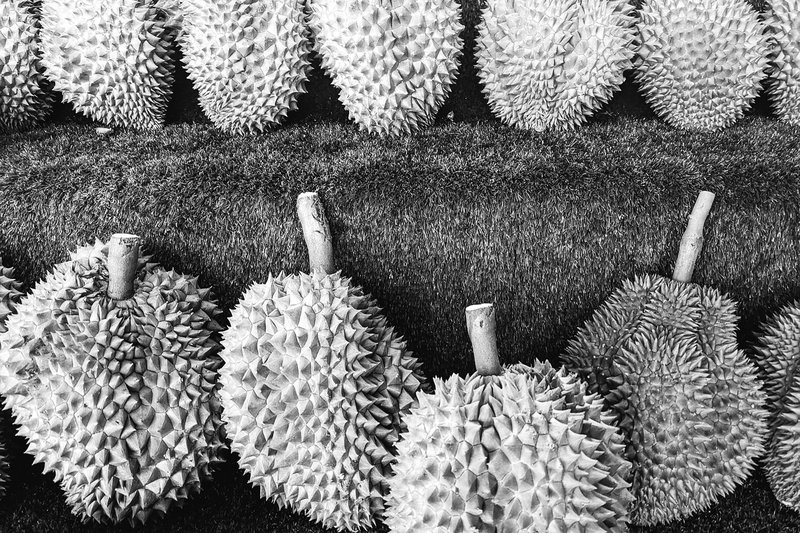
Durian is the king of fruits and the hardest to recommend without a warning label. The smell comes from a family of sulfur compounds. Researchers who sequenced the durian genome traced the stench to a gene family that makes the sulfur-producing enzyme methionine gamma-lyase, and the levels rise as the fruit ripens. People describe the aroma as rotten onions, gas leaks, or old gym socks.
The taste is something else. The flesh is thick, buttery, and custard-like, with notes of sweet cream, almond, caramel, and a savory finish. People who like durian tend to love it. People who don’t can’t get past the smell.
The common varieties are monthong (creamy, mild, sweet, and the best for beginners), chanee (stronger, with a deeper aroma), and kan yao (a little firmer and less sticky). Start with monthong.
Peak months: April to June in the east (Chanthaburi, Rayong), June to August in the south. Tip: Buy it already opened and boxed, in a plastic container at a market, and eat it outdoors. Details on picking one are below.
Thai Fruit Season Calendar
Seasons shift by region and by year, and most fruits have a long tail either side of the peak. Use this as a guide, not a guarantee.
| Fruit | Peak months | Notes |
|---|---|---|
| Mango | Mar to Jun | Peak is April and May |
| Pineapple | Mar to Jun | Sold year-round |
| Dragon fruit | Jun to Oct | |
| Rambutan | May to Sep | South runs later |
| Longan | Jul to Sep | Best in the north |
| Mangosteen | Apr to Aug | Peak May and June |
| Pomelo | Aug to Oct | Sold most of the year |
| Rose apple | Hot season | Available much of the year |
| Guava | Year-round | |
| Sapodilla | Much of the year | |
| Sugar apple | Jul to Oct | |
| Jackfruit | Year-round | Strongest in spring |
| Salak | May to Aug | |
| Santol | Jun to Aug | |
| Durian | Apr to Aug | East first, then south |
April to June is the sweet spot. Mango, mangosteen, rambutan, pineapple, and durian are all at their best at once, which is why that’s when fruit stalls look their most chaotic.
How to Pick a Ripe Durian
You can buy durian in two ways: a whole fruit, or pre-opened pods in a box. If it’s your first time, buy the box.
If you decide to choose a whole fruit, do this:
- Ask the vendor to open it. Good vendors will. They’ll pry the husk open with a knife and let you look and smell before you pay.
- Check the flesh. Ripe monthong flesh is pale yellow, creamy, and slightly soft. Watery, wet flesh means overripe. Hard and pale means underripe.
- Smell it. A strong sweet-and-savory smell is normal. A sour or alcoholic smell means it’s fermenting and past its best.
- Buy by the lobe, not the kilo, if you can. A whole durian can weigh 2 to 4 kg, and a few lobes are plenty for one person.
Prices fluctuate by year and by variety, but a monthong at a market will often cost somewhere around 100 to 250 baht per kilo, and more at a tourist area or an airport shop. Pre-packed pods cost more per kilo but save you from buying a husk you’ll throw away.
Where to Buy Fruit: Markets vs. Street Carts
Fresh markets have the best quality and the best prices. In Bangkok, try Or Tor Kor Market near Chatuchak, which is known for good fruit, or Khlong Toei Market for the cheap, local stuff. Outside Bangkok, every town has a morning market. Prices are posted by the kilo, or by the bag for smaller fruit, and haggling is rare for fruit.
Street carts sell cut, ready-to-eat fruit in small bags, usually 20 to 50 baht a bag, on ice, with a dip on the side. They’re the most convenient option, and the fruit is often fine. But you’re paying a premium for the labor, and the quality depends entirely on how long the cart has been out in the sun.
Supermarkets (Tops, Big C, Makro) are pricier, but good for peeled pomelo and pre-cut jackfruit when you want to eat in your hotel room.
A good rule: buy whole fruit at the market, buy cut fruit from carts with high turnover and ice, and eat it within an hour or two.
Etiquette and Food Safety
Durian rules are real. Many Thai hotels post a crossed-out durian sign on the door, and buses and metro systems in the region ban it outright. Singapore’s MRT does, and a durian once emptied a library in Australia when someone left one in a bin. Eat it outside, wash your hands afterward, and don’t carry leftovers back to your room.
Cut fruit is only as safe as its handling. Look for fruit on ice, in covered containers, and cut in front of you. Avoid anything that’s been sitting in direct sun. Bright, unnaturally colored fruit is a warning sign; if a fruit looks dyed, skip it.
Wash whole fruit with bottled or filtered water before eating the skin, as with guava, and peel the rest with clean hands or a clean knife.
Don’t chew the seeds of sugar apple, longan, or mangosteen.
FAQ
What is the best fruit to try in Thailand for beginners?
Mango with sticky rice. It’s easy to like, easy to find, and it’s a proper Thai dessert. Pineapple and mangosteen are close behind.
Durian vs. mangosteen: which one should I try?
Mangosteen if you want a safe, sweet, floral fruit. Durian if you want the legendary experience. They’re often sold side by side, and Thais pair them on purpose: mangosteen is called the “queen” because it’s considered a cooling fruit that balances durian’s heaviness.
Which fruits are in season in Thailand by month?
April to June has the most variety: mango, mangosteen, rambutan, and durian. July to September brings longan, sugar apple, and dragon fruit. Check the calendar above for the full list.
Can I bring Thai fruit home on a plane?
Rules depend on your destination. Many countries restrict fresh fruit at the border, and durian is banned on most airlines. Check your destination’s customs rules before you buy.
How do I say the names of Thai fruits?
Thai is tonal, so you won’t get it perfect, but the guides above get you close enough. If all else fails, point and smile. Vendors will do the rest.