Short answer: most baby lizards eat live insects. Feed small crickets, dubia roaches, black soldier fly larvae or silkworms, no longer than the space between the lizard’s eyes, gut-loaded and dusted with calcium. Baby leopard geckos and anoles eat insects only. Baby bearded dragons eat about 70% insects plus a daily salad of collard, mustard or dandelion greens. Baby green iguanas eat chopped greens only, and crested geckos live on a powdered crested gecko diet. Never feed fireflies, bugs caught outdoors, avocado, spinach, milk or bread. Babies eat daily, and most species drop to meals every 2 to 3 days as adults.
Identify the species first, because “baby lizard” covers insect eaters, omnivores and plant eaters. The chart below sorts common foods into safe staples, small amounts only and never feed, with species notes on each tile. Search any food to see where it falls. Under the chart are setup steps, a species table, how to feed, a schedule by age and a printable cheat sheet. This guide covers pet lizards. A baby that won’t eat after its first 1 to 2 weeks, can’t walk normally or has a swollen jaw needs a reptile vet. If you found a baby lizard outside, start with the box.
Found a wild baby lizard?
Can a baby lizard eat it?
Safe staples (11)
- Safe to feed. Standard feeder for geckos, anoles and young beardies. Gut-load, dust with calcium and keep them no longer than the gap between the eyes.All ages#
- Safe to feed. VCA lists calcium-dusted dubia roaches for bearded dragons and leopard geckos. Pick nymphs no wider than the gap between the eyes.All ages#
- Safe to feed. Small, soft, high in calcium and easy for young lizards to digest. ReptiFiles still dusts them, as much of the calcium sits in the skin.All ages#
- Safe to feed. Soft-bodied staple feeders on VCA's lists for bearded dragons and leopard geckos. Buy sizes no longer than the gap between the eyes.All ages#
- Safe to feed. Juicy, soft feeders on VCA and PetMD lists. Use captive-bred ones only: ReptiFiles warns that wild hornworms are toxic.All ages#
- Safe to feed. Tiny enough for hatchling anoles and small geckos that can't manage crickets yet. Buy flightless cultures; wild flies may be unsafe.Ages 0–3 months#
- Safe to feed. The base salad for bearded dragons and iguanas, chopped fine and offered daily. Leopard geckos and anoles eat insects only and skip plants.All ages#
- Safe to feed. A calcium-rich green VCA lists for bearded dragons and iguanas; the flowers are a treat. Use store-bought or unsprayed plants.All ages#
- Safe to feed. On VCA's recommended vegetable list for bearded dragons and iguanas. Chop it fine and mix it into the greens.All ages#
- Safe to feed. Crested geckos live on a complete powdered diet mixed with water, daily for babies. Insects are an extra once or twice a week.All ages#
- Safe to feed. A shallow dish changed daily. Anoles and crested geckos lick droplets off leaves, so mist the tank; some beardies ignore dishes too.All ages#
Small amounts only (10)
- Small amounts only. Fine in a varied diet but fatty with a tough shell young geckos can struggle with. Chewy suggests 1 or 2 small ones per meal for juveniles.All ages#
- Small amounts only. High in fat and too big for most babies. VCA and PetMD say give them sparingly, as an occasional treat for larger lizards.From 1 year#
- Small amounts only. Very fatty treats that can cause obesity. VCA says not daily; ReptiFiles caps them at once a week for leopard geckos.From 3 months#
- Small amounts only. Feeder earthworms are an occasional treat for adult beardies and skinks. Ask a vet before giving them to babies; skip yard and bait worms.From 1 year#
- Small amounts only. Nutritious, but VCA says to be cautious: kale, cabbage and mustard greens carry goitrogens that can affect the thyroid. Rotate them in.All ages#
- Small amounts only. Safe and on PetMD's list, but PetMD rates collard, mustard and dandelion greens as better staples. Mix it in, don't build the salad on it.All ages#
- Small amounts only. Grated squash, zucchini, carrot and sweet potato add color. VCA puts them in the smaller share of a bearded dragon's vegetables.All ages#
- Small amounts only. A sugary treat for beardies, iguanas and cresties only; PetMD keeps fruit to 5% of the diet. Leopard geckos and anoles skip fruit.From 3 months#
- Small amounts only. On VCA and PetMD fruit lists for bearded dragons and iguanas. Chop a few small pieces into the salad as a rare treat.From 3 months#
- Small amounts only. Safe fruits on VCA and PetMD lists. Cut them small and offer now and then; ReptiFiles keeps fruit to about once a month for beardies.From 3 months#
Never feed (11)
- Never feed. PetMD lists avocado, onion and garlic as toxic to lizards and rhubarb as too high in oxalates. Mushrooms are on PetMD's never list too.
- Never feed. Firefly toxins kill lizards; ASPCA Poison Control says half of one can kill an adult bearded dragon. PetMD also lists ladybugs as toxic.
- Never feed. Yard insects and worms can carry pesticides, fertilizer or parasites, and some, like wild hornworms, are toxic. Buy feeders instead.
- Never feed. Oxalates in these greens block calcium uptake. PetMD says to avoid spinach and beet greens; VCA allows them only sparingly. Skip them.
- Never feed. Mostly water with very few nutrients. VCA tells iguana owners to avoid both, and PetMD says no iceberg lettuce for lizards.
- Never feed. PetMD's veterinarian lists citrus fruits among foods not to feed lizards. Pick a safe fruit like berries instead.
- Never feed. Not for babies. VCA allows them only for larger adult bearded dragons, sparingly; ReptiFiles caps them at once a month for adults.
- Never feed. PetMD lists raw meat and eggs as foods not to feed bearded dragons. Insect eaters get their protein from feeder insects instead.
- Never feed. VCA says dog and cat food has too much protein, vitamin D, phosphorus and fat for iguanas, and PetMD rules it out for bearded dragons.
- Never feed. Reptiles aren't mammals and can't digest dairy. Offer water only; Chewy's vet advises against juice, broth and other drinks.
- Never feed. Chewy's vet says lizards can't easily digest processed food like bread, crackers or sugary snacks, and it lacks the nutrients they need.
Sources
- Feeding Bearded Dragons (Rich, Hess, Axelson) — VCA Animal Hospitals
- Leopard Geckos: Care and Feeding (Gregory Rich DVM) — VCA Animal Hospitals
- Feeding Iguanas (Rich, Hess, Axelson) — VCA Animal Hospitals
- Nutrition in Reptiles — Merck Veterinary Manual
- Nutritional, Metabolic, and Endocrine Diseases of Reptiles — Merck Veterinary Manual
- What Do Lizards Eat? (Sean Perry DVM) — PetMD
- What Do Bearded Dragons Eat? Diet Guide (Sean Perry DVM) — PetMD
- Bearded Dragon Care Sheet (Maria Zayas DVM) — PetMD
- Leopard Gecko Care Sheet (Maria Zayas DVM) — PetMD
- Crested Gecko Care Sheet (Maria Zayas DVM) — PetMD
- What should I feed my reptile? — RSPCA Australia
- What Do Lizards Eat? (with Dana Varble DVM) — Chewy
- Anole Care Sheet (reviewed by Melissa Witherell DVM) — Chewy
- What Do Leopard Geckos Eat? (reviewed by Ivan Alfonso DVM) — Chewy
- Can Bearded Dragons Eat Earthworms? (reviewed by Angela Beal DVM) — Chewy
- Treating Firefly Toxicosis in Lizards — ASPCApro (ASPCA Animal Poison Control Center)
- Are fireflies poisonous to reptiles? — Pet Poison Helpline
- What Do Bearded Dragons Eat? Diet and Feeding Guide — ReptiFiles
- What Do Leopard Geckos Eat? Diet and Feeding Guide — ReptiFiles
- Green Anole Care: Habitat and Health — ReptiFiles
- What Do Crested Geckos Eat? Diet and Feeding Guide — ReptiFiles
- Care and Feeding of Gecko Hatchlings — Gecko Time
- Can Bearded Dragons Eat Cheese? — Hepper
- What To Do If You Find Baby Wildlife — National Wildlife Federation
- Reptile and Amphibian Rescue — International Wildlife Rehabilitation Council
- What to Do If You Find Wildlife — University of Illinois Wildlife Medical Clinic
- Lizards: injury or illness — Froglife
- Biologists Reply to Lizard FAQs — Oklahoma Department of Wildlife Conservation
- Q&AZ: Are Gila monsters legal as pets in Arizona? — KJZZ (quoting Arizona Game and Fish Department)
- Gila Monster (Heloderma suspectum) — Online Field Guide to the Reptiles and Amphibians of Arizona
- Find A Vet — Association of Reptile and Amphibian Veterinarians
- Wildlife help locator — Animal Help Now
Setting up a feeding routine for a baby lizard
A baby lizard digests food and uses calcium only when its enclosure is warm and lit correctly. Get the setup right before the first meal.
1. Heat and UVB come first
Lizards are cold-blooded and need warmth to digest. PetMD calls heat and UVB essential for a bearded dragon’s digestion and calcium metabolism, and VCA notes that bearded dragons need UV light to use vitamin D3 and absorb calcium. Run a UVB bulb 10 to 12 hours a day and replace it about every 6 months, as PetMD’s care sheets advise. VCA calls UVB recommended rather than required for leopard geckos, while PetMD says they need it. Give every species UVB. A leopard gecko kept without it needs a calcium powder with D3.
2. Expect a slow start
A hatchling lives on its yolk for the first days. Many hatchling geckos don’t eat until their first shed, often around day 3, and eat only 1 or 2 insects a day for the first week or two, according to the hobby site Gecko Time. Have a shallow water dish in place from day one. A baby that still refuses food after 1 to 2 weeks in a warm, correctly lit enclosure needs a reptile vet.
3. Keep feeder insects on hand
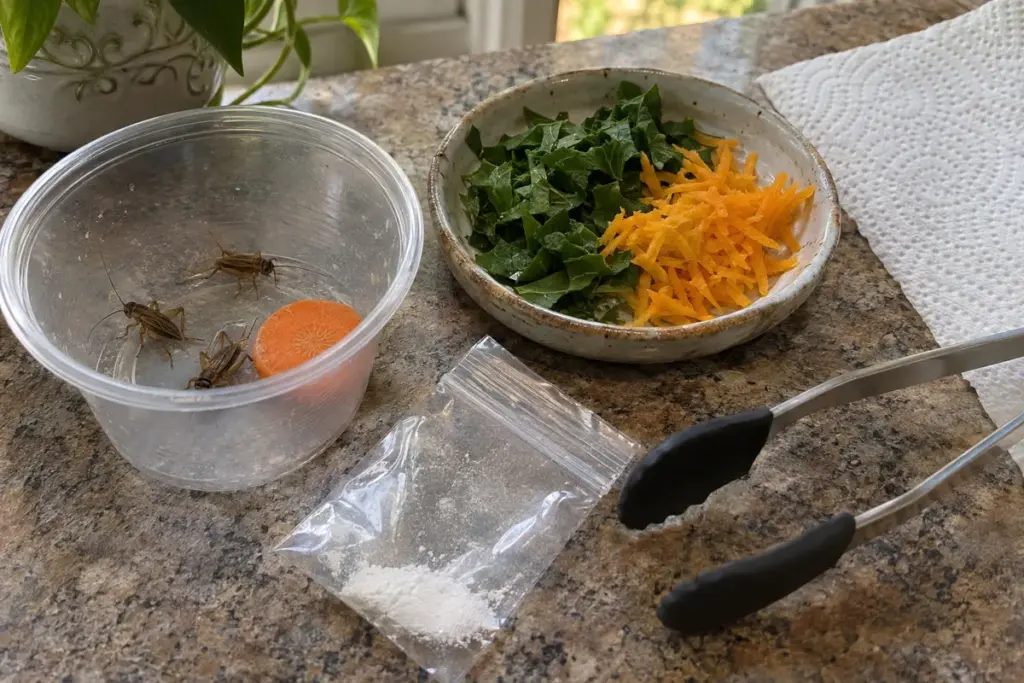
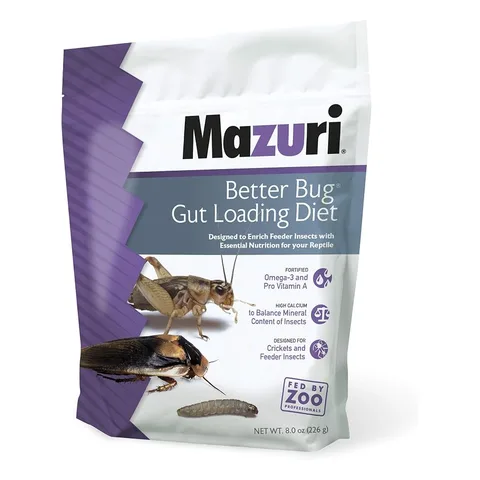
Buy feeders from a pet store or breeder and keep them in a cricket keeper or bin with a gut-load diet. Insects that come straight from the store are low in nutrients. Feeding them a quality diet for at least 24 hours before they go to the lizard, as VCA advises for leopard geckos, makes each insect a better meal.
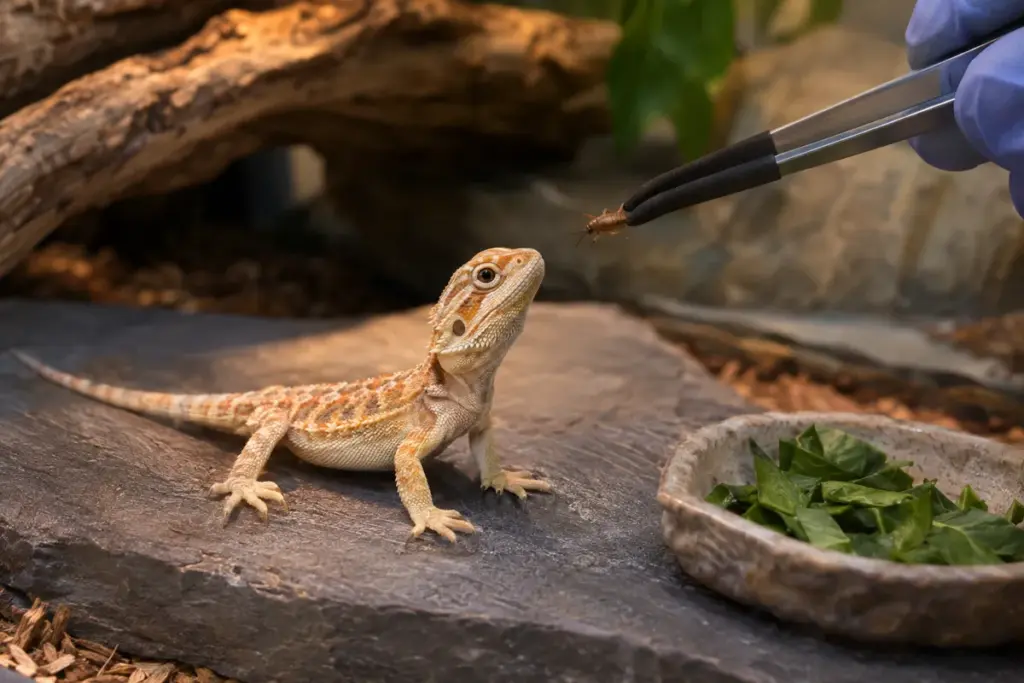
What to feed a baby lizard, by species
Lizards split into insect eaters, omnivores and plant eaters. PetMD notes that only about 2% of lizard species are strictly herbivorous, and that most wild lizards eat insects, spiders and even other lizards. These are the species most often kept as babies:
| Species | Diet | What babies eat | How often |
|---|---|---|---|
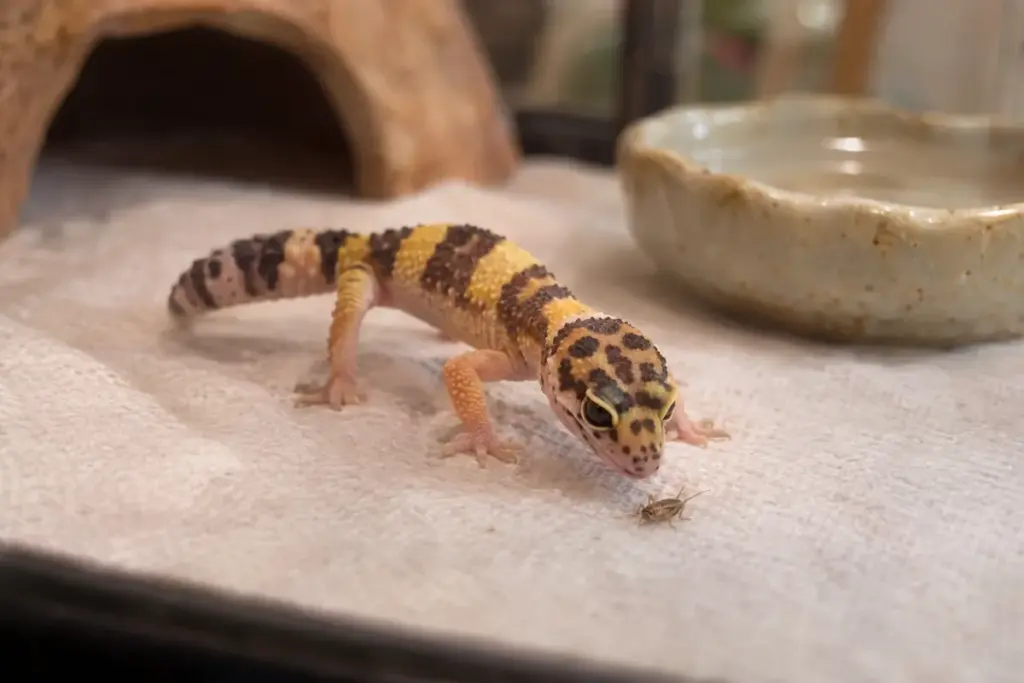
| Leopard gecko | Insect eater | Gut-loaded, dusted live insects only. No fruit or vegetables. | Daily |
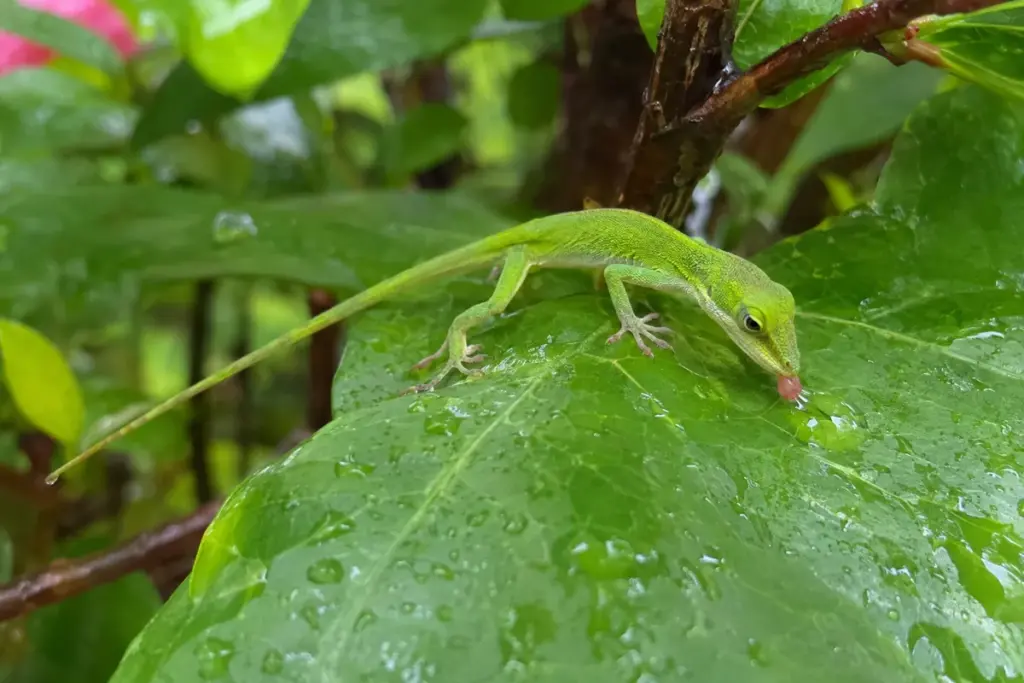
| Green or brown anole | Insect eater | Small insects, flightless fruit flies for hatchlings. Drinks droplets, so mist the tank. | Daily |
| Bearded dragon | Omnivore | About 70% insects, 20 to 30% greens and vegetables, offered from the start. | 1 to 2 meals a day |
| Crested gecko | Fruit and insects | Complete powdered crested gecko diet, plus insects once or twice a week. | Diet daily |
| Green iguana | Plant eater | Finely chopped dark leafy greens and some other vegetables. No insects. | Daily |
| Blue-tongued skink | Omnivore | Slightly more than half animal food (insects, snails), the rest vegetables. | Every 1 to 2 days |
Vets split on young iguanas. VCA says young iguanas can have up to 10% animal protein but adds that many vets recommend only plants. Dana Varble, chief veterinary officer of the North American Veterinary Community, told Chewy that green iguanas “do not need, and should not be given, animal protein.” This guide follows the plants-only advice.
Feeder insects
- Staples: crickets, dubia roach nymphs, black soldier fly larvae, silkworms and captive-bred hornworms. VCA lists crickets, dubia roaches and silkworms for both bearded dragons and leopard geckos.
- For the smallest babies: flightless fruit flies, for hatchling anoles and small geckos that can’t manage crickets yet.
- Treats only: mealworms, waxworms, butterworms and superworms. VCA warns that these fatty larvae can cause obesity. Superworms are too big for most babies.
Calcium, vitamin D3 and multivitamins
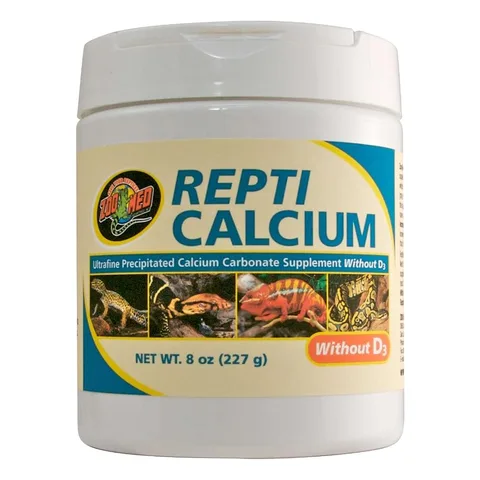
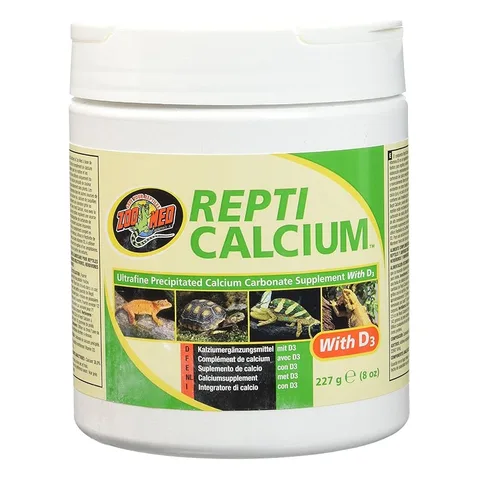
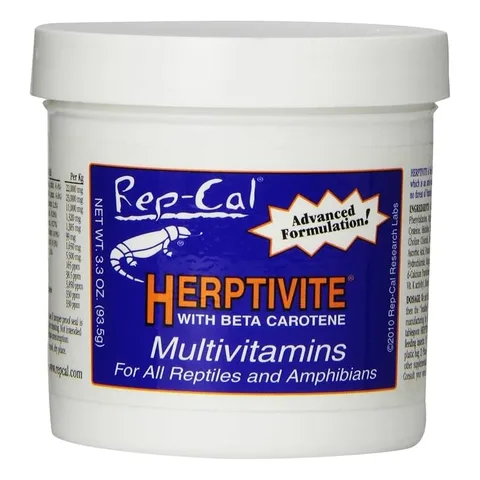
“Both insects and many vegetables are actually calcium-deficient,” Varble says, so feeders need a dusting of calcium powder. Shake a few insects in a bag or cup with the powder just before feeding. VCA’s routine for bearded dragons is phosphorus-free calcium at most meals and a calcium powder with D3 2 to 3 times a week. Add a reptile multivitamin about once a week. VCA warns that over-supplementing, especially with vitamin D3, is a common problem, so follow your vet if they set a different schedule.
Greens for bearded dragons and iguanas
Collard, mustard and turnip greens and dandelion greens make the base of the salad. PetMD rates them better staples than any lettuce. Chop them fine, about half the size of the lizard’s head, and mix in bell pepper and a little grated squash or carrot. Kale and cabbage are fine in rotation, but VCA flags their goitrogens, which can affect the thyroid.
Foods that harm baby lizards
- Fireflies. The ASPCA Animal Poison Control Center reports that half a firefly can kill an adult bearded dragon, and signs start within 15 minutes to 2 hours. PetMD also lists ladybugs as toxic.
- Bugs and worms caught outdoors. VCA and PetMD warn about pesticides, fertilizer and parasites, and ReptiFiles notes that wild hornworms are toxic. Buy feeders instead.
- Avocado, onion, garlic, rhubarb and mushrooms. PetMD lists avocado, onion and garlic as toxic to lizards, rhubarb as too high in oxalates and mushrooms as a food never to feed bearded dragons.
- Spinach, chard and beet greens. Their oxalates block calcium absorption. VCA allows spinach sparingly and PetMD says to avoid it; this guide leaves it out.
- Iceberg lettuce and celery. Mostly water. VCA tells iguana owners to avoid both.
- Citrus. PetMD lists citrus fruits among foods not to feed lizards.
- Pinky mice. VCA allows them only for larger adult bearded dragons, sparingly. They are not baby food.
- Raw meat, eggs, dog food and cat food. PetMD rules all of them out for bearded dragons, and VCA says dog and cat food carry too much protein, vitamin D, phosphorus and fat for iguanas.
- Milk, cheese, bread and snacks. Reptiles can’t digest dairy, and Varble says lizards can’t easily digest processed food like bread, crackers or sugary snacks. Offer water only, not juice or broth.
How to feed a baby lizard
- Size the insects. Feeders should be no longer than the space between the lizard’s eyes, the rule PetMD and RSPCA Australia give. Bigger insects are a choking hazard for lizards that swallow prey whole.
- Dust them. Put the insects for this meal in a cup or bag with a pinch of calcium powder and shake gently to coat.
- Offer a few at a time. Use soft-tipped tongs or a smooth-sided dish that insects can’t climb out of. Give one or two insects, then more as the lizard eats.
- Stop after one short session. Feed what the lizard eats in a few minutes. ReptiFiles uses about 2 insects per inch of a leopard gecko’s length, or 15 minutes of eating.
- Remove leftover live insects. PetMD and RSPCA Australia warn that uneaten crickets can bite and injure a lizard.
- Refresh water and wash your hands. Change the water dish daily. VCA advises washing your hands after feeding, cleaning or handling a lizard.
Baby lizard feeding schedule by age
The schedule covers the common pet species, with notes where they differ. Vet sources agree that hatchlings and juveniles eat daily. For adults they range from every other day to once or twice a week; the table uses the less frequent end to avoid obesity, which Varble calls common in bearded dragons and skinks. Ages are approximate: go by species, size and body condition.
| Age | What it looks like | Food | Amount | How often | Notes |
|---|---|---|---|---|---|
| First days after hatching | Fresh from the egg; may show a yolk scar on the belly and has not shed yet | Nothing needed while the yolk lasts. Have heat, UVB and a shallow water dish ready | Offer 1 or 2 tiny insects or fruit flies once it has shed, often around day 3 | From the first shed: daily | Many hatchling geckos don't eat until their first shed and eat little for 1 to 2 weeks. A baby that still refuses food after that needs a reptile vet. |
| 0–3 months | Hatchling; grows fast and sheds often | Insect eaters and beardies: small gut-loaded insects. Beardies: about 70% insects plus a daily salad. Iguanas: chopped greens only. Cresties: powdered diet | What it eats in one short session, usually a few minutes; remove leftover live insects | Daily. Bearded dragons 1 to 2 meals a day (PetMD gives 2 to 3 small meals) | Dust insects with plain calcium most meals, calcium with D3 2 to 3 times a week and a multivitamin once a week, unless your vet advises otherwise. |
| 3–12 months | Juvenile; eating eagerly, sheds less often | Same mix. Beardies still about 70% insects, greens daily. Leopard geckos and anoles: insects only. Cresties: diet daily, insects 1 to 2 times a week | Leopard geckos: about 2 insects per inch of body length (ReptiFiles). Anoles: 2 to 3 small insects. Beardies: what they eat in one session | Daily for most species. Chewy's vet keeps leopard geckos on daily meals to about 8 months | Fruit can start as a rare treat for beardies, iguanas and cresties only, 5% of the diet or less. No fruit or vegetables for leopard geckos. |
| 1–2 years | Subadult; growth slows and body fills out | Beardies shift toward greens as insects drop toward the adult 20 to 30%. Iguanas: greens with some other vegetables. Insect eaters: varied insects | Leopard geckos: about 2 insects per inch of length or 15 minutes of eating; one with a tail fatter than its neck can go longer between meals | Most every 1 to 2 days; leopard geckos every 2 to 3 days (ReptiFiles); beardies salad daily, insects a few times a week | Overfeeding and obesity are common in bearded dragons and skinks. Fatty worms stay occasional treats. |
| 2 years and up | Adult size; growth has mostly stopped | Beardies: 70 to 80% greens and vegetables, 20 to 30% insects. Iguanas: 80 to 90% dark leafy greens, under 20% fruit. Geckos and anoles: insects | Beardies: salad daily plus insects 3 to 4 times a week (PetMD). Others: a portion eaten in one session | Adults usually 2 to 3 times a week; plant eaters can have greens daily | Calcium with D3 and multivitamins less often in adults. Lack of UVB and calcium causes metabolic bone disease; see a reptile vet for trouble walking or swollen jaws. |
Weigh a young lizard every week or two on a kitchen scale that reads in grams. Steady weight gain, regular sheds and a tail that fills out mean the diet is working. In leopard geckos, ReptiFiles treats a tail wider than the neck as a sign the gecko can go longer between meals.
How a baby lizard’s diet changes with age
- Bearded dragons: about 70% insects as juveniles, flipping to 70 to 80% greens and vegetables as adults, PetMD says. Adults eat salad daily and insects 3 to 4 times a week.
- Leopard geckos: daily as babies, every 2 to 3 days as subadults and 2 to 3 times a week as adults, VCA advises.
- Anoles: daily as juveniles, every other day as adults.
- Crested geckos: powdered diet daily for the first year, then every 2 to 3 days, ReptiFiles says, with fewer insects as adults.
- Green iguanas: 80 to 90% dark leafy greens at every age, with fruit kept under 20% of adult diets, VCA says.
- Supplements: adults need calcium with D3 and multivitamins less often than growing babies.
Can baby lizards eat fruit?
Only some species, and only as a treat. Leopard geckos and anoles don’t eat fruit at all. For bearded dragons, PetMD keeps fruit to 5% of the diet or less, and ReptiFiles offers it about once a month. Banana, apple, strawberries, blueberries and grapes are safe in small pieces for bearded dragons, iguanas and crested geckos. Hatchling bearded dragon diets in vet and keeper guides list insects and greens only, so hold fruit until the lizard is growing well. Skip citrus.
Water for baby lizards
Keep a shallow dish of fresh water in the enclosure, low enough that a baby can’t drown. Some species won’t drink from a dish. PetMD notes that crested geckos drink by licking droplets off leaves, and Chewy’s vet-reviewed anole care sheet says anoles like to drink water droplets off plants, so mist their tanks daily. VCA notes that some bearded dragons don’t recognize a water dish and suggests misting their vegetables or giving a short soak several times a week.
Signs something is wrong
- Won’t eat: check the temperatures and the UVB bulb’s age first. A baby that refuses food for more than 1 to 2 weeks after hatching or arriving needs a vet.
- Trouble walking, a swollen or soft jaw, swollen legs or twitching: signs of metabolic bone disease, which the Merck Veterinary Manual calls the most common bone disease in reptile practice. It comes from too little calcium, vitamin D3, UVB or heat and hits fast-growing insect-eating and plant-eating lizards. The outlook is better if the lizard is still eating, so see a vet early.
- Swollen or sunken eyes: PetMD lists these among signs that need a vet. Merck links vitamin A deficiency to insect-eating lizards on diets without preformed vitamin A.
- Stuck shed on toes or tail: another sign PetMD says a vet should check.
- Ate a firefly: an emergency, even if the lizard looks fine. Signs start within 15 minutes to 2 hours, so call a vet or animal poison control right away.
The Association of Reptile and Amphibian Veterinarians keeps a directory of reptile vets.
Printable baby lizard feeding chart
The cheat sheet fits on one page. It has the safe, small amounts only and never food lists, the schedule by age and the wild baby lizard steps. Print it in color or black and white and keep it beside the enclosure.
Supplies for feeding a baby lizard
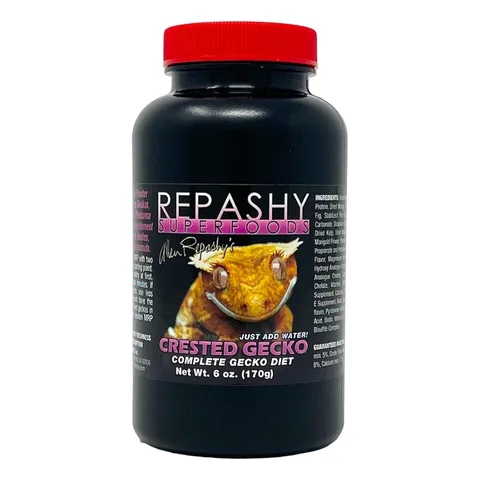
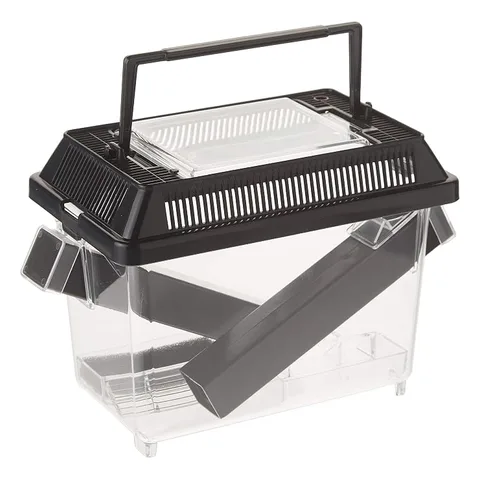
These are the products vet and keeper guides name: plain calcium and calcium with D3 for dusting, a reptile multivitamin, a gut-load diet for feeders, a complete diet for crested geckos and a cricket keeper.
More about lizards
Plan a baby’s home around its adult size with our guides to the best bearded dragon enclosure, the best leopard gecko enclosure and the best gargoyle gecko enclosure. Learn more about the animals themselves in the characteristics of a bearded dragon, the characteristics of a gecko and our list of lizard species. For other young reptiles, see what to feed a baby snake and what to feed a baby turtle. All our lizard articles are in the lizards and geckos section.
Frequently asked questions
What do baby lizards eat?
Most baby lizards eat small live insects such as crickets, dubia roach nymphs, black soldier fly larvae and silkworms, gut-loaded and dusted with calcium. Baby bearded dragons add a daily salad of dark leafy greens, baby green iguanas eat greens only and crested geckos eat a powdered crested gecko diet. Identify the species before choosing food.
How often should I feed a baby lizard?
Feed hatchlings and juveniles every day. Baby bearded dragons get 1 to 2 meals a day, and PetMD suggests 2 to 3 small meals for hatchlings. Most species drop to meals every 2 to 3 days as adults, while bearded dragons and iguanas keep eating greens daily.
How many crickets should a baby lizard eat?
Feed as many as the lizard eats in one short session of a few minutes, then remove the leftovers, because uneaten crickets can bite. ReptiFiles uses about 2 insects per inch of a leopard gecko's length. Chewy's vet-reviewed anole care sheet gives 2 to 3 small insects per feeding.
What size insects can a baby lizard eat?
No longer than the space between the lizard's eyes. PetMD and RSPCA Australia both use this rule. Larger insects can choke a lizard that swallows its prey whole, so hatchling anoles and small geckos often start on flightless fruit flies.
Can baby lizards eat fruit?
Leopard geckos and anoles should not eat fruit. Bearded dragons, iguanas and crested geckos can have small pieces of banana, apple, berries or grapes as a rare treat. PetMD keeps fruit to 5% or less of a bearded dragon's diet. Skip citrus.
Can baby lizards drink milk?
No. Lizards are reptiles, not mammals, and can't digest dairy. Give fresh water in a shallow dish, and mist the tank for anoles and crested geckos, which drink droplets off leaves. Chewy's vet advises against juice and broth too.
Can I feed a baby lizard bugs from my yard?
No. VCA and PetMD warn that wild insects can carry pesticides, fertilizer and parasites, and some are toxic, including fireflies and wild hornworms. The ASPCA Animal Poison Control Center reports that half a firefly can kill an adult bearded dragon. Buy feeder insects from a pet store or breeder.
Why is my baby lizard not eating?
Check the temperatures and the UVB bulb first, because a cold lizard can't digest. Many hatchling geckos don't eat until their first shed, often around day 3, and a new arrival may skip a few meals. A baby that still refuses food after 1 to 2 weeks needs a reptile vet.
Do baby lizards need calcium powder?
Yes. Feeder insects and many vegetables are low in calcium, and a shortage leads to metabolic bone disease. VCA dusts insects with plain calcium at most meals and with calcium plus D3 2 to 3 times a week, plus a multivitamin about once a week. Too much D3 is also harmful, so follow your vet's schedule.
What do baby bearded dragons eat?
About 70% insects such as crickets, dubia roaches and black soldier fly larvae, and 20 to 30% finely chopped greens such as collard, mustard and dandelion greens, PetMD says. Offer the salad daily from the start. Fruit stays at 5% or less, and fireflies are deadly.
I found a baby lizard outside. What should I feed it?
Nothing. Baby lizards hatch able to look after themselves, so a healthy one should be left where it is. The International Wildlife Rehabilitation Council warns that the wrong diet can kill a wild reptile and that keeping one without a permit is illegal in most places. If it is injured, put it in a ventilated box somewhere warm and quiet and call a wildlife rehabilitator.
Can you keep a wild baby lizard as a pet?
Usually not. Keeping wildlife without a permit is illegal in most places, and some states protect specific lizards: Arizona protects Gila monsters, and Oklahoma bans keeping Texas horned lizards. Wild lizards also do poorly in captivity, so leave them outdoors.
Sources
- Feeding Bearded Dragons, Leopard Geckos: Care and Feeding and Feeding Iguanas, VCA Animal Hospitals
- Nutritional, Metabolic, and Endocrine Diseases of Reptiles, Merck Veterinary Manual
- What Do Lizards Eat?, What Do Bearded Dragons Eat?, Leopard Gecko Care Sheet and Crested Gecko Care Sheet, PetMD
- What should I feed my reptile?, RSPCA Australia
- What Do Lizards Eat? and Anole Care Sheet, Chewy
- Treating Firefly Toxicosis in Lizards, ASPCA Animal Poison Control Center
- What Do Bearded Dragons Eat? and What Do Leopard Geckos Eat?, ReptiFiles
- Reptile and Amphibian Rescue, International Wildlife Rehabilitation Council
- What To Do If You Find Baby Wildlife, National Wildlife Federation