Romania has roughly 3,450 vascular plant species, around 30% of everything that grows in Europe, packed into a country about the size of Oregon. The reason is geography. The Carpathians curve through the middle, the Danube drains into a vast delta on the east, and dry steppe meets the Black Sea in the southeast. Each zone grows its own plants, so the easiest way to learn the plants of Romania is to sort them by habitat.
Endemic counts vary with how strictly botanists draw the line, from a few dozen to over a hundred taxa. Most are on limestone peaks in the Carpathians. This guide covers 22 species, with bloom times, a quick-reference table, and a plan for seeing them.
Table of Contents
- Plants of Romania by Habitat: Quick Orientation
- Carpathian Alpine Plants
- Transylvanian Meadow Wildflowers
- Danube Delta Wetland Plants
- Dobrudja Steppe and Black Sea Dunes
- Forest Plants
- Medicinal and Traditional Plants
- Quick-Reference Table
- Where and When to See Them
- The Short Version
Plants of Romania by Habitat: Quick Orientation
Elevation and water explain most of the map.
- Carpathian alpine zone: above the treeline, roughly 1,800 m and up. Limestone ledges, dwarf shrubs, short summers.
- Transylvanian meadows: hay meadows at mid elevation, kept open by centuries of scything.
- Danube Delta: reed beds, floating islands, lakes and a few forests on sand ridges.
- Dobrudja and the coast: hot, dry steppe and sand dunes in the southeast.
- Forests: beech at mid elevations, oak in the warm lowlands, spruce higher up.
Some plants here are not Romanian exclusives. Many also grow across the Balkans or central Europe. “Native to Romania” and “found only in Romania” are different claims, and the profiles below say which applies.
Carpathian Alpine Plants
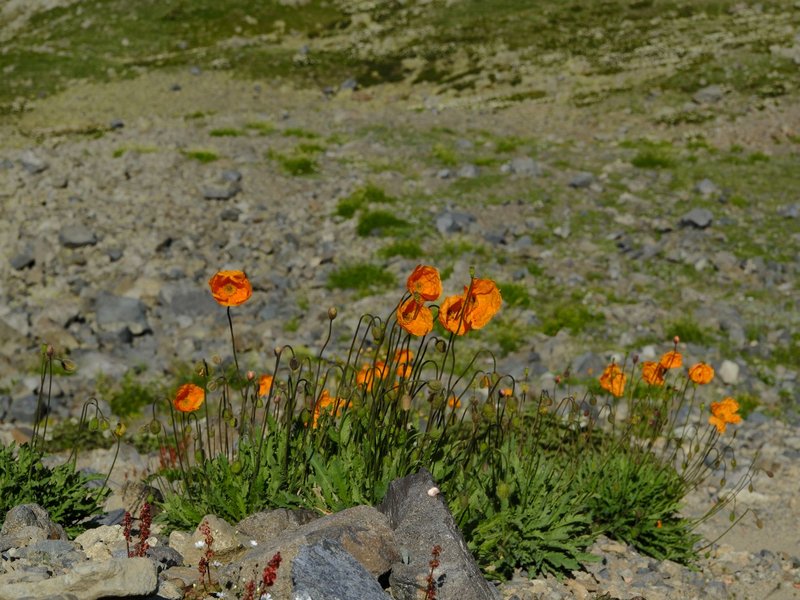
Mountain flora here is a mix of Alpine relatives and species that exist only in the Carpathian arc. Snow can last into June, so everything blooms fast, mostly July and August.
Edelweiss (Leontopodium nivale subsp. alpinum)
Habitat: rocky limestone ledges in the high Carpathians, including the Bucegi and Piatra Craiului. Blooms: July to September.
The white “petals” are woolly bracts. The real flowers are the tiny yellow clusters in the center. Romanians call it floarea de colț, “flower of the rock corner”, and it is protected by law. Picking it can bring a fine, and the plants are slow to recover.
Piatra Craiului pink (Dianthus callizonus)
Habitat: limestone crags of the Piatra Craiului massif. Blooms: July and August.
This is a true endemic. It grows in this one mountain range and nowhere else on Earth. The flowers are deep pink with a darker ring around the center, which is what callizonus, “beautiful belt”, refers to. Hikers on the ridge trail see it only if they look down at the rock.
Carpathian rhododendron (Rhododendron myrtifolium)
Habitat: subalpine slopes in the Retezat, Făgăraș and Rodna ranges. Blooms: June and July.
Called smirdar in Romanian. It is a low, leathery-leaved shrub that spreads into pink mats just above the treeline. In late June, whole slopes turn pink. The plant is toxic to livestock, which is partly why it survives on grazed ground.
Arnica (Arnica montana)
Habitat: acidic mountain pastures, including the Apuseni and the Carpathians. Blooms: June to August.
Orange-yellow, daisy-like heads on a short stem. It is the source of the bruise gels sold across Europe, and wild populations are declining from overharvesting and the loss of traditional grazing. The US National Center for Complementary and Integrative Health notes it is used on the skin only, since swallowing it can be dangerous.
Transylvanian Meadow Wildflowers
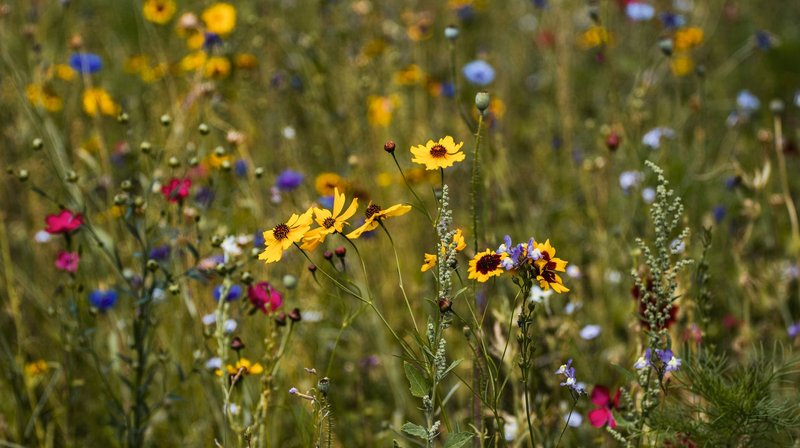
Transylvania’s hay meadows are the best-known wildflower habitat in Romania. They exist because villagers mowed by hand and never plowed or fertilized. A single square meter can hold dozens of species, and the peak is late May to early July.
Transylvanian sage (Salvia transsilvanica)
Habitat: dry hay meadows and grassy slopes. Blooms: June and July.
Violet-blue flower spikes, 40 to 70 cm tall, with bumblebees working them all day. The name suggests it is limited to Transylvania, but it also occurs in neighboring countries. Native, yes. Exclusive, no.
Poet’s narcissus (Narcissus poeticus subsp. radiiflorus)
Habitat: damp mountain-foot meadows, notably the Poiana Narciselor near Dumbrava Vadului in the Făgăraș foothills. Blooms: mid-May to early June.
White flowers with a yellow, red-rimmed cup, and a scent you can smell from the road. The same species group supplies the narcissus absolute used in perfumery, though here it is simply a meadow flower.
Snake’s head fritillary (Fritillaria meleagris)
Habitat: damp meadows and river floodplains. Blooms: April and May.
Nodding bells with a purple-and-white checkerboard pattern. Meleagris is Latin for guinea fowl, a reference to the speckling. It is declining because drained meadows have no place for it. Romanians call it lalea pestriță, the speckled tulip.
Spring crocus (Crocus heuffelianus)
Habitat: mountain meadows and clearings. Blooms: March to April.
It flowers as the snow melts, sometimes through it. Violet cups open in sun and close in cloud. Don’t confuse it with the autumn crocus (Colchicum autumnale), which is a different, poisonous plant that flowers in September.
Danube Delta Wetland Plants
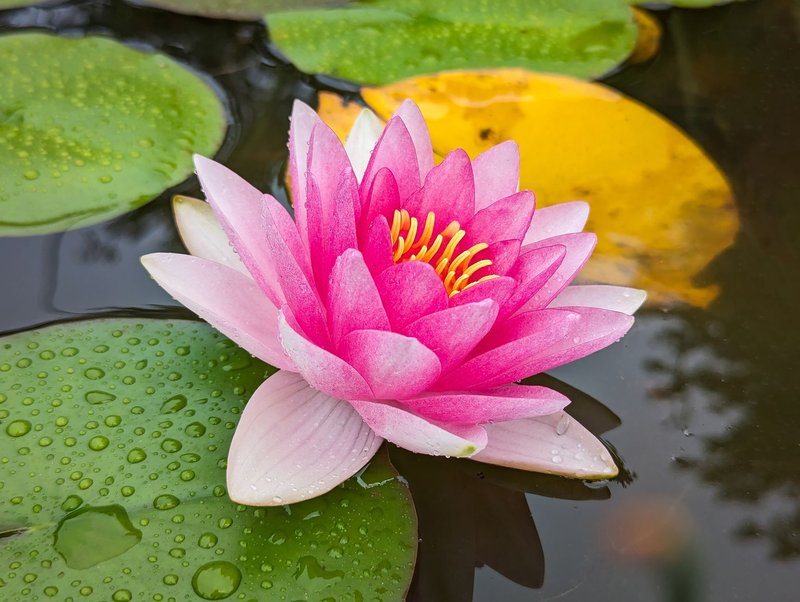
The Danube Delta is a UNESCO World Heritage Site, and plants are why. It has reed beds, willow and poplar stands, lakes thick with water lilies, and oak forests on old sand ridges.
Common reed (Phragmites australis)
Habitat: shallow water throughout the delta. Flowers: July to September (silver-brown plumes).
Reed is the delta’s dominant plant community, and its beds are often cited as the largest continuous reed stand in the world. Some of it forms plaur, floating mats thick enough to walk on. It is cut in winter for thatch and has fed Romania’s reed-based industries.
White water lily (Nymphaea alba)
Habitat: quiet lakes and channels. Blooms: June to August.
White, with yellow centers, floating on round pads. The flowers open in the morning and close by late afternoon. Boat tours from Tulcea pass lily-covered channels in midsummer.
Silk vine (Periploca graeca)
Habitat: Letea Forest, on sand dunes in the northern delta. Blooms: June and July.
Letea is odd for northern Europe. Oak and ash are draped in lianas, including silk vine, wild grape and hops, which gives the forest a jungle look. Silk vine can climb to the crowns, and its brown-purple, star-shaped flowers are easy to overlook.
Dobrudja Steppe and Black Sea Dunes
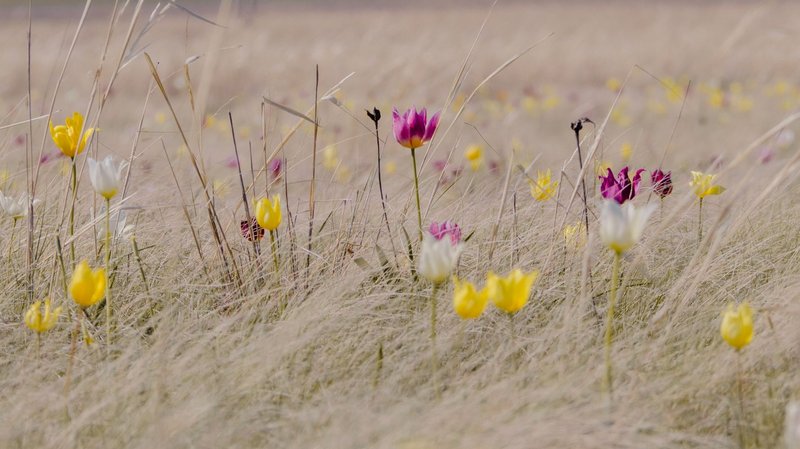
Dobrudja is the driest, hottest part of Romania. Feather grasses and bulbs take over, as they do across the Eurasian steppe, and the spring bloom ends before summer heat arrives. The coastal dunes are a separate habitat; the Agigea dunes reserve near Constanța protects one of the last stretches of natural dune vegetation on the Romanian coast.
Pheasant’s eye (Adonis vernalis)
Habitat: steppe grassland in Dobrudja and the Transylvanian Plain. Blooms: March to May.
Bright yellow, with up to 20 narrow petals, flowering among last year’s dry grass. It contains cardiac glycosides. They were once used in heart medicines, and the same compounds make the plant poisonous.
Romanian peony (Paeonia peregrina)
Habitat: forest clearings and glades in the southern lowlands and Dobrudja. Blooms: May and June.
Crimson, glossy and about 10 cm across. It is called bujor in Romanian, and “red as a peony” (roșu ca bujorul) is the standard idiom for blushing. It also grows elsewhere in the Balkans, and in Romania it is protected.
Forest Plants
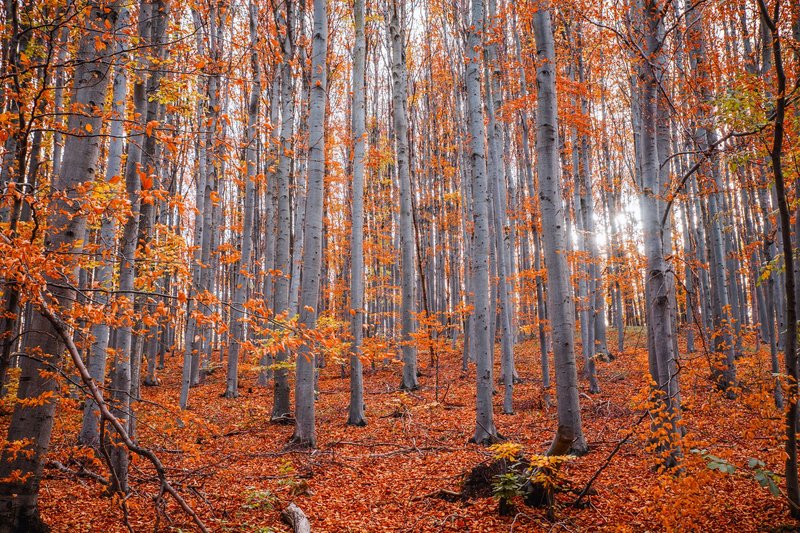
Forest covers roughly a quarter of Romania. Beech dominates the mid-elevation Carpathians, and some of the continent’s oldest stands are here. Several Romanian tracts belong to the UNESCO Ancient and Primeval Beech Forests listing.
European beech (Fagus sylvatica)
Habitat: slopes at roughly 600 to 1,400 m. Leafs out: April to May.
Smooth gray bark and a closed canopy. Beech woods are dark in summer, so the wildflowers bloom in spring before the leaves arrive. Old-growth beech supports brown bear, lynx and wolf.
Ramsons, or wild garlic (Allium ursinum)
Habitat: damp beech and mixed woods. Blooms: April and May.
Leurdă is a spring staple in Romanian kitchens, used in soups and with polenta. Foragers should smell the leaf before eating. Lily-of-the-valley and autumn crocus grow nearby and are toxic, and only ramsons smells of garlic.
Snowdrop (Galanthus nivalis)
Habitat: woodland floors and shady slopes. Blooms: February to March.
Ghiocel is the flower of 1 March, when Romanians give each other mărțișor charms, and bunches of snowdrops are sold in the street. Wild bulbs are the problem. Buy from growers rather than taking them from the forest.
Lady’s slipper orchid (Cypripedium calceolus)
Habitat: calcareous beech and mixed woods. Blooms: May to July.
Papucul doamnei, the lady’s slipper. A yellow pouch with maroon twisted petals. It takes more than a decade to flower from seed, so one picked plant represents years of growth. It is rare and strictly protected.
Burning bush (Dictamnus albus)
Habitat: warm, dry oak woodland edges and sunny slopes. Blooms: May and June.
Pink-purple spires. Its leaves and seed pods give off volatile oils flammable enough that, on hot still days, a match held near the plant can ignite the air around it, hence the name. Don’t try it: the sap can cause burns when skin is later exposed to sunlight.
Medicinal and Traditional Plants

Romanian villages have long relied on wild plants for tea, jam and home remedies. Arnica, covered above, is the best-known medicinal species from the mountains. These four turn up in kitchens and pharmacies.
Dog rose (Rosa canina)
Habitat: hedgerows, forest edges, scrub. Blooms: May and June.
This is Romania’s national flower, and it also grows across most of Europe. The petals are pale pink, almost white. The real use is the hips, picked from September and made into tea and dulceață de măceșe, a rose hip jam. They are a well-known source of vitamin C.
Linden (Tilia cordata, T. platyphyllos)
Habitat: lowland and hill forests, also parks and avenues. Blooms: June and July.
Tei flowers go into tea for colds, and the trees line boulevards in Bucharest. In Iași’s Copou Park, a linden is tied to the poet Mihai Eminescu. The honey from its flowers is pale and strongly scented.
Sea buckthorn (Hippophae rhamnoides)
Habitat: sandy river banks, gravel bars, coastal dunes. Fruits: August to October.
Cătină is a thorny shrub with silver leaves and orange berries that stay on the branches into winter. The berries are very sour. They are sold as juice, syrup and oil. It grows wild along the Danube and its delta.
Elder (Sambucus nigra)
Habitat: hedges, roadsides, village edges. Blooms: May and June.
Soc flowers are used to make socată, a fermented elderflower drink made at home in late spring, similar to lemonade. The flat white flower clusters are the part used. Berries must be cooked, because raw ones cause stomach upset.
Quick-Reference Table
| Species | Region | Season | Use or note |
|---|---|---|---|
| Edelweiss | Carpathian alpine | Jul–Sep | Protected symbol |
| Piatra Craiului pink | Piatra Craiului | Jul–Aug | Endemic |
| Carpathian rhododendron | Subalpine slopes | Jun–Jul | Toxic shrub |
| Arnica | Mountain pastures | Jun–Aug | Topical bruise remedy |
| Transylvanian sage | Hay meadows | Jun–Jul | Pollinator plant |
| Poet’s narcissus | Foothill meadows | mid-May–Jun | Perfumery relative |
| Snake’s head fritillary | Damp meadows | Apr–May | Declining |
| Spring crocus | Mountain meadows | Mar–Apr | Early bloomer |
| Common reed | Danube Delta | Jul–Sep | Thatch, floating islands |
| White water lily | Danube Delta | Jun–Aug | Lake and channel plant |
| Silk vine | Letea Forest | Jun–Jul | Liana |
| Pheasant’s eye | Steppe | Mar–May | Toxic, once medicinal |
| Romanian peony | Southern lowlands | May–Jun | Folk idiom |
| European beech | Carpathian slopes | Apr–May | Old-growth forest |
| Ramsons | Damp woods | Apr–May | Edible leaves |
| Snowdrop | Woodland | Feb–Mar | 1 March tradition |
| Lady’s slipper | Calcareous woods | May–Jul | Rare orchid |
| Burning bush | Oak woodland edges | May–Jun | Skin irritant |
| Dog rose | Hedgerows | May–Jun | National flower, hip tea |
| Linden | Forests and towns | Jun–Jul | Flower tea |
| Sea buckthorn | River banks, dunes | Aug–Oct | Berry juice and oil |
| Elder | Hedges and village edges | May–Jun | Elderflower drink |
Where and When to See Them
Timing matters more than location. Plan by season.
- March to April: crocus and pheasant’s eye in the lowlands and foothills, then snowdrops in the woods earlier.
- Mid-May to early July: the peak window for the Transylvanian meadows. Go before the hay is cut, usually late June into July. Villages around the Târnava Mare valley, such as Viscri and Saschiz, are common bases.
- Late May to June: narcissus at Dumbrava Vadului and peonies in the southern clearings.
- July and August: alpine flora. Piatra Craiului is reached from Zărnești, and the Bucegi plateau has cable car access from Bușteni. Check for lingering snow in early July.
- June to August: water lilies in the delta, by boat from Tulcea.
- September to October: rose hips and sea buckthorn berries.
Stay on marked trails in national parks. Edelweiss, lady’s slipper and many others are protected, and photographing them is the better option.
The Short Version
The plants of Romania fall into five habitat groups, and each has a signature species. Carpathian summits have edelweiss and the Piatra Craiului pink. Transylvanian meadows have sage, narcissus and fritillary. The Danube Delta has reeds, lilies and the lianas of Letea. The southeast has steppe peonies and pheasant’s eye. Forests and village hedgerows supply most of the medicinal plants, from dog rose to elder. If you only have one trip, go in the second half of June.