Table of Contents
- TLDR
- The Ross seal diet at a glance
- Why the numbers don’t agree
- Built for slippery prey
- Where and how Ross seals hunt
- How the diet compares with other Antarctic seals
- Why squid may explain the rarity
- What we still don’t know
TLDR
Ross seals eat mostly squid and fish, with smaller amounts of krill and other invertebrates. The best-known breakdown is about 47% squid, 34% fish and 19% invertebrates. An older study put cephalopods much higher, so treat every percentage as a rough estimate.
The Ross seal diet at a glance
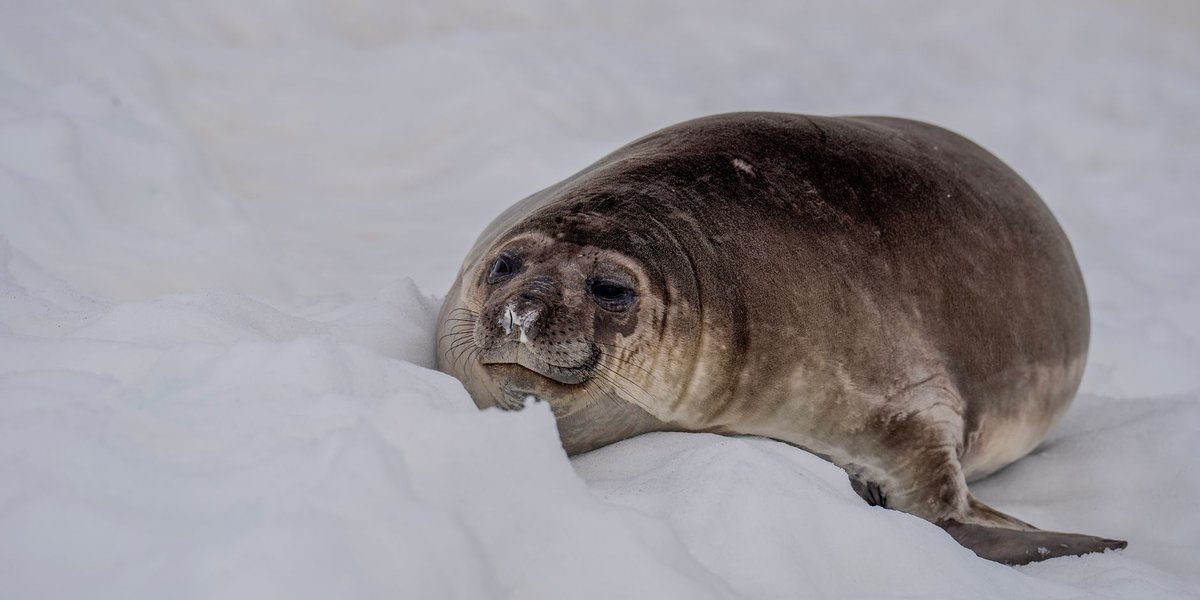
The Ross seal (Ommatophoca rossii) is a squid-and-fish specialist. It doesn’t live on krill the way its relative the crabeater seal does, and it doesn’t hunt penguins like the leopard seal. Its menu sits in the dark middle water of the Southern Ocean, and most of it is soft-bodied and slippery.
Here’s what shows up in the diet, based on stomach-content studies:
| Prey | Type | Notes |
|---|---|---|
| Squid | Cephalopod | The largest share of the diet in most studies |
| Antarctic silverfish | Fish | A key mid-water fish of the Antarctic shelf |
| Lanternfish (myctophids) | Fish | Small, deep-dwelling, bioluminescent |
| Krill | Crustacean | Eaten, but a minor part of the diet |
| Bottom-dwelling invertebrates | Mixed | Small amounts, suggesting some feeding near the seafloor |
The breakdown most often quoted comes from work by Skinner and Klages in 1994: roughly 47% squid, 34% fish and 19% invertebrates. The Australian Antarctic Program describes the same pattern in general terms, squid and fish first, with invertebrates in a supporting role.
Why the numbers don’t agree
Look up the Ross seal diet in a second source and you may get a different set of percentages. An earlier study by Oritsland in 1977 reported about 64% cephalopods, 22% fish and 14% invertebrates. Squid still comes first, but the gap over fish is much wider.
Both can be right. Each study sampled a small number of animals, in different places and different years. Ross seals live on dense pack ice far from shore, so researchers get few chances to examine them. Stomach contents also only show the last meal or two, and squid beaks last longer in a stomach than fish flesh does, which can skew the counts.
The safe summary is that squid is the biggest single item, fish are a close second, and invertebrates trail behind.
Built for slippery prey
The Ross seal’s body reads like a spec sheet for catching squid and small fish.
- Small mouth. It’s tiny for a seal of its size, which is typically 2 to 2.5 metres long. A big gape isn’t needed for prey that’s mostly handful-sized.
- Needle-like teeth. The teeth are small, sharp and curved, built to pin soft bodies rather than crush shells or shear blubber. Squid and fish don’t need to be chewed.
- Large eyes. Ross seals have notably big eyes for a pinniped. At several hundred metres down, there’s very little light, and squid and lanternfish are both active there. More light-gathering area means a better chance of spotting them. Northern elephant seals also hunt squid in pitch-black deep water, so this kind of dark-water diving is not unique to the Antarctic.
None of this is accidental. A leopard seal’s wide jaws and cusped teeth suit penguins and seal pups. The Ross seal’s smaller kit suits a different job.
Where and how Ross seals hunt
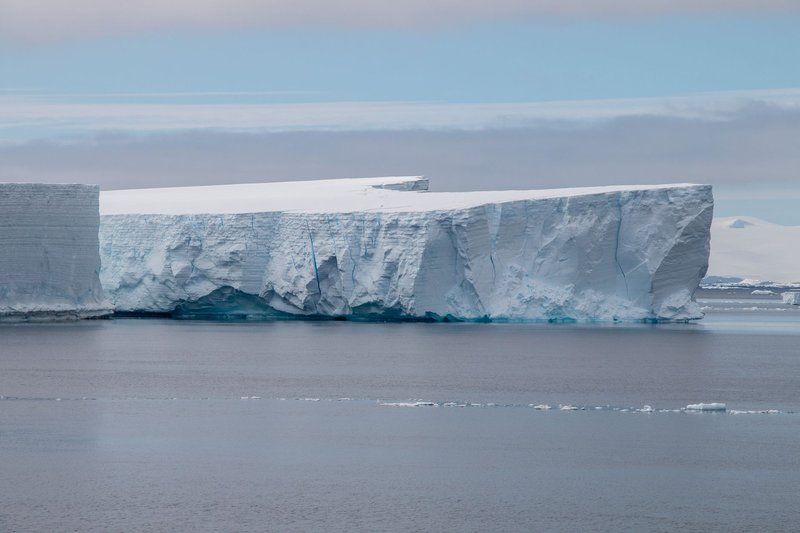
Ross seals spend most of the year in the thick, consolidated pack ice around Antarctica, alongside other polar animals adapted to the cold, and they hunt in the open water beneath and beyond it. Reports on their diving behavior, including from ASOC, describe dives down to roughly 1,000 feet (about 300 metres) lasting more than 20 minutes.
That depth matches the prey. Squid and many lanternfish sit in mid-water, well below where most seals forage. A Ross seal can drop into that layer, make a capture and return to a breathing hole or the ice edge on a single breath.
It’s solitary hunting, too. Ross seals aren’t known for the group feeding you’d see with some other Antarctic species. Individuals are usually seen alone or in very small groups on the ice, which fits a diet of single, fast-moving prey rather than dense swarms.
How the diet compares with other Antarctic seals
Four seal species share the Antarctic pack ice, and they divide the food supply fairly cleanly.
| Seal | Main food |
|---|---|
| Ross seal | Squid, fish, some krill |
| Crabeater seal | Almost entirely krill |
| Weddell seal | Fish and squid, often caught on deeper dives from fast ice |
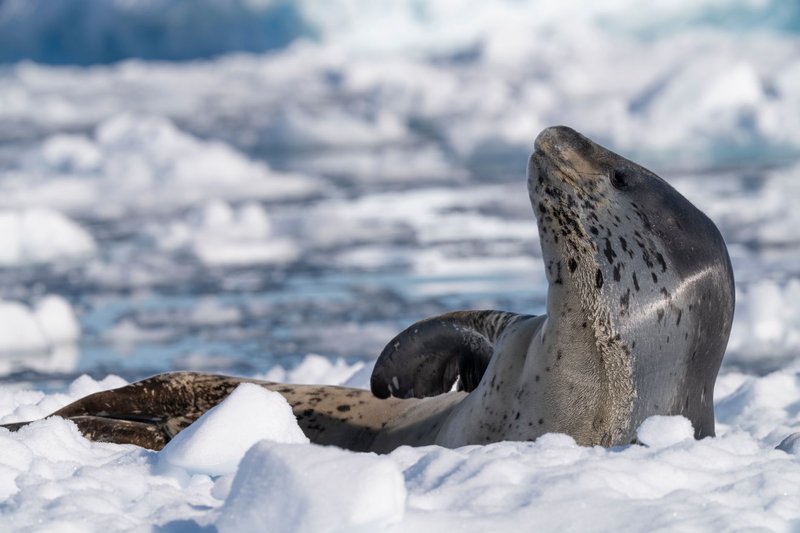
| Leopard seal | Krill, penguins, fish and other seals |
The crabeater and the Ross seal show the sharpest contrast. The crabeater has lobed teeth that act as a krill sieve. The Ross seal has needle teeth for single targets. Same ice, same ocean, two entirely different feeding tools.
Why squid may explain the rarity
Ross seals are the least-seen and, by most estimates, the least numerous of the Antarctic seals, although population figures are rough because the animals are so hard to count. The Seal Conservation Society hints at a link between this and the diet.
The idea runs like this. Krill supports huge numbers of crabeater seals. Squid and mid-water fish are a thinner, patchier resource, so they may support fewer seals. That’s a hypothesis, not a proven cause. Ice habitat, predation and other factors may play a part as well.
What we still don’t know
The honest answer is that the Ross seal diet is poorly studied. The numbers above come from limited samples, mostly from a few decades ago. Which squid species matter most, how the diet shifts by season or region, and how much the seals depend on krill in different years are all open questions.
That also leaves a gap on climate effects. Ross seals rely on sea ice, and their prey depends on the wider Southern Ocean food web, which includes krill. How changing ice and krill fishing will feed through to squid and fish populations isn’t well mapped, and anyone who gives you a firm prediction is ahead of the data.
For now, the answer to what Ross seals eat is simple to state and hard to refine: squid first, fish second, a little krill and seafloor life on the side.