Syria’s native animals range from a small brown bear on the northern mountains to a river turtle that lives in the Euphrates and nowhere near the coast. The Syrian brown bear is the animal most often named as the national animal, but it’s one of the rarest on this list. The hamster you probably know from pet shops is a better-known Syrian native than any of the big mammals.
This guide sorts 13 species by where they live, gives each one an IUCN status and a single detail worth remembering, and then separates them from the animals that used to live in Syria and no longer do. That second part is the one most lists skip.
Table of contents
- TLDR
- What “native” means here
- Syria’s native animals by habitat
- Mediterranean coast and mountains
- Steppe and desert
- The Euphrates and its wetlands
- Animals no longer found in Syria
- What is threatening Syrian wildlife
TLDR
- Best known: Syrian brown bear (national animal), Syrian hamster, gray wolf, striped hyena, goitered gazelle, Euphrates softshell turtle.
- Three habitat zones: the wetter, wooded Mediterranean mountains in the west, a huge dry steppe and desert in the center and east, and the Euphrates valley running southeast.
- Most threatened of the 13: the Euphrates softshell turtle (Endangered), followed by the goitered gazelle, Syrian hamster, Syrian serin, and spur-thighed tortoise (all Vulnerable).
- Gone from Syria: Syrian wild ass (extinct worldwide), Arabian oryx, northern bald ibis as a breeding bird, cheetah, and lion.
What “native” means here
Three words get blurred in most animal lists, so here’s how they’re used below.
Native means the species lives in Syria naturally, without human introduction. Endemic means it lives only in a small area. Very few Syrian animals are truly endemic, and several species with “Syrian” in the name live well beyond the country. Extinct in Syria (or extirpated) means the species survives elsewhere but no longer lives wild inside Syria’s borders.
Migratory birds are left out of the main list. Flamingos at Lake Jabbul and storks passing over the coast visit Syria, but they don’t belong to it the way a resident woodpecker does.
One more caution. Species counts for Syria vary widely by source, from roughly 95 mammals to several hundred vertebrates, because surveys have been patchy and the taxonomy keeps shifting. Treat any single number as provisional. Conservation statuses below follow the IUCN Red List, and some Syria-specific population details are thin or out of date.
Syria’s native animals by habitat
Syria is small on a map and varied on the ground. A narrow coastal plain gives way to the Coastal Mountain Range and the Anti-Lebanon and Hermon ranges, which catch enough rain to hold oak, pine, and juniper forest. Beyond them the country dries out into steppe, then the Syrian Desert. The Euphrates cuts diagonally through that dryness and carries a ribbon of reeds, fish, and farmland with it.
Animals follow those bands closely, so the list does too.
Mediterranean coast and mountains
1. Syrian brown bear (Ursus arctos syriacus)
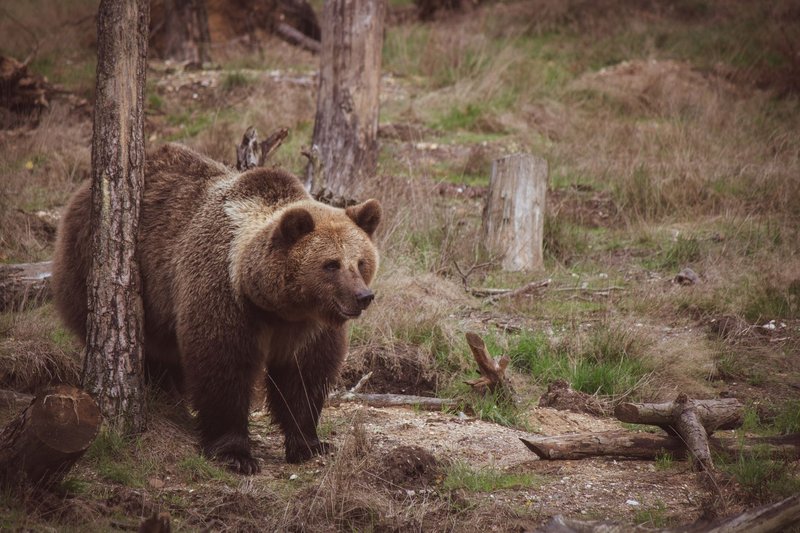
Status: The brown bear as a species is Least Concern worldwide. The Syrian subspecies is not assessed separately, and in Syria itself it is critically scarce.
This is among the smallest and palest of the brown bears, with a sandy coat that suits dry mountain country. It’s also the species most often cited as Syria’s national animal. Its stronghold is the high ground along the Lebanese border, around Mount Hermon and the Anti-Lebanon range, and sightings there are rare and hard to confirm.
2. Syrian serin (Serinus syriacus)
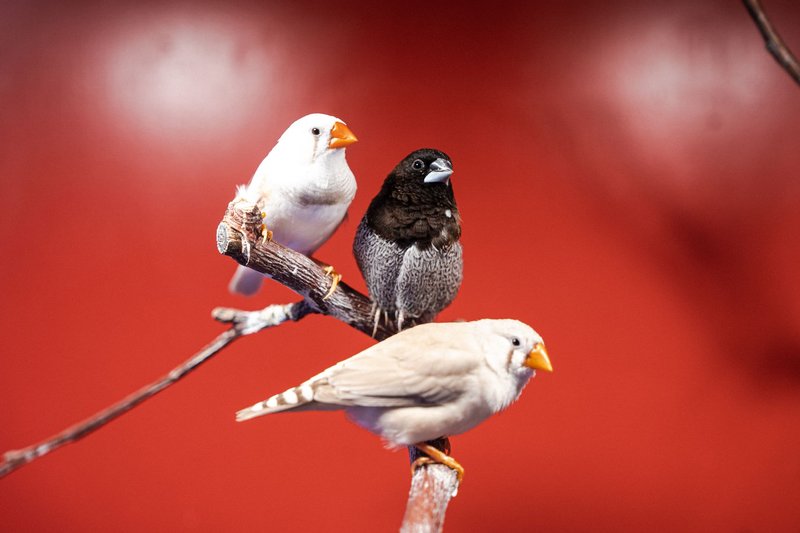
Status: Vulnerable.
A small, streaky yellow-green finch, and one of the few birds with a breeding range limited to the Levant. It nests on rocky, scrub-covered slopes in the mountains of Syria, Lebanon, Israel, and Jordan, then moves to lower ground in winter. The total population is small and spread across a handful of mountain areas, which makes every lost hillside count.
3. Syrian woodpecker (Dendrocopos syriacus)
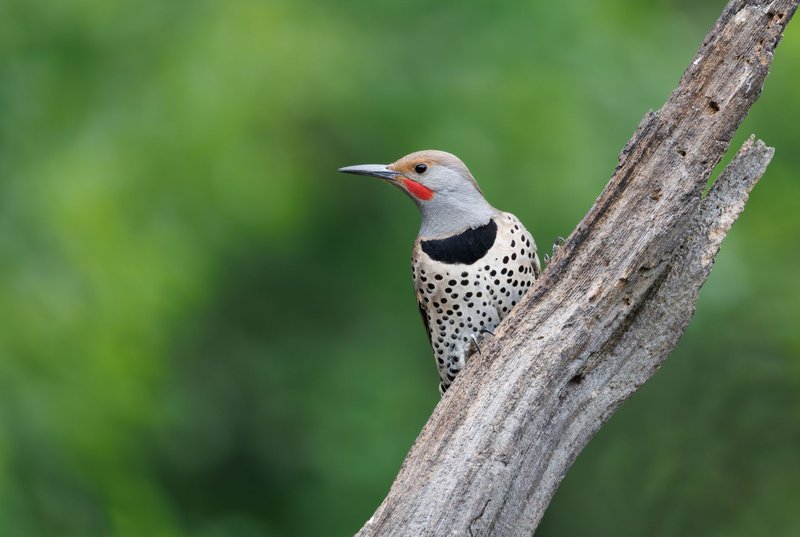
Status: Least Concern.
The Syrian woodpecker is the success story on this list. It lives in orchards, olive groves, and open woodland, and over the last century it has expanded north and west through the Balkans into central Europe. A bird named after Syria now nests in countries that have never been near it.
4. Palestine viper (Daboia palaestinae)
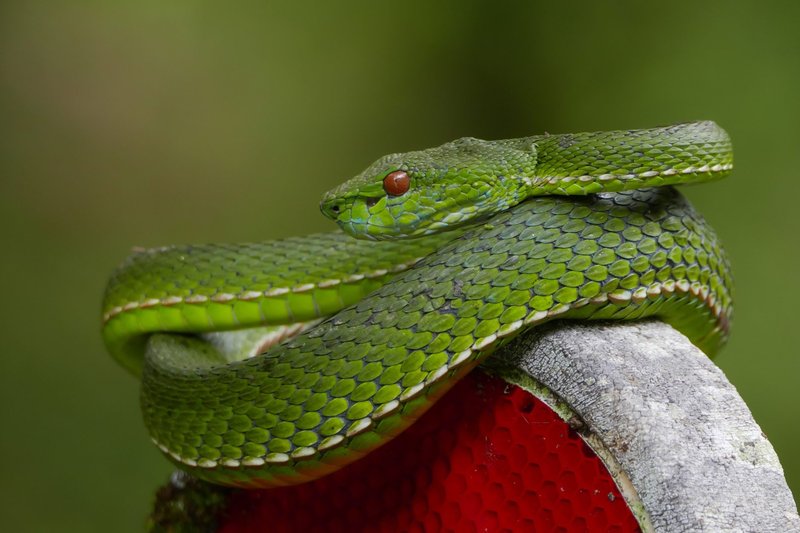
Status: Least Concern.
If you’re searching for dangerous animals in Syria, this is the main one. The Palestine viper is a stocky snake with a zigzag pattern down its back, and it’s common on rocky hillsides, farm terraces, and the edges of villages across the Levant. Its venom is potent enough that bites are a recognized medical emergency in the region. It isn’t aggressive, but it hunts at dusk and rests in stone walls, so walking in the dark is the usual way people meet it.
Steppe and desert
5. Gray wolf (Canis lupus)
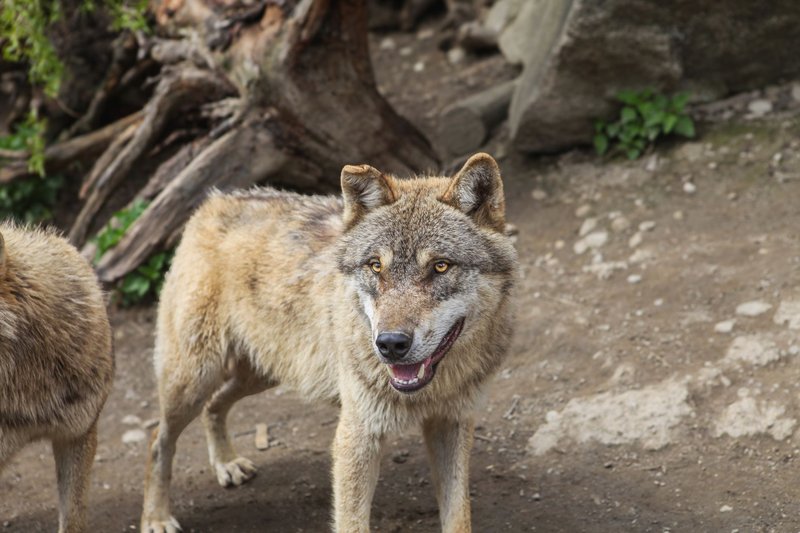
Status: Least Concern globally.
Middle Eastern wolves are smaller and lighter-coated than the ones in European forests. In Syria they use rocky steppe hills and the edges of farmland. Livestock is the problem: a wolf that takes a sheep gets shot or poisoned, which is the main reason they stay shy and hard to see.
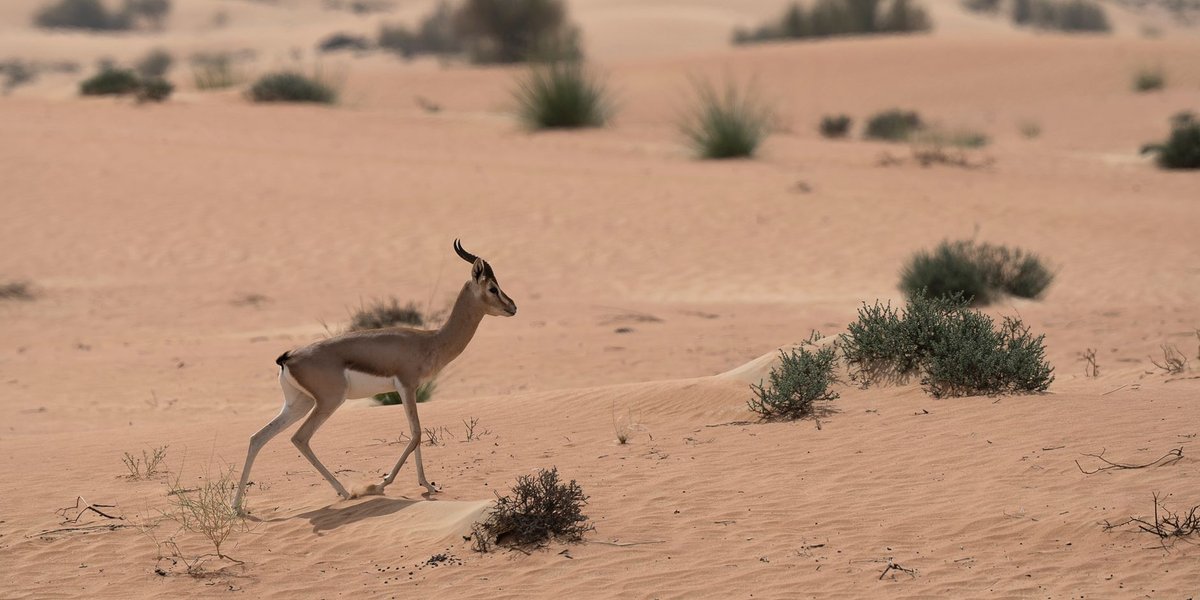
6. Goitered gazelle (Gazella subgutturosa)
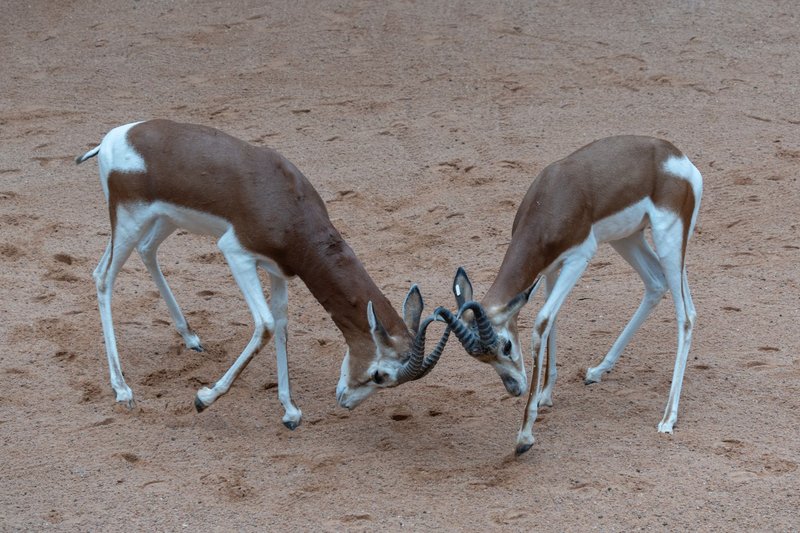
Status: Vulnerable.
The name comes from the males, whose throats swell during the rut. Males carry lyre-shaped horns, and females usually have none or only thin ones. Goitered gazelles live on open steppe and gravel plains, and they depend on speed because there is no cover. They have been hunted hard across their range, which is why protected steppe areas matter so much to them.
7. Striped hyena (Hyaena hyaena)
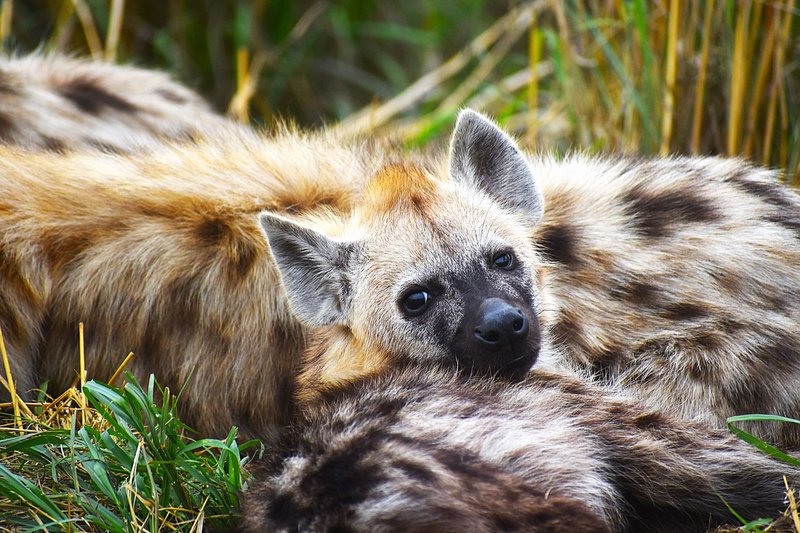
Status: Near Threatened.
Smaller and more solitary than the spotted hyena of Africa, the striped hyena is a night scavenger with a mane it raises along its spine to look larger. It dens in caves and rocky crevices and travels long distances to find carcasses. Its jaws can crack bones that other scavengers leave behind, which makes it a cleanup crew for the steppe.
8. Syrian hamster (Mesocricetus auratus)
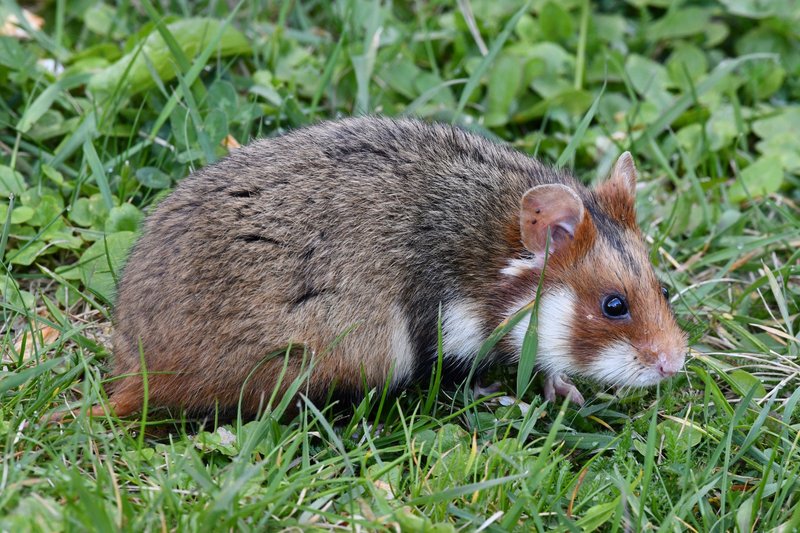
Status: Vulnerable.
Also called the golden hamster. In 1930 the zoologist Israel Aharoni dug up a mother and her litter from a burrow near Aleppo, and those animals founded the captive line that became the pet hamster. Essentially every pet golden hamster today descends from that small group. In the wild they live in the farmland and steppe of northern Syria and nearby Turkey, and they’re getting harder to find as irrigation and farming change the land.
9. Lesser Egyptian jerboa (Jaculus jaculus)
Status: Least Concern.
A rodent that moves like a miniature kangaroo, hopping on long hind legs with a tufted tail for balance. It sleeps through the day in a burrow plugged with sand and comes out at night to eat seeds. It gets most of its water from its food rather than from drinking.
10. Spur-thighed tortoise (Testudo graeca)
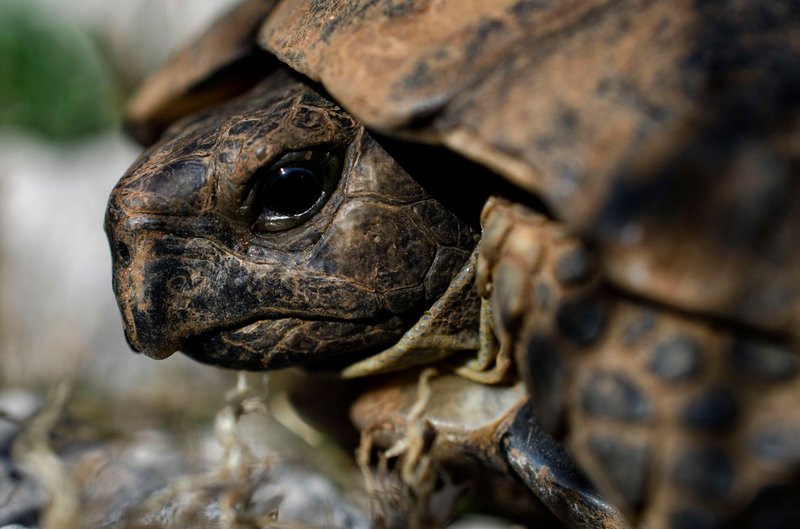
Status: Vulnerable.
The spurs are the small, horny knobs on each hind thigh. These tortoises live in scrub and dry grassland, shelter from the summer heat, and in colder areas hibernate for the winter. They’re slow to mature and slow to breed, so losing adults to collection for the pet trade or to fires hurts a population for decades.
The Euphrates and its wetlands
11. Euphrates softshell turtle (Rafetus euphraticus)
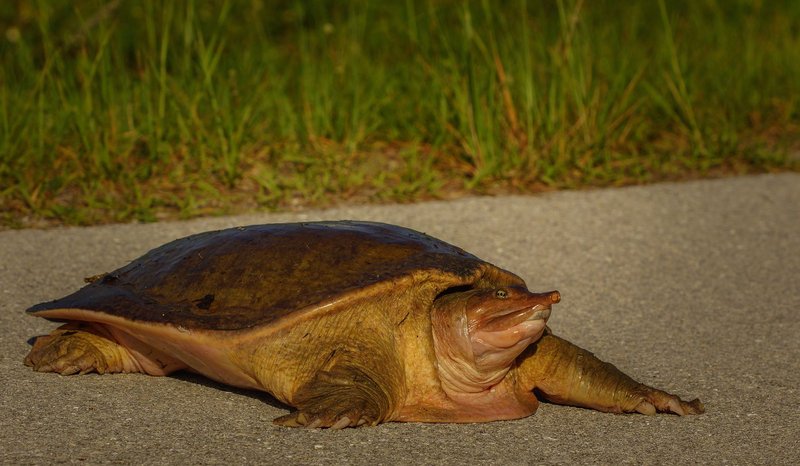
Status: Endangered.
This is one of the largest freshwater turtles in the region, with a flat leathery shell, a long snout like a snorkel, and a habitat limited to the Euphrates and Tigris basins. It spends most of its time lying on the bottom or basking on sandbars. Dams, pollution, fishing nets, and poaching have cut its numbers. It’s also a good example of why Syria’s native animals can’t be separated from the health of the river.
12. Jungle cat (Felis chaus)
Status: Least Concern.
Despite the name, this cat prefers reed beds, marsh edges, and irrigation canals to jungle. It’s a long-legged, sandy-brown cat that swims well and hunts rodents, waterbirds, and fish along the Euphrates. It’s tied to water more than most wild cats, so drying wetlands push it toward farms and villages.
13. Golden jackal (Canis aureus)
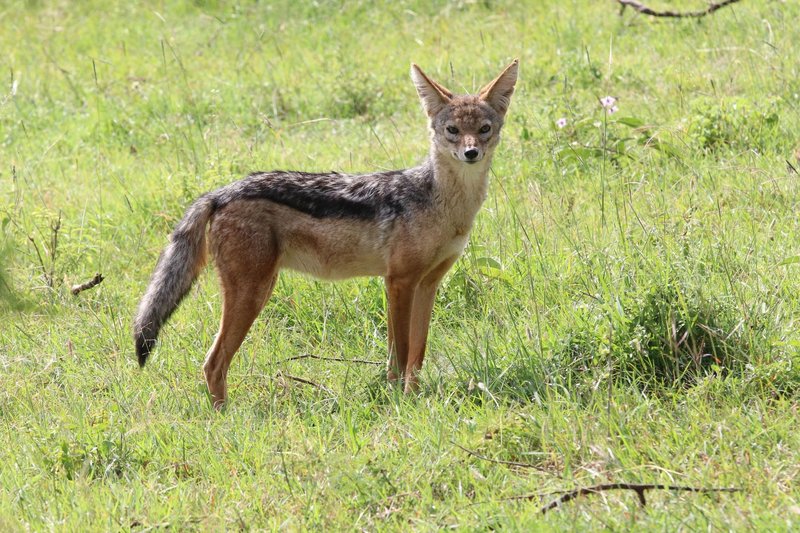
Status: Least Concern.
Jackals are the animals you’re most likely to hear in Syria and least likely to see. Groups call in a rising chorus at dusk, and the sound carries across the river valley and farmland. They eat fruit, rodents, carrion, and scraps, and that flexibility explains why they’re doing fine while larger predators vanish.
Animals no longer found in Syria
These five belong in any honest account of Syria’s native animals, but none of them can be seen in the wild there today.
Syrian wild ass (Equus hemionus hemippus). A small, pale subspecies of the onager that once ranged across the Syrian Desert. It was hunted from cars and vanished in the early twentieth century, and the last captive animal reportedly died in Vienna’s Schönbrunn zoo in 1927. The IUCN lists it as extinct, which makes it the only animal here gone from the entire planet.
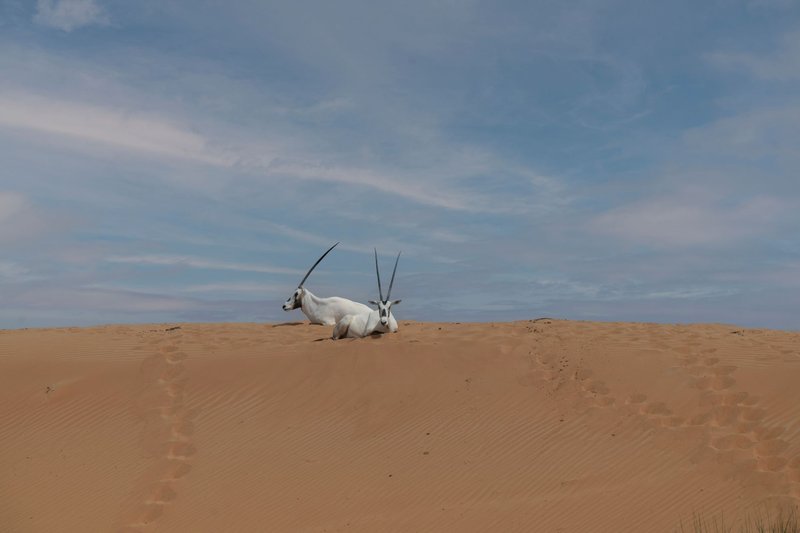
Arabian oryx (Oryx leucoryx). Wild oryx disappeared from the Arabian Peninsula and neighboring deserts by 1972. Captive breeding and releases in other countries have since brought the species back from extinction in the wild, and it is now listed as Vulnerable. Syria’s own wild herds did not survive.
Northern bald ibis (Geronticus eremita). A bare-headed, glossy black ibis. A small breeding colony was rediscovered near Palmyra in 2002, a surprise because the species had been presumed lost from the region. It dwindled through the following decade, and the species is now Endangered worldwide, according to BirdLife International. Syria no longer holds a breeding population.
Cheetah (Acinonyx jubatus). Asiatic cheetahs once hunted the steppe and desert plains. They are gone from Syria, and the last tiny population survives in Iran.
Lion (Panthera leo). Asiatic lions lived in Syria and across the Levant in historical times and were gone by the late nineteenth century.
What is threatening Syrian wildlife
Four pressures show up again and again.
- Habitat loss. Steppe has been plowed, overgrazed, and drained, and forests on the coast have been cleared for farms and building.
- Hunting. Gazelles, wild ass, and oryx were driven to the edge by vehicle-mounted hunters. Poisoning and shooting still hit wolves, hyenas, and jackals.
- Water. Dams and drought have changed the Euphrates and its wetlands, which matters most for the softshell turtle and jungle cat.
- Conflict. The civil war that began in 2011 has disrupted protected areas, patrols, and surveys, so there’s little current data on several populations. Some statuses above may be out of date because researchers haven’t been able to count.
The IUCN’s species pages are the best place to check for updates, and some of the species above may be reassessed as access improves. What’s clear already is the pattern across Syria’s native animals: the generalists hold on, and the specialists tied to one river, one slope, or one kind of grassland are the ones running out of room.