Barbados has one endemic bird, one national bird, and a species list that depends on who’s counting. The endemic is the Barbados bullfinch. The national bird is the brown pelican. And the number of birds of Barbados you’ll find quoted online runs from about 180 to nearly 300, which tells you nothing useful on its own.
Here’s what matters on the ground. Only about 46 species are true residents that breed on the island. Most of the rest are migrants passing through, winter visitors, or vagrants blown in by storms. A one-week visitor realistically meets 20 or so birds, and this guide covers those 20, grouped by the place you’ll find them.
Contents
- How many birds are there in Barbados?
- Beaches and coast
- Wetlands and mangroves
- Gardens and hotels
- Cane fields and open country
- Best birdwatching sites in Barbados
- When to go: a season guide
- Beginner gear and tips
- Quick reference: residents vs. visitors
- Summary
How many birds are there in Barbados?
Wikipedia’s list of Barbados birds tops 280 species. Tourism pages and bird sites quote lower numbers, and some higher. None of them explain the gap, so here’s the likely reason: lists differ on whether they include vagrants (a single bird recorded once), escaped cage birds, and records nobody has verified. Strip those out and the real picture is simple.
- Resident breeders: about 46 species.
- Regular migrants and winter visitors: a few dozen more, mostly shorebirds, herons, ducks and warblers from North America.
- Vagrants: well over a hundred species recorded once or twice, often after a tropical storm.
Barbados is a small, flat, heavily farmed island with little native forest left. That’s why the resident list is short and why the one endemic, the bullfinch, is a bird of gardens and scrub rather than rainforest. The 20 below are the ones you can reasonably plan to see.
Beaches and coast
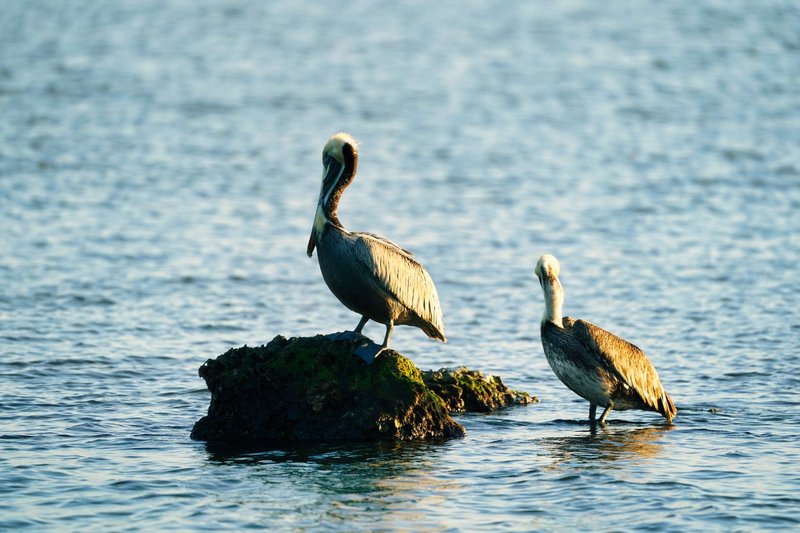
1. Brown pelican
ID: Big, gray-brown, with a pale head and a huge bill pouch. Wingspan is over two meters. Birds in breeding plumage get a yellowish head and a dark brown neck.
Habitat: Open sea close to shore, harbors, fishing beaches.
Where to see it: Watch the fishing boats at Bridgetown’s Careenage and the fish markets, where pelicans queue for scraps. Offshore, they fold their wings and plunge-dive for fish, which is the show worth stopping for. This is Barbados’s national bird.
2. Magnificent frigatebird
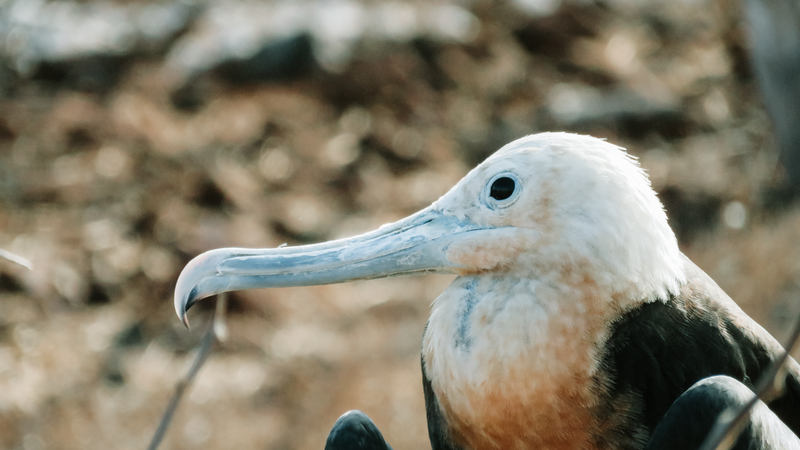
ID: A black bird with long, angular wings and a deeply forked tail. Males have a dark throat, females a white chest. It soars for long periods without a single wingbeat.
Habitat: Open sky above the coast and just offshore.
Where to see it: Look up along the south and west coasts on breezy days. Frigatebirds can’t land on water to feed, so they harass terns and boobies until they drop their catch. If a black “M” is circling over a flock of terns, that’s your bird.
3. Royal tern
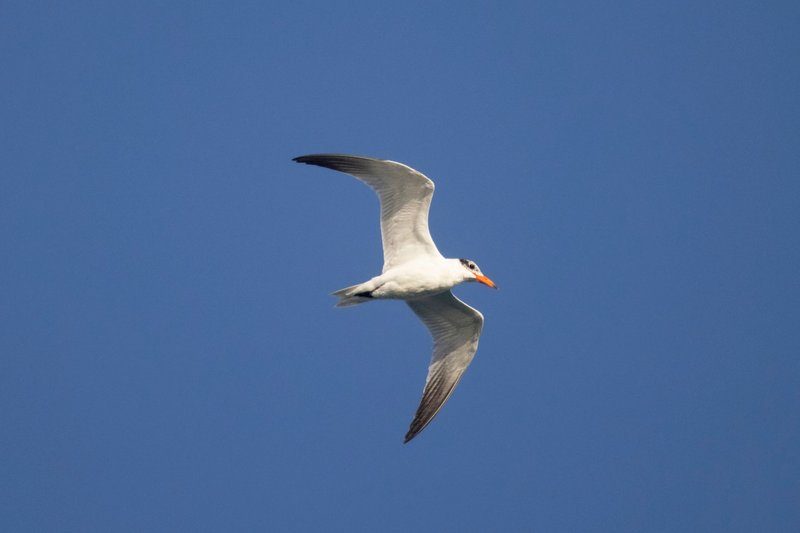
ID: A large tern with a thick orange bill and a shaggy black crest in breeding season (the crest turns patchy in winter). White body, pale gray back.
Habitat: Beaches, bays, sandbars.
Where to see it: Any beach with a few fishing boats. Terns line up on the sand at dawn and hover before plunging for small fish. Early morning light is also best for photos.
4. Ruddy turnstone
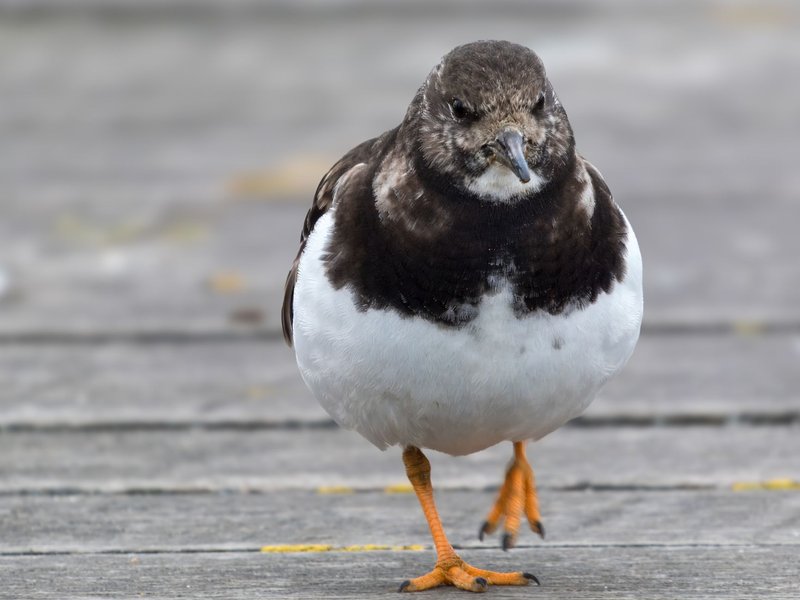
ID: A stocky shorebird with orange legs and a chestnut-and-black calico back. The name is literal: it flips over stones, shells and seaweed to find food underneath.
Habitat: Rocky shores, seawalls, tide-line debris.
Where to see it: Rocky stretches of the east and south coasts, plus the edges of hotel beaches. This is a winter migrant that breeds in the Arctic, so a turnstone on a Barbados beach has traveled thousands of miles to be there.
5. Sanderling
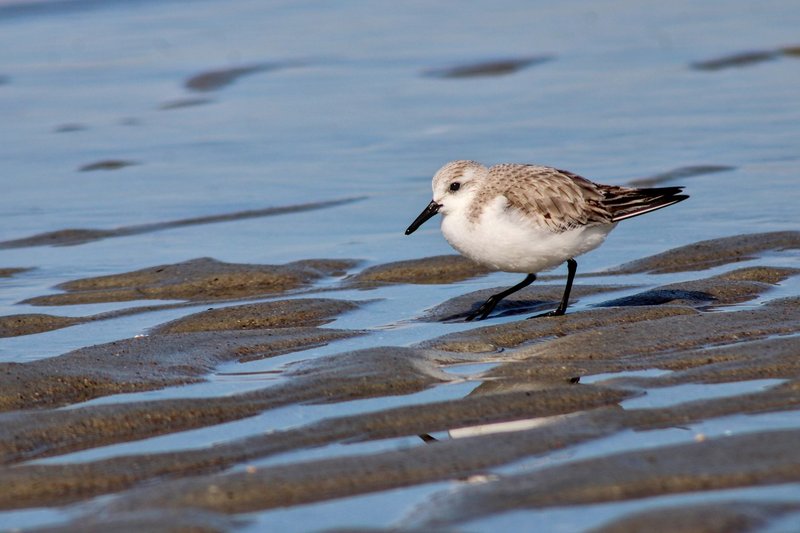
ID: A small, pale gray shorebird, nearly white below, with a black shoulder smudge. It runs along the waterline in a rush, chasing each retreating wave, and rarely stands still.
Habitat: Sandy beaches, right at the surf line.
Where to see it: Long sandy beaches on the south and east coasts. Sit at the waterline for 10 minutes and a flock will run past you. Sanderlings are migrants, so you won’t find them in June.
Wetlands and mangroves
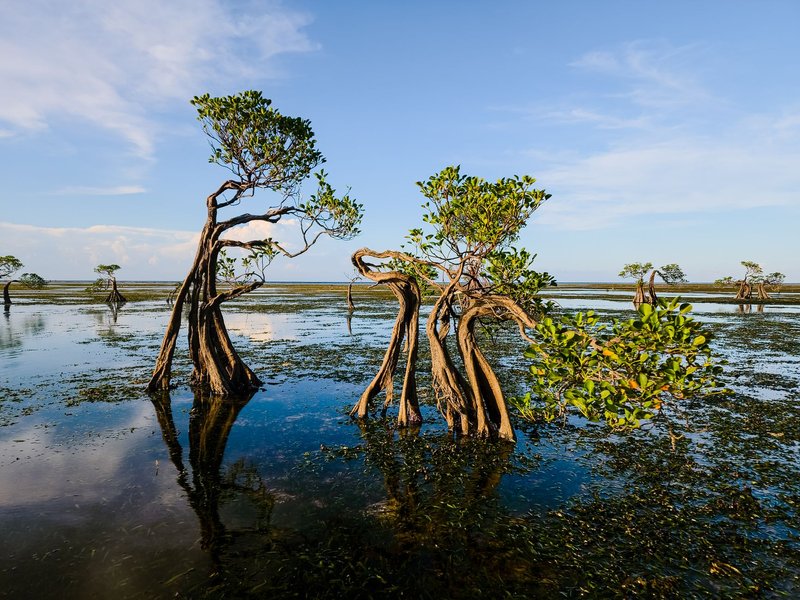
6. Green heron
ID: A small, compact heron with a dark cap, chestnut neck and greenish-gray back. It often crouches with its neck pulled in, which makes it look like a bird made of wet cardboard.
Habitat: Mangroves, pond edges, drainage ditches.
Where to see it: Graeme Hall and Chancery Lane. Green herons are one of the few birds known to use bait: they drop a feather or insect on the water, then wait for fish to investigate. Stand still and watch the water edge, not the trees.
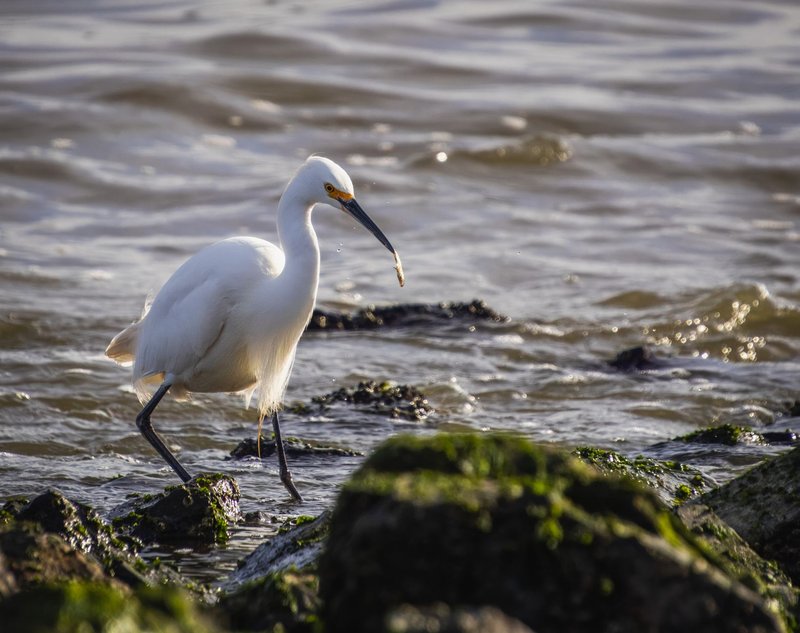
7. Snowy egret
ID: A slim white heron with a thin black bill, yellow patch at the base of the bill, black legs and bright yellow feet. The yellow feet separate it from the larger great egret.
Habitat: Shallow ponds, lagoons, mudflats.
Where to see it: Wetland edges at Graeme Hall and Chancery Lane. Snowy egrets stir the mud with a foot to flush prey, so you can watch them do a little tap dance in the shallows.
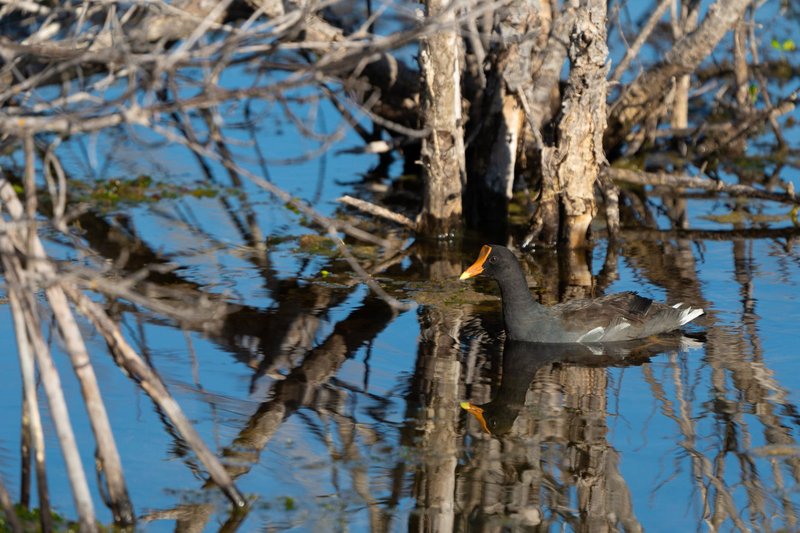
8. Common gallinule
ID: A dark, chicken-sized waterbird with a red forehead shield, a yellow-tipped red bill and a white stripe along the flank. Its tail flicks up and down as it walks.
Habitat: Ponds with floating plants and reeds.
Where to see it: Graeme Hall’s open water. Gallinules often feed on the edge of reeds, stepping from lily pad to lily pad on very long toes.
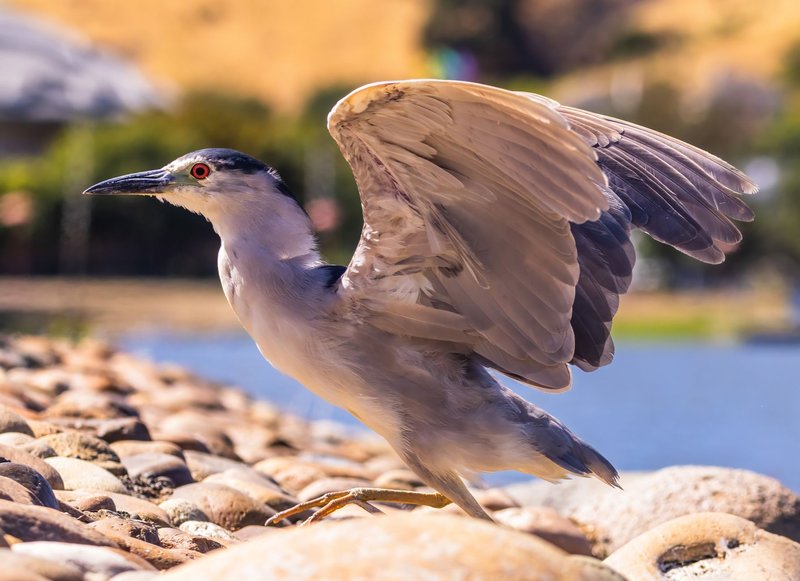
9. Yellow-crowned night heron
ID: A stocky gray heron with a black-and-white striped head and a pale yellow crown. Orange eyes, short thick bill, and a hunched posture.
Habitat: Mangroves, mudflats, shorelines.
Where to see it: Mangrove edges at dusk, especially at Graeme Hall. It specializes in crabs, and a night heron standing motionless over a crab hole is a common sight. Despite the name, it feeds in daylight too.
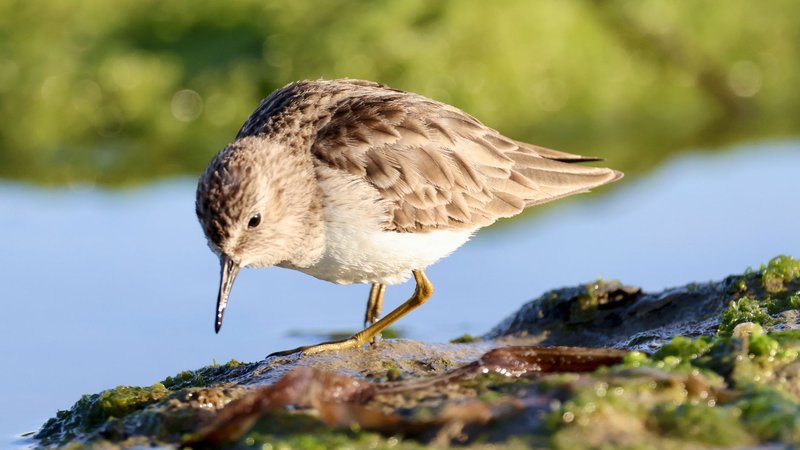
10. Lesser yellowlegs
ID: A medium-sized sandpiper on long, bright yellow legs, with a thin straight bill and a speckled gray-brown back. A rapid, ringing tew-tew call is the giveaway before you spot it.
Habitat: Shallow freshwater pools, flooded fields, lagoon edges.
Where to see it: Chancery Lane Swamp and other shallow pools during migration. Yellowlegs are skittish and are usually the first shorebird to sound the alarm when you walk up. Approach slowly along the bank.
Gardens and hotels
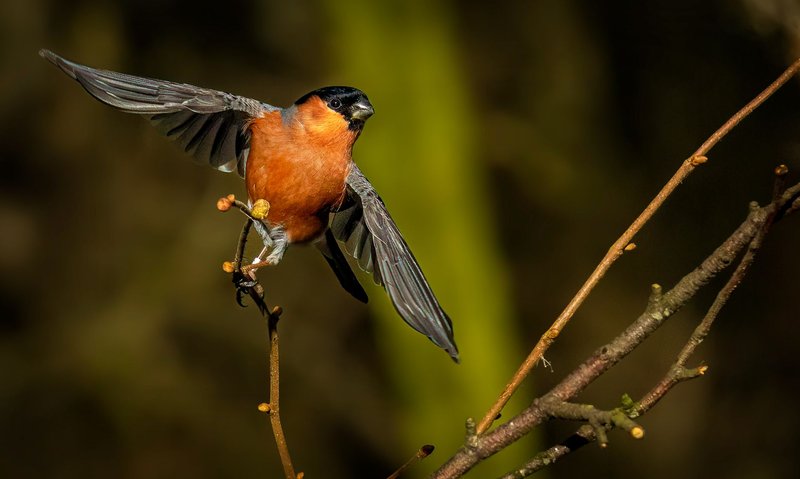
11. Barbados bullfinch
ID: The island’s only endemic. Males are mostly black with a rusty-red patch at the throat. Females are olive-brown and plain. It has a stout, finch-like bill built for cracking seeds and fruit.
Habitat: Gardens, scrub, hotel grounds, wooded gullies.
Where to see it: Breakfast terraces. Bullfinches have learned that sugar bowls are free fuel and will hop up to the table when nobody’s looking. They’re also common in quiet gardens and at the Wildlife Reserve. Some authorities still treat it as a subspecies of the Lesser Antillean bullfinch, which is one reason endemic counts vary between sources.
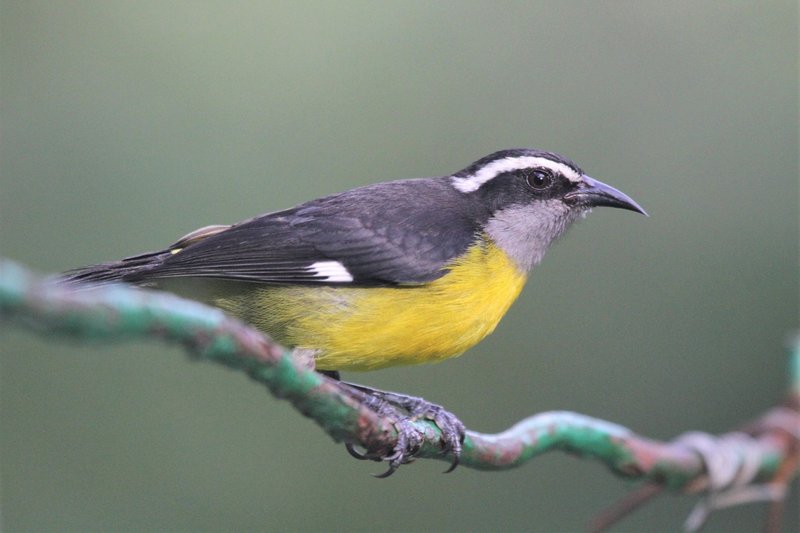
12. Bananaquit
ID: A small, active bird with a black back, bright yellow breast, white eyebrow and a thin, curved bill. Locally it’s called the “yellow breast.”
Habitat: Gardens, flowering trees, hotel grounds.
Where to see it: Anywhere there’s a flowering shrub or a sugar packet. Bananaquits will pierce flowers at the base to steal nectar, and they’ll hang around outdoor cafes for sweetener. They’re among the first birds you’ll spot, and they won’t leave you alone.
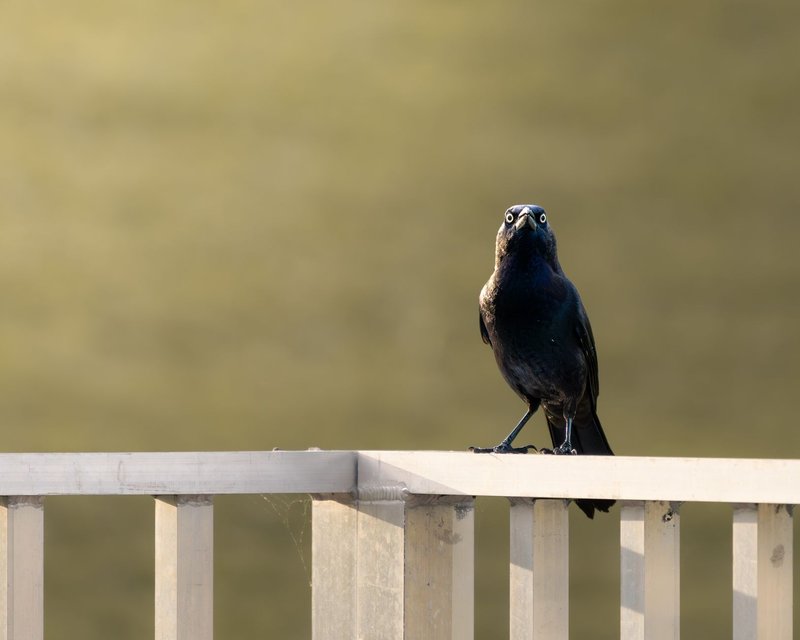
13. Carib grackle
ID: A glossy black bird with a pale yellow eye and a long, keel-shaped tail. Females are browner. Locals call it the blackbird.
Habitat: Everywhere with people: beaches, car parks, restaurant terraces.
Where to see it: Look at the empty chair next to you. Grackles are bold, noisy and clever, and will walk onto a beach restaurant table within seconds of you looking away. Keep your food covered.
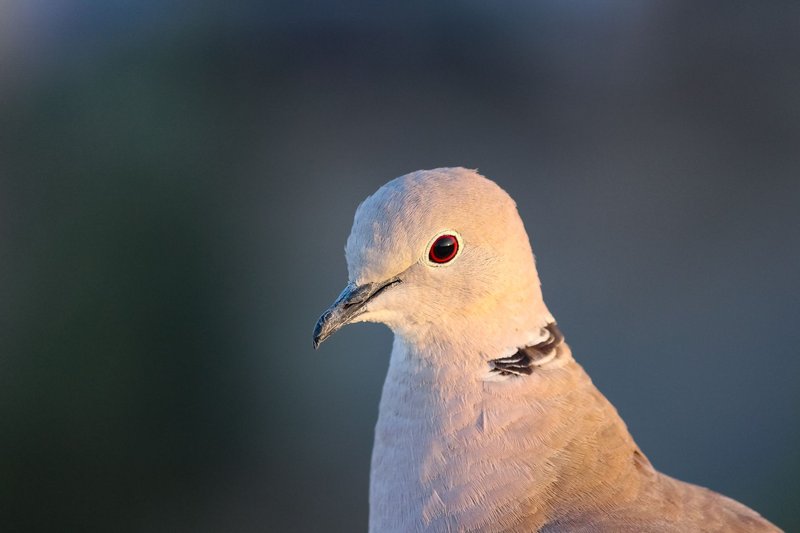
14. Zenaida dove
ID: A plump, pinkish-brown dove with a white band along the trailing edge of the wing, a bluish eye ring and black ear marks. It walks rather than hops, with head bobbing.
Habitat: Gardens, lawns, roadsides, scrub.
Where to see it: Lawns, especially early morning. Its soft, rolling coo is the background sound of mornings at many Barbados hotels. In flight, look for the white wing edges.
15. Black-faced grassquit
ID: A tiny finch. Males have a black face and breast on an olive body; females and young are plain olive-brown. It hops and buzzes through short grass.
Habitat: Lawns, roadsides, rough ground.
Where to see it: Under outdoor tables and along paths, picking up crumbs. Grassquits usually feed in small groups. If a tiny brown bird is walking at your feet and isn’t scared, it’s probably this one.
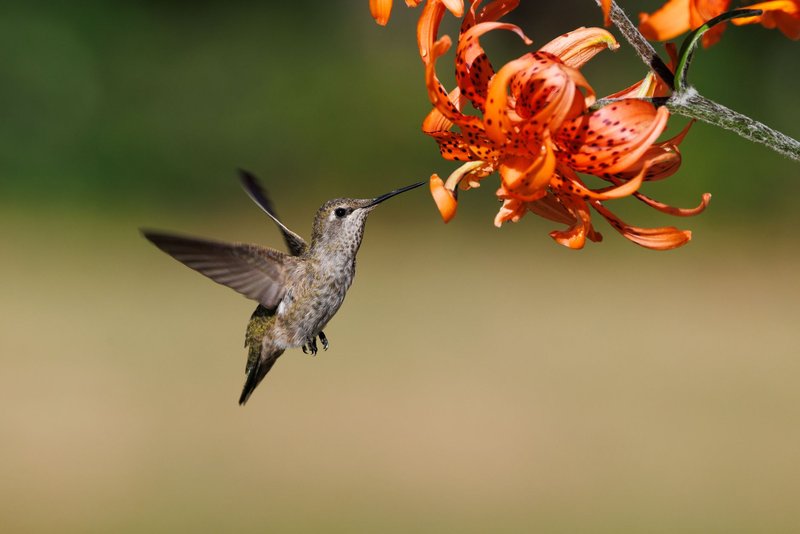
16. Antillean crested hummingbird
ID: A tiny hummingbird with a metallic green back and a short crest. Males have an iridescent blue-violet crown and throat patch. It hovers, then zips off.
Habitat: Flowering gardens, hedges, hibiscus.
Where to see it: Hibiscus and other flowering shrubs in hotel gardens. Stand near a bloom for a couple of minutes and one will usually arrive. The wing buzz often gives it away before you see it.
Cane fields and open country
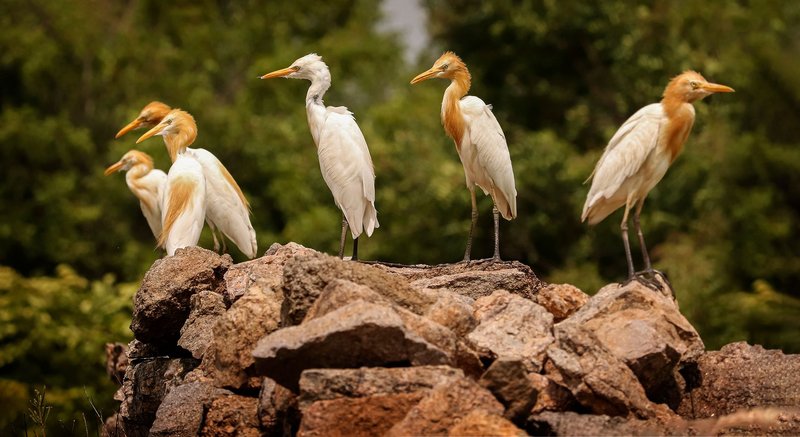
17. Cattle egret
ID: A compact white heron with a short yellow bill and a hunched look. In breeding season it gets buff-orange feathers on the head and back. It’s shorter and stockier than the snowy egret and has dark legs.
Habitat: Fields, pastures, roadside verges.
Where to see it: Fields with grazing animals or tractors at work. Cattle egrets follow livestock and machinery to catch the insects they disturb. At dusk, flocks fly in to roost together in trees.
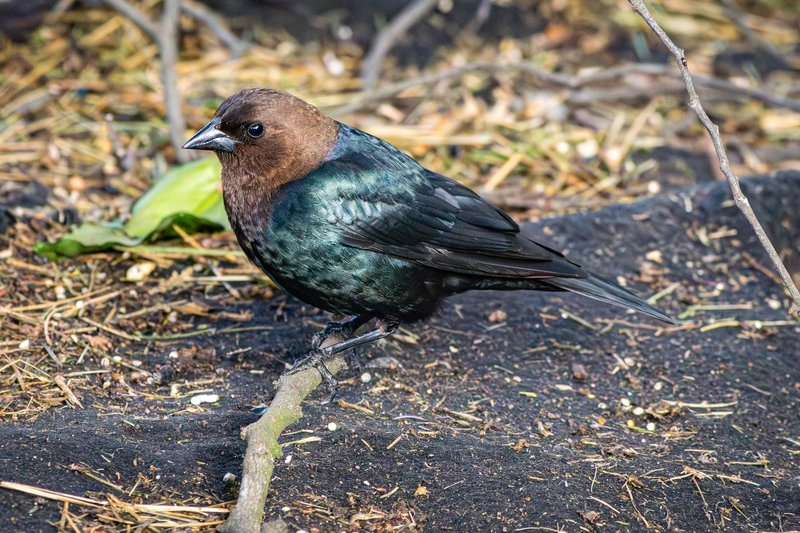
18. Shiny cowbird
ID: Males are glossy purple-black with a slim, pointed bill. Females are plain brown with a faint pale eyebrow. Males sing from perches with a long, bubbly whistle.
Habitat: Cane edges, pastures, open scrub, towns.
Where to see it: Utility wires and fence posts along country roads. This is a South American brood parasite that spread north through the Caribbean, and it lays its eggs in other birds’ nests. That makes it unpopular with bullfinches and bananaquits.
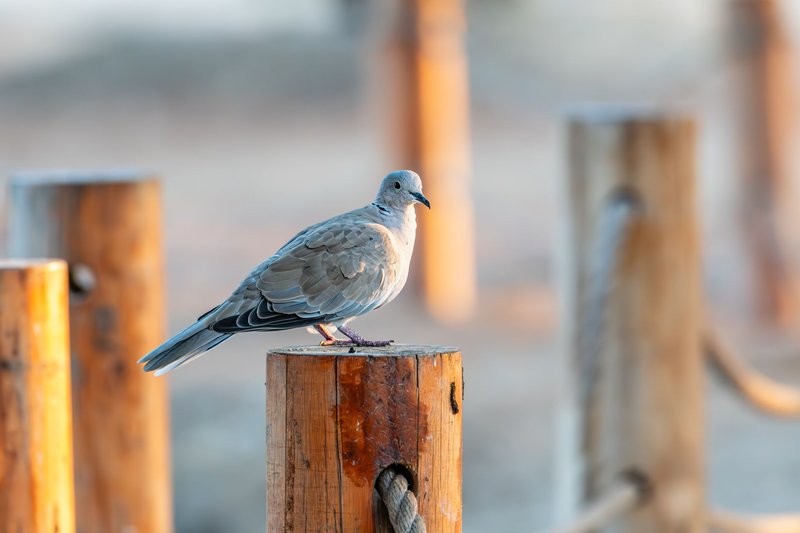
19. Eared dove
ID: A gray-brown dove with a short tail, a pale pinkish breast, black spots on the wing and two dark marks behind the eye. It’s smaller and plainer than the Zenaida dove.
Habitat: Fields, roadsides, farmland.
Where to see it: Rural roads and field edges, often in pairs or small flocks on the ground. When flushed, they go up with a clap of wings and fly off low.
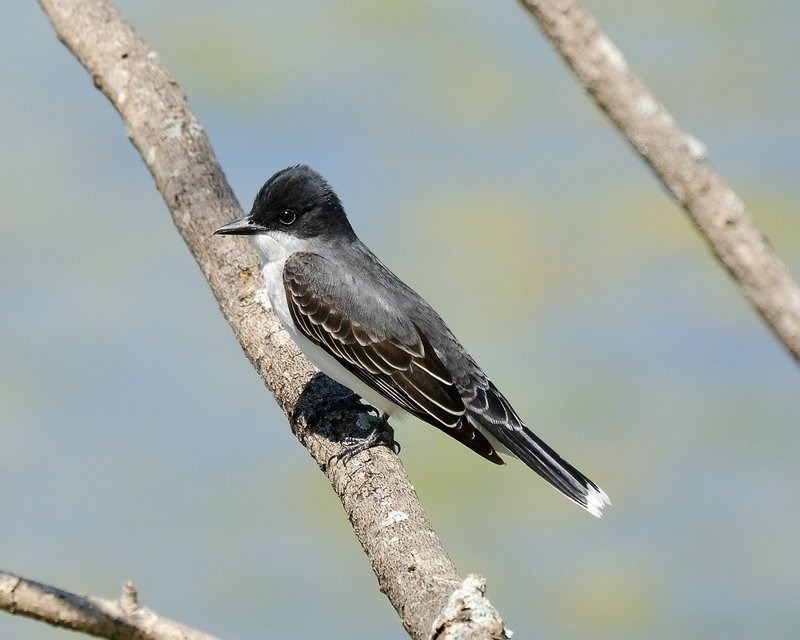
20. Gray kingbird
ID: A medium-sized flycatcher, gray above and pale below, with a dark mask and a big, heavy bill. It perches upright on an exposed branch or wire.
Habitat: Open country with scattered trees, field edges, roadsides.
Where to see it: Power lines along cane fields. Kingbirds sit still, then dart out to snatch an insect in flight and return to the same perch. Drive slowly and scan the wires.
Best birdwatching sites in Barbados
Four places cover almost everything above.
- Graeme Hall Nature Sanctuary (Christ Church): A mangrove swamp and lake system on the south coast. The best single stop for herons, gallinules and migrant shorebirds, with boardwalks that make it easy for beginners. Go early. Check opening hours and admission before you head over.
- Chancery Lane Swamp (Christ Church): A shallow wetland on the southeast coast and the island’s best spot for migrant shorebirds. It’s rougher and less developed than Graeme Hall, so bring sturdy shoes and use a scope if you have one. Expect yellowlegs and other sandpipers when water levels are right.
- Codrington College pond (St. John): A pond in the grounds of a historic college on the east coast, with palms lining an avenue down to the water. A quiet stop for herons and gallinules, plus gardens that bring in bullfinches and bananaquits.
- Barbados Wildlife Reserve (St. Peter): A mahogany woodland in the north, better known for green monkeys than birds. Wander the shaded paths for doves, bullfinches and other small woodland birds that don’t show up at the beach.
For the coast, you don’t need a site. A walk along any south or east coast beach at dawn will deliver pelicans, terns and turnstones.
When to go: a season guide
Barbados is birdable year-round, but the mix shifts with the calendar. The big swing is the winter migrant peak, from roughly October through March, when North American shorebirds, herons and warblers fill the wetlands.
| Months | What’s happening |
|---|---|
| December to March | Peak of winter migrants. Dry season, clearest weather, best light. Best time for Chancery Lane and Graeme Hall. |
| April to May | Northbound migrants pass through and many head north in breeding plumage. Resident birds begin nesting. |
| June to July | Quietest period. Mostly residents and non-breeding visitors. Good for bullfinches and garden birds. |
| August to October | Southbound shorebirds return. Tropical storms can push in rare seabirds and vagrants, but the weather is unpredictable (hurricane season). |
| November | Winter birds settle in. A strong month for migrants, with fewer crowds than December. |
If you only have one week and want maximum variety, go from December to March.
Beginner gear and tips
- Binoculars: 8×42 is the standard beginner choice. They’re bright and steady, and good for both shorebirds and garden birds. Anything from 8×32 to 10×42 works fine.
- Timing: Birds are most active in the first two hours after sunrise, and again before dusk. Midday, they tuck into shade.
- ID app: Cornell’s Merlin Bird ID can identify birds from photos or sound and is free to use. Download the Caribbean or Barbados bird pack before you leave, since you may lose signal in swamps.
- Phone photos: Hold your phone lens up to the binocular eyepiece for a surprisingly good shot.
- Sun and water: A hat, reef-safe sunscreen and a water bottle matter more than lenses on a tropical wetland trail.
- Move slowly: Walk, stop, scan. Birds notice fast movement and flee. Standing still for two minutes works better than three minutes of walking.
Quick reference: residents vs. visitors
“Resident” means the species breeds on Barbados. “Year-round visitor” means it can be seen in any month but breeds mainly elsewhere or only in small numbers. “Migrant” means present mainly from roughly August to April.
| # | Bird | Habitat | Status |
|---|---|---|---|
| 1 | Brown pelican | Coast, harbors | Year-round visitor |
| 2 | Magnificent frigatebird | Coast, open sky | Year-round visitor |
| 3 | Royal tern | Beaches, bays | Year-round visitor |
| 4 | Ruddy turnstone | Rocky shores | Migrant |
| 5 | Sanderling | Sandy beaches | Migrant |
| 6 | Green heron | Mangroves, ponds | Resident |
| 7 | Snowy egret | Shallow wetlands | Year-round visitor |
| 8 | Common gallinule | Ponds, reeds | Resident |
| 9 | Yellow-crowned night heron | Mangroves, mudflats | Resident |
| 10 | Lesser yellowlegs | Shallow pools | Migrant |
| 11 | Barbados bullfinch | Gardens, scrub | Resident (endemic) |
| 12 | Bananaquit | Gardens, flowers | Resident |
| 13 | Carib grackle | Everywhere | Resident |
| 14 | Zenaida dove | Lawns, gardens | Resident |
| 15 | Black-faced grassquit | Lawns, paths | Resident |
| 16 | Antillean crested hummingbird | Flowering gardens | Resident |
| 17 | Cattle egret | Fields, pastures | Resident |
| 18 | Shiny cowbird | Cane edges, wires | Resident |
| 19 | Eared dove | Fields, roadsides | Resident |
| 20 | Gray kingbird | Wires, open country | Resident |
Summary
The birds of Barbados split into a small resident core and a much larger crowd of seasonal visitors. The resident group is the one you’ll meet every day: the bullfinch and bananaquit at breakfast, grackles at lunch, doves on the lawn, egrets in the cane fields. Add pelicans and terns on the coast, and a morning at Graeme Hall for herons and gallinules, and you’ve covered most of the list.
Go between December and March for the widest variety. Take binoculars, get up early, and sit still. The bullfinch is the one to tick first, since it’s found nowhere else.