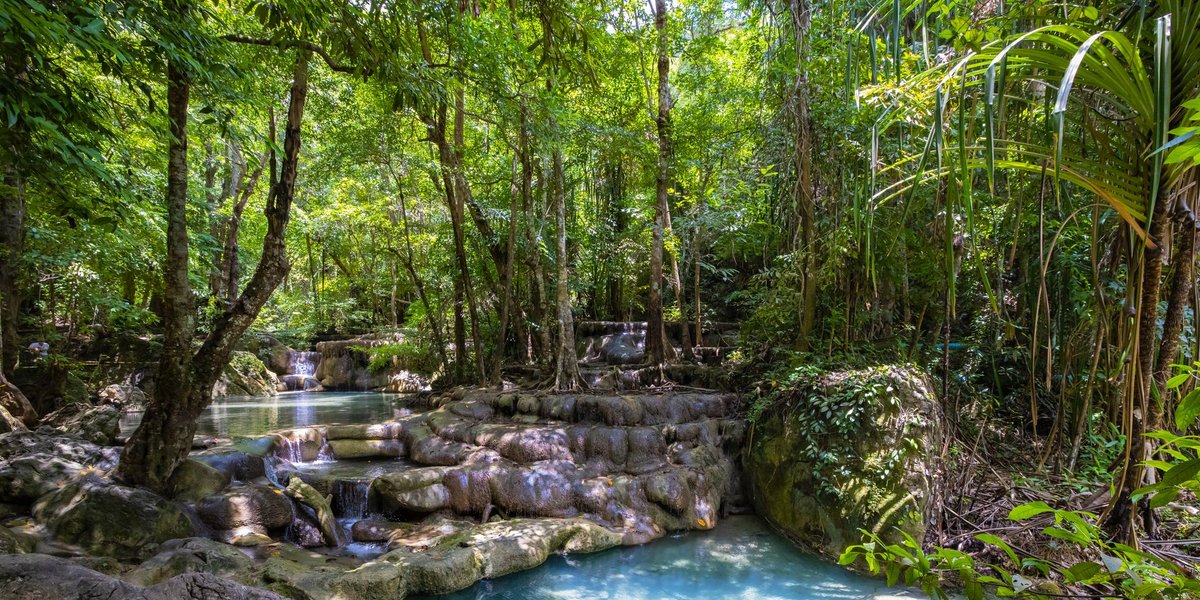
The fauna of Honduras spans jaguars in lowland rainforest, quetzals in cloud forest, whale sharks off Utila and more than 110 endemic reptiles and amphibians. A country about the size of Tennessee holds this much because it sits where North and South American species meet, has two coastlines, and rises from sea level to cloud forest above 2,000 meters. Roughly 45% of its land is still forested, which is most of the reason the animals below are still there.
This guide covers the animals by group. Each of the 20 species has its scientific name, IUCN status and the protected area or island where you’d actually look for it. A table near the end maps species to parks.
Contents
- Why Honduras holds so much wildlife
- Mammals
- Birds
- Reptiles
- Amphibians
- Marine life and invertebrates
- Species by protected area
- Threats and conservation
- Summary
Why Honduras holds so much wildlife
Three things do the work. The first is geography: Honduras is a land bridge, so Neotropical species from the south overlap with North American ones. The second is relief. Mountain ranges split the country into isolated pockets of cloud forest, dry valley and pine-oak highland, and isolation produces endemics. The third is the sea. The Caribbean coast runs along the Mesoamerican Reef, which Healthy Reefs describes as the largest barrier reef system in the Western Hemisphere, and the Bay Islands sit right on it.
The numbers back this up. McCranie’s 2015 checklist counts 264 reptile species, 59 of them endemic, and 137 amphibian species, 52 of them endemic. Birds are in the range of 800 species. Bats alone number over 100 species, which is the group most travel guides skip.
IUCN statuses below reflect the Red List and BirdLife International assessments at the time of writing (late 2026). Check the IUCN Red List for any update.
Mammals of Honduras
The big mammals live in the northeast, in the rainforest of La Mosquitia, where roads barely reach. The smaller and stranger ones, like bats, are easier to find.
1. White-tailed deer (Odocoileus virginianus)
Honduras’s national mammal, and the least dramatic animal on this list. It’s widespread across pine-oak highlands and dry forest, including the edges of Celaque National Park. IUCN: Least Concern. Hunting and habitat loss have thinned local populations even where the species as a whole is secure.
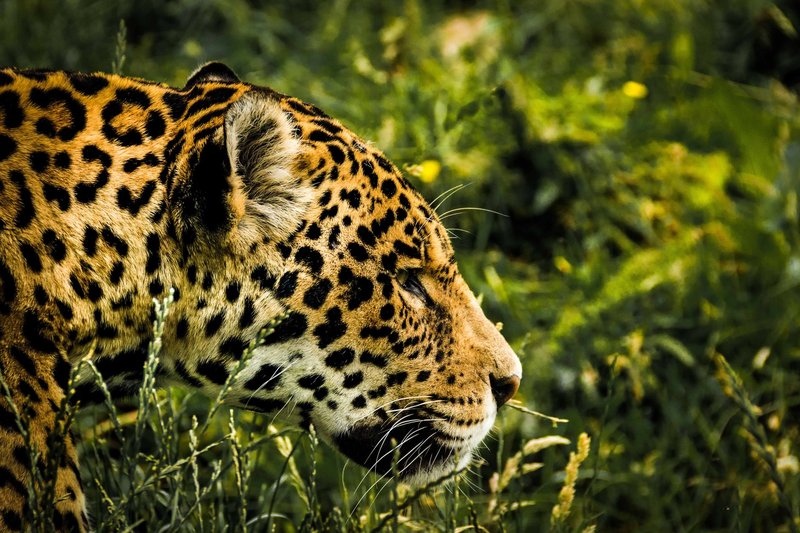
2. Jaguar (Panthera onca)
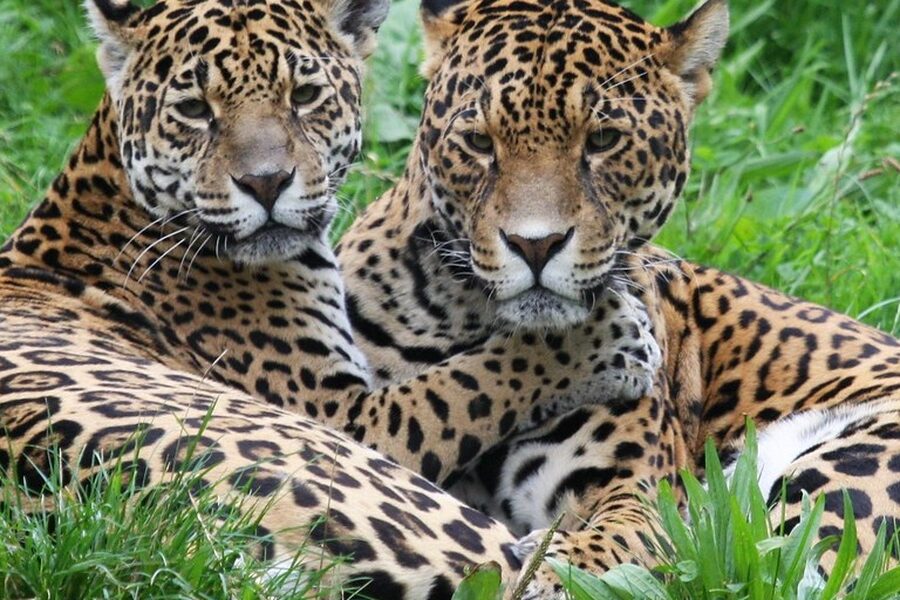
The largest cat in the Americas and the apex predator of the Río Plátano Biosphere Reserve and the Patuca River forests. You will almost certainly see tracks before you see a cat. IUCN: Near Threatened. Honduras’s population depends on the northeastern forests staying connected.
3. Baird’s tapir (Tapirus bairdii)
Central America’s largest land mammal, up to roughly 300 kg, and a prolific seed disperser. It prefers wet forest near water. Look in Río Plátano and the Sierra de Agalta. IUCN: Endangered.
4. Geoffroy’s spider monkey (Ateles geoffroyi)
A canopy specialist with a prehensile tail that works as a fifth limb. It needs large, continuous forest because it feeds mostly on ripe fruit, which is why it vanishes first when forest is fragmented. Found in Río Plátano and the Sierra de Agalta. IUCN: Endangered.
5. Honduran white bat (Ectophylla alba)
A white bat about the size of a thumb, with a yellow nose and ears. It cuts the midrib of a Heliconia leaf so the leaf folds into a tent, then roosts underneath in small groups. The white fur reflects green light through the leaf, so the bats look green to predators. It lives in Caribbean-slope forest, including the Pico Bonito area. IUCN: Near Threatened.
6. West Indian manatee (Trichechus manatus)
Slow, grazing and entirely dependent on shallow water. Honduras’s coastal lagoons and river mouths, especially in and around Cuero y Salado Wildlife Refuge, are among its Caribbean refuges. Boat strikes and net entanglement are the main killers. IUCN: Vulnerable.
Birds of Honduras
Most of Honduras’s roughly 800 bird species are tropical residents, with winter migrants from North America added on top. Cloud forest and dry valleys each have specialists you won’t find anywhere else in the country.
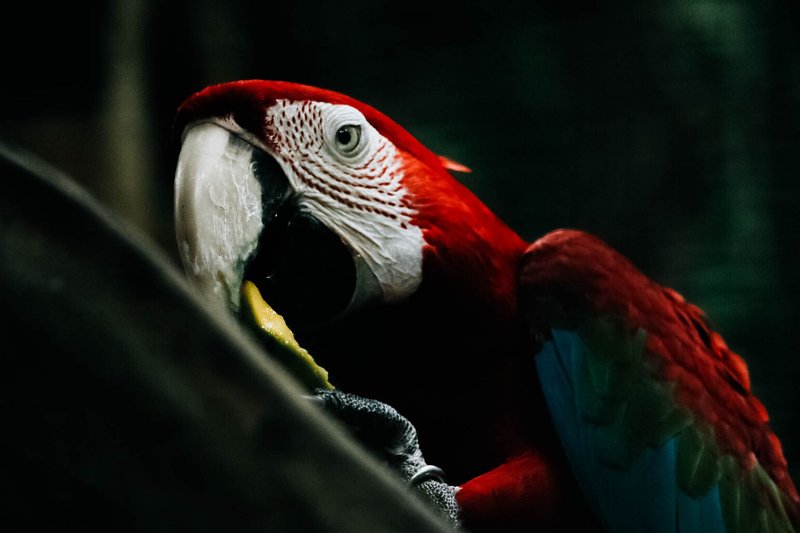
7. Scarlet macaw (Ara macao)
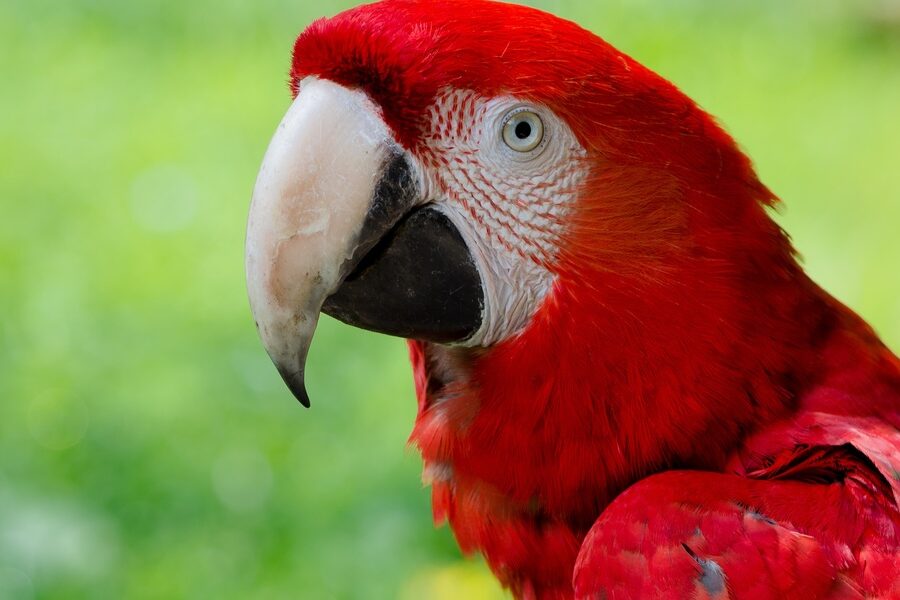
The national bird. Wild birds persist in La Mosquitia and the Río Plátano region, and the Copán area is known for a release program that has put macaws back over the ruins. Pairs fly in tight twos, which makes a flock easy to read at a distance. IUCN: Least Concern globally, but local populations are small and under pressure from the pet trade.
8. Honduran emerald (Amazilia luciae)
The country’s only endemic bird species, a hummingbird about 9 cm long. It lives in a handful of dry interior valleys, in thorn scrub that is being cleared for farming and grazing. Most of its remaining habitat has no formal protection. IUCN: Endangered.
9. Resplendent quetzal (Pharomachrus mocinno)
A male’s tail coverts can run past 60 cm, which is why photographs of this bird tend to be mostly tail. It needs mature cloud forest with large fruiting trees, mainly the avocado relatives it eats. Cusuco and Celaque national parks are the dependable places in Honduras. IUCN: Near Threatened.
10. Harpy eagle (Harpia harpyja)
Honduras sits at the northern edge of its range, and sightings are rare. It hunts sloths and monkeys in the canopy and needs huge territories of intact lowland forest, so the Río Plátano region is the realistic place. IUCN: Vulnerable.
11. Great curassow (Crax rubra)
A turkey-sized forest bird with glossy black males, yellow bill knobs and curled crests. It walks the forest floor, which makes it easy to hunt, and it vanishes quickly wherever hunting is unchecked. Pico Bonito and Río Plátano still hold birds. IUCN: Vulnerable.
Reptiles of Honduras
Reptiles are where Honduras’s endemism shows. Of the 264 species in McCranie’s checklist, 59 occur nowhere else, and many of those are island forms. Rare and endemic are not the same thing, and 12 Rare Animals in Honduras (And Where to Spot Them) explains the difference species by species.
12. Utila spiny-tailed iguana (Ctenosaura bakeri)
Found only on Utila, and mostly in one place: the black mangrove swamps on the island’s eastern end. The population is small and its habitat is competing with coastal development, and it is one of the most threatened lizards in the Americas. IUCN: Critically Endangered.
13. Roatán spiny-tailed iguana (Ctenosaura oedirhina)
The Roatán equivalent, found on Roatán and a few nearby cays. It lives in coastal scrub and mangrove and gets squeezed by the same resort building that brings visitors to the island. IUCN: Endangered.
14. Honduran pink boa (Boa imperator, Cayos Cochinos form)
A pale, pinkish island population of the common boa on Cayos Cochinos, the “Hog Islands” off the northern coast. It eats rodents, lizards and birds, and it is protected as part of the Cayos Cochinos Marine Natural Monument. Boas are listed on CITES Appendix II, and this island form isn’t assessed separately. IUCN: the species is Least Concern.
15. Hawksbill turtle (Eretmochelys imbricata)
Feeds on sponges along the reef and nests on Caribbean beaches in Honduras, including those around the Bay Islands and Cayos Cochinos. The old trade in its shell nearly wiped it out. IUCN: Critically Endangered.
16. American crocodile (Crocodylus acutus)
Adults commonly reach 4 meters. Mangrove lagoons on both coasts hold them, including Cuero y Salado and the Gulf of Fonseca on the Pacific side. IUCN: Vulnerable.
Amphibians of Honduras
Honduras’s 137 amphibian species are the group most at risk. The spikethumb frogs (genus Plectrohyla), several of them endemic to Honduran cloud forest, have declined sharply and are among the most threatened frogs in Central America. They’re hard to find and mostly absent from tourist itineraries. The easy, charismatic frog from the lowlands is better for first-timers.
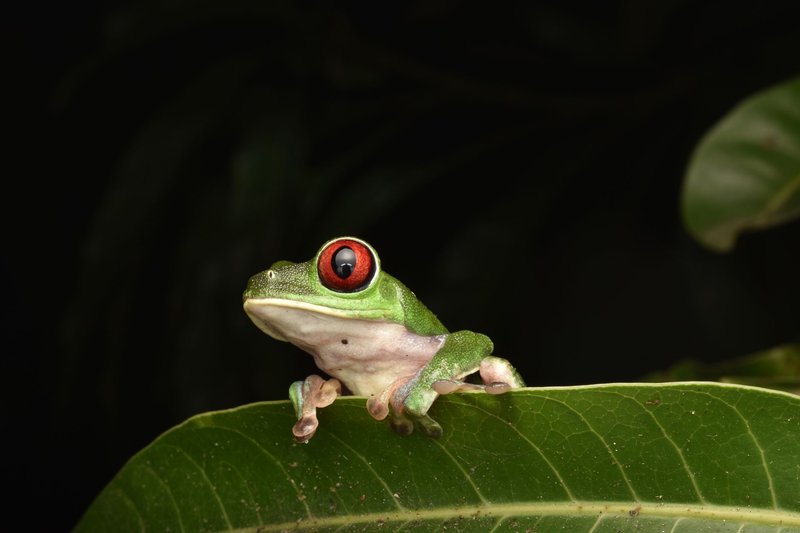
17. Red-eyed tree frog (Agalychnis callidryas)
It sleeps through the day pressed against the underside of a leaf, green, with its eyes shut. Open the eyes and you get the red startle display. It breeds on leaves above ponds in Caribbean lowland forest, including around Pico Bonito. IUCN: Least Concern.
Marine life and invertebrates
The Bay Islands (Utila, Roatán, Guanaja) and Cayos Cochinos are where the Mesoamerican Reef is easiest to reach. Honduras’s reef fish and invertebrates are underdocumented in most guides, though divers see them daily. For the fish of the whole isthmus, a two-ocean field guide to Central American fish is a good starting point.
18. Whale shark (Rhincodon typus)
The largest fish in the sea, reaching about 12 meters, and a plankton feeder with no interest in people. Utila is known as one of the more reliable places in the Caribbean to swim with one. IUCN: Endangered.
19. Elkhorn coral (Acropora palmata)
A reef-building coral with flat, branching antlers, once dominant in the shallow reef crest. Disease and bleaching cut Caribbean populations by more than 90% from the 1970s onward. Healthy colonies survive on Bay Islands reefs. IUCN: Critically Endangered.
20. Blue morpho (Morpho peleides)
An invertebrate that earns its place. Its wings span up to 15 cm, and the upper surface is a structural blue that comes from wing-scale geometry, not pigment. When it folds its wings, the brown underside with eyespots makes it vanish. It flies along forest streams on the Caribbean slope, including Pico Bonito. IUCN: Not assessed.
Species by protected area
| Protected area | Where | Species to look for |
|---|---|---|
| Río Plátano Biosphere Reserve | La Mosquitia, northeast | Jaguar, Baird’s tapir, spider monkey, harpy eagle, great curassow, scarlet macaw |
| Pico Bonito National Park | Caribbean slope, near La Ceiba | Honduran white bat, great curassow, red-eyed tree frog, blue morpho |
| Cusuco National Park | Northwest cloud forest | Resplendent quetzal, spikethumb frogs |
| Celaque National Park | Western highlands | Resplendent quetzal, white-tailed deer |
| Cuero y Salado Wildlife Refuge | Caribbean coast | West Indian manatee, American crocodile |
| Cayos Cochinos Marine Natural Monument | Off the north coast | Honduran pink boa, hawksbill turtle |
| Bay Islands (Utila, Roatán) | Caribbean | Utila and Roatán spiny-tailed iguanas, whale shark, elkhorn coral |
| Dry interior valleys | Central Honduras | Honduran emerald |
Threats and conservation
Habitat loss is the common thread. Forest clearing for cattle, farming and illegal logging is the leading driver, and it has reached into protected areas. UNESCO has listed Río Plátano as World Heritage in Danger since 2011 because of illegal logging and land clearing, which puts the habitat of the jaguar, tapir and harpy eagle at risk.
Amphibians face a second threat. Chytridiomycosis, caused by the fungus Batrachochytrium dendrobatidis, has been linked to declines in Honduran cloud forests, including Cusuco. A 2019 study in Science found it has contributed to the decline of at least 501 amphibian species worldwide, 90 of them presumed extinct. Cloud-forest frogs have nowhere cooler or higher to retreat to.
Islands add their own risks. The Utila and Roatán iguanas have such small ranges that one development decision can alter their future, and the reefs of the Bay Islands face bleaching, disease and runoff from coastal building.
Summary
The fauna of Honduras is best understood as a set of separate habitats, each with its own animals: rainforest for jaguars and tapirs, cloud forest for quetzals and frogs, dry valleys for the Honduran emerald, islands for iguanas and boas, and the reef for sharks and corals. Of the 20 species profiled, 15 are Near Threatened or worse, and the endemics are the most exposed. If you can visit only one place, Río Plátano has the most species and the most at stake. Pico Bonito is the easier one, and Utila is the best bet for the marine animals.