TLDR
- Barbados has two amphibian species: the Lesser Antillean whistling frog (Eleutherodactylus johnstonei) and the cane toad (Rhinella marina).
- The whistling frog is a thumbnail-sized frog behind the “peep” you hear at night. The cane toad is the big, warty one.
- Cane toads are toxic to dogs and cats. Whistling frogs are harmless.
- Neither is a certain native. The toad was brought in on purpose in the 1830s, and the frog’s origin on the island is disputed.
Table of Contents
- Why Barbados has so few amphibians
- Lesser Antillean whistling frog
- Cane toad
- Telling them apart
- Where and when to hear them
- Are Barbados amphibians dangerous?
Why Barbados has so few amphibians
Most Caribbean islands have a respectable frog list. Barbados has two. Neighbors like Dominica or Trinidad have many more.
The island explains it. Barbados is a low, mostly flat coral island of about 430 square kilometers, with no mountains to catch rain and no permanent rivers to speak of. Frogs need moisture, and the island is dry for much of the year. On top of that, roughly three centuries of sugarcane farming stripped away nearly all of the original forest. What survives is mostly in narrow gullies, the limestone ravines that cut through the interior.
So the amphibians of Barbados are not a story of rich native diversity. They are a story of what could arrive and hold on.
Lesser Antillean whistling frog
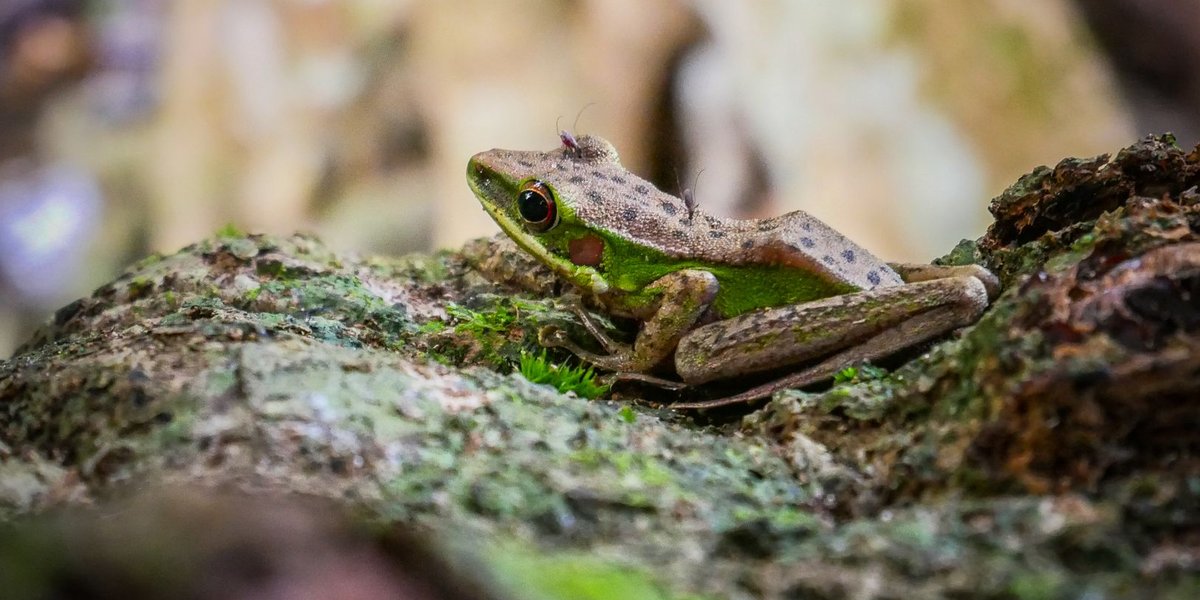
Eleutherodactylus johnstonei is small. Adults run about 2 to 3.5 centimeters, with females larger than males. Color varies from tan to brown, sometimes with darker marks on the back, and the toes have no webbing.
The call is what most people notice first: a short, clear, high whistle or “peep,” repeated over and over by males after dark. One frog is a nuisance. A whole garden of them is a chorus.
This frog skips the tadpole stage entirely. Females lay a small clutch of eggs in damp leaf litter, under stones, or in the soil, and tiny froglets hatch directly. That’s how it survives without ponds, and it’s a big reason it does well on a dry island. It lives in gardens, leaf litter, wooded gullies, and around houses, often hiding in potted plants.
Its origin is the interesting part. The species is native to parts of the Lesser Antilles, and it has been spread widely by human movement of plants and soil, including to other Caribbean islands and South America. Whether it reached Barbados naturally or by human help is disputed, which is why you’ll see it listed differently depending on the source.
Cane toad
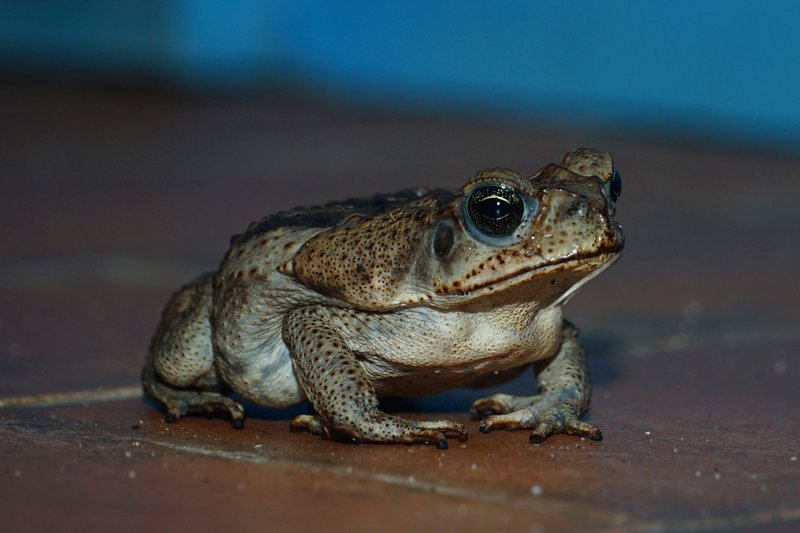
The cane toad (Rhinella marina, formerly Bufo marinus) is the opposite of the whistling frog in every way. Adults commonly reach 10 to 15 centimeters, and large ones get bigger. The skin is dry and warty, brown to gray or reddish, and there’s a large gland behind each eye, called a parotoid gland.
It was introduced to Barbados in the 1830s, among the earliest deliberate introductions of the species anywhere, to help control pests in the sugarcane fields. That approach was later copied in other places, notably Australia in the 1930s, where it went badly. The IUCN Global Invasive Species Database lists the cane toad among the world’s worst invasive species, and National Geographic describes how far its toxic skin secretions reach up the food chain.
On Barbados the toad breeds in ponds, drains, and standing water, and it can be common around gardens and lit areas where insects gather at night. It eats almost anything that fits in its mouth.
Its call is very different from the frog’s. Instead of a whistle, it’s a low, steady trill, often compared to a distant idling engine.
Telling them apart
The two are hard to confuse once you see them side by side.
| Feature | Whistling frog | Cane toad |
|---|---|---|
| Scientific name | Eleutherodactylus johnstonei | Rhinella marina |
| Adult size | 2 to 3.5 cm | 10 to 15 cm or more |
| Skin | Smooth | Dry, warty |
| Head | No prominent glands | Large gland behind each eye |
| Call | High, short whistle | Low, steady trill |
| Young | Hatch as froglets from land eggs | Aquatic tadpoles |
| Status on Barbados | Origin disputed | Introduced in the 1830s |
| Risk to pets | None | Toxic |
If it fits on a coin, it’s the frog. If it fills your palm, it’s the toad.
Where and when to hear them
Go after sunset. Both species are nocturnal, and calling peaks in the hour or two after dark, especially after rain.
For the whistling frog, gardens and hotel grounds are enough. Listen near shrubs and potted plants, and you’ll usually hear several at once. Wooded gullies, like the ones at Welchman Hall Gully or Turners Hall Woods, hold quieter, denser groups.
For the cane toad, stand near standing water after a good downpour. That’s when males gather and trill. You may also see them on pavement under outdoor lights, waiting for insects.
The wet season, roughly June to November, is the best time. In the dry months, both go quiet and hide.
Are Barbados amphibians dangerous?
The whistling frog is completely harmless.
The cane toad is a different matter. Its skin and glands release a toxin called bufotoxin. It won’t hurt you if you only look, but you should wash your hands after handling one and keep it away from your eyes and mouth.
Pets are the real risk. A dog that mouths or licks a cane toad can develop heavy drooling, red gums, and vomiting within minutes, and serious cases involve seizures or heart problems. If your dog does this, wipe out its mouth with a damp cloth, keep water from being swallowed, and get to a vet immediately. On a night walk, keep dogs on a lead near ponds and drains.
Barbados has only two amphibians, and only one of them can hurt anything. The rest of the night noise comes from insects.