Table of Contents
- The Quick Answer
- Why Belarus Barely Has True Endemics
- Animals That Define Belarus
- Where to Actually See Them
The Quick Answer
Search “animals only found in Belarus” and you’ll get a disappointing truth: almost nothing on Earth lives exclusively within Belarus’s borders. The country sits on a flat, glaciated plain with no mountain ranges, islands, or isolated valleys — the kind of geography that produces endemic species elsewhere. What Belarus does have is a handful of genuine oddities (a fish, some insects, a few plants) and a much longer list of animals that, while not technically endemic, are so tied to Belarus’s forests and marshes that they’ve become the country’s identity. The European bison tops that list. It’s the national animal, and Belarus holds one of the largest free-ranging populations left on the planet.
Why Belarus Barely Has True Endemics
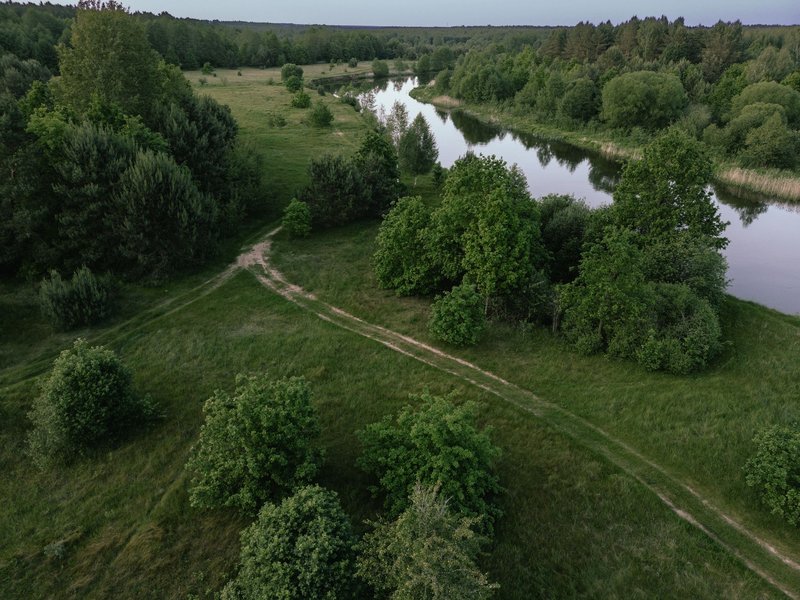
Endemism needs isolation — a mountain range, a river system nothing else drains into, millions of years without gene flow from outside populations. Belarus has none of that. It’s a flat corridor between the Baltic and Black Sea watersheds, crossed for millennia by the same species moving freely across what’s now Poland, Ukraine, and Russia. Nothing got stuck long enough to become its own thing.
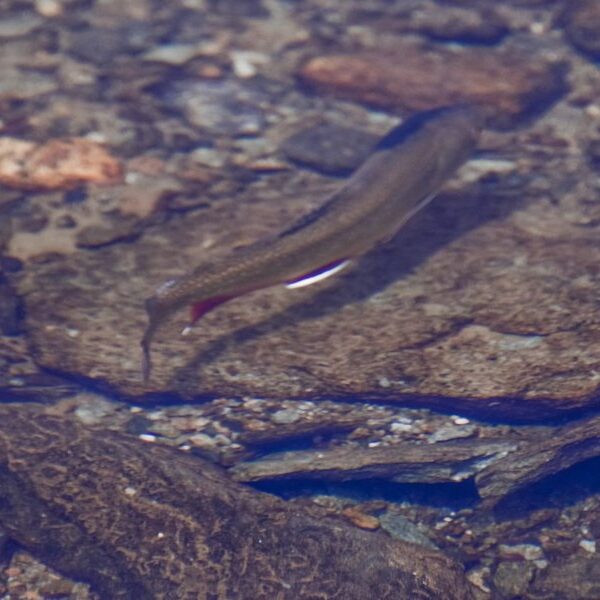
The exceptions are narrow and easy to miss. Belarus’s one confirmed endemic vertebrate is a freshwater sculpin, Cottus dorofeevi, a small bottom-dwelling fish known only from a stretch of the Neman river basin. Beyond that, endemism drops to the invertebrate and plant level: a small number of insect species and tardigrade populations recorded nowhere else, plus a couple of plants — a water-plantain, Alisma praecox, and an evening-primrose, Oenothera pripjatiensis, both tied to the wetlands of the Pripyat basin. None of these show up on a “cool animals to see in Belarus” list, because none of them are visible to a casual observer. That’s the honest version of this search.
Animals That Define Belarus
None of the following are endemic in the strict sense. They’re the animals that make Belarus’s wildlife recognizable — species that either survive here in numbers found almost nowhere else in Europe, or that Belarus has adopted as its own through history and conservation.
1. European Bison (Bison bonasus)
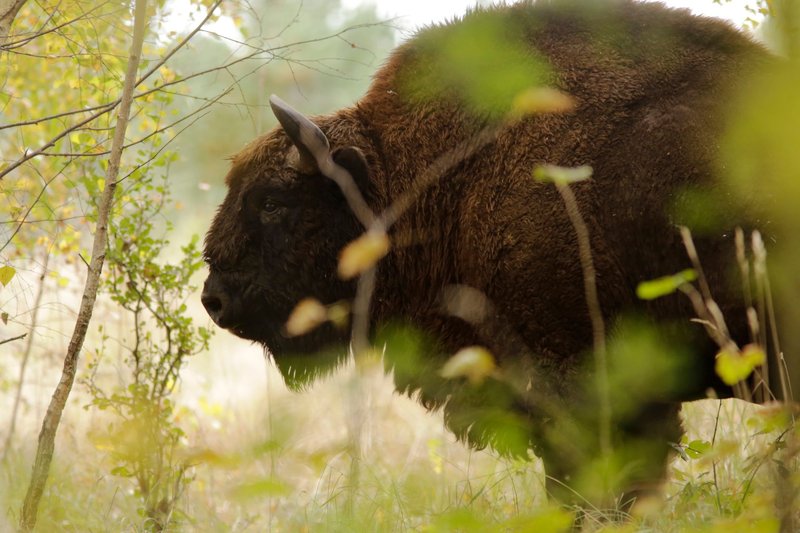
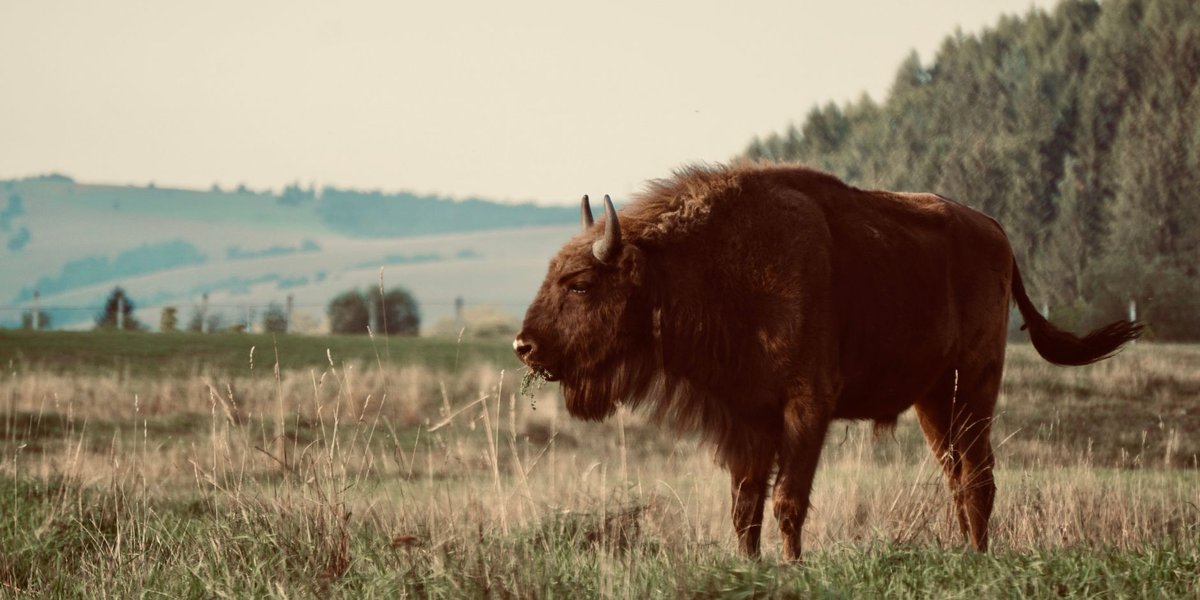
By 1919, hunting and war had wiped out every wild European bison on the continent, including the herd in Belovezhskaya Pushcha. The species survived only in zoos — 12 animals worldwide at its lowest point. Belarus started rebuilding its population in 1946 with animals brought in from Poland, and the recovery has become one of conservation’s clearer success stories: the IUCN downgraded the species from Vulnerable to Near Threatened in 2020 as the global wild population passed 6,000. Belovezhskaya Pushcha alone now holds close to 800 bison, the core of a lineage that every wild bison alive today descends from.
2. Eurasian Lynx (Lynx lynx)
Belarus is one of the few countries in Central and Eastern Europe where the lynx was never fully wiped out, even through the poaching spike of the 1990s. Naliboki Forest, west of Minsk, held roughly 100 lynx by the winter of 2018–2019 — a density that would be remarkable almost anywhere else on the continent. They hunt roe deer almost exclusively and leave a signature kill: prey dragged and cached under brush, fed on over several days.
3. Grey Wolf (Canis lupus)
Naliboki Forest again — researchers tracking the area between 2000 and 2013 found 41 separate wolf dens with pups inside roughly 1,900 square kilometers, a den density that outpaces most of Western Europe. Belarusian wolves aren’t protected the way they are in the EU; they’re managed as game, which keeps the population stable but wary. You’re far more likely to hear one than see one.
4. Elk (Alces alces)
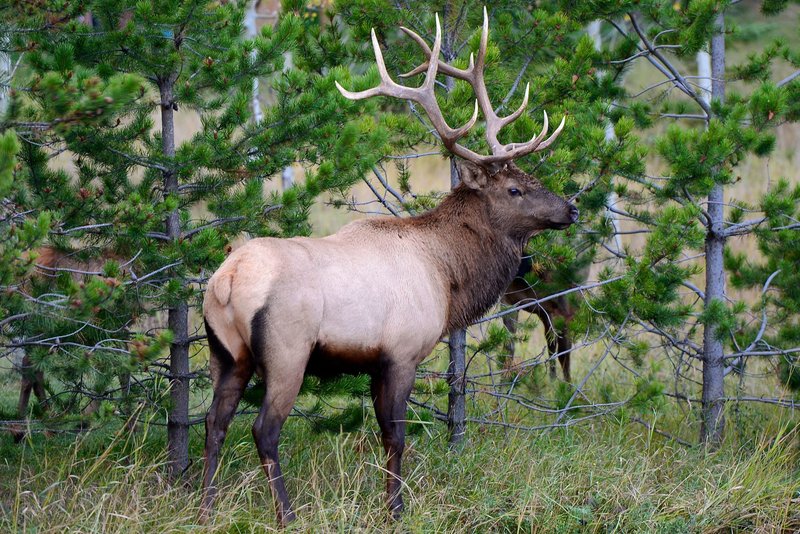
Known as moose in North America, elk move through Belarus’s marshes and mixed forest in numbers that make them the country’s largest resident land mammal after the bison. The Pripyat marshes, waterlogged and mostly roadless, give them exactly the cover they need — dense brush to browse, water to cool off in, few reasons to cross paths with people.
5. Eurasian Beaver (Castor fiber)
Hunted to near-collapse across Europe for its pelts and castoreum, the beaver came back hard in Belarus after 1950s reintroductions. The country now holds one of the densest beaver populations on the continent, dense enough that foresters manage them as a nuisance species in places — their dams reroute drainage channels that farms depend on. Their lodges are one of the easiest wildlife signs to spot along the Pripyat’s slower channels.
6. Brown Bear (Ursus arctos)
Brown bears in Belarus are a northern story — a small, scattered population in the Vitebsk region near the Russian and Latvian borders, at the southern edge of where the species still holds on in this part of Europe. Sightings are rare enough that a confirmed bear track makes local news.
7. Wild Boar (Sus scrofa)
Wild boar used to be the default large mammal sighting in any Belarusian forest, until African swine fever tore through populations starting in 2013 and forced mass culls to slow its spread. Numbers are recovering unevenly. Where boar are still common, they’re the animal most likely to actually cross your path — they’re bold, opportunistic, and not particularly afraid of people.
8. Red Deer (Cervus elaphus)
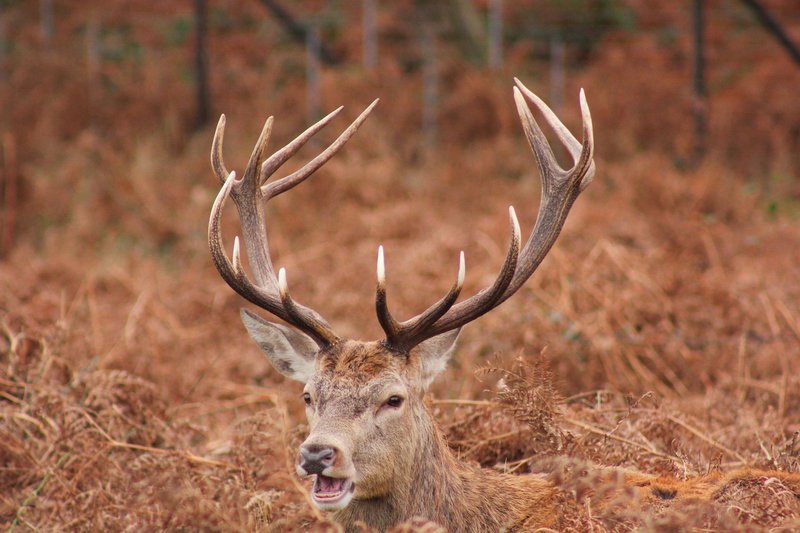
Red deer share Belovezhskaya Pushcha’s old-growth stands with the bison, and the rutting call of a stag in September is one of the forest’s defining sounds. Belarus has reintroduced and supplemented herds in several reserves after historic overhunting, and the animal now ranks as the country’s most-managed big game species after boar.
9. Roe Deer (Capreolus capreolus)
Smaller, more common, and far less picky about habitat than red deer, roe deer are the species most Belarusians actually see — field edges, forest margins, even the outskirts of smaller towns. They’re also the primary prey base that keeps the lynx population in Naliboki Forest as dense as it is.
10. Greater Spotted Eagle (Clanga clanga)
The Pripyat marshes and the wider Polesia wetland region host 120–150 breeding pairs of greater spotted eagle every year — 80 to 90 percent of the entire Belarusian population, concentrated in one of the last large wetland strongholds the species has left. Globally the eagle is listed as Vulnerable, extinct or fading across most of its former European range—a fate shared by other rare animals in Europe. Polesia is one of the few places where that trend isn’t happening.
11. White Stork (Ciconia ciconia)
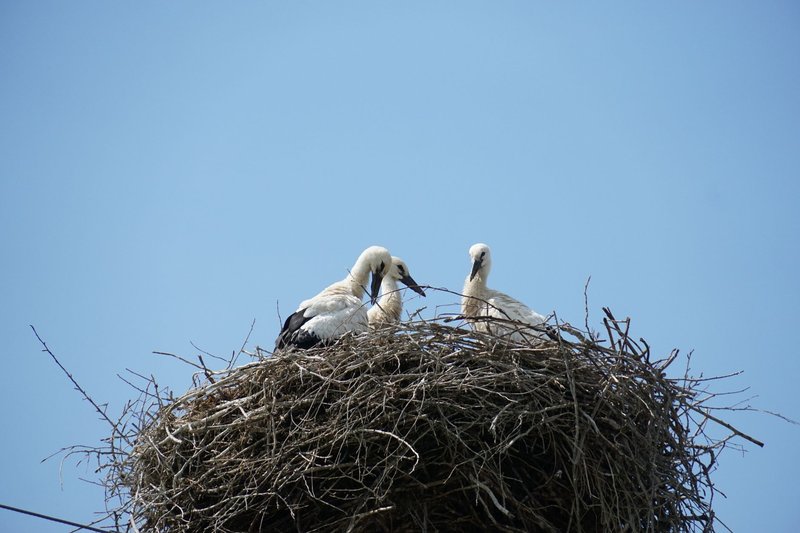
Belarusians nickname white storks “bocian,” and villages compete, informally, for whose rooftop nest returns the most reliably each spring. Belarus sits within the belt of highest white stork density in Europe — a byproduct of exactly the kind of wet meadow and marginal farmland the bird needs for frogs and insects, habitat that’s disappeared from most of Western Europe.
12. Black Stork (Ciconia nigra)
Where the white stork is a farmland bird comfortable near people, the black stork is its opposite: shy, forest-dwelling, and far harder to find. It nests deep in old-growth stands, often the same mature forest blocks that shelter lynx and bison, and a black stork nest is treated as a marker of genuinely undisturbed habitat.
13. Eurasian Otter (Lutra lutra)
Otters thread the Pripyat’s side channels and oxbows, feeding mostly on fish and crayfish in water clean enough to support both. They’re mostly nocturnal and rarely seen directly — the giveaway is a slide mark on a muddy bank or a scattering of fish bones and scat on a favorite rock.
14. European Pond Turtle (Emys orbicularis)
Belarus sits at the northern edge of this species’ range, and populations here are small, fragmented, and listed in the country’s Red Book of threatened species. Finding one basking on a log in the Pripyat basin is the kind of sighting a Belarusian naturalist would actually get excited about — not because the turtle is dramatic to look at, but because so few of them are left this far north.
Where to Actually See Them
Three places cover almost everything on this list. Belovezhskaya Pushcha, on the Polish border, is where the bison recovery started and remains the most reliable place to see one in the wild — it’s also part of the Białowieża Forest UNESCO World Heritage site, one of the last remnants of the primeval forest that once covered most of lowland Europe. Naliboki Forest, west of Minsk, is the lynx and wolf stronghold. And the Pripyat marshes in the south — sometimes called Europe’s Amazon for their scale and lack of development — hold the elk, beaver, otter, and the region’s eagle population.
None of it fits the “endemic species” framing the search engines keep returning. What Belarus actually offers is rarer in a different way: large, connected, still-wild habitat in a part of Europe where most of it disappeared a century ago. The bison didn’t survive here by accident. It survived because Belarus kept enough forest intact to let it.