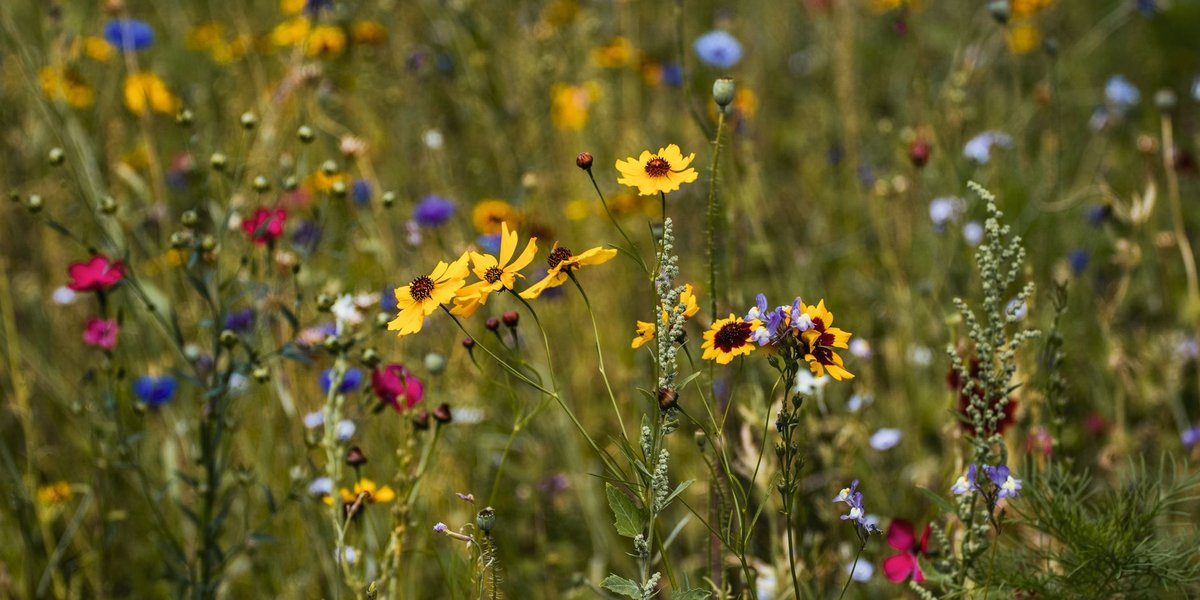
Ask a Belarusian what the national flower is and you’ll get two different answers, and both are right. Flax sits on the state emblem. Cornflower sits on everything else — postcards, folk songs, the mental image most people already have of a Belarusian meadow. Neither one is wrong; they’re just answering different questions.
TLDR
- Flax (Linum usitatissimum) is the official national flower — it’s woven into the state emblem alongside wheat and clover, and the crop built a chunk of the national economy for two centuries.
- Cornflower (Centaurea cyanus, “vasilёk” in Belarusian) is the unofficial folk favorite, tied to rye fields, open-endedness, and sincerity.
- Belarus has a real wildflower calendar: snowdrops and coltsfoot break through in March, lily of the valley and globeflower carry April into May, and cornflower, heather, and valerian take the summer through September.
- Gift flowers in odd numbers. Even numbers are for funerals — this rule is not optional in Belarusian etiquette.
Table of Contents
- Flax vs. Cornflower: Belarus’s Two National Flowers
- 12 Wild and Garden Flowers Worth Knowing
- When They Bloom: A Season-by-Season Calendar
- Why Belarusians Give Flowers in Odd Numbers
- Sending Flowers to Someone in Belarus
Flax vs. Cornflower: Belarus’s Two National Flowers {#flax-vs-cornflower}
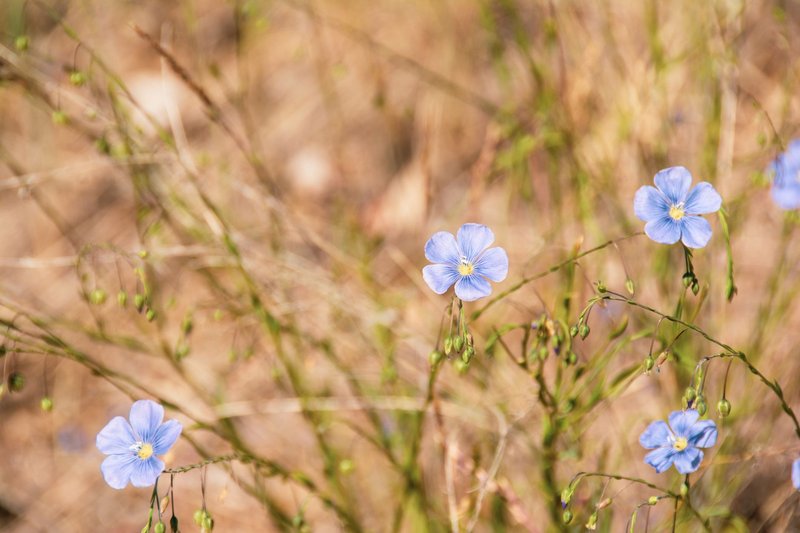
Flax won the official title the boring way — through centuries of being useful. Belarusians have grown it for more than 200 years, first for linen and rope, later as one of the backbones of the Soviet-era agricultural economy. The plant tolerates poor soil, needs little water, and shrugs off cold snaps that would kill a fussier crop. That reliability, not sentiment, is why its small blue flowers ended up on the state emblem, woven into the wreath alongside wheat and clover following the 1995 constitutional referendum that formalized Belarus’s current national symbols.
Cornflower never got the official nod, and it doesn’t need one. Locals call it vasilёk, and it grows wild at the edges of rye fields across the country — the same blue that shows up in embroidery patterns, folk songs, and tourism photography whenever someone wants to signal “Belarus” without saying the word. Where flax represents cultivation and labor, cornflower represents the landscape itself: open fields, rural life, a color people associate with sincerity rather than industry. Researchers studying Centaurea cyanus across Central Europe have documented exactly this pattern — it functions as an arable-land weed that agricultural communities adopted as a cultural and ethnobotanical symbol rather than a cultivated crop.
The two flowers aren’t competing so much as covering different ground. If you’re looking for the flower that’s legally, officially “Belarus,” it’s flax. If you’re looking for the flower Belarusians would point to if you asked them to picture home, it’s the cornflower.
12 Wild and Garden Flowers Worth Knowing {#wild-and-garden-flowers}
Flax and cornflower get the attention, but Belarus’s flora runs deeper — helped by the fact that roughly 70% of the country’s plant species grow within the old-growth forest of Belovezhskaya Pushcha, a UNESCO World Heritage site straddling the Polish border. Here’s a working list of what else is worth knowing, from early spring through late summer.
Snowdrop (Galanthus nivalis) — First flower up, often through actual snow cover. It doesn’t wait for warm weather; it forces its way through frozen ground in March, which is exactly why it’s the plant Belarusians point to as the real end of winter, weeks before the calendar agrees.
Coltsfoot, known locally as “mother-and-stepmother” (Tussilago farfara) — The nickname comes from the leaves: smooth and warm on top, cold and downy underneath. The yellow flowers show up before the leaves do, on roadsides and disturbed ground, usually right behind the snowdrops.
Lily of the valley (Convallaria majalis) — Small white bells, heavy scent, deciduous forest floors. It spreads by underground rhizomes into dense colonies, so where you find one plant you usually find a carpet of them.
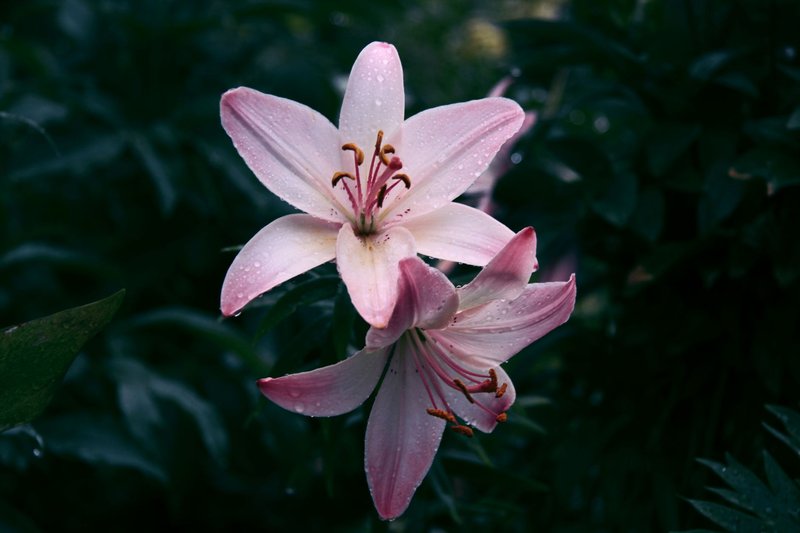
Turk’s-cap lily (Lilium martagon) — The only wild lily native to Belarus, and it looks the part: reflexed pink-purple petals that curl backward like a turban, growing in broad-leaved and mixed forest. It’s not common, and finding one feels like it.
Globeflower (Trollius europaeus) — A tight, golden-yellow sphere that never fully opens — the petals cup inward instead of spreading flat, which is unusual enough that people who don’t know the plant often assume it’s a bud that never bloomed.
Siberian iris (Iris sibirica) — Violet-blue flowers on tall, wiry stems, found in wet floodplain meadows near rivers. It’s one of three iris species native to Belarus and the one most likely to show up in a lowland meadow rather than a garden bed.
Common heather (Calluna vulgaris) — Low mats of tiny purple-pink flowers that blanket the sandy pine forests in late summer. Where the soil is too poor and acidic for most wildflowers, heather takes over completely.
Meadow cranesbill (Geranium pratense) — Violet-blue, five-petaled, and genuinely common in hay meadows and roadside verges through summer. It’s the wild ancestor of the geraniums sold in garden centers, minus the breeding for bigger blooms.
Common yarrow (Achillea millefolium) — Flat clusters of small white (occasionally pink) flowers on feathery, almost fern-like foliage. It’s been used in folk medicine across Europe for centuries, and it’s tough enough to grow in roadside gravel.
Valerian (Valeriana officinalis) — Clusters of pale pink flowers on tall stems, best known for the root, which has a long history in folk sleep remedies. It grows wild in damp meadows and along riverbanks.
Wild rye-field poppy and larkspur — Poppy (Papaver rhoeas) and field larkspur (Delphinium consolida) round out the classic rye-field trio with cornflower — the same three arable weeds that show up together across Slavic and Central European folk art and embroidery.
Common dandelion (Taraxacum officinale) — Unglamorous, everywhere, and worth including precisely because it’s the flower most Belarusian kids actually pick first — the one that turns fields yellow before anything else gets a chance to bloom.
When They Bloom: A Season-by-Season Calendar {#bloom-calendar}
Belarus sits in a temperate continental zone — real winters, a fast spring, and a summer that peaks in intensity rather than length. That shapes a tight bloom window compared to milder climates further west.
| Period | What’s blooming |
|---|---|
| March – early April | Snowdrop, coltsfoot |
| Mid-April – May | Lily of the valley, globeflower, early cornflower |
| May – June | Siberian iris, meadow cranesbill, Turk’s-cap lily |
| June – July | Flax, cornflower (peak), yarrow, valerian |
| July – August | Heather (begins), rye-field poppy and larkspur |
| August – September | Heather (peak) |
If you’re planning a trip around the blooms, June is the single best month: flax fields are flowering, cornflower is at its peak color along the rye margins, and the forest species from the spring flush have generally been replaced by the meadow and roadside flowers rather than disappearing entirely.
Why Belarusians Give Flowers in Odd Numbers {#gifting-traditions}
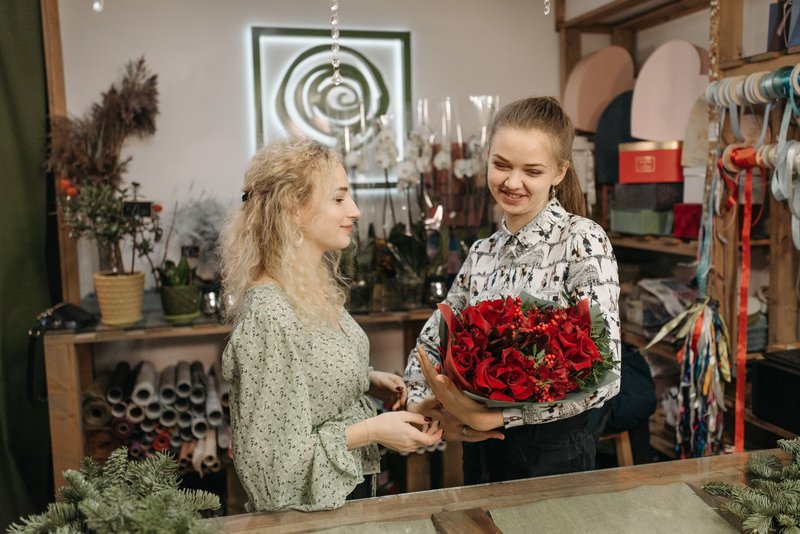
This one trips up visitors more than any other local custom: in Belarus, flowers for a living person go in odd numbers — three, five, seven, eleven. Even numbers are reserved for funerals and graves. It’s not a superstition anyone treats as optional; it’s closer to an unwritten rule of manners, the kind you’re expected to already know.
The logic traces back to pre-Christian Slavic number symbolism, where even numbers represented something closed and completed — a finished cycle, appropriate for marking an ending — while odd numbers stayed “open,” associated with continuation and growth. A bouquet of six, however nice, reads as a funeral arrangement to anyone raised on the custom.
The habit extends past romance. Visiting someone’s home, especially with a female host present, generally calls for a small bouquet alongside whatever else you’re bringing. Teachers, colleagues, mothers, and grandmothers are all fair recipients — flower-giving in Belarus is a broader social gesture than the flowers-for-a-date framing common elsewhere.
Sending Flowers to Someone in Belarus {#sending-flowers}
If you’re trying to get flowers to someone in Belarus rather than identify what’s growing there, a few things are worth knowing before you order. Local florists and international delivery services both operate in the country, and same-city delivery in Minsk and other major cities is generally reliable within a day. Cross-border delivery services that ship internationally into Belarus exist too, though selection tends to lean toward roses and mixed arrangements rather than native species — don’t expect to order a bouquet of wild cornflower on demand.
Whichever route you go, stick to the odd-number rule when specifying the arrangement, and if the occasion is anything other than a funeral, skip the white lilies and chrysanthemums — both carry mourning associations in Belarusian and broader Slavic tradition, the same way even-numbered bouquets do.