TLDR
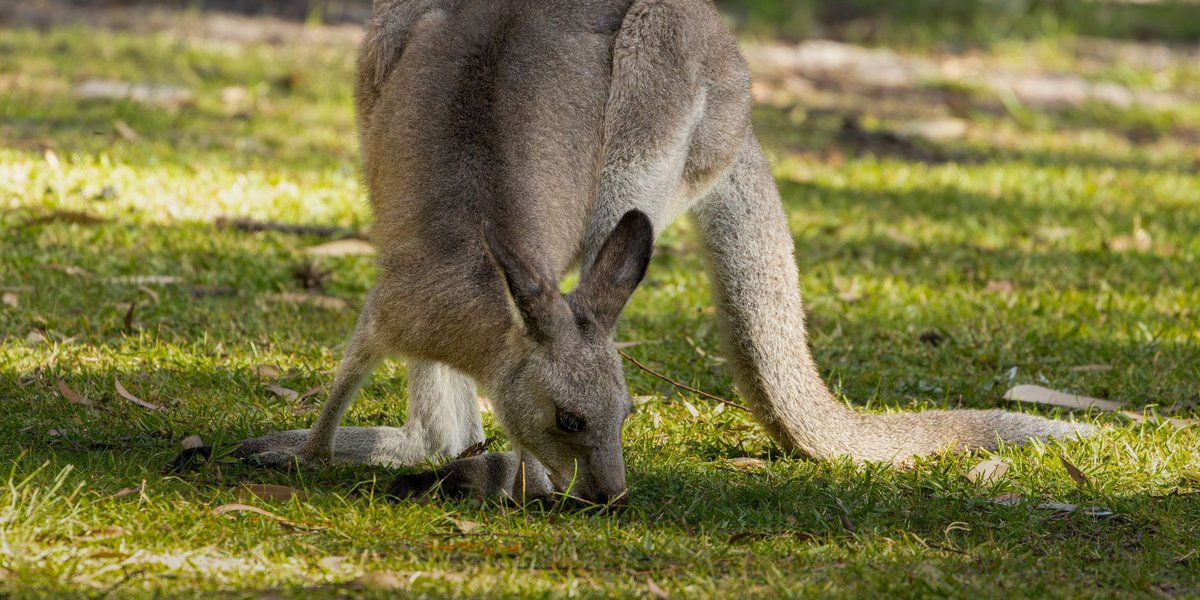
Common wallaroos — also called euros — eat grasses, forbs, and shrub foliage, switching their ratio with the seasons rather than sticking to one menu. Here’s the diet at a glance:
- Primary food: green grasses and forbs, especially after rain
- Dry-season fallback: shrub leaves, browse, and tough spinifex (Triodia) in rocky country
- Water: can go weeks without drinking, pulling most moisture from the plants they eat
- Feeding hours: dawn, dusk, and overnight — they shelter in rock crevices through the heat of the day
- In zoos: grass hay and macropod pellets, with vegetables and fruit kept to a small supplement
Table of Contents
- Wild Diet: What Euros Actually Eat
- Seasonal Diet Shifts
- The Spinifex Fallback
- Water Needs: Going Weeks Without a Drink
- Foraging Behavior: Why They Eat at Dusk
- Wallaroo vs. Kangaroo Diet
- Captive and Zoo Diet
Wild Diet: What Euros Actually Eat
A common wallaroo’s diet is built around grass. Given the choice, they’ll graze on soft, green grasses and forbs — the same low-growing broadleaf plants that show up on any grazier’s “good pasture” list. When that’s not on the menu, they browse: shrub leaves, low branches, and whatever woody vegetation is holding moisture.
That flexibility is the whole story. Common wallaroos, scientifically Osphranter robustus (formerly classified under Macropus), live across some of the harshest, rockiest terrain in Australia — escarpments, gorges, and stony ridgelines where a picky eater would starve. So they don’t specialize. They eat what the season and the rock type hand them, and they’re unusually good at extracting nutrition from food other grazers would pass up.
Seasonal Diet Shifts
The ratio of grass to browse tracks the rain, not the calendar. After wet-season downpours, euros shift heavily toward grasses and forbs — the new growth is nutrient-dense and easy to digest, so they take advantage while it lasts.
Once the dry season sets in and the grass cures out or disappears, the balance flips. Shrub foliage and coarser browse make up a bigger share of the diet, and wallaroos will range further from their rocky shelter to find it. It’s a pattern that shows up across the macropod family, but euros run it harder than most because their rocky home ranges dry out faster than the open plains other kangaroos live on.
The Spinifex Fallback
In the stoniest parts of their range — the Pilbara is the textbook example — common wallaroos lean on Triodia, better known as spinifex, when nothing softer is available. It’s a hummock grass with sharp, silica-loaded leaves that most herbivores avoid, and it’s nutritionally thin by grass standards. But it’s abundant where little else grows, and euros are equipped to process it, per Western Australia’s Department of Biodiversity, Conservation and Attractions.
They don’t live on spinifex alone. Wallaroos pair it with shrub leaves to round out the protein and moisture that coarse grass can’t provide — a mixed strategy that’s less about preference and more about what a rocky, poor-pasture landscape can actually support.
Water Needs: Going Weeks Without a Drink
This is where euros separate themselves from most grazing animals: they can survive roughly two weeks without drinking free water, pulling what they need from the moisture in the plants they eat. In cooler conditions or with access to succulent forage, that stretch can run even longer.
When surface water is around, they’ll drink from it — or dig a soak in a dry creek bed to reach water sitting below the sand. But they’re not dependent on it the way cattle or sheep are, which is part of why wallaroos hold territory in country too dry and broken for most other grazers, according to Parks Australia’s overview of wallaroos in Kakadu.
Foraging Behavior: Why They Eat at Dusk
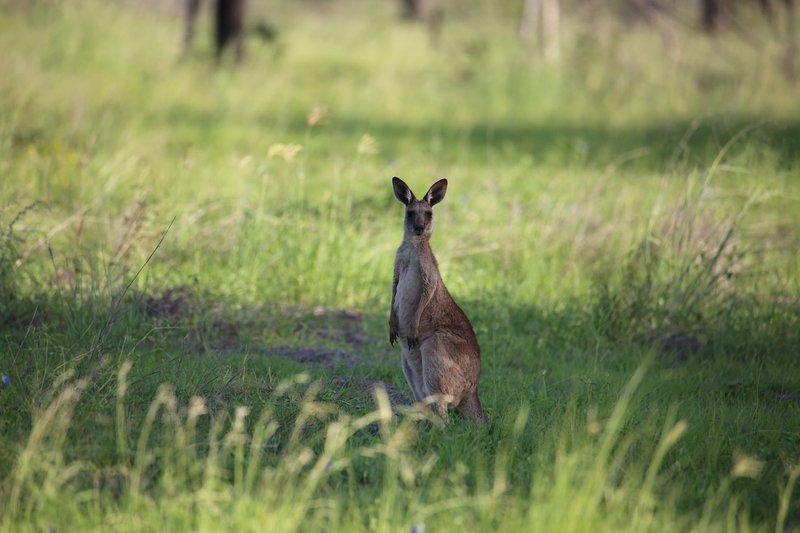
Common wallaroos are crepuscular — most active at dawn, dusk, and through the night, with the middle of the day spent resting in rock crevices, caves, or dense shade. That’s not a quirk; it’s thermoregulation. Their rocky home ranges heat up fast under the Australian sun, and moving during the cool hours cuts both water loss and the energy cost of foraging.
The daily pattern usually looks the same: shelter in the rocks through the heat, then move out onto adjacent grassy flats as the temperature drops to graze, before retreating to cover again before or around sunrise. It’s this rock-to-grass commute — not just what they eat, but when and where — that lets them exploit habitat other macropods skip entirely.
Wallaroo vs. Kangaroo Diet
Wallaroos and kangaroos eat from the same general menu — grasses, forbs, some browse — but the balance differs because their habitats do. Red and grey kangaroos live mostly on open plains and grassland, where grass is reliably available, so their diet stays closer to a straight grazing pattern.
Wallaroos, tied to rocky, broken country, don’t get that luxury. They graze when good grass is nearby but shift to browse and tough fallback plants like spinifex far more readily than kangaroos do, because their terrain simply offers less consistent grass cover. It’s less a difference in taste and more a difference in what the landscape is willing to provide — euros are the more opportunistic eaters of the two because they have to be.
Captive and Zoo Diet
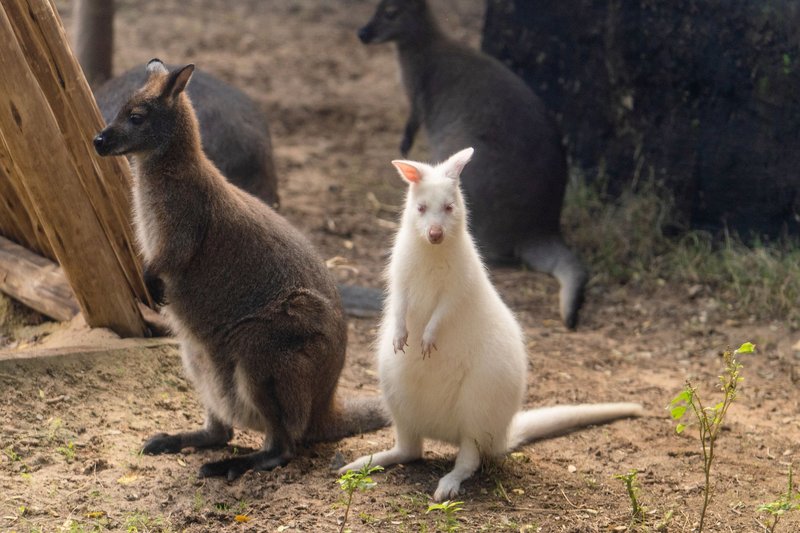
Zoo diets for euros are built to mimic the wild ratio without the wild scarcity. Grass hay forms the base, supplying the fiber their digestive system is built around, alongside commercial macropod pellets — typically making up somewhere around 15–20% of daily intake and covering nutrients that hay alone won’t supply consistently.
Fresh vegetables — carrot, sweet potato, leafy greens — and a small amount of fruit round things out as a minor supplement, generally kept under 10% of the diet. Keepers deliberately limit fruit and other sugary produce, since a captive wallaroo’s easy access to it (without the walking and searching wild foraging demands) makes weight gain and dental problems a real risk. The goal in captivity isn’t variety for its own sake — it’s replicating the coarse, fiber-heavy diet a euro would be working for in the wild.
A euro grazing a rocky outcrop in the Pilbara and one pacing a zoo enclosure are running the same underlying logic: eat what’s abundant, fall back on what’s tough when you have to, and don’t waste water you don’t need to spend. For more on the species’ broader biology and range, Animal Diversity Web has a solid academic rundown.