Iceland sits at roughly the same latitude as parts of Alaska and Siberia, on soil that’s mostly volcanic ash and basalt, with a growing season that can run under three months in the north. By every normal rule of fruit farming, the answer to “what fruit grows in Iceland” should be nothing. It isn’t. Between wild heathland berries, geothermally heated greenhouses, and a handful of stubborn backyard trees, Iceland produces more fruit than its climate has any right to allow.
Table of Contents
- Why Doesn’t Fruit Grow in Iceland?
- Wild Berries You Can Actually Forage
- A Berry-Picking Season Calendar
- Foraging Etiquette: What Almannaréttur Actually Allows
- Greenhouse Fruit: Tomatoes, Strawberries, and a Banana Experiment
- Fruit Trees in Icelandic Gardens
- Where to Buy Local Fruit in Iceland
- FAQ
Why Doesn’t Fruit Grow in Iceland?
Three things work against Icelandic fruit at once. The soil is young and volcanic, low in organic matter compared to the glacial till and loess that built Europe’s fruit belts. The growing season is short and the light is strange — near-endless sun in June, followed by a hard frost window that can arrive in September. And the wind off the North Atlantic strips moisture and heat off anything taller than a shrub, which is why Iceland has almost no native trees over a few meters.
What Iceland does have, in surplus, is heat underground. The island sits on the Mid-Atlantic Ridge, where the North American and Eurasian plates are pulling apart, and that tectonic activity is why geothermal sources supply the bulk of the country’s energy and heating. Icelandic farmers figured out by the 1920s that if the ground itself wouldn’t warm a field, they could pipe the heat into a greenhouse instead. That single workaround — glass instead of open sky — is the reason “fruit in Iceland” isn’t a contradiction. It’s just fruit grown two different ways: wild, and geothermal.
Wild Berries You Can Actually Forage
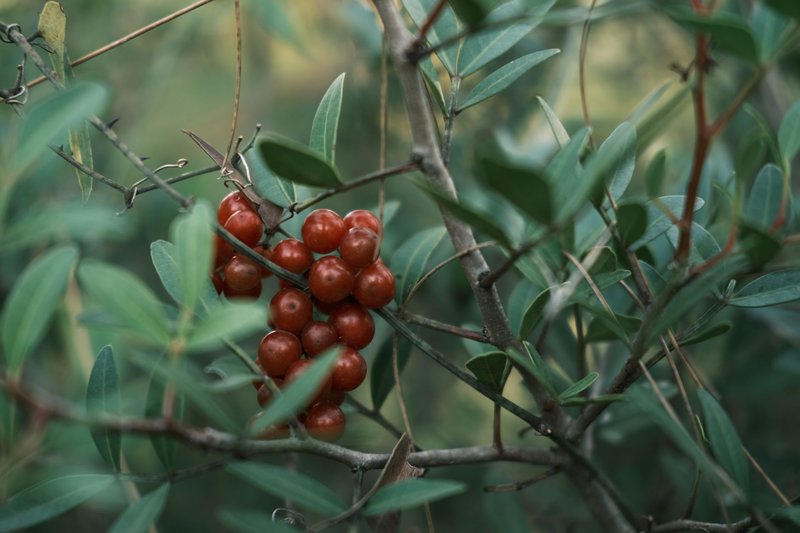
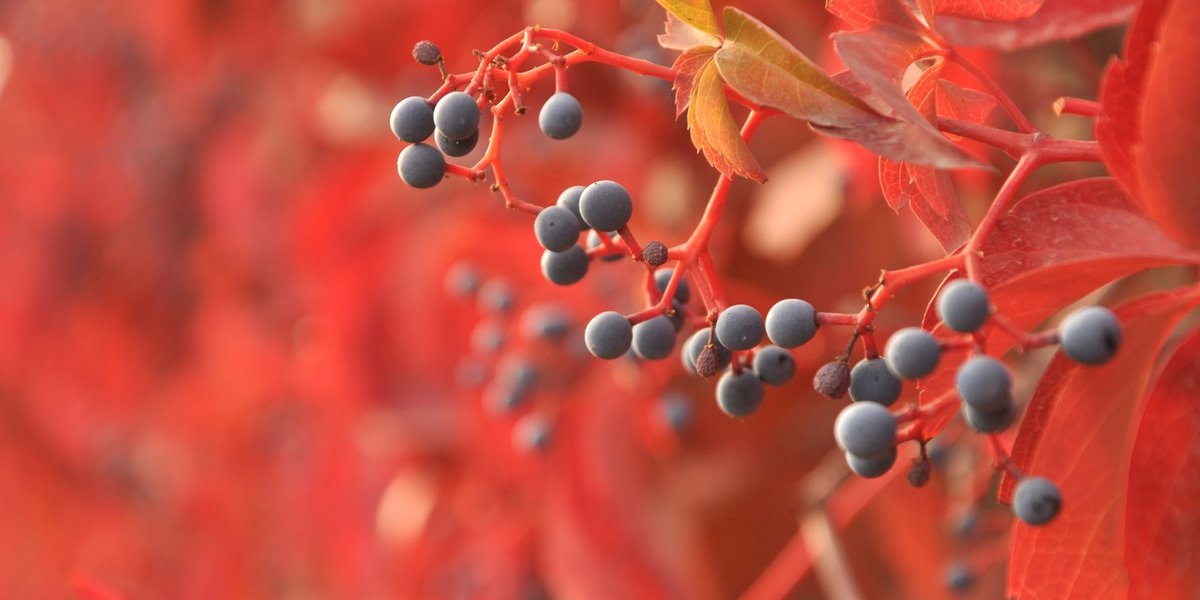
Late summer turns Iceland’s lava fields and heaths a deep red-purple, and it’s not the flowers. It’s berries, growing low and dense across terrain that looks too harsh to grow anything at all.
Bilberries (Bláber)
What Icelanders call bláber and what tourists assume are blueberries are actually bilberries, Vaccinium myrtillus — a close relative, but a different plant, with flesh that stains purple all the way through instead of staying pale like a cultivated blueberry. They grow low across heathland and birch scrub, ripen from mid-July into September, and taste sharper and more tannic than the supermarket berry, which is exactly why locals prize them for jam.
Crowberries (Krækiber)
The crowberry, Empetrum nigrum, is the toughest thing on this list. It’s a low evergreen shrub with needle-like leaves that carpets lava fields where almost nothing else survives, and its black berries have been part of the Icelandic diet for a very long time — pollen from crowberry plants has turned up in sediment cores dating back roughly 10,000 years. The berries themselves are mild, slightly bitter, and low in sugar on their own, which is why they’re traditionally mixed with bilberries or sweetened for jelly rather than eaten straight off the plant. Research on the species has also found unusually high anthocyanin and flavonoid content, among the highest of any berry tested in comparative antioxidant studies.
Wild Strawberries (Jarðarber)
Genuinely wild strawberries exist in Iceland but they’re rare and localized, mostly in sheltered, south-facing pockets in the south and west. If you find a patch, treat it as luck rather than a plan — this isn’t a berry you can reliably build a foraging trip around the way you can with bilberries or crowberries.
Stone Bramble (Hrútaber)
Stone bramble, a Rubus relative that looks like a sparse, low-growing raspberry, shows up in rocky, shaded spots and produces a handful of tart red berries per plant. It’s the berry most visitors walk straight past because it doesn’t grow in the dense mats that bilberries and crowberries do — you have to know to look for it.
A Berry-Picking Season Calendar
Berry season in Iceland runs roughly from late July through late September, but the window shifts by species and by how far north you are.
- Late July to mid-August: bilberries and wild strawberries hit their peak in the south and west lowlands.
- Mid-August to September: crowberries ripen across lava fields and highland fringes, later in the north and interior.
- September: stone bramble and the last of the bilberries, right before the first hard frosts end the season.
Locals plan entire weekend trips around this window, heading to a known heath with a bucket and, often, a thermos — picking is a slow, bent-over task, and the reward is a kitchen full of jam by October.
Foraging Etiquette: What Almannaréttur Actually Allows
Iceland operates under almannaréttur, a right-to-roam principle similar to Norway’s and Sweden’s, and it’s more generous than most visitors expect. On uncultivated public land, you’re allowed to pick berries, mushrooms, and other wild plants for your own immediate consumption without asking anyone first, according to Iceland’s Environment Agency. The catch is in that phrase — immediate consumption. Picking a handful to eat on the trail is fine. Filling a truck bed to sell at a market crosses into commercial harvesting, which requires permission, and on privately owned land you need the landowner’s go-ahead regardless of quantity. Some native plant species are also protected outright and shouldn’t be picked or disturbed at all, so if you don’t recognize what you’re looking at, leave it.
Greenhouse Fruit: Tomatoes, Strawberries, and a Banana Experiment
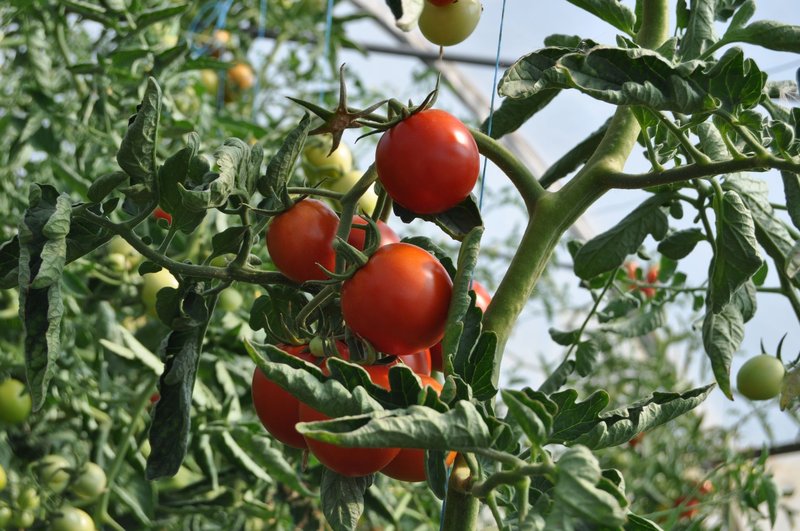
Drive the Golden Circle and you’ll pass glowing greenhouses lit through the winter dark, heated by water drawn straight from boreholes tapping the island’s volcanic heat. Iceland has been doing this since the 1920s, and the payoff is real: the country now grows a large share of the tomatoes it eats domestically, along with nearly all of its cucumbers, using energy that would otherwise just vent into the sky. Strawberries, peppers, and lettuce come out of the same greenhouses, sold fresh in Reykjavík supermarkets instead of arriving on a truck from Spain or the Netherlands.
Then there are the bananas. The Agricultural University of Iceland has grown banana plants in a research greenhouse in Hveragerði since the 1950s, and yes, they produce edible fruit — a modest yield, not a commercial crop. A persistent rumor claims this is the largest banana plantation in Europe, repeated for years in books, films, and even a BBC quiz show, but it isn’t a plantation in any commercial sense. It’s a teaching and research collection that happens to prove a point: with enough geothermal heat, you can coax a tropical plant to fruit inside the Arctic Circle. Nobody’s buying Icelandic bananas at Bónus.
Fruit Trees in Icelandic Gardens
Away from the greenhouses, a small number of hardy fruit trees survive in sheltered home gardens, mostly in Reykjavík’s warmer microclimates and the south coast. Crab apple and a few cold-tolerant apple cultivars can produce small, tart fruit in a good summer. Cherry and pear trees exist too, planted more as ornamental curiosities and climate experiments than reliable food sources — a homeowner might get a handful of usable pears in a warm year and nothing at all the next. None of this rises to orchard scale; it’s backyard hobbyist territory, and every gardener who manages it treats it as a minor triumph over the climate rather than a given.
Where to Buy Local Fruit in Iceland
If you’re visiting and want to taste what’s actually grown here rather than imported, a few spots are worth knowing. Bónus and Krónan, Iceland’s two big discount grocery chains, both stock domestically grown greenhouse tomatoes and cucumbers labeled as Icelandic — look for “íslenskt” on the shelf tag. Farmers markets in Reykjavík and around the Golden Circle sell crowberry and bilberry jam, syrup, and skyr toppings made from that season’s wild harvest, which is a better souvenir than most gift-shop options. Skyr itself, the thick Icelandic cultured dairy product, is traditionally served with a spoon of crowberry or bilberry jam stirred through it — it’s the single most common way locals actually eat these berries, more so than eating them raw.
FAQ
What is Iceland’s national fruit? Iceland has no officially designated national fruit. If any berry has earned the title unofficially, it’s the crowberry — it’s native, abundant across the whole country, and woven into Icelandic food traditions going back millennia, but there’s no formal designation behind that reputation.
Can you grow fruit in Iceland? Yes, in three distinct ways: wild berries that grow unassisted across heathland and lava fields, greenhouse fruit like tomatoes and strawberries grown year-round using geothermal heat, and a small range of cold-hardy trees — apple, pear, cherry — that survive in sheltered home gardens without producing at commercial scale.
Are Icelandic wild berries safe to eat? Bilberries, crowberries, wild strawberries, and stone bramble are all edible and commonly eaten. As with foraging anywhere, don’t eat anything you can’t positively identify, and note that some native plants are protected and shouldn’t be picked regardless of edibility.
Do bananas actually grow in Iceland? Yes, in a geothermal research greenhouse at the Agricultural University of Iceland in Hveragerði, which has produced banana fruit since the 1950s. It’s a small research operation, not a commercial farm, despite the persistent myth about it being Europe’s largest banana plantation.
Iceland’s fruit story isn’t really about scarcity. It’s about two very different workarounds for the same problem — one plant-based and ancient, the other engineered and geothermal — both built around a landscape that refuses to make anything easy.