Contents
- Quick answer
- Same family, different plants
- Side-by-side comparison
- Nutrition per serving, not per 100 grams
- How to cook each one
- Substituting garlic and onions
- Digestion, fructans and IBS
- Pets: both are toxic
- FAQ
Quick answer
Onion is the bulk and the sweet base. Garlic is the sharp aroma on top. Most savory dishes want both, and neither fully replaces the other.
- Flavor: onion turns sweet and mellow when cooked; garlic turns nutty, or bitter if you burn it.
- Nutrition: garlic wins per gram, onion wins per serving, because you eat a whole onion’s worth far more often than 100 grams of garlic.
- Swap ratio: 1 clove of garlic is about 1/8 teaspoon of garlic powder. One medium onion is about 1 tablespoon of onion powder.
- Sensitive gut: both are high in fructans. Garlic-infused oil and the green tops of scallions are the usual workarounds.
Same family, different plants
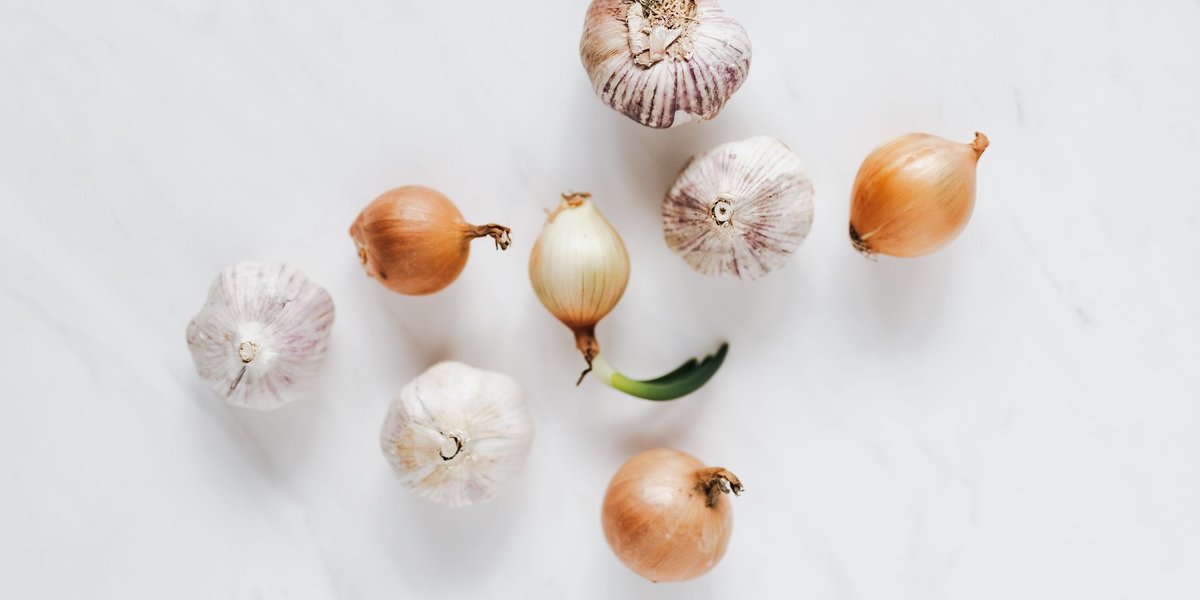
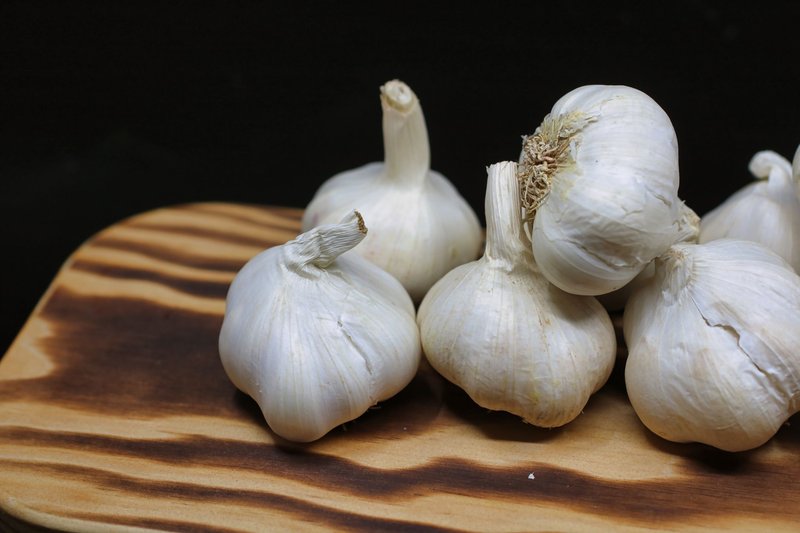
Garlic (Allium sativum) and onion (Allium cepa) are both in the genus Allium, along with leeks, shallots, chives and scallions. They share the sulfur chemistry that makes them smell, sting and make you cry, but the plants grow differently. An onion is a single swollen bulb of layered leaf bases. A garlic bulb is a cluster of separate cloves, each one a miniature bulb that can grow into a new plant if you push it into the soil in autumn.
That structural difference explains a lot of what happens in the kitchen. Onion layers are mostly water and sugar. Garlic cloves are dense, low in water and packed with sulfur compounds.
Side-by-side comparison
| Garlic | Onion | |
|---|---|---|
| Raw flavor | Hot, pungent, lingers | Sharp, watery, fades fast |
| Cooked flavor | Nutty, savory; bitter if scorched | Sweet, jammy, mellow |
| Texture | Dissolves into sauces or turns creamy when roasted | Softens and melts, or stays crisp-tender |
| Role in a dish | Aroma and punch | Body, sweetness and volume |
| Typical amount | 1 to 6 cloves (3 to 20 g) | Half to 2 whole onions (60 to 250 g) |
| Shelf life, whole | 3 to 6 months, cool and dry | 1 to 2 months in a pantry for most storage types |
| Shelf life, cut | Peeled cloves a few days in the fridge | 7 to 10 days wrapped in the fridge |
| Price per kilo | Several times higher | Cheap staple |
The makeup of the bite is different too. Chopping an onion releases a gas (syn-propanethial S-oxide) that irritates your eyes. Crushing garlic triggers an enzyme reaction that forms allicin, the compound behind garlic’s sharp heat. Letting crushed garlic sit for about 10 minutes before it hits the pan gives that reaction time to finish, and it preserves more of the pungency through cooking.
Nutrition per serving, not per 100 grams
Many comparison pages quote per-100g figures and declare garlic the winner. Those numbers are accurate, and also misleading. According to USDA FoodData Central, raw garlic has roughly 149 calories, 33 g of carbohydrate and about 31 mg of vitamin C per 100 g. Raw onion has roughly 40 calories, 9 g of carbohydrate and about 7 mg of vitamin C. By weight, garlic is denser in nearly everything.
Nobody eats 100 g of garlic. That is around 30 cloves. Here is what a real serving looks like, using rounded USDA-based values:
| 1 clove garlic (3 g) | 1 medium onion (110 g) | |
|---|---|---|
| Calories | about 4 | about 44 |
| Carbohydrate | about 1 g | about 10 g |
| Fiber | about 0.1 g | about 1.9 g |
| Vitamin C | about 1 mg | about 8 mg |
| Protein | about 0.2 g | about 1.2 g |
Per serving, the onion contributes more fiber and more vitamin C simply because there is more of it. Neither is a meaningful source of anything when you use one clove or a few slices. This is why pages that claim one “has more fiber” or “has more vitamin C” contradict each other: the answer flips depending on whether they compare by weight or by portion.
What both do offer is sulfur compounds and flavonoids (onions are especially rich in quercetin, concentrated in the outer layers). Treat these as a bonus of eating a flavorful, low-calorie ingredient, not as a reason to eat extra.
How to cook each one
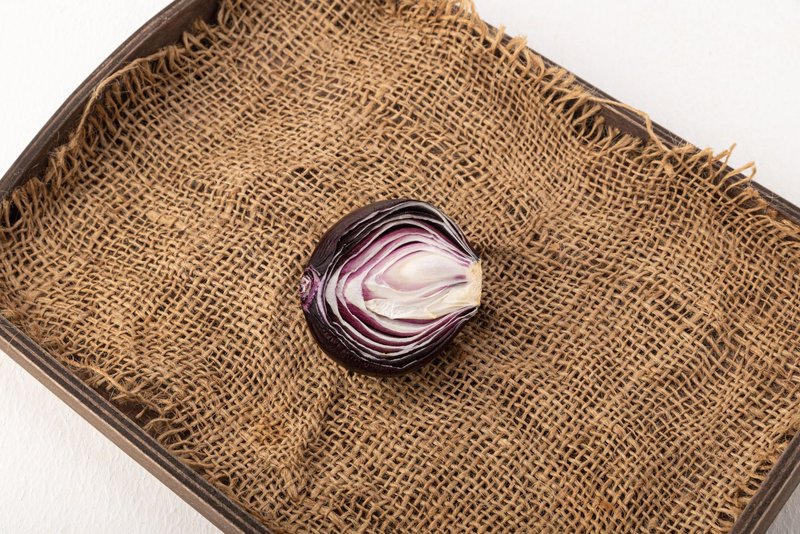
Add onions first. They contain around 4 g of sugar per 100 g and a lot of water, so they need time. Over medium heat, diced onion turns translucent in 5 to 8 minutes. To caramelize, keep the heat at medium-low, stir occasionally, and expect 35 to 45 minutes. Anyone promising caramelized onions in 10 minutes is browning them, not caramelizing them. A pinch of salt early pulls out water and speeds things up.
Add garlic late. Minced garlic has little water and plenty of sugar and protein on a small surface area, so it burns in under a minute at medium-high heat, and burnt garlic tastes acrid. Add it for the final 30 to 60 seconds before the liquid goes in, or stir it into the onions once they are done. Whole or smashed cloves are more forgiving and can go in earlier, for braises, roasts and stocks.
Roasting is where garlic changes the most. A whole bulb at around 400°F (200°C) for 40 to 50 minutes turns the cloves soft, sweet and spreadable, and the raw bite is gone.
For raw use, slice onion thin and soak it in cold water for 10 minutes to tame the sting. With garlic, grate it finely and use less than you think you need. A raw clove in a dressing for four is plenty.
Substituting garlic and onions
The two do different jobs, so substitutions work in one direction better than the other.
If you’re out of garlic:
- 1 clove fresh garlic = 1/2 teaspoon jarred minced garlic = about 1/8 teaspoon garlic powder
- Garlic chives or the white parts of scallions, about 1 tablespoon chopped per clove, give a similar savory edge
- Shallot works in small amounts, but it is milder and sweeter
If you’re out of onion:
- 1 medium onion (about 1 cup chopped) = about 1 tablespoon onion powder, or 3 tablespoons dried minced onion
- Shallots, 1:1 by volume, give a gentler flavor
- Leeks (white and light green parts) and scallions, 1:1, work in soups and sautés
You cannot replace a cup of onion with garlic. Six cloves would leave the dish harsh and thin, with none of the sweetness or bulk. And a clove of garlic can’t be replaced with a handful of onion, because the aroma is missing. When one is absent, the fix is to boost the other plus a little acid or herbs, not to match volumes.
Digestion, fructans and IBS
Both are high in fructans, a carbohydrate that humans can’t fully digest and that gut bacteria ferment, producing gas. For people with irritable bowel syndrome, that is a common trigger. Monash University, which developed the low-FODMAP diet, lists both onion and garlic as high-FODMAP foods, with small servings tolerated in some cases.
Garlic is the more concentrated source by weight, but onions are usually eaten in larger amounts, so both matter. The problem is that cooking doesn’t remove fructans; they just leach into the food. Picking the pieces out doesn’t help much either.
Fructans dissolve in water but not in fat. That leads to two practical workarounds:
- Garlic-infused oil: flavor from garlic moves into the oil, and the fructans mostly don’t. Commercial versions are considered low-FODMAP. If you make it at home, refrigerate it and use it within a few days. Garlic stored in oil at room temperature carries a botulism risk.
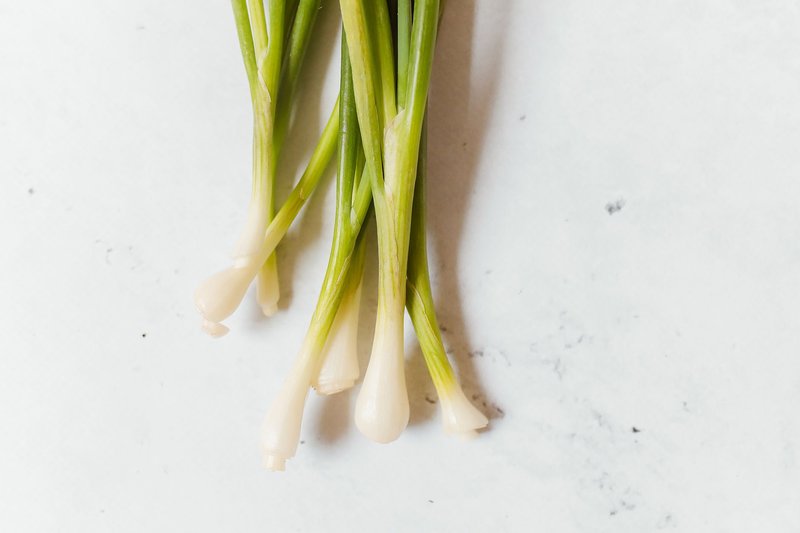
- Green tops: the green part of scallions and chives is low in fructans, while the white bulb end is high. Use the greens for an onion-like flavor.
Asafoetida (hing), a pungent spice common in Indian cooking, tempered in hot oil gives a flavor that sits between garlic and onion.
If you suspect alliums are causing symptoms, talk to a dietitian before cutting them out entirely. Elimination is meant to be temporary, with a structured reintroduction afterward.
Pets: both are toxic
Garlic and onions are both harmful to dogs and cats. The compounds in them damage red blood cells and can cause anemia. The ASPCA lists onion as toxic to dogs, cats and horses, and cooked, raw and powdered forms all count. Cats are more sensitive than dogs. Leftover sauces and baby food with onion powder are common ways pets get a dose.
FAQ
Which is healthier, garlic or onion? Neither beats the other in a way that matters at typical portions. Onion contributes more fiber and vitamin C per serving. Garlic is richer by weight but eaten in tiny amounts. Eat both for flavor.
Can I use garlic powder instead of fresh garlic? Yes. Use about 1/8 teaspoon per clove. The flavor is flatter and lacks the fresh bite, so add it earlier in cooking and finish with a little fresh garlic if you have some.
Why does garlic burn so quickly? Minced garlic is small, low in moisture and rich in sugars, so it goes from golden to bitter in seconds. Lower the heat or add it late.
Is garlic a type of onion? Not exactly. Both belong to the genus Allium and are related, but they are separate species: Allium sativum and Allium cepa.
Do cooked onions and garlic still bother IBS? Usually yes. Cooking doesn’t break down the fructans. Infused oil and the green parts of scallions avoid most of them.
Are shallots closer to garlic or onion? Onion. Shallots are a variety of Allium cepa (sometimes classed as A. cepa var. aggregatum), sweeter and finer than a standard onion, with a faint garlic note.