Most lists of big hairy dog breeds are really lists of big dogs with a photo of a fluffy one on top. The coat is the part that decides your next ten years of vacuuming, brushing and groomer bills, so this list sorts the breeds by what the hair actually does.
Each entry has a quick stats block and a plain verdict on living with the coat. Sizes and weights are typical breed-standard ranges, so individual dogs vary.
Table of Contents
- TLDR
- What “Hairy” Actually Means
- The 12 Breeds
- Grooming Time and Cost Compared
- Best For: Quick Picks
- Drool, Mud and Shedding: The Unglamorous Part
TLDR
- Least maintenance: Irish Wolfhound and Bouvier des Flandres shed little. Their wiry coats need regular brushing and a periodic strip or trim, but you won’t be wearing fur.
- Softest and fluffiest, with the most shedding: Bernese Mountain Dog, Great Pyrenees, Leonberger, Newfoundland and Tibetan Mastiff.
- Most grooming effort: Old English Sheepdog, Briard and Komondor. Most owners of the first two keep them in a short clip.
- Most unusual: Komondor and Bergamasco, both with coats that form cords or mats on purpose.
- Messiest face: Saint Bernard and Newfoundland. Bring towels.
What “Hairy” Actually Means
Search for hairy dogs and you get four different coats mixed together. They behave very differently at home. If you’re looking at smaller companions, the complete list of small hairy dog breeds covers coat needs and grooming for each.
Soft double coat. A dense woolly undercoat under longer guard hair. Newfoundlands, Bernese, Great Pyrenees and Leonbergers have it. It insulates beautifully, and it sheds in clumps, with a heavy blowout once or twice a year.
Wiry or rough coat. Harsh, crisp hair that stands off the body. Irish Wolfhounds and Bouviers have it. Shedding is low, but the hair needs combing, and dead hair gets pulled out or clipped on a schedule.
Long, flowing coat. Old English Sheepdogs and Briards. Gorgeous, and prone to mats behind the ears, under the legs and along the britches.
Corded or matted-on-purpose coat. Komondors and Bergamascos. The coat forms ropes or flat felted plates. Nobody brushes it, but it needs hands-on separating, and washing is a project.
Keep those four in mind. “Fluffy” and “low-maintenance” almost never share a dog.
The 12 Breeds
1. Newfoundland
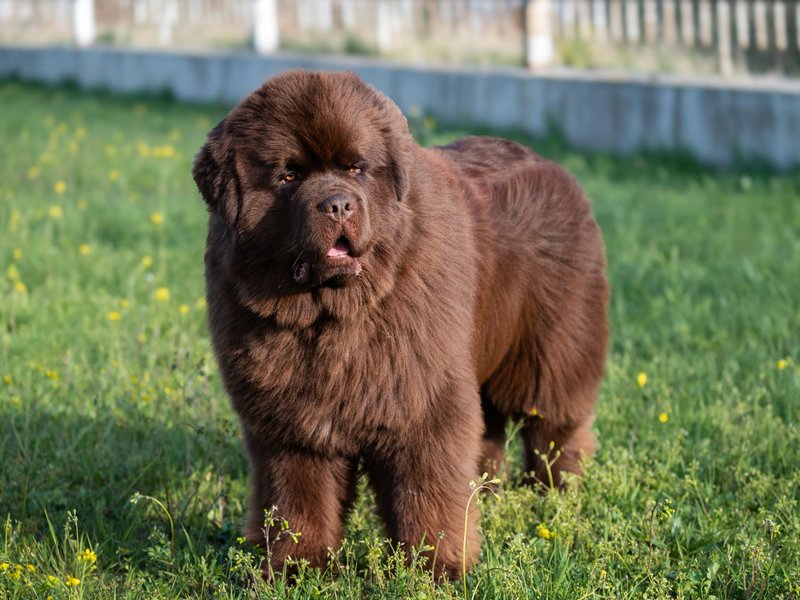
- Height: 26-28 in
- Weight: 100-150 lb
- Coat: Soft, water-resistant double coat
- Shedding: Heavy
- Grooming effort: High
The Newfoundland was built to haul fishing nets out of cold water, and the coat shows it: oily guard hair over a dense undercoat that sheds water like a duck. The American Kennel Club notes that the breed’s gentle temperament is as famous as its size. These are patient, sweet dogs that tend to drift to whichever child is smallest.
Expect brushing several times a week, and daily during the seasonal shed. Expect drool too. Great with kids, poor for tiny apartments and hot climates.
2. Bernese Mountain Dog
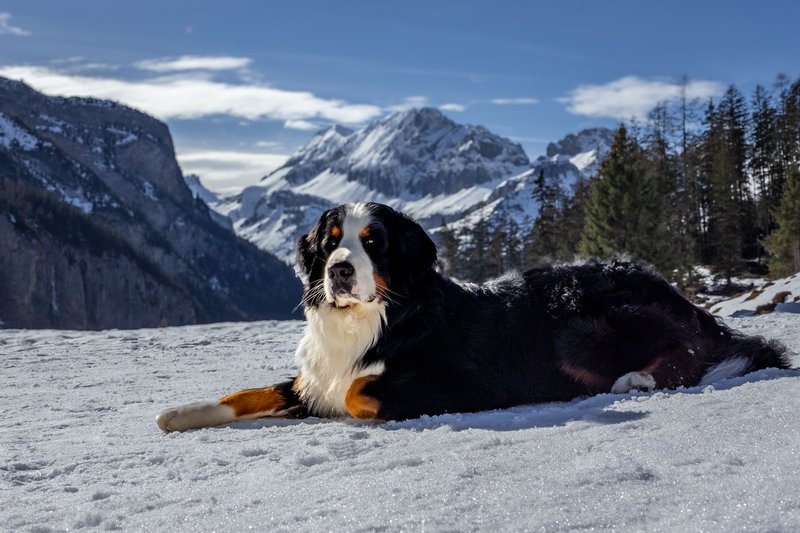
- Height: 23-27.5 in
- Weight: 70-115 lb
- Coat: Long, silky double coat in black, rust and white
- Shedding: Heavy
- Grooming effort: Moderate to high
The tricolor coat is why Berners show up on every “fluffy dog” list. It sheds year-round with two big spikes, and the white chest shows every muddy paw print. A thorough brushing twice a week keeps the house manageable.
The tradeoff is lifespan. Berners are a short-lived large breed, commonly cited at around 7 to 10 years. Buy from breeders who health-test, and budget for that.
3. Old English Sheepdog
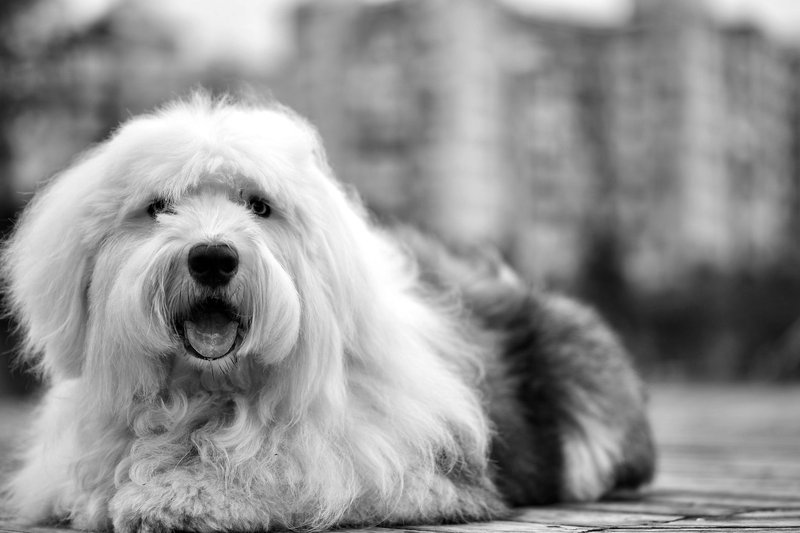
- Height: 21+ in
- Weight: 60-100 lb
- Coat: Long, shaggy double coat
- Shedding: Moderate
- Grooming effort: Very high
The hair is the whole look: shaggy, grey and white, falling over the eyes. Kept long, it needs a full line-brushing down to the skin several times a week, because the surface can look fine while mats form underneath.
This is why many owners choose a puppy-style clip every few months. A clipped Sheepdog is still a big, goofy herding dog, just one with a lower laundry bill. They’re also energetic, and they’ll try to herd your kids.
4. Great Pyrenees
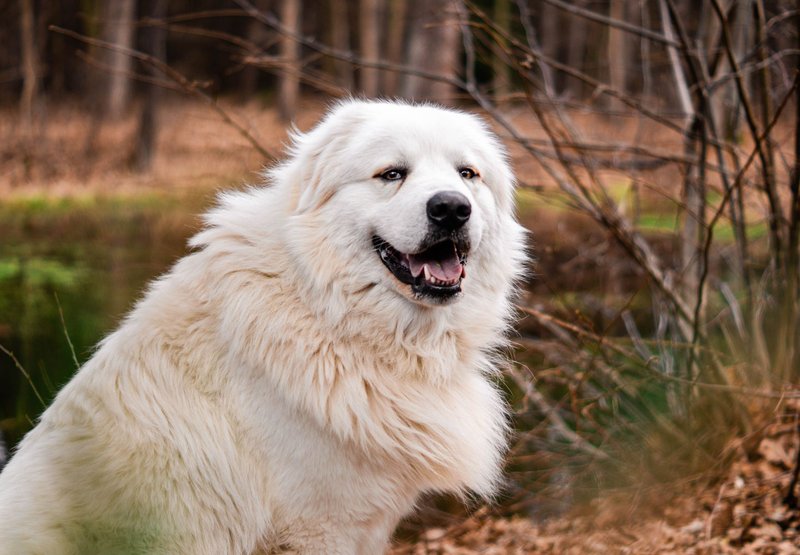
- Height: 25-32 in
- Weight: 85-115+ lb
- Coat: Thick white double coat with a weather-proof outer layer
- Shedding: Heavy
- Grooming effort: Moderate
Livestock guardians in the Pyrenees mountains, these dogs have a coat that stays surprisingly clean, because the long outer hair tends to shed dirt once it dries. Weekly brushing handles most of the year. During the blowout, you’ll fill a trash bag.
Don’t shave a Pyr in summer. The double coat insulates against heat as well as cold. The harder part of ownership is the temperament: independent, nocturnal and loud when they think something needs guarding.
5. Komondor
- Height: 25.5+ in
- Weight: 80-100 lb
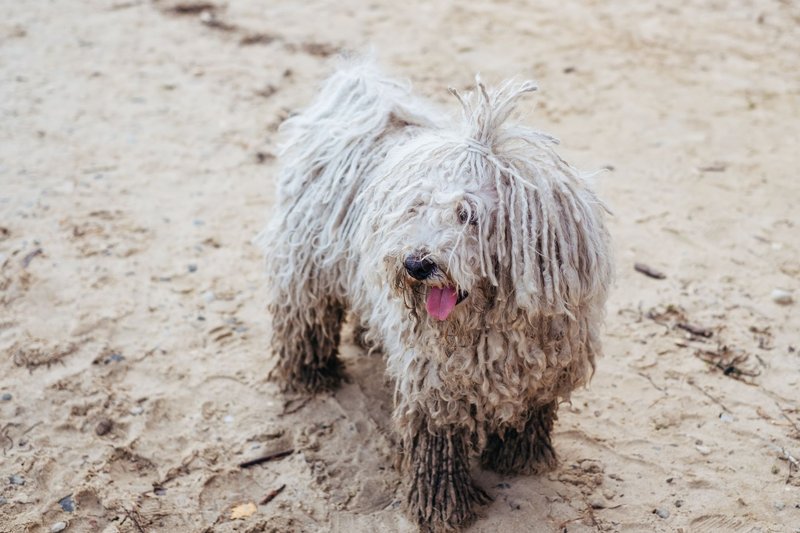
- Coat: White corded coat
- Shedding: Very low, with the cords holding loose hair in
- Grooming effort: High, and different from other breeds
A Komondor looks like a walking mop, and the cords are the point. The coat is a Hungarian flock guardian’s disguise among sheep. The AKC describes the cords as forming from the puppy coat as the dog matures, and they have to be hand-separated as they grow so they form ropes rather than one big mat.
No brushing, but it takes a long time for a wet cord coat to dry, so bathing means a day of fans. Owners also report that a dog this size with a coat this long picks up everything. Komondors are serious guardians, not cuddly party dogs.
6. Bouvier des Flandres
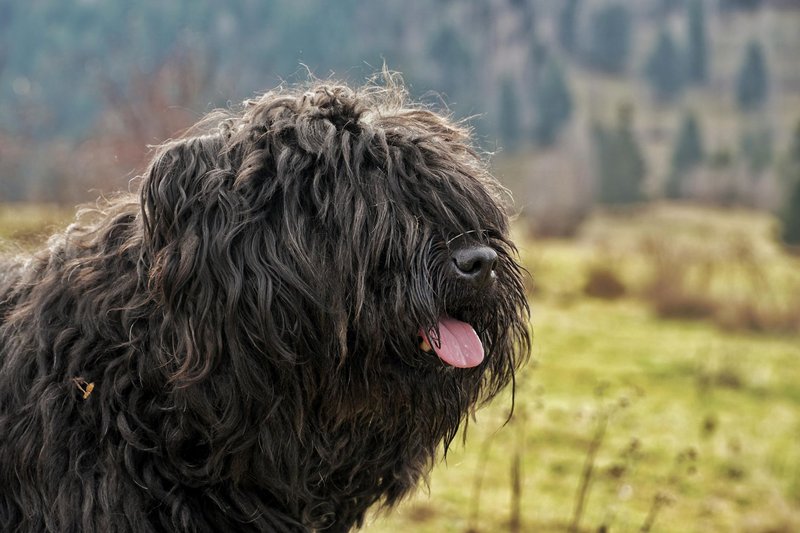
- Height: 23.5-27.5 in
- Weight: 70-110 lb
- Coat: Rough, tousled double coat with a beard and mustache
- Shedding: Low
- Grooming effort: High
The Bouvier’s coat is harsh and crisp rather than soft, with a built-in beard. It doesn’t leave much hair on the sofa, but it holds onto everything else: water, food, burrs. Expect to brush and comb thoroughly each week and to book professional grooming every couple of months.
Bouviers are working dogs, and they’ll want a job. A bored one can be bossy.
7. Leonberger
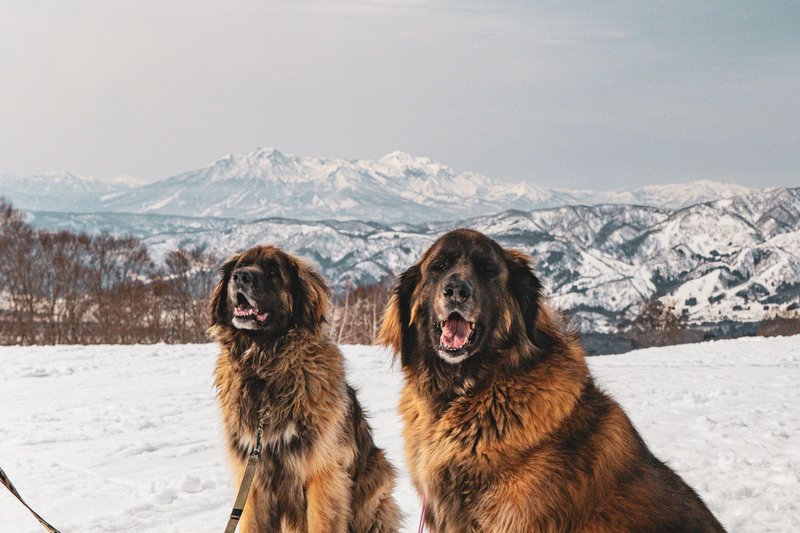
- Height: 25.5-31.5 in
- Weight: 90-170 lb
- Coat: Long, water-resistant double coat with a lion-like mane
- Shedding: Heavy
- Grooming effort: Moderate to high
This breed was bred in Germany to look like the lion on the town crest, which explains the mane on males. The coat is soft and water-resistant, and there’s a lot of it. Plan for brushing several times a week, with extra attention to the feathering on the legs and the mane around the neck.
They’re affectionate and tuned in to their people. They’re also huge, and the grooming sessions take longer than you think.
8. Briard
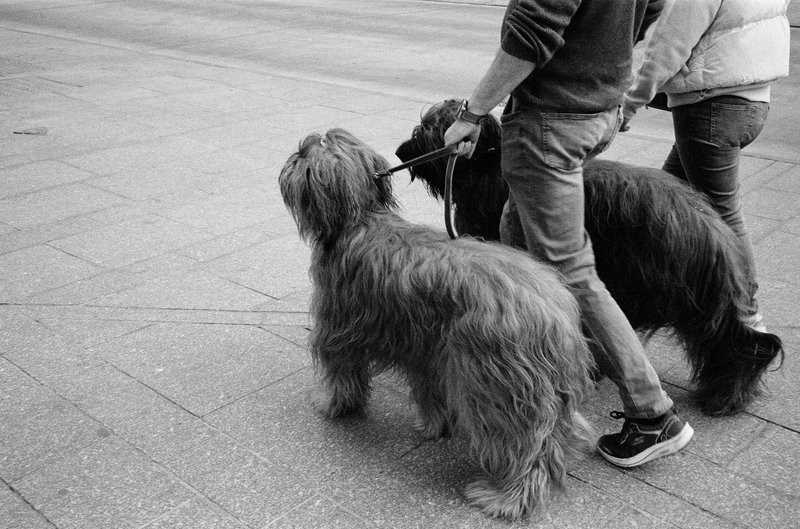
- Height: 22-27 in
- Weight: 55-100 lb
- Coat: Long, slightly wavy, coarse, goat-like coat
- Shedding: Moderate
- Grooming effort: High
French sheep herders produced the Briard, and the long, wavy coat falls over the eyes. It’s coarser than a Bernese’s silk, so it forms mats more easily if neglected. Plan on a thorough brushing every few days.
A fun detail: Briards have double dewclaws on each hind leg, and the breed standard requires them. Check those nails.
9. Tibetan Mastiff
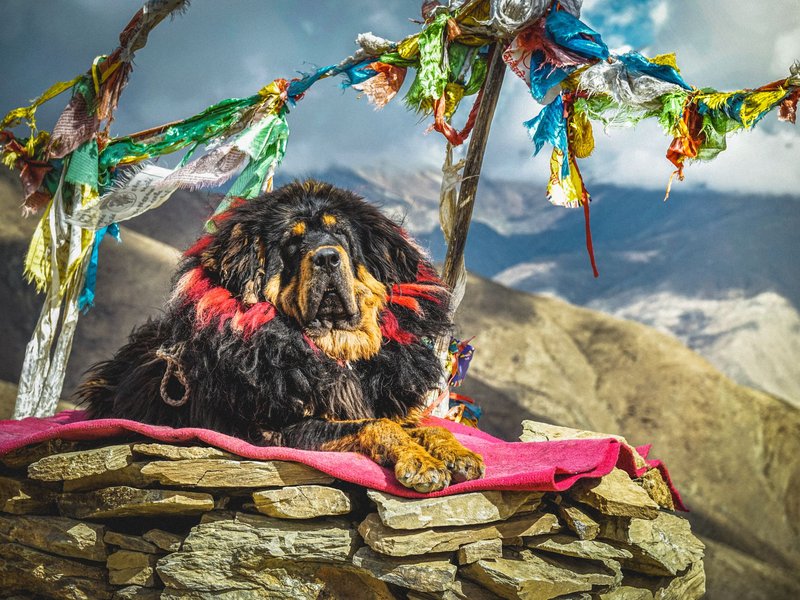
- Height: 24+ in
- Weight: 70-150 lb
- Coat: Thick double coat with a heavy mane
- Shedding: Seasonal, once a year
- Grooming effort: Moderate
The Tibetan Mastiff mostly sheds once a year, but when it happens the whole undercoat comes out at once and you’ll need days of brushing. The rest of the year a weekly brush keeps the coat in shape.
These aren’t a beginner dog. They’re independent guardians with big voices, and training needs a patient, confident owner.
10. Irish Wolfhound
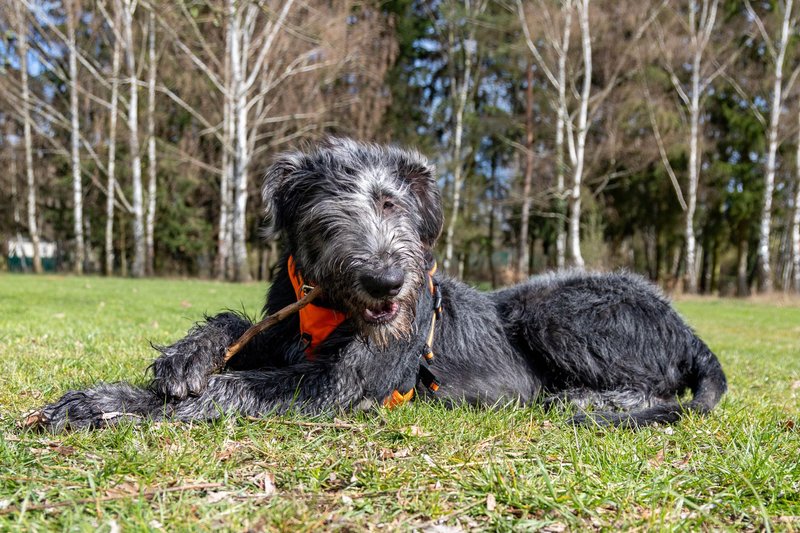
- Height: 30-32+ in
- Weight: 105-120+ lb
- Coat: Rough, wiry, harsh coat
- Shedding: Low
- Grooming effort: Moderate
The tallest dog on this list has one of the easiest coats. It’s wiry and weather-resistant, and shedding is minimal. Brush weekly, comb through the beard and legs, and pull or strip the dead hair periodically (a groomer can do it).
Wolfhounds are gentle, quiet indoors and need space to stretch. They also tend to be short-lived. If you want a big dog that doesn’t coat your house, this is a strong pick.
11. Saint Bernard (Long-Haired)
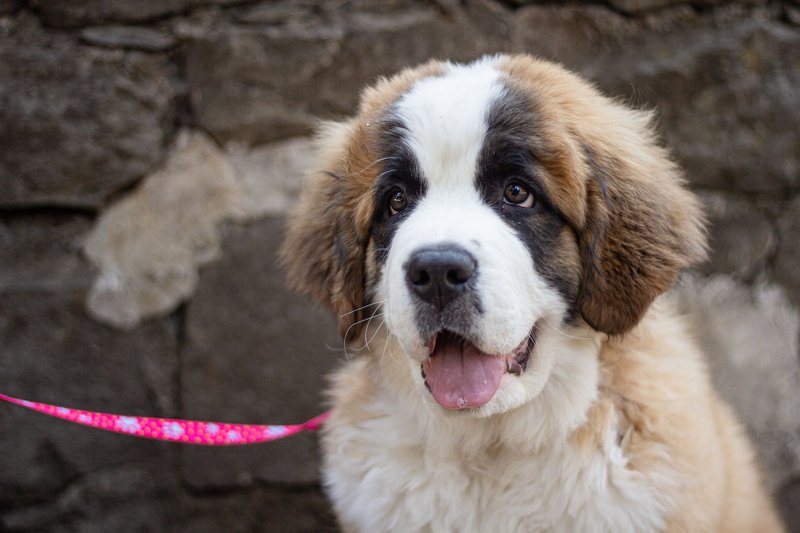
- Height: 26-30 in
- Weight: 120-180 lb
- Coat: Dense, with a longer, feathered coat in the long-haired variety
- Shedding: Heavy
- Grooming effort: Moderate to high
Saint Bernards come in short and long coats, and the long-haired version has feathering on the legs, tail and chest. Weekly brushing is the baseline. During shedding, brush every day.
The coat isn’t the main event here, though. It’s the drool, which collects on the jowls and ends up on walls and furniture. The long coat also holds heat, so summer means fans, shade and AC.
12. Bergamasco
- Height: 23-24.5 in
- Weight: 57-84 lb
- Coat: Three types of hair that weave into flat mats called flocks
- Shedding: Very low
- Grooming effort: Low brushing, but hands-on
The AKC says the Bergamasco’s coat forms flat felted mats rather than round cords, and that it’s not brushed. You separate the mats by hand as they form and keep the dog clean and dry. The coat helps protect against weather and was a defense against predators in the Italian Alps.
Rare, so waitlists are common. Smaller than most of the breeds here, but still a big dog.
Grooming Time and Cost Compared
These figures are rough estimates. Prices vary a lot by region and by the dog’s size, and a groomer will charge more for a matted dog.
| Breed | Coat type | Shedding | Home brushing | Professional grooming |
|---|---|---|---|---|
| Newfoundland | Soft double | Heavy | 2-3 times a week | Every 2-3 months |
| Bernese Mountain Dog | Soft double | Heavy | 2 times a week | Optional |
| Old English Sheepdog | Long, shaggy | Moderate | 3+ times a week if long | Every 4-8 weeks |
| Great Pyrenees | Thick double | Heavy | Weekly | Optional |
| Komondor | Corded | Very low | None (separating cords) | Specialist care |
| Bouvier des Flandres | Rough | Low | Weekly | Every 6-8 weeks |
| Leonberger | Soft double | Heavy | 2-3 times a week | Optional |
| Briard | Long, coarse | Moderate | 2-3 times a week | Every 2-3 months |
| Tibetan Mastiff | Thick double | Seasonal | Weekly | Optional |
| Irish Wolfhound | Wiry | Low | Weekly | Strip or trim 2-4 times a year |
| Saint Bernard (long) | Dense, feathered | Heavy | Weekly, daily during shed | Optional |
| Bergamasco | Flocked | Very low | None (separating mats) | Occasional |
For giant breeds, professional grooming sessions often cost well over $100, and the heavy-coated ones can run higher. That’s per visit, several times a year.
Best For: Quick Picks
First-time owners with a big yard: Newfoundland or Bernese Mountain Dog. Both are gentle and eager to please.
Low-shed big dog: Irish Wolfhound or Bouvier des Flandres. Wiry coats keep fur off your clothes, though you’ll still handle regular grooming.
No brushing at all: Komondor or Bergamasco. Know what you’re signing up for with the cords and flocks.
Cold climates: Great Pyrenees, Tibetan Mastiff, Newfoundland. All three were bred for harsh weather.
Active owners: Old English Sheepdog, Briard, Bouvier. They want work and exercise.
Hot climates: None of these is ideal. If you live somewhere warm, the Irish Wolfhound and a clipped Old English Sheepdog cope best.
Drool, Mud and Shedding: The Unglamorous Part
Drool. Saint Bernards and Newfoundlands are the two worst. Keep a towel by the door and another in the car.
Mud. Long leg feathering and beards on Bouviers, Wolfhounds and Leonbergers collect mud, water and food. Wipe paws and beards after walks.
Shedding. Soft double-coated breeds shed year-round and “blow” their undercoat seasonally. A good slicker brush, an undercoat rake and a high-powered vacuum are standard kit. Don’t shave a double coat to cut shedding; it doesn’t help, and it can leave the dog less protected from heat and sun.
Heat. Big dogs with thick coats overheat easily. Walk early and late in summer, and give them shade and water at all times.
Pick the coat you can live with first, then the temperament. A shaggy dog is easy to fall for in photos, and a lot easier to love when you’ve planned for the brushing.