Most rundowns of Mongolian steppe animals read like a zoo directory: species, photo, one paragraph, next species, repeat until you hit 183 entries and give up halfway through. None of them tell you where to actually look, or when.
The steppe isn’t one landscape. It’s three, stacked against each other — open grassland core, forest-steppe edge where taiga gives way to plain, and scattered wetland pockets around rivers and lakes. Different animals hold different ground, and knowing which zone you’re in tells you what you’re likely to see. This guide profiles nine signature species by zone, with conservation status and the best window to catch each one, plus the human pressures — herding, hunting, grazing — that are reshaping all of it.
Table of Contents
- The Lineup at a Glance
- Grassland Core
- Forest-Steppe Edge
- Wetland and Lake Pockets
- Herders, Hunting, and a Shrinking Steppe
- Summary
The Lineup at a Glance
| Species | Zone | Conservation Status | Best Season to See |
|---|---|---|---|
| Mongolian gazelle | Grassland core | Least Concern | June (calving) or autumn rut |
| Przewalski’s horse | Grassland core | Endangered (recovering) | Year-round, best in summer |
| Mongolian marmot (tarbagan) | Grassland core | Regionally hunted, monitored | May–August |
| Corsac fox | Grassland core | Least Concern | Dawn/dusk, autumn–winter |
| Argali sheep | Forest-steppe edge | Near Threatened | November–December rut |
| Pallas’s cat | Forest-steppe edge | Least Concern (declining) | Winter, against snow cover |
| Grey wolf | Forest-steppe edge | Least Concern | Winter (easier tracking) |
| Steppe eagle | Forest-steppe edge | Endangered | April–September breeding |
| Demoiselle crane | Wetland/lake pockets | Least Concern | Late April–early May arrival |
Grassland Core
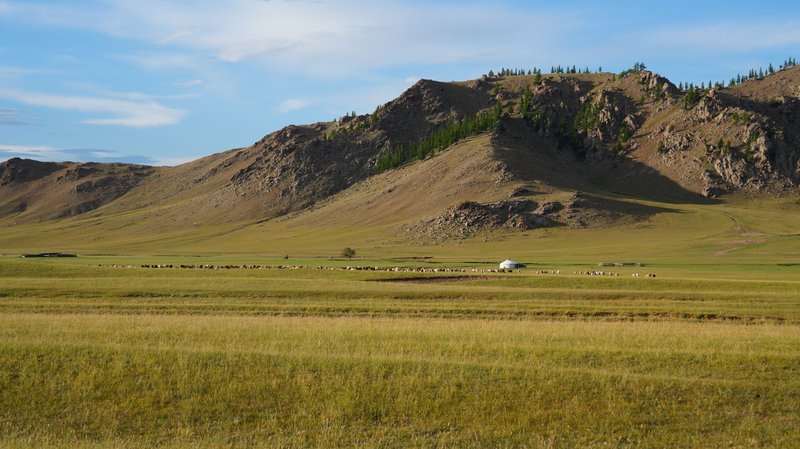
This is the open, treeless heart of the steppe — rolling grassland that runs to the horizon with almost nothing to break the wind. It’s the zone tourists picture when they hear “Mongolia,” and it’s where the biggest herds move, operating in a landscape type shared with other temperate grasslands animals across Eurasia.
Mongolian gazelle. Roughly two million of them roam this grassland, and unlike most migratory ungulates, they don’t follow a fixed route. One tagged gazelle logged over 18,000 kilometers in five years, covering an annual range of about 19,000 square kilometers with almost no overlap from year to year. That’s the defining trait: no site fidelity, no seasonal corridor, just a nomadic response to wherever rain fell last. Wildlife Conservation Society researchers found Mongolia holds around 99% of the world’s population, which makes this grassland the species’ entire stronghold, not just a range extension. Catch them in June during calving, when females cluster in loose aggregations, or in the autumn rut when herds swell into the thousands.
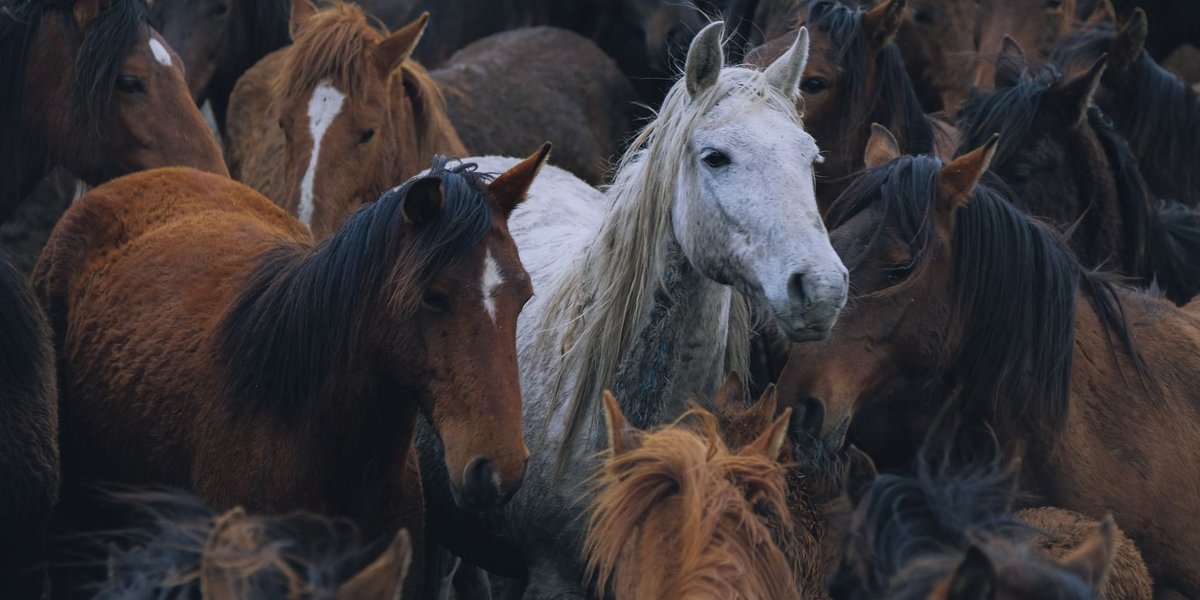
Przewalski’s horse (takhi). The world’s last truly wild horse — never domesticated, genetically distinct from the domestic horse — went extinct in the wild by the 1960s. Every living individual descends from a small captive population. The comeback started on June 5, 1992, when the first 16 horses were released into Hustai National Park by a joint Dutch-Mongolian program. That population has grown to roughly 450 animals today, close to half of Mongolia’s free-ranging takhi. It’s one of the only reintroductions where a species went from extinct in the wild back to a self-sustaining wild population on its original range, and Hustai remains the best place on earth to see it happen.
Mongolian marmot (tarbagan). Don’t underestimate the marmot. Its burrow systems aerate compacted grassland soil, create microhabitat for corsac foxes and reptiles that shelter in abandoned tunnels, and functionally reshape plant diversity around every colony — the kind of keystone-engineer role usually reserved for beavers or prairie dogs. It’s also carrying real epidemiological weight: tarbagan marmots are a natural reservoir for the bacterium behind bubonic plague, which is why Mongolia runs seasonal hunting bans and targeted vaccination drives for herders in high-risk areas. Above ground and easy to spot from May through August; it hibernates the other half of the year.
Corsac fox. Smaller and paler than a red fox, built for the wind-scoured open steppe and adjoining desert-steppe fringe. It’s an opportunist — rodents, marmot-burrow tenants, insects, whatever the season offers — and it’s most active at dawn and dusk, which is also when the light on this grassland turns genuinely dramatic.
Forest-Steppe Edge
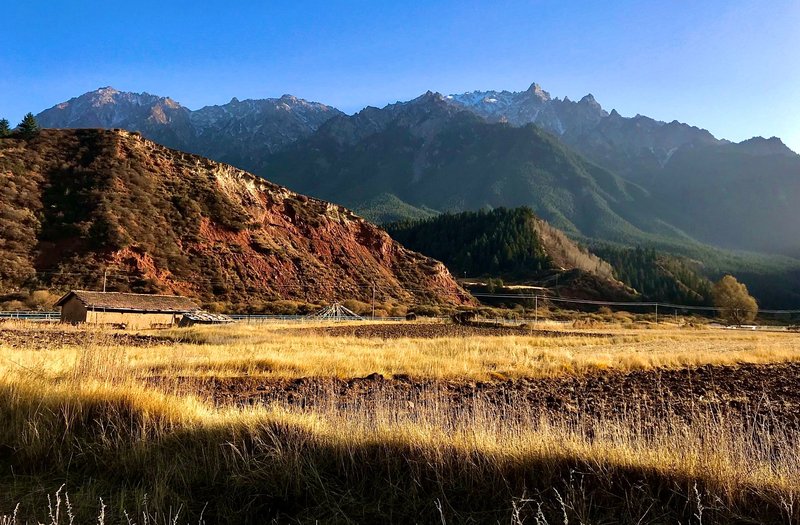
Where the plain meets rockier, hillier terrain and the first stands of larch and birch appear, the species list shifts toward predators and cliff-dwellers that need broken ground.
Argali sheep. The largest wild sheep on the planet, built for the rocky foothills where the forest-steppe starts climbing. The Mongolian population is a hard case study in how conservation and exploitation collide: numbers fell from roughly 40,000 animals in 1975 to somewhere between 13,000 and 15,000 by 2001, driven by habitat loss and competition with livestock. The species is Near Threatened, general hunting is banned, yet Mongolia still issues limited trophy-hunting permits to foreign hunters for high fees — a program that in some managed areas correlates with local population recovery, and in others has drawn accusations that permit revenue never reaches conservation work on the ground. Rutting season, November into December, is when rams clash and are easiest to observe.
Pallas’s cat (manul). Squat, stocky, and covered in the densest fur of any cat species, an adaptation for the cold rock crevices and sparse scrub where it dens. Mongolia holds the largest known population, with density estimates around 4 to 8 individuals per 100 square kilometers in prime central steppe grassland. Officially Least Concern, but the IUCN’s own assessment flags a declining trend — the cat gets caught as bycatch in traps set for wolves and foxes, poisoned incidentally through pika-control programs, and killed by herders’ dogs. Winter is the best window: the low scrub thins out and the cat’s coat stands out against snow, though “best” here still means patient and lucky.
Grey wolf. The apex predator of the whole steppe system, and the animal most tangled up in herder conflict — more on that below. Wolves range across both grassland and forest-steppe, denning in the broken terrain at the edge and hunting out into the open. Tracks in fresh snow are often the only sign you’ll get; winter is genuinely the easier season to confirm they’re around, even without a sighting.
Steppe eagle. This one is now a genuine conservation emergency, not a background species. Reclassified from Least Concern to Endangered in 2015 after populations fell by roughly half in under fifty years — the IUCN’s own assessment points to uninsulated power line electrocution as one of the leading causes, with a wingspan up to 2.6 meters making even a glancing wing-touch on a wire fatal. It nests on cliffs and rock outcrops at the forest-steppe edge and hunts pikas and marmots over open ground below. Breeding season, roughly April through September, is when nesting pairs are most reliably located near escarpments.
Wetland and Lake Pockets
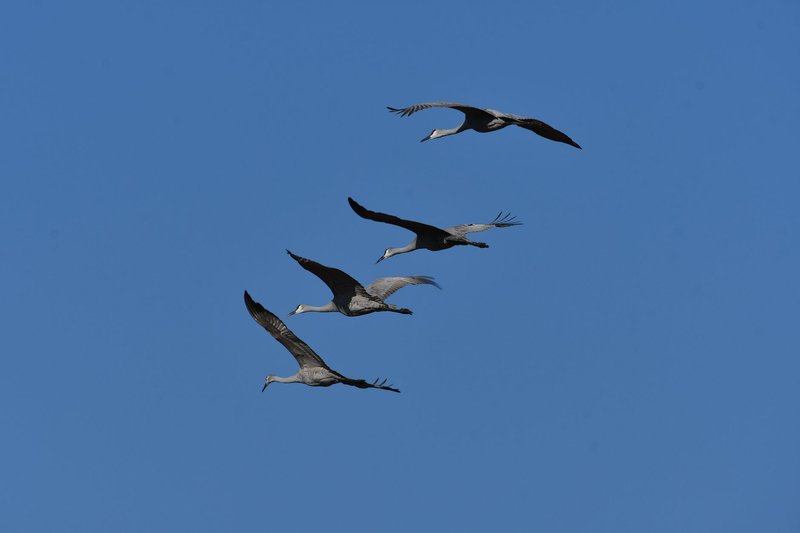
Scattered river valleys and shallow lakes break up the grassland, and they concentrate a completely different set of animals — mostly birds — around water that’s otherwise scarce for hundreds of kilometers in any direction.
Demoiselle crane. The smallest crane species in the world, and one of the most punishing migrants of any bird. After breeding on Mongolia’s wetland edges through summer, flocks head south in September on a route that crosses the Himalayas at altitudes between 16,000 and 26,000 feet — a physiological feat that still isn’t fully explained, given the thin air at that elevation. They return to breed in northern Mongolia between late April and early May, and that spring arrival, when pairs stake out territory near water, is the best time to see them at their most active. Whooper swans and bar-headed geese share these same lake pockets, making the wetland zone worth a slower look even outside crane season.
Herders, Hunting, and a Shrinking Steppe
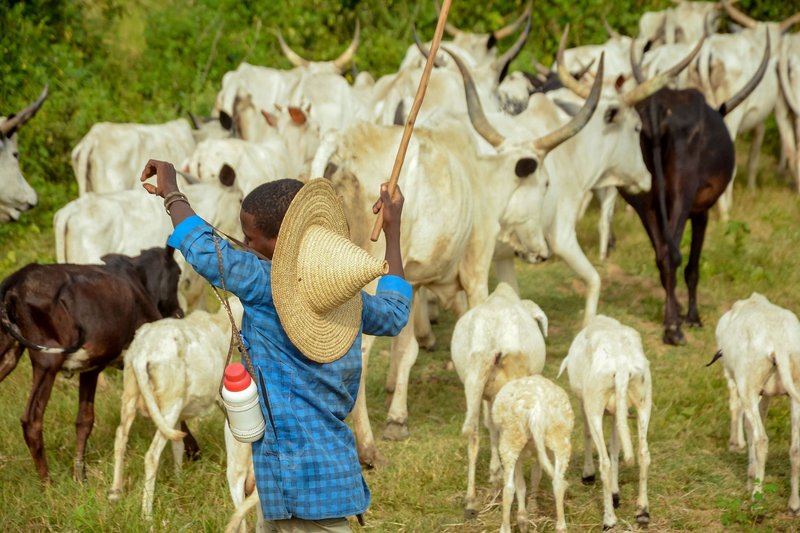
No species profile on this list exists apart from what’s happening to the grassland underneath it. Since livestock herding was privatized in the early 1990s, Mongolia’s herd numbers have climbed sharply — from about 25 million animals to 33 million by 2000, driven in large part by the cashmere goat boom — and research tracking satellite vegetation data attributes roughly 80% of recent grassland biomass loss directly to overgrazing, with reduced rainfall making up most of the rest. An estimated 70% of Mongolia’s grassland ecosystem is now considered degraded, and in the driest southern belts, steppe is converting to desert steppe outright, eliminating habitat for the diverse native plants that once thrived there.
That squeeze shows up differently for every species on this list. Argali and gazelle compete directly with domestic sheep and goats for the same forage. Wolves that lose access to wild prey turn to livestock, which turns herders into the wolf’s primary adversary — a conflict as old as pastoralism itself, just intensified by more animals packed onto degraded ground. Marmot populations face pressure from both directions: hunting for meat and pelts on one side, plague-driven eradication culls on the other, with researchers tracking climate-linked plague dynamics in the region as warming shifts outbreak patterns. None of these pressures show up in the tourist brochures, but they’re the actual variable determining whether the animal you’re hoping to photograph is still there in ten years.
Summary
The Mongolian steppe isn’t a flat backdrop for one long species list — it’s three distinct habitats layered together, each with its own signature animals and its own best season. Grassland core belongs to gazelle herds, recovering takhi, and marmot colonies. The forest-steppe edge holds the predators and cliff-dwellers: argali, manul, wolf, steppe eagle. Wetland pockets, small as they are, carry the demoiselle crane’s brutal migration and the wider bird life that depends on scarce water. And underneath all of it, overgrazing and human-wildlife conflict are quietly rewriting which species get to stay. Time a visit around calving, rut, or spring arrival, and you’re not just improving your odds of a sighting — you’re seeing the steppe at the one moment each species is actually built for.