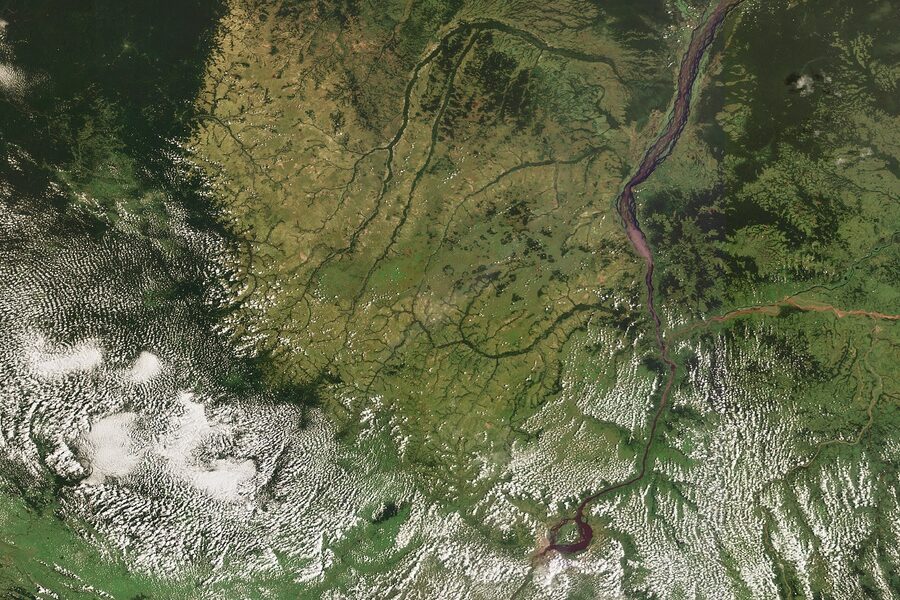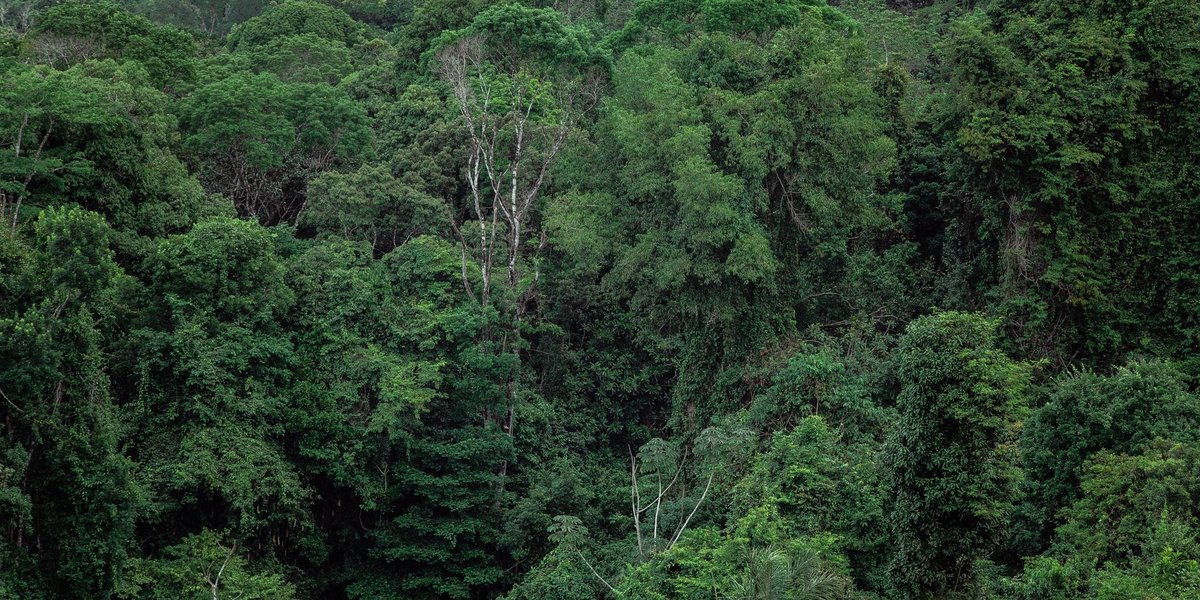
Type “rainforest fauna” into Google and you’ll get the Amazon, every time. Fair enough — it’s the biggest rainforest on Earth and the one every nature documentary defaults to. But fauna is a global word, and rainforests aren’t a single ecosystem wearing different scenery. The Congo Basin, the forests of Borneo, and Australia’s Daintree each evolved their own cast of animals, mostly in isolation from each other, which is why a gorilla and an orangutan solve the same problem — living in a canopy — in completely different ways.
This is a tour of that whole cast: what lives where, how it survives, and which of these animals are running out of time.
Table of Contents
- Why Rainforests Pack in So Much Life
- The Four Layers, and Who Lives in Each
- Mammals
- Birds
- Reptiles and Amphibians
- Insects and Invertebrates
- Fish and Aquatic Life
- Conservation Status at a Glance
- How Rainforest Animals Actually Survive
- The Short Version
Why Rainforests Pack in So Much Life
Rainforests cover roughly 6% of the planet’s land surface and hold more than half of its terrestrial species. That ratio isn’t an accident of luck — it’s a direct result of stable warmth, year-round rainfall, and structure. A temperate forest has one or two usable canopy heights; a rainforest has four distinct layers stacked on top of each other, each with its own light levels, humidity, and food supply. More vertical real estate means more niches, and more niches means more species can specialize without competing directly for the same resources.
That’s also why “rainforest fauna” resists a single answer. A frog in the Amazon understory and a frog in the Daintree understory are solving an identical problem — staying wet and staying hidden — using traits that evolved thousands of miles apart.
The Four Layers, and Who Lives in Each
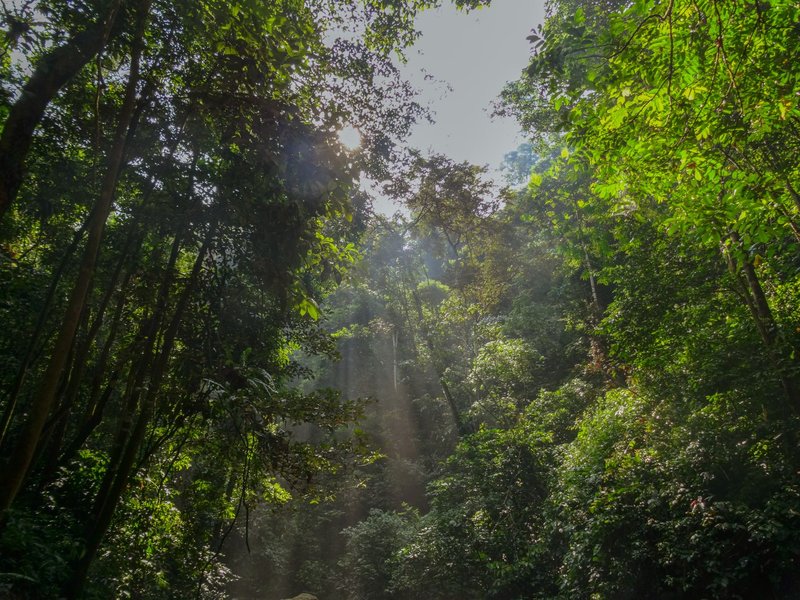
Emergent layer. The tallest trees, poking 100+ feet above everything else, exposed to full sun and wind. Home to eagles, large bats, and gliding animals that use the open air to move between trees rather than climbing down and back up.
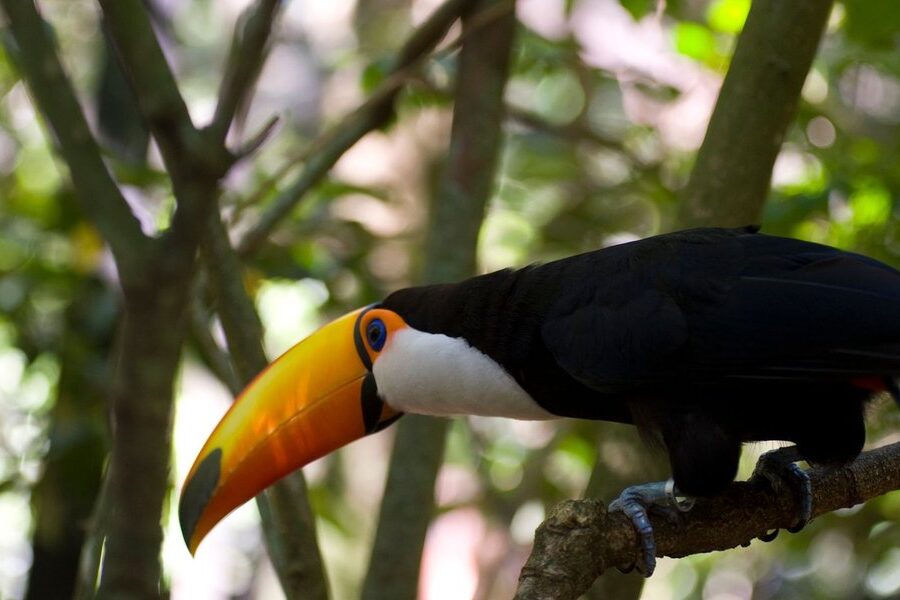
Canopy. The dense, interlocking treetop layer that catches most of the sunlight — and, per National Geographic Education, holds around 90% of a rainforest’s species. This is where primates, monkeys, sloths, toucans, and countless insects spend nearly their entire lives, rarely touching ground.
Understory. Shaded, humid, and thick with broad-leafed shrubs adapted to scraps of filtered light. Big cats hunt here because the cover works both ways — it hides them from prey and hides prey from them.
Forest floor. Dark, damp, and surprisingly open once you’re under the canopy’s shadow. Only a sliver of sunlight reaches down this far, so the floor runs on decomposition rather than photosynthesis — leaf litter, fungi, and the animals that eat both.
Every animal on this list fits into one of those four layers, and knowing which one tells you almost everything about how it hunts, hides, and moves.
Mammals
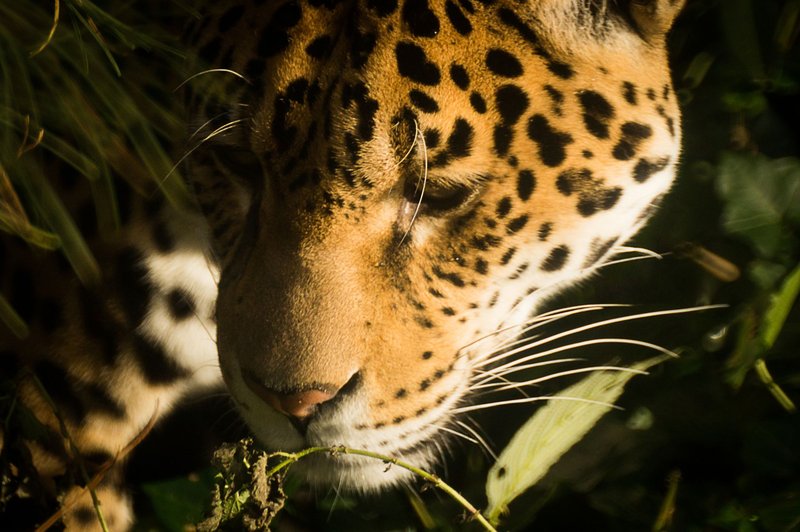
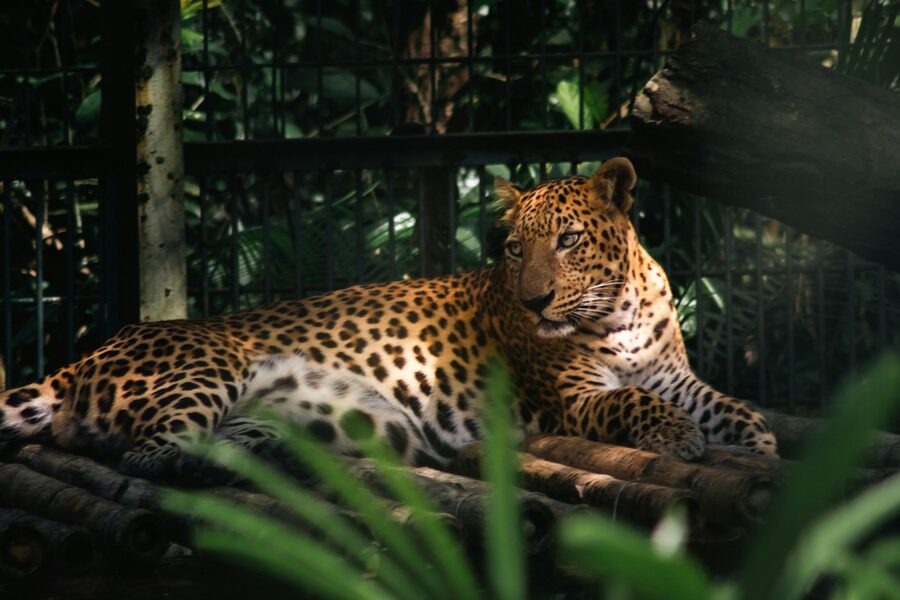
Jaguar (Amazon). The Amazon’s apex predator hunts the understory and forest floor, and unlike most cats, it doesn’t avoid water — jaguars swim rivers and take caimans. Their rosette pattern isn’t decorative; it breaks up their outline against dappled leaf shadow, which is exactly the camouflage a floor-dwelling ambush predator needs.
Giant otter (Amazon). Up to six feet long, hunting in noisy family groups along riverbanks — the opposite strategy of a solitary jaguar, and effective for the same reason a wolf pack is effective.
Western lowland gorilla and African forest elephant (Congo Basin). Both are forest-floor specialists in a region where the canopy is too dense for large animals to move through easily. Forest elephants are smaller and straighter-tusked than their savanna relatives, an adaptation for weaving through tight-packed trees rather than open grassland. According to WWF, the Congo Basin holds more than 400 mammal species, one of the highest concentrations on the planet.
Bonobo (Congo Basin). Found only along the south bank of the Congo River, nowhere else on Earth — the river itself is the boundary that keeps them separate from chimpanzees, which live on the north bank. Bonobo society runs on female-led social bonds rather than male dominance hierarchies, a rarity among great apes.
Okapi (Congo Basin). Striped like a zebra from the hip down, but its closest living relative is the giraffe. Okapis are so shy and so deep in the forest interior that Western science didn’t formally describe them until 1901.
Bornean orangutan (Southeast Asia). The only great ape found outside Africa, and almost entirely arboreal — it’s the largest tree-dwelling mammal alive. The species was uplisted from Endangered to Critically Endangered by the IUCN in 2016, and population estimates have fallen from roughly 230,000 individuals a few decades ago to around 105,000 today.
Proboscis monkey (Southeast Asia). Endemic to Borneo, with webbed feet built for swimming between riverside trees and a hanging potbelly that houses a multi-chambered gut for digesting toxic leaves other primates can’t touch.
Sunda clouded leopard (Southeast Asia). Borneo’s only big cat, and built almost entirely for the canopy rather than the ground — flexible ankles that rotate to grip branches descending headfirst, a trick almost no other cat pulls off.
Lumholtz’s tree kangaroo (Daintree). A kangaroo that climbs. It’s endemic to a narrow strip of Queensland rainforest between the Daintree River and the Atherton Tablelands and exists nowhere else on the planet — proof that isolation, not just climate, drives how specialized rainforest fauna gets.
Birds
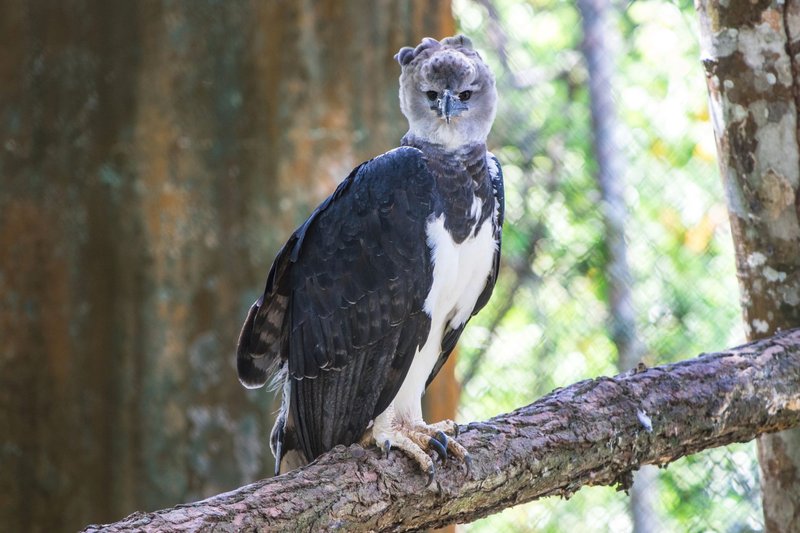
Harpy eagle (Amazon). One of the largest and most powerful raptors alive, with talons longer than a grizzly bear’s claws. It hunts sloths and monkeys straight out of the canopy, snatching prey off branches in full flight rather than stooping from above like a falcon.
Southern cassowary (Daintree). Australia’s heaviest flightless bird, standing up to two meters tall, with a horn-like casque on its head and a kick strong enough to be genuinely dangerous. It’s also a forest-floor gardener: cassowaries swallow fruit whole and are the only animal large enough to disperse the seeds of certain rainforest trees, which is why conservationists call it a keystone species — remove it, and the plants that depend on it start to disappear too.
Congo peafowl (Congo Basin). Africa’s only native peafowl species, discovered by Western science as recently as 1936 and still rarely seen — dense understory cover and a naturally shy temperament keep it out of view even in areas where it’s known to live.
Rhinoceros hornbill (Southeast Asia). Named for the upward-curving casque on its bill, and functionally a seed-dispersal engine for the canopy — a single bird can carry fruit seeds miles from the parent tree.
Reptiles and Amphibians
Poison dart frogs (Amazon). Their toxins come from the ants and mites they eat in the wild; captive-bred dart frogs raised on a different diet lose their toxicity entirely. That single fact tells you the poison isn’t really the frog’s trait — it’s the forest’s.
Green anaconda (Amazon). The heaviest snake on Earth, hunting near water on the forest floor by constriction rather than venom, an approach suited to prey too large to swallow any other way.
Boyd’s forest dragon (Daintree). A canopy-and-understory lizard endemic to Queensland’s Wet Tropics, colored to vanish against moss-covered bark until it moves.
Emerald tree boa (Amazon) and green tree python (Southeast Asia). Two unrelated snakes on opposite sides of the planet that independently evolved the same coiled, branch-draped resting posture and near-identical bright green camouflage — a textbook case of convergent evolution driven by the same canopy pressures.
Insects and Invertebrates
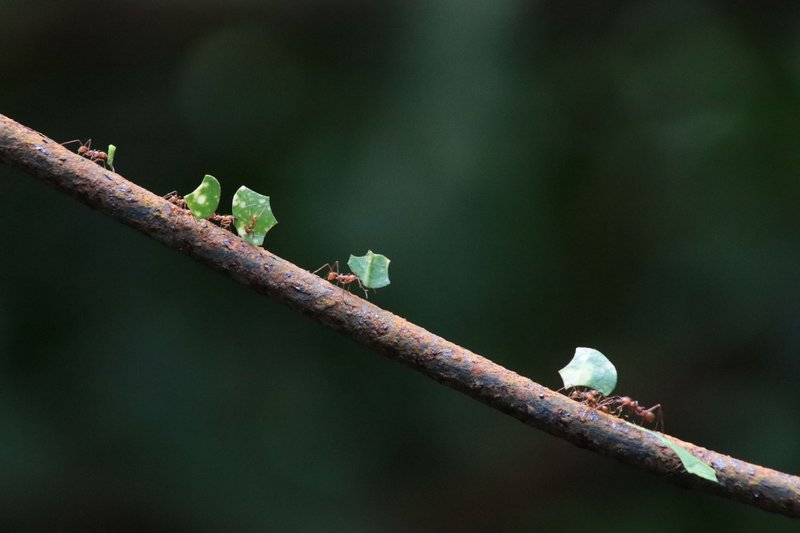
Leafcutter ants (Amazon). They don’t eat the leaves they carry — they farm fungus on them, in underground colonies that can hold millions of ants and rank among the most complex social structures outside human civilization.
Rainforest centipedes and millipedes. Both are common on the forest floor, where centipedes and millipedes process leaf litter and decomposing matter—though they look similar, the two creatures are fundamentally different in anatomy and behavior.
Blue morpho butterfly (Amazon). The wings aren’t pigmented blue at all; microscopic ridges scatter light at a specific wavelength, an optical trick called structural color that also shows up, unrelated, in peacock feathers and opal.
Goliath beetle (Congo Basin). Among the heaviest insects on Earth, with larvae that can weigh more than a small mouse before pupating.
Atlas moth (Southeast Asia). One of the largest moths by wing surface area on the planet, with wingtips patterned to mimic a snake’s head — a bluff aimed at birds, not people.
Fish and Aquatic Life
Pink river dolphin, or boto (Amazon). The largest freshwater dolphin species, navigating flooded forest by echolocation in water too murky for eyesight to matter. Its numbers have declined enough that the IUCN reclassified it as Endangered in 2018, after decades of being rated Data Deficient.
Red-bellied piranha (Amazon). Its reputation outruns its behavior — piranhas mostly scavenge and only swarm aggressively under specific, food-scarce conditions, not on sight the way movies suggest.
Daintree rainbowfish (Daintree). Formally described as its own species only in 2018, found in a handful of creek systems in the Daintree region and nowhere else — a reminder that “rainforest fauna” still includes species science is actively cataloging in real time.
Conservation Status at a Glance
| Species | Region | Layer | Conservation Status |
|---|---|---|---|
| Jaguar | Amazon | Floor / Understory | Near Threatened |
| Harpy Eagle | Amazon | Canopy / Emergent | Vulnerable |
| Giant Otter | Amazon | Rivers / Floor | Endangered |
| Pink River Dolphin (boto) | Amazon | Rivers | Endangered |
| Western Lowland Gorilla | Congo Basin | Floor | Critically Endangered |
| African Forest Elephant | Congo Basin | Floor | Critically Endangered |
| Bonobo | Congo Basin | Canopy / Floor | Endangered |
| Okapi | Congo Basin | Understory | Endangered |
| Bornean Orangutan | Southeast Asia | Canopy | Critically Endangered |
| Proboscis Monkey | Southeast Asia | Canopy / Riverside | Endangered |
| Sunda Clouded Leopard | Southeast Asia | Canopy / Understory | Vulnerable |
| Southern Cassowary | Daintree | Floor | Endangered (Australia); Least Concern (global) |
| Lumholtz’s Tree Kangaroo | Daintree | Canopy | Near Threatened |
Every status above comes from the IUCN Red List, the standard reference conservationists use worldwide. A few patterns jump out: the Congo Basin’s biggest mammals are in the worst shape of any region here, and every large primate on this table — gorilla, bonobo, orangutan — is Endangered or worse. Habitat loss is the common thread; poaching and the bushmeat trade layer on top of it in the Congo Basin specifically.
How Rainforest Animals Actually Survive
Three strategies show up again and again, across regions that never shared an ancestor for the animals doing them.
Camouflage matched to the layer, not the species. A jaguar’s rosettes work like dappled light on the forest floor. A green tree python or emerald tree boa reads as a leaf from a few feet away in the canopy. These aren’t the same trick reused — they’re the same problem solved twice, independently, because the lighting conditions of each layer create the same selection pressure wherever they show up on Earth.
Nocturnal timing to dodge competition. The forest floor is dark enough at noon that “night” and “day” barely matter to light levels — so many floor and understory species shift activity to when temperatures drop and predators that hunt by sight lose their advantage. It’s less about hiding from the sun and more about avoiding animals that rely on it.
Vertical specialization instead of horizontal range. A rainforest species doesn’t need to travel far to find an unclaimed niche — it can just move up or down a few dozen feet. That’s why a canopy-dwelling proboscis monkey and a floor-dwelling giant otter can live in the same general area of Borneo without ever competing for the same food or space. Height does the sorting that distance does everywhere else.
The Short Version
Rainforest fauna isn’t one story — it’s four regional stories that rhyme because the physics of a rainforest (light, moisture, vertical layering) forces similar solutions onto unrelated animals. The Amazon gets the headlines, but the Congo Basin’s forest elephants, Borneo’s proboscis monkeys, and the Daintree’s tree kangaroos are running the same experiment in isolation, and the results don’t always look alike.
What does line up, unfortunately, is the conservation picture. Habitat loss is shrinking every one of these forests, and the animals most tied to a single layer or a single region — the ones with nowhere else to go — are the ones showing up as Endangered or Critically Endangered across the board. Knowing where an animal lives in the canopy is trivia. Knowing why that spot is disappearing is the part worth paying attention to.