“Rare” and “endangered” get used as synonyms, but they measure different things. Rare describes scarcity: a tiny population, a tiny range, or both. Endangered is a formal category on the IUCN Red List, assigned by testing a species against thresholds for population decline, population size and range. A cave beetle on one mountain can be rare and stable. A common fish can be endangered because it’s collapsing fast.
The 14 species below are rare in both senses. Thirteen are Endangered or Critically Endangered, the top threat tier before “Extinct in the Wild.” One, the Chinese mountain cat, earns its place because almost nobody has studied it. Each entry gives the location, a population figure with its year, the IUCN status, one odd fact and the main threat. Counts of elusive animals shift as survey methods change, so read them as the best current estimates, not census results.
The list is grouped by region, because habitat tells you more about why a species is rare than its family tree does.
Contents
- Rare Animals in Asia at a Glance
- Island Southeast Asia
- Mainland Southeast Asia
- China, Russia and the North
- South Asia
- What Helps Rare Animals in Asia
Rare Animals in Asia at a Glance
| # | Species | Where | IUCN status | Estimated population |
|---|---|---|---|---|
| 1 | Javan rhino | Indonesia | Critically Endangered | About 76 (2023) |
| 2 | Sumatran rhino | Indonesia | Critically Endangered | Fewer than 80 (2020) |
| 3 | Tapanuli orangutan | Indonesia | Critically Endangered | Fewer than 800 (2017) |
| 4 | Bawean deer | Indonesia | Critically Endangered | Roughly 250 to 500 (2010s) |
| 5 | Philippine eagle | Philippines | Critically Endangered | 82 to 233 pairs (2010s) |
| 6 | Saola | Vietnam, Laos | Critically Endangered | Unknown, likely tens |
| 7 | Cat Ba langur | Vietnam | Critically Endangered | About 70 (2019) |
| 8 | Yangtze giant softshell turtle | Vietnam, China | Critically Endangered | Fewer than five known (2020s) |
| 9 | Amur leopard | Russia, China | Critically Endangered | Roughly 100 to 130 (2020s) |
| 10 | Hainan gibbon | China | Critically Endangered | About 37 (2023) |
| 11 | Chinese mountain cat | China | Vulnerable | Under 10,000 mature (IUCN est.) |
| 12 | Chinese alligator | China | Critically Endangered | Roughly 120 to 150 wild (2010s) |
| 13 | Spoon-billed sandpiper | Russia, Myanmar, Bangladesh | Critically Endangered | Roughly 240 to 456 mature (2018) |
| 14 | Gharial | India, Nepal | Critically Endangered | About 650 mature (2017) |
Island Southeast Asia
Islands cap a species’ range at the shoreline. Four of the 14 live on Indonesian islands, and one on the Philippines’ Mindanao.
1. Javan rhino (Rhinoceros sondaicus)
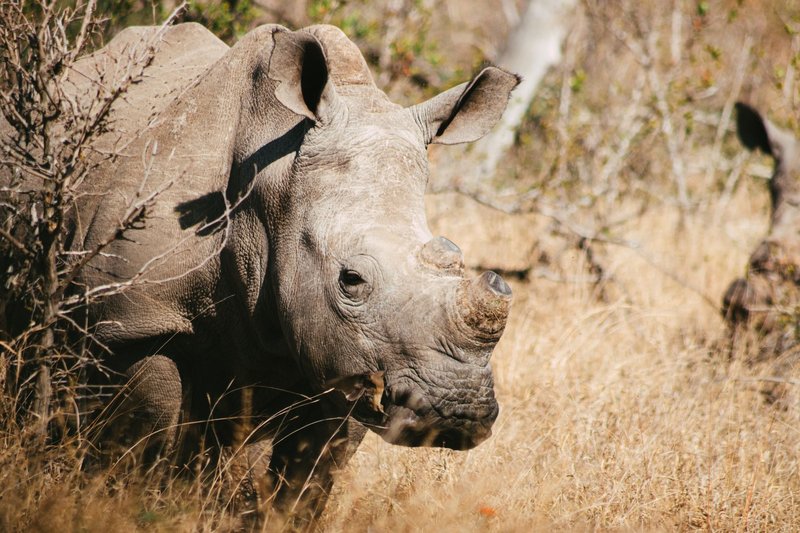
- Location: Ujung Kulon National Park, western Java, Indonesia
- Population: About 76 (2023 park count)
- IUCN status: Critically Endangered
- Main threat: Poaching, and having every animal in one place
The last Vietnamese Javan rhino was shot in 2010, which left one population on Earth, on a peninsula within sight of Krakatoa’s volcanic ruins. Indonesian police said in 2024 that a poaching ring had killed 26 rhinos in the park over several years, so the real count is likely lower than the headline figure. The WWF species profile covers the park and the ongoing effort to find a second habitat.
2. Sumatran rhino (Dicerorhinus sumatrensis)
- Location: A few forest pockets in Sumatra and Indonesian Borneo
- Population: Fewer than 80 (2020)
- IUCN status: Critically Endangered
- Main threat: Scattered survivors that never meet
It’s the smallest rhino and the hairy one, a living relative of the extinct woolly rhino. Malaysia lost its last wild animal in 2019. The trap is biological: a female who goes years without breeding tends to develop reproductive cysts and tumors, so a lone animal in a far-off valley is as good as gone.
3. Tapanuli orangutan (Pongo tapanuliensis)
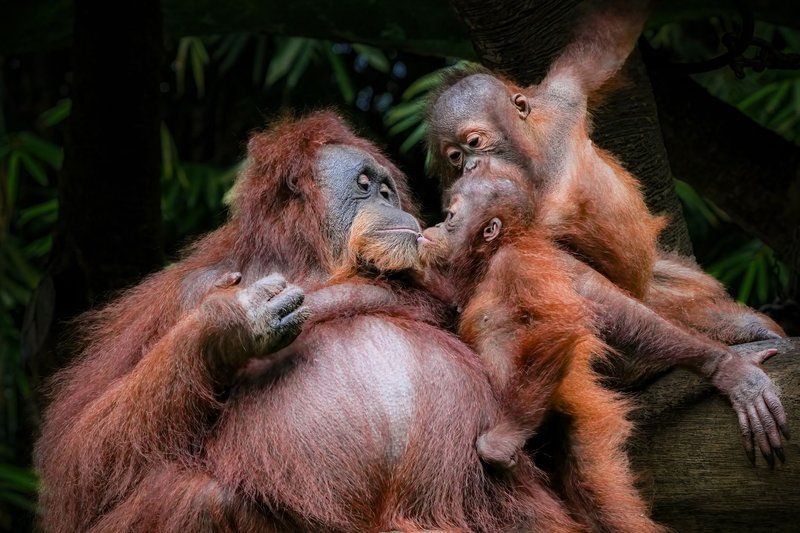
- Location: Batang Toru forest, North Sumatra, Indonesia
- Population: Fewer than 800 (2017)
- IUCN status: Critically Endangered
- Main threat: Forest clearing and a hydropower project inside its range
Scientists described it as a separate species only in 2017, the first new great ape since the bonobo was recognized in 1929. It’s already the rarest great ape. Its entire range is roughly the size of a mid-sized county, and a dam and road network cut straight through it.
4. Bawean deer (Hyelaphus kuhlii)
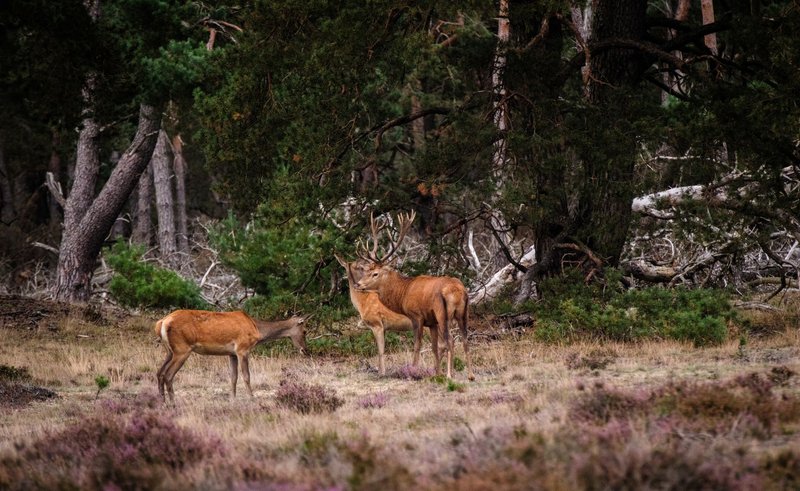
- Location: Bawean Island in the Java Sea, Indonesia
- Population: Roughly 250 to 500 (2010s estimates)
- IUCN status: Critically Endangered
- Main threat: Habitat loss, plus hunting with dogs
The whole species lives on an island of about 200 square kilometers, and most of the deer sit inside a nature reserve and a wildlife sanctuary that cover only part of it. Captive herds exist, but releases have been hard to organize. Teak plantations and the pressure of roughly 70,000 islanders keep squeezing the forest.
5. Philippine eagle (Pithecophaga jefferyi)
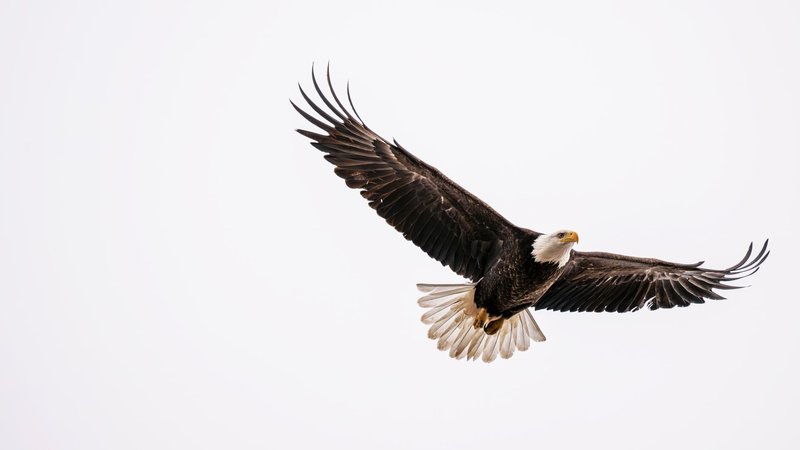
- Location: Remaining rainforest on Luzon, Samar, Leyte and Mindanao, Philippines
- Population: Roughly 82 to 233 pairs (2008 to 2010 survey estimates; figures vary by source)
- IUCN status: Critically Endangered
- Main threat: Deforestation, plus shooting
It was once called the monkey-eating eagle, and the name is accurate: it hunts macaques and colugos, snatched from the canopy by a bird about a meter tall. A pair raises one chick every two years at best, so losing even a few adults sets the population back for a decade. It’s the national bird, which hasn’t stopped people from shooting it.
Mainland Southeast Asia
6. Saola (Pseudoryx nghetinhensis)
- Location: Annamite Mountains along the Vietnam-Laos border
- Population: Unknown, probably in the tens
- IUCN status: Critically Endangered
- Main threat: Snares set for other animals
Scientists found it in 1992 from a set of horns in a hunter’s house, the first large mammal new to science in over 50 years. The last confirmed sighting was a camera-trap photo in Vietnam in 2013. Nobody targets it; it simply walks into wire loops meant for muntjac and wild pigs. You can check the species’ assessment through the IUCN Red List search.
7. Cat Ba langur (Trachypithecus poliocephalus)
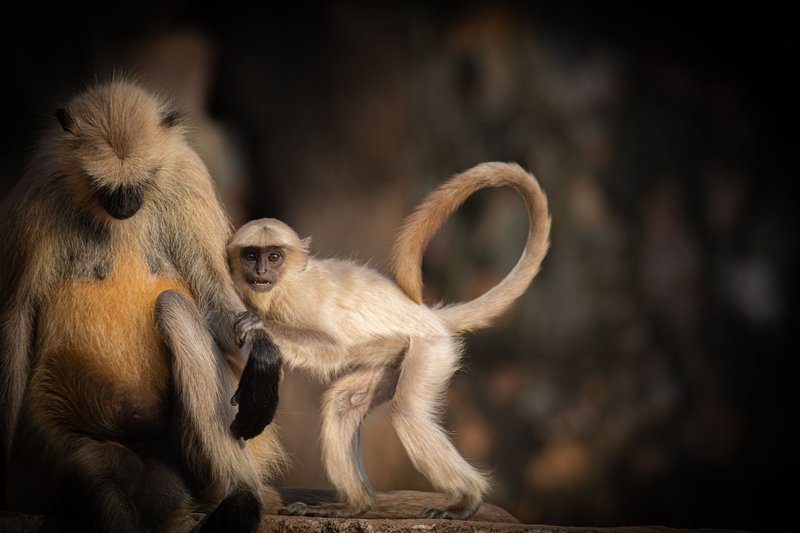
- Location: Cat Ba Island, Ha Long Bay, Vietnam
- Population: About 70 (2019)
- IUCN status: Critically Endangered
- Main threat: Hunting, and an island too small to recover on
Numbers fell from a few thousand in the 1960s to just 53 by 2000, mostly because langurs were hunted for use in traditional medicine. Patrols and a breeding program have pulled the count back up. Babies are born bright orange and darken to the adult black body and pale head as they grow.
8. Yangtze giant softshell turtle (Rafetus swinhoei)
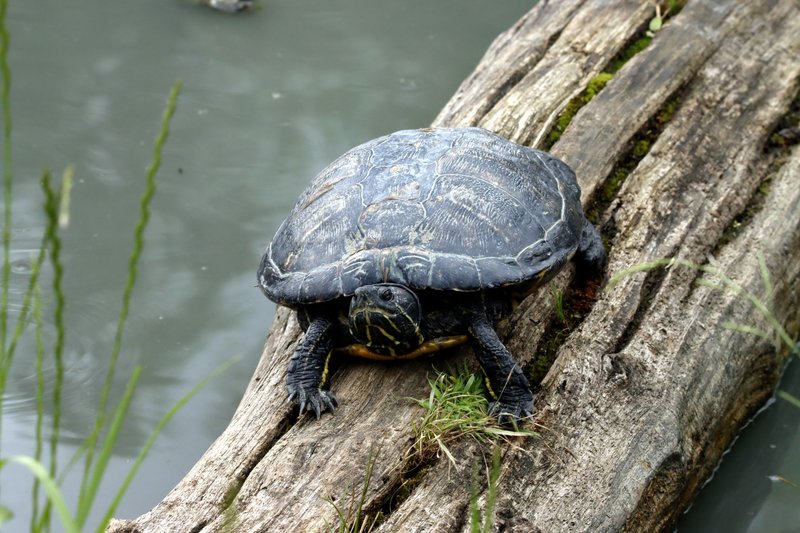
- Location: Lakes and river stretches in northern Vietnam; formerly the Yangtze basin, China
- Population: Fewer than five individuals known (2020s)
- IUCN status: Critically Endangered
- Main threat: Hunting and habitat loss, now overtaken by sheer scarcity
This is likely the rarest large vertebrate on the planet. Shells top a meter and animals can weigh over 100 kilograms. The last known female in China died at Suzhou Zoo in 2019 after repeated artificial insemination attempts failed. Hanoi’s legendary Hoan Kiem Lake turtle, which died in 2016, is generally treated as the same species.
China, Russia and the North
9. Amur leopard (Panthera pardus orientalis)
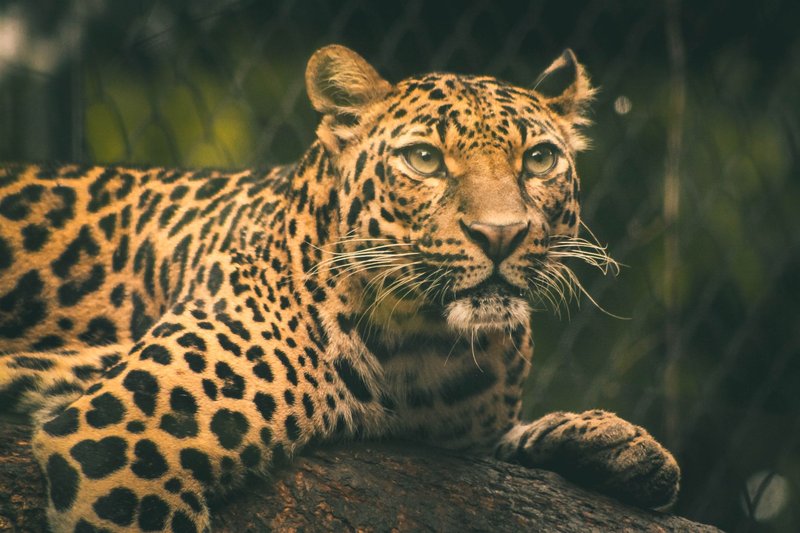
- Location: Russian Far East and northeastern China
- Population: Roughly 100 to 130 (2020s camera-trap counts)
- IUCN status: Critically Endangered
- Main threat: Poaching, prey loss, wildfire and inbreeding
This is the leopard built for snow, with winter fur up to 7 centimeters long and widely spaced rosettes. In the early 2000s it was down to about 30 animals, and cross-border protected areas have since pulled the number above 100. All of them descend from a small gene pool, so one disease outbreak could still do outsized damage.
10. Hainan gibbon (Nomascus hainanus)
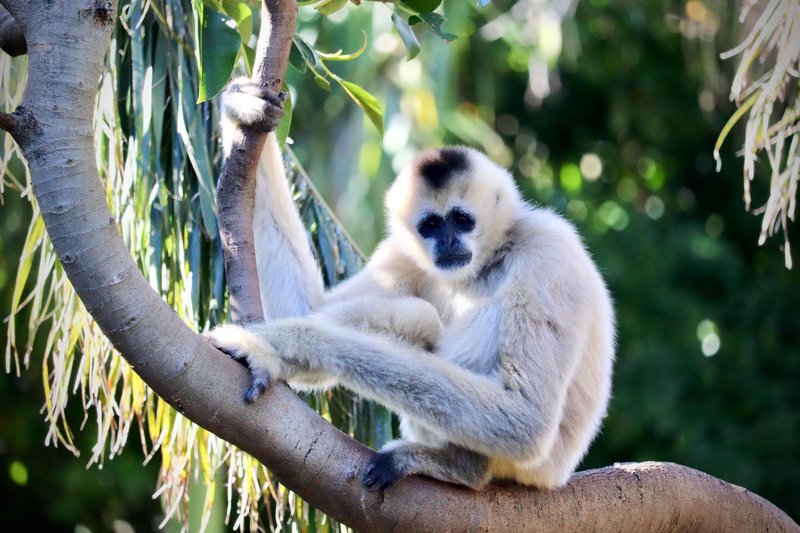
- Location: Bawangling National Nature Reserve, Hainan Island, China
- Population: About 37 (2023)
- IUCN status: Critically Endangered
- Main threat: One small forest patch, low genetic diversity
It’s the rarest primate alive, up from about 20 around 2010. Males are black and females are golden-tan, so family groups look like two different species sharing branches. Every individual lives in one reserve on one island, which makes a single typhoon season or fire a national emergency.
11. Chinese mountain cat (Felis bieti)
- Location: Edge of the Tibetan Plateau in Qinghai, Sichuan and Gansu, China
- Population: IUCN estimates under 10,000 mature individuals; no systematic census exists
- IUCN status: Vulnerable
- Main threat: Poisoning of its prey, plus hybridization with domestic cats
This is the only cat species found nowhere but China, and it’s sandy-colored, lives at 2,500 to 5,000 meters and eats mostly plateau pikas. Almost everything known about it comes from a short list of camera-trap studies. Poison campaigns aimed at pikas kill the cat’s food supply and can poison the cat itself.
12. Chinese alligator (Alligator sinensis)
- Location: Lower Yangtze region, Anhui Province, China
- Population: Roughly 120 to 150 wild (2010s estimates); over 10,000 in captivity
- IUCN status: Critically Endangered
- Main threat: Conversion of wetland to rice paddies and fish ponds
Its only relative is the American alligator, an ocean apart. It tops out near two meters and spends about half the year hibernating in burrows. China has bred thousands in captivity, but the wild population lives in disconnected pockets of farmland that can’t hold many animals.
13. Spoon-billed sandpiper (Calidris pygmaea)
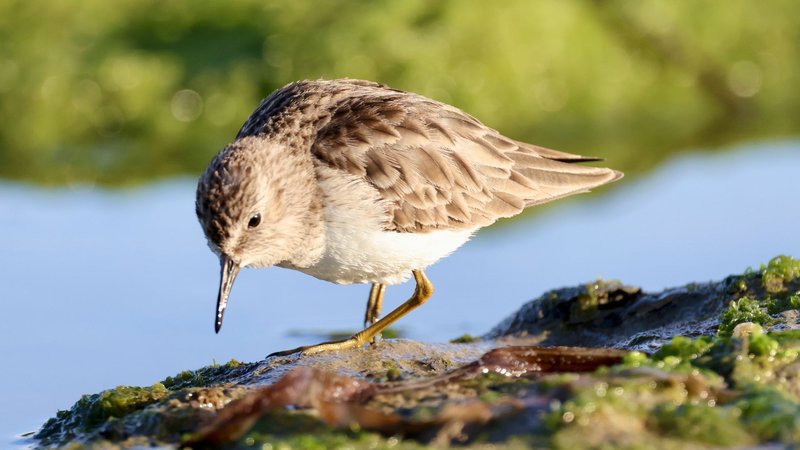
- Location: Breeds in Chukotka, Russia; winters in Myanmar and Bangladesh
- Population: Roughly 240 to 456 mature adults (2018 estimate)
- IUCN status: Critically Endangered
- Main threat: Loss of Yellow Sea mudflats, plus trapping on its wintering grounds
The bill is shaped like a spoon and swept side to side through mud to filter food. It makes a flight of several thousand kilometers each way, and the Yellow Sea stopover mudflats it relies on have been reclaimed for development. Conservationists have hatched eggs in captivity and released chicks to help the wild flock hold steady.
South Asia
14. Gharial (Gavialis gangeticus)
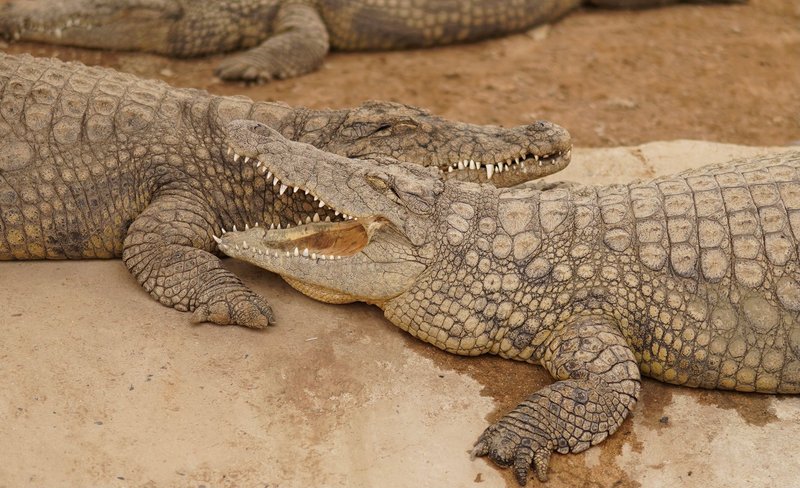
- Location: A few stretches of rivers in India and Nepal, including the Chambal and Narayani
- Population: About 650 mature adults (2017)
- IUCN status: Critically Endangered
- Main threat: Dams and barrages, sand mining and fishing nets
Adult males grow a bulbous knob on the snout called a ghara, which they use to buzz and blow bubbles during courtship. The long, thin jaws are made for catching fish, which is also why nets drown them. The species now survives in only a small portion of its former river range.
What Helps Rare Animals in Asia
Most of the animals above can’t be seen by visitors, and that’s the point. The ethical way to meet them is through places that do the work. The Philippine Eagle Foundation’s center in Davao keeps non-releasable eagles and runs breeding, and the Cat Ba Langur Conservation Project in Vietnam funds patrols. Avoid any outfit selling “close encounters” with wild individuals of these species.
Three things move the numbers most:
- Protect the specific places. Ujung Kulon, Batang Toru, Bawangling and the Chambal each hold a species that exists nowhere else.
- Remove the snares. Ranger teams in the Annamites pulled out tens of thousands of wire snares, which is the most direct way to help the saola.
- Check the numbers yourself. The IUCN Red List lists every species above, with sources and assessment dates, and it’s the best place to check whether a “rarest animal” claim is current.
Rare animals in Asia are rarely rare by accident. Each one on this list is boxed in by a specific road, dam, snare or paddy field, and that’s what makes the situation fixable in a way that “habitat loss” never is.