Lebanon packs an outsized reptile list into a country you can drive across in half a day. Roughly 55 species call it home, split across a coastline, a pair of mountain ranges, and the arid Bekaa Valley squeezed between them — three distinct climates in a country the size of Connecticut. That geographic compression is exactly why the list is so long. A species built for coastal dunes and a species built for cedar-forest scree can live 40 kilometers apart and never meet.
Most guides to Lebanese wildlife either dump a bare taxonomic list on you (thanks, Wikipedia) or split the story into disconnected pages by family. This one puts turtles, lizards, and snakes in the same place, tells you which three species actually carry venom worth worrying about, and gives you a fast way to tell a harmless house gecko from something that bites.
Quick answer
- Lebanon has around 55 native reptile species: sea and freshwater turtles, one tortoise, roughly 25 lizard species, and about 25 snake species.
- Only three species are venomous vipers. Everything else — every gecko, every agama, every rat snake — is harmless to humans.
- The Palestinian viper causes the most bites because it lives in farmland and scrub where people actually work. The Lebanon viper is rarer and higher-altitude but medically serious when it does bite. The blunt-nosed viper is the largest and carries the biggest venom yield.
- Several species are IUCN-listed as threatened, including the Lebanon viper, the loggerhead and green sea turtles, and multiple lizards restricted to high-altitude habitat.
Table of contents
- Where Lebanon’s reptiles live
- Turtles of Lebanon
- Lizards of Lebanon
- Snakes of Lebanon
- Are Lebanon’s reptiles actually dangerous?
- What to do if you find a snake
- Quick ID guide
- Conservation status at a glance
Where Lebanon’s reptiles live
Lebanon’s reptile diversity tracks its topography almost exactly. The coast — a narrow strip of citrus groves, sand dunes, and rocky headlands — hosts the Mediterranean chameleon, nesting sea turtles, and heat-loving geckos. Climb into Mount Lebanon or the Anti-Lebanon range and the cast changes completely: alpine grassland and cedar stands support endemic, cold-tolerant species found nowhere else on Earth, including the Lebanon viper and two rare lacertid lizards. Between the ranges, the Bekaa Valley runs semi-arid, closer in character to inland Syria than to the coast, and it’s where you’re most likely to run into the Palestinian viper working through agricultural land.
That three-way split — coast, mountains, Bekaa — is the single most useful mental map for figuring out what you’re likely to encounter and where.
Turtles of Lebanon
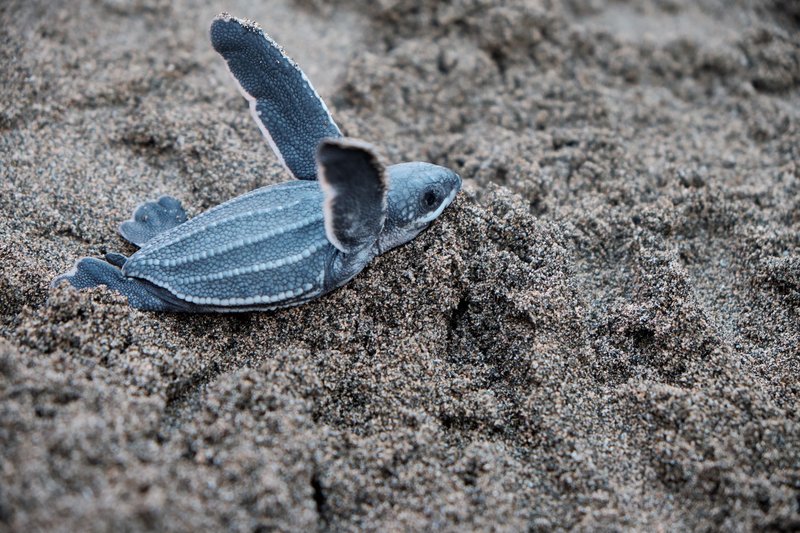
Turtles are the smallest group by species count but carry some of the highest conservation stakes.
Green turtle (Chelonia mydas) and loggerhead turtle (Caretta caretta) both nest on Lebanon’s remaining sandy beaches, most notably at the Tyre Coast Nature Reserve — the country’s largest surviving stretch of undeveloped sand. Green turtles disappeared from Tyre’s beaches for nearly a decade before returning to nest there in 2014, a recovery credited partly to reduced beach lighting during nesting season. Both species are globally threatened, and nesting zones at Tyre are roped off and monitored in season by conservation groups running guided night walks.
Leatherback turtles (Dermochelys coriacea) turn up occasionally in Lebanese waters but don’t nest here — they’re passing visitors, not residents.
Freshwater and terrestrial species round out the group: the Balkan terrapin (Mauremys rivulata) in rivers and spring-fed pools, the Nile softshell turtle (Trionyx triunguis), a genuinely large freshwater species found in and around the Litani River system, and the Greek tortoise (Testudo graeca), Lebanon’s only land tortoise, historically hit hard by illegal collection for the pet trade.
Lizards of Lebanon
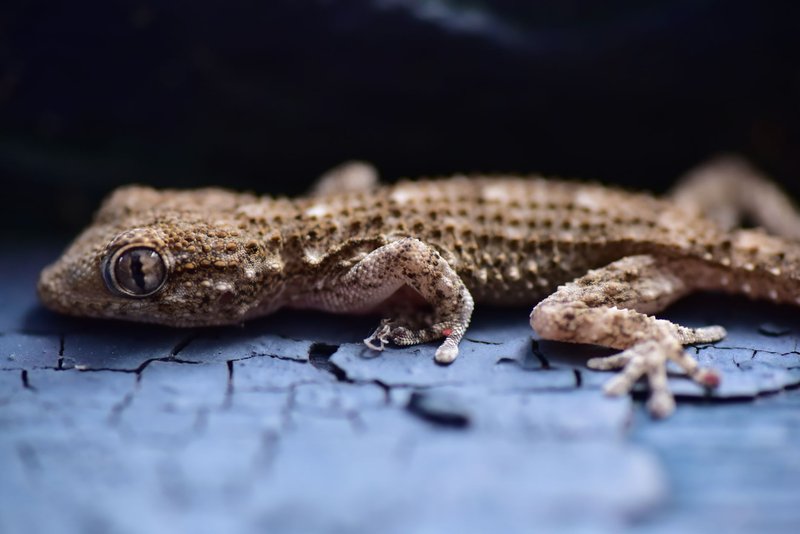
This is the largest and most visually varied group, and the one most people actually see, since several species live comfortably around houses and ruins.
Geckos are the ones you’ll meet on a wall at night, drawn in by the insects that gather around porch lights. The Turkish gecko and Moorish gecko are both common around buildings; despite persistent internet folklore, none of them are poisonous or dangerous in any way — more on that below.
Agamas, particularly the starred agama (Laudakia stellio), are the chunky, spiny-tailed lizards you’ll spot basking on stone walls and archaeological ruins along the coast and in the foothills — bold, diurnal, and easy to photograph if you approach slowly.
Lacertid lizards carry Lebanon’s conservation weight in this group. Fraas’s lizard (Parvilacerta fraasi) is a high-altitude endemic tied closely to cedar forest habitat, and Kulzer’s lizard (Phoenicolacerta kulzeri) is a threatened rock-dweller with a similarly narrow range. Lebanon recognizes six skink species in total, one of which is also considered threatened.
The Mediterranean chameleon (Chamaeleo chamaeleon) is the group’s celebrity — slow, deliberate, and restricted mostly to coastal citrus groves and dune scrub, where its color-shifting camouflage makes it far harder to spot than its fame suggests.
Snakes of Lebanon
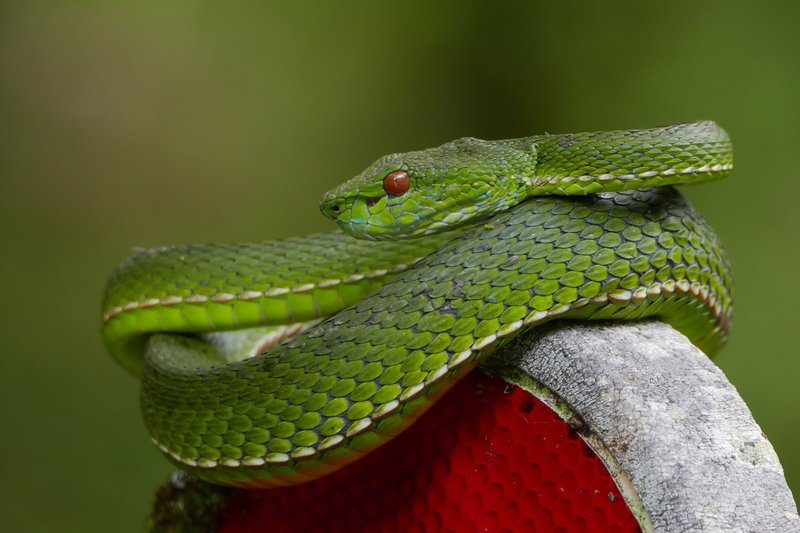
Roughly 25 snake species live in Lebanon, and the overwhelming majority are harmless. The large whip snake (Dolichophis jugularis) is Lebanon’s biggest non-venomous species, fast-moving and often mistaken for something more sinister purely on size. The cat snake (Telescopus fallax) is mildly rear-fanged but poses no real threat to people, and the dice snake works Lebanon’s rivers and springs hunting fish and amphibians.
The three species worth knowing by name are the vipers:
Palestinian viper (Daboia palaestinae) is the one responsible for the most bites in Lebanon, simply because it favors farmland, scrubland, and rocky field edges — the places people actually work and walk.
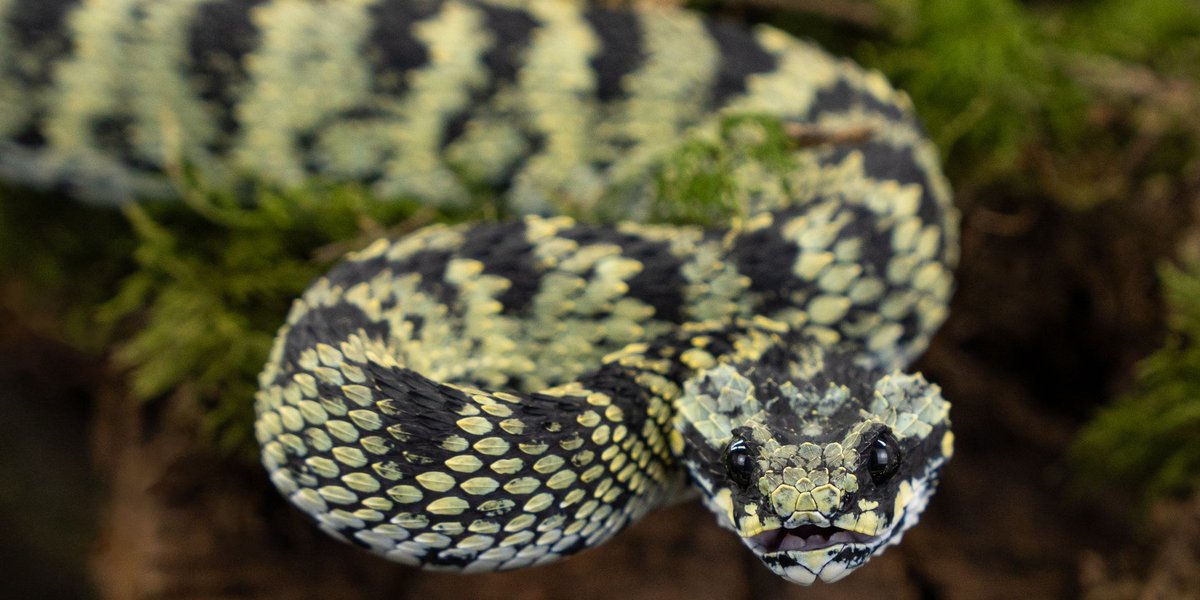
Lebanon viper (Montivipera bornmuelleri) is endemic to Lebanon’s high-altitude cedar forests and alpine grassland, and it’s the rarest of the three by a wide margin. Its remote habitat keeps human encounters uncommon, but not zero — a documented case involved a bite to a five-year-old child, with researchers noting that limited public awareness and delayed access to appropriate antivenom worsened the outcome. It’s also classified Endangered, with researchers flagging Lebanon’s mountain vipers as especially vulnerable to climate-driven habitat loss, since their entire range sits within a narrow elevation band that’s shrinking as temperatures rise.
Blunt-nosed viper (Macrovipera lebetina) is the largest of the three and delivers the biggest venom yield per bite, making it the most medically significant if an encounter turns into a bite — though, like the others, it would rather retreat than strike.
Are Lebanon’s reptiles actually dangerous?
Short version: almost none of them.
Of Lebanon’s roughly 55 reptile species, exactly three are venomous vipers. Every gecko, agama, skink, chameleon, terrapin, tortoise, sea turtle, and non-viper snake in the country is harmless to a person who leaves it alone.
The gecko myth deserves its own callout because it’s persistent and completely false. The idea that geckos are “poisonous” or that their skin can contaminate food badly enough to kill someone has circulated for years across the Mediterranean and Middle East — it isn’t specific to Lebanon, and it isn’t true. Geckos have no venom and no toxic skin secretions. The only real, minor hygiene concern is that gecko droppings can theoretically carry salmonella, the same low-grade risk posed by most small reptiles, birds, and rodents. Otherwise they’re a net positive around a house: a gecko on your wall is quietly eating the mosquitoes and cockroaches you’d rather not deal with yourself.
Vipers are a different conversation, but even there, context matters. All three species would rather avoid you than bite you — snakebite is almost always a defensive response to being stepped on, grabbed, or cornered, not an unprovoked attack. The Palestinian viper causes the most incidents purely on exposure: it lives where farmers, hikers, and gardeners spend time. The Lebanon viper bites far less often, but its remoteness means less public familiarity with symptoms and treatment when it does happen. The blunt-nosed viper’s size makes it the one you least want to bump into unaware, though actual encounters are infrequent.
What to do if you find a snake
If you spot a snake in Lebanon, the moves that keep everyone safe are simple: back away slowly rather than approaching for a closer look or a photo, keep children and pets away from the area, and don’t attempt to identify it by getting close enough to check head shape or pupil color — that’s exactly the range where defensive bites happen. Most snakes, venomous or not, will move off on their own if given space and a few quiet minutes. If the snake is somewhere it genuinely can’t be left — inside a home or an enclosed yard — contact a local wildlife removal group or veterinary service rather than attempting to catch or kill it yourself; several operate in Lebanon specifically for safe reptile relocation. If a bite does occur, treat it as a medical emergency: keep the person calm and the bitten limb still and below heart level, and get to a hospital immediately rather than attempting first-aid remedies like cutting, sucking, or tourniquets, all of which do more harm than good.
Quick ID guide
| Group | What to look for | Where you’ll find it | Venomous? |
|---|---|---|---|
| Geckos | Small, pale, sticky toe-pads, active at night near lights | Walls, ruins, homes — countrywide | No |
| Agamas | Chunky body, spiny tail, basks in open sun | Rocky walls, ruins, coast and foothills | No |
| Chameleon | Slow, color-shifting, prehensile tail | Coastal citrus groves, dune scrub | No |
| Lacertid lizards | Slender, fast, alert, often patterned | High-altitude rock and cedar forest | No |
| Tortoise / terrapins | Hard shell, slow-moving, land or freshwater | Bekaa scrub, rivers, springs | No |
| Sea turtles | Large, flippered, marine | Nesting on remaining sandy beaches (e.g., Tyre) | No |
| Whip snake, cat snake, dice snake | Slender, fast-moving, non-viper head shape | Fields, riverbanks, scrub countrywide | No |
| Palestinian viper | Thick body, triangular head, zigzag pattern | Farmland, scrub, field edges | Yes |
| Lebanon viper | Smaller viper, high-altitude coloring | Cedar forest, alpine grassland (endemic) | Yes |
| Blunt-nosed viper | Largest viper, heavy-bodied | Rocky slopes, scrub | Yes |
Conservation status at a glance
Lebanon’s reptile conservation picture is more precarious than the species count suggests. The Lebanon viper is IUCN-listed as Endangered, squeezed by overgrazing, off-road vehicle damage, and a shrinking high-altitude range as the climate warms. Both the green and loggerhead sea turtles nesting at Tyre are globally threatened, with beach development, artificial lighting, and human foot traffic on nesting sand among the ongoing pressures. Among lizards, Fraas’s lizard and Kulzer’s lizard are both threatened endemics restricted to narrow high-altitude habitat, and one of Lebanon’s six skink species carries the same status.
None of that is an argument for keeping your distance out of fear — it’s the opposite. These are species doing fine specifically because most people never encounter them, tucked into cedar forest, coastal dune, or riverbank habitat that’s shrinking a little more each year. A country with 55 reptile species packed into a landscape this small is not a place to be nervous around wildlife. It’s a place worth paying attention to, because the wildlife itself has an unusually short shelf life if the habitat keeps disappearing.