TLDR
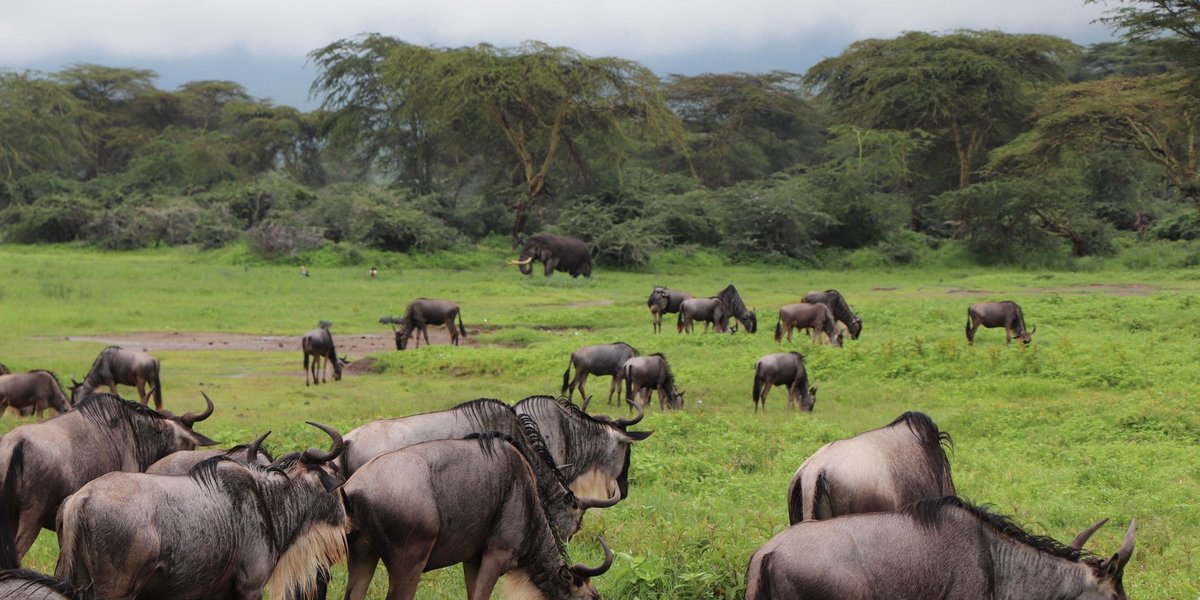
Blue wildebeest are grazers, not browsers. They eat short, green grass almost exclusively when it’s available, switching to leaves and shrubs only when drought strips the plains bare. A four-chambered stomach lets them ferment tough plant fiber that most animals can’t touch. Herds need water every one to two days, which is why grass availability and rainfall together — not grass alone — set the route of the Great Migration.
Table of Contents
- What Blue Wildebeest Actually Eat
- The Stomach That Makes It Possible
- Wet Season vs. Dry Season Diet
- Water: The Other Non-Negotiable
- How Diet Drives the Great Migration
- What Baby Wildebeest Eat
- Wildebeest vs. Zebra: Same Plains, Different Menu
- FAQ
What Blue Wildebeest Actually Eat
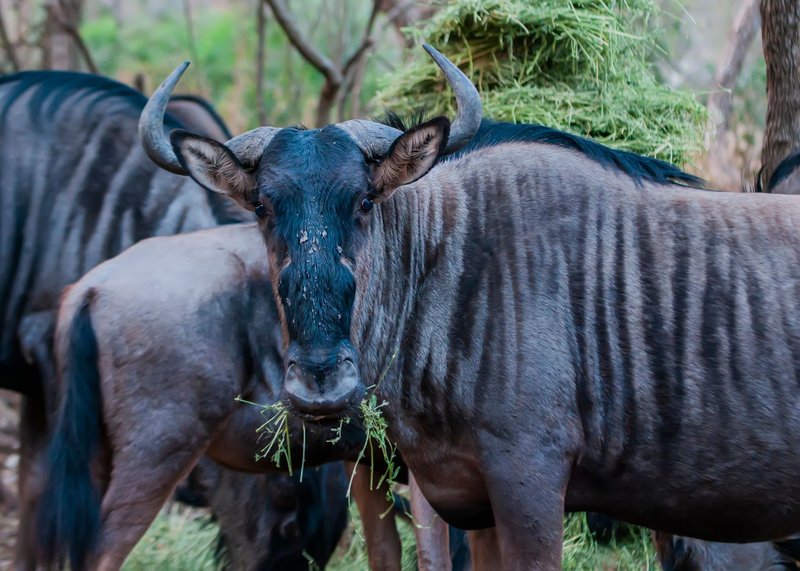
Blue wildebeest (Connochaetes taurinus) are grazers first and everything else a distant second. Grass makes up the overwhelming majority of what they eat, and not just any grass — they’re picky about height and freshness in a way that shapes where entire herds choose to stand.
They target short grass, ideally under 5 centimeters, because it’s higher in protein and easier to digest than the tall, fibrous stalks that grow once a field goes unchecked. This is why wildebeest gravitate toward areas that have recently burned or been grazed down by other animals: fresh regrowth on scorched ground comes in tender, green, and nutrient-dense, and a wildebeest will walk toward smoke on the horizon to get to it once the fire clears. Species like red oat grass and Kenya bristle grass turn up constantly in field studies of their diet, alongside dozens of other short grass species depending on region.
What they mostly ignore: tall, seed-headed grass past its prime, and — outside of true scarcity — leaves, herbs, and shrubs. A wildebeest will eat some browse if it has to, but it’s a fallback, not a preference.
The Stomach That Makes It Possible
Wildebeest are ruminants, which means they carry a four-chambered stomach — rumen, reticulum, omasum, abomasum — built specifically to handle cellulose, the tough structural material in plant cell walls that most mammals simply can’t break down on their own. Grass gets swallowed, softened in the rumen, brought back up as cud, and re-chewed before microbes in the gut ferment it into usable nutrients. It’s the same basic system found in cattle, and the University of Minnesota Extension’s overview of ruminant digestion breaks down how the process works chamber by chamber.
This setup is what lets wildebeest live almost entirely on grass that would leave a non-ruminant grazer malnourished. It’s also relatively inefficient compared to a horse or zebra’s gut, which processes food faster but extracts less from it — a tradeoff that explains why wildebeest are so particular about grass quality. Low-grade forage isn’t worth the energy it costs to ferment.
Wet Season vs. Dry Season Diet
Diet isn’t static across the year. Wildebeest track the rain, and what’s on the menu shifts with it.
| Wet Season | Dry Season | |
|---|---|---|
| Primary food | Short, green grass, abundant and widespread | Remaining green patches, often near water; more leaves and shrubs |
| Grass condition preferred | Fresh regrowth, high protein, low fiber | Whatever hasn’t dried out or been grazed flat |
| Browse (leaves/shrubs) | Minimal to none | Rises noticeably; some studies show browse climbing well above wet-season levels when grass crude protein drops |
| Movement pattern | Spread out across open plains | Concentrated near permanent water and remaining grazing |
| Water needs | Largely met through succulent grass moisture | Requires active trips to open water sources |
The dry-season shift matters more than most casual write-ups admit. Wildebeest are obligate grazers by preference, but preference bends under pressure — when grass crude protein falls below what the rumen’s microbes need to function well, herds will take in more browse to close the gap, even though it’s not their first choice.
Water: The Other Non-Negotiable
Grass gets most of the attention, but water discipline is just as strict. Wildebeest need to drink roughly every one to two days and typically can’t range more than about 15 to 25 kilometers from a permanent water source before it becomes a problem. That’s a tight leash for an animal covering as much ground as they do, and it’s non-negotiable in a way that grass quality isn’t — a wildebeest can tolerate mediocre grazing for a while, but it can’t tolerate going dry.
How Diet Drives the Great Migration
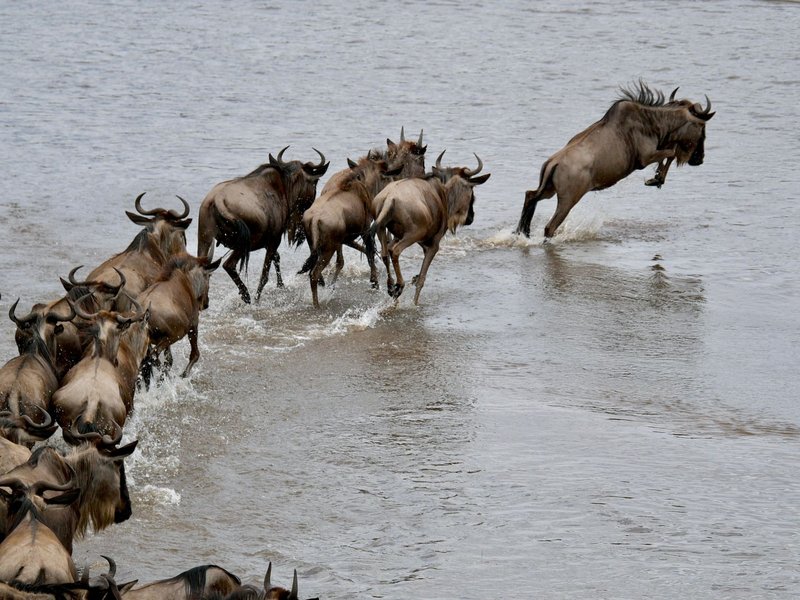
The wildebeest Great Migration — roughly 1.2 to 1.5 million animals moving in a circuit of well over 1,000 kilometers between Tanzania’s Serengeti and Kenya’s Maasai Mara — isn’t a scenic loop. It’s a grazing-and-drinking circuit drawn by two overlapping needs: fresh grass and reachable water, both of which move with the rain.
Herds follow what ecologists call the “green wave” — the leading edge of new grass growth that follows seasonal rainfall across the plains. Chase the rain, and you get both requirements met at once: young grass is more nutritious and, not incidentally, greener grass generally means water isn’t far off. According to National Geographic’s reporting on how wildebeest reshape the Serengeti, the migrating herds collectively consume more than 4,500 tons of grass a day — a volume of grazing pressure that keeps the plains cropped short and, through their dung, actively fertilizes the next season’s growth. The wildebeest aren’t just passing through the ecosystem; their eating habits are part of what maintains it.
What Baby Wildebeest Eat
Wildebeest calves are born already able to stand and run within minutes — a defense against predators on open plains with nowhere to hide — and that precociousness extends to feeding. Calves nurse heavily in the first weeks but start sampling grass remarkably early, well before they’re nutritionally dependent on it. Full weaning typically happens by around 8 months of age in blue wildebeest, by which point a calf is grazing alongside the herd like any adult. Black wildebeest, a separate but closely related species, tend to wean noticeably earlier, closer to 4 months.
The early start on solid food isn’t optional. A herd on the move can’t wait for a calf to be milk-only for half a year — grazing competence has to come fast, in step with the migration’s pace.
Wildebeest vs. Zebra: Same Plains, Different Menu
Wildebeest and zebra graze the same landscapes, often side by side, but they’re not competing for the same grass — which is exactly why the two species travel together so often. Zebra are non-ruminant hindgut fermenters, meaning they process food faster and less efficiently, so they go after the taller, coarser grass stems first, stripping off the fibrous outer growth. That clears the way for wildebeest, who follow behind and take the shorter, more nutrient-dense grass the zebra left standing.
It’s less a rivalry than a relay: zebra mow the rough stuff down, wildebeest finish the job. That sequencing is one of the quieter reasons the migration works as an ecosystem instead of just a big herd moving in one direction.
FAQ
What do blue wildebeest eat when grass is scarce? They shift toward whatever green vegetation is left, including leaves and shrubs, and lean more heavily on migration itself — moving toward areas with better grazing rather than settling for poor grass in place.
How much grass does a wildebeest eat per day? Individual intake varies with body size and grass quality, but collectively, migrating herds are estimated to consume more than 4,500 tons of grass daily during peak movement.
Do wildebeest eat meat? No. They’re strict herbivores. Reports of wildebeest gnawing on bones are about mineral supplementation (calcium and phosphorus), not meat-eating.
How is a wildebeest’s digestion different from a zebra’s? Wildebeest are ruminants with a four-chambered stomach that ferments plant fiber slowly and thoroughly. Zebra are hindgut fermenters that digest faster but less completely, which is why the two species prefer different grass textures.
Do wildebeest need to drink every day? Not necessarily every single day, but close to it — roughly every one to two days — which keeps them tethered to areas within reach of permanent water.