Table of Contents
- The National Flower Everyone Searches For
- What “Native” Actually Means Here
- The Native Species Field Guide
- Native vs. Cultivated: What Gets Mixed Up
- Where to See Native Flora in the Wild
- Conservation Status Worth Knowing
- Summary
The National Flower Everyone Searches For
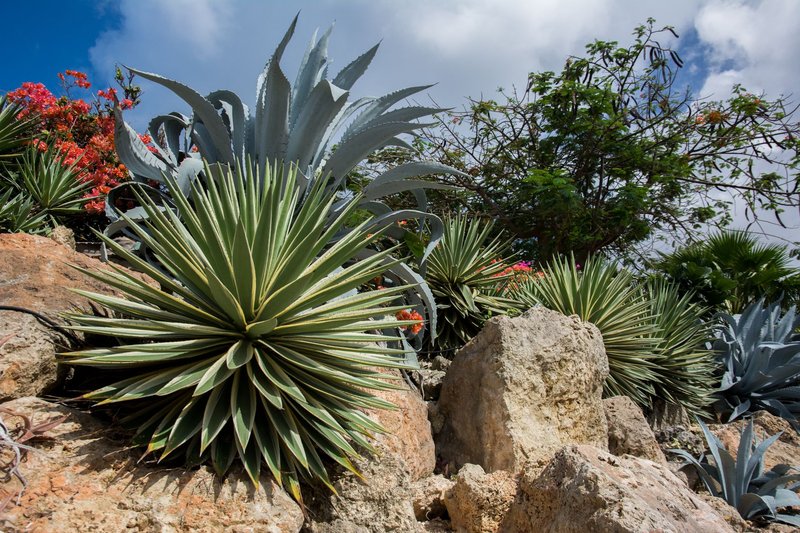
Type “Antigua and Barbuda native plants” into a search bar and you’ll get one answer over and over: Agave karatto, known locally as Dagger Log. It’s the national flower, and it earns the title honestly. A rosette of thick, blue-green leaves ending in sharp spines, it survives in the driest scrubland on the islands and sends up a single flowering stalk that can reach over 20 feet, dotted with yellow-green blooms that pollinators track from a distance.
That single-species obsession is understandable, but it also means most of what’s written about Antiguan and Barbudan flora stops at one plant. The islands have a real native flora beyond it — dry forest trees, coastal mangroves, cacti built for drought, and dune scrub species found nowhere near a garden center. This guide covers the ones that actually grow here on their own, not the imports that dominate hotel landscaping.
What “Native” Actually Means Here
Antigua and Barbuda’s landscape is full of plants that look like they belong — mango trees, hibiscus hedges, bougainvillea spilling over walls — but arrived with colonists, traders, or landscapers centuries after the islands’ original flora took hold. None of that is native. Native means the species evolved here or reached the islands without human help, typically by wind, water, or bird dispersal, long before agriculture and ornamental gardening reshaped the landscape.
Antigua and Barbuda sit in the Lesser Antilles’ dry forest zone, a limestone-and-volcanic ecosystem shaped by low rainfall, thin soil, and salt exposure. That environment filters hard for what actually survives: waxy leaves, deep taproots, spines instead of soft foliage, and root systems built to handle both drought and the occasional flash flood.
The Native Species Field Guide
Agave karatto (Dagger Log)
The national flower, and the plant this whole search topic orbits around. Found on rocky, sun-blasted hillsides across Antigua, it stores water in fleshy leaves and flowers only once in its life — a single stalk shoots skyward, blooms, and the parent rosette dies back, leaving offshoots to continue the colony. The spines aren’t decorative; goats and grazing livestock leave it alone, which is part of why it’s held on in areas where softer plants got eaten out.
White cedar (Tabebuia pallida)
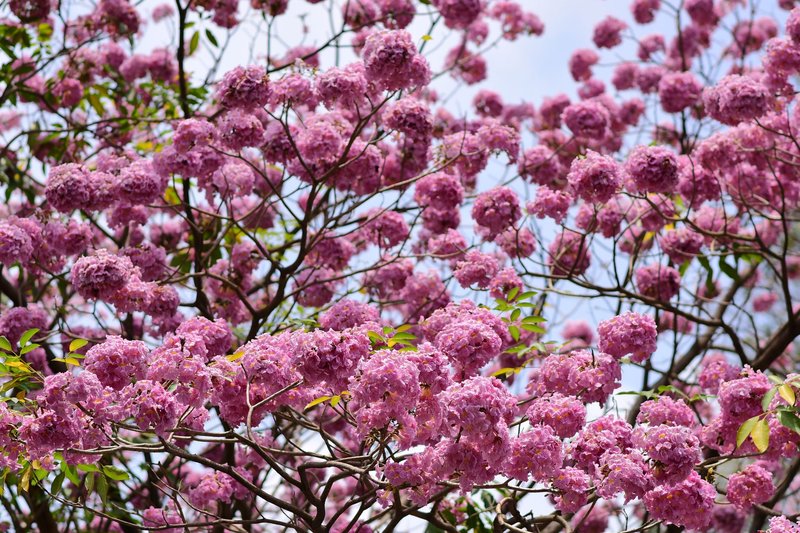
Antigua and Barbuda’s national tree, and arguably the more visually dramatic of the two national symbols. After the first hard rains of the wet season, white cedar drops its leaves and covers itself in pale pink to white trumpet-shaped flowers, blooming in dense flushes rather than a slow trickle. Locals track the rains by it — a sudden wave of blooming white cedar means the dry season broke.
Turk’s cap cactus (Melocactus intortus)
A squat, barrel-shaped cactus capped with a fuzzy, reddish structure called a cephalium — the part that gives it its name, resembling a fez or turban perched on top. It only grows once the plant reaches maturity, and it’s where the flowers and fruit actually emerge. You’ll find it wedged into rocky, exposed coastal ground where almost nothing else takes root.
Red mangrove (Rhizophora mangle)
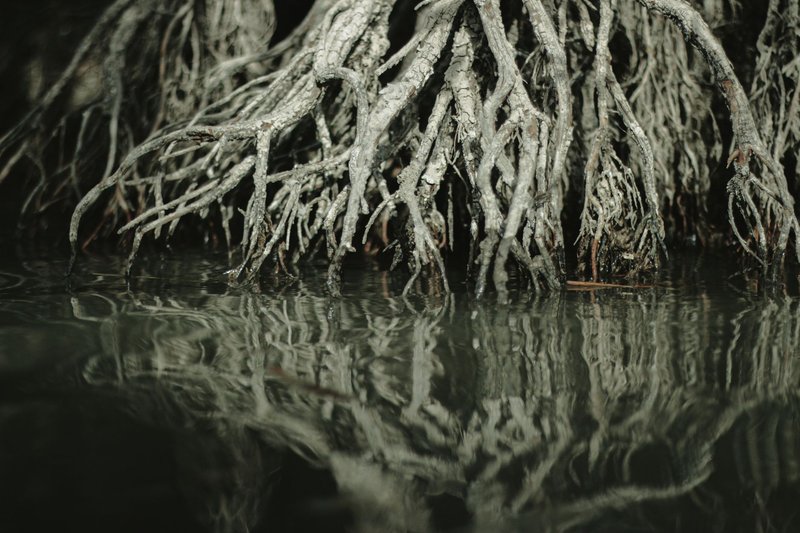
Recognizable by its tangle of reddish, arching prop roots that seem to walk the tree out over the water. Red mangrove lines Antigua’s coastal lagoons and forms much of the shoreline around Barbuda’s Codrington Lagoon. Those root systems do double duty: they filter sediment and pollutants before it reaches reef systems offshore, and they’re a nursery habitat for juvenile fish and crustaceans. NOAA Fisheries documents mangroves as one of the most productive nursery ecosystems on the planet, and the islands’ coastal fisheries lean on that fact more than most visitors realize.
Black mangrove (Avicennia germinans)
Grows slightly higher up the intertidal zone than red mangrove, identifiable by pencil-like breathing roots (pneumatophores) that poke straight up out of the mud around its base. It tolerates saltier, more waterlogged soil than almost any other tree species on the islands, and it’s often the first line of vegetation absorbing storm surge before it reaches inland structures.
Gumbo limbo (Bursera simaruba)
Called the “tourist tree” throughout the Caribbean, a nickname that pokes fun at its red, peeling bark — supposedly reminiscent of a sunburned visitor. It’s a dry forest staple, fast-growing and resinous, and its sap was historically used as glue and varnish. Cut a live branch and stick it in the ground, and there’s a decent chance it roots — a trait that’s made it a natural, no-cost fence line tree across the region.
Lignum vitae (Guaiacum officinale)
One of the densest woods in the world — dense enough to sink in water — with small blue-violet flowers that stand out against the surrounding dry scrub. Lignum vitae’s wood was prized historically for ship bearings and mortar-and-pestle sets because it’s self-lubricating, oily enough to resist friction without added grease. That same value nearly wiped it out. The IUCN Red List tracks Guaiacum officinale as a species under conservation concern across its Caribbean range, largely from historic overharvesting.
Manchineel (Hippomane mancinella)
Grows along beaches and coastal margins, and it’s one of the more dangerous native trees anywhere in the world. Every part is toxic — the sap blisters skin on contact, and the small, sweet-smelling fruit (sometimes called the “beach apple”) can cause severe internal injury if eaten. The National Park Service posts explicit warnings about it in the nearby Virgin Islands, and Antiguan beaches with manchineel present typically mark the trunks with a red band or warning paint. Worth knowing before you lean against a shady-looking tree on an empty beach.
Sea grape (Coccoloba uvifera)
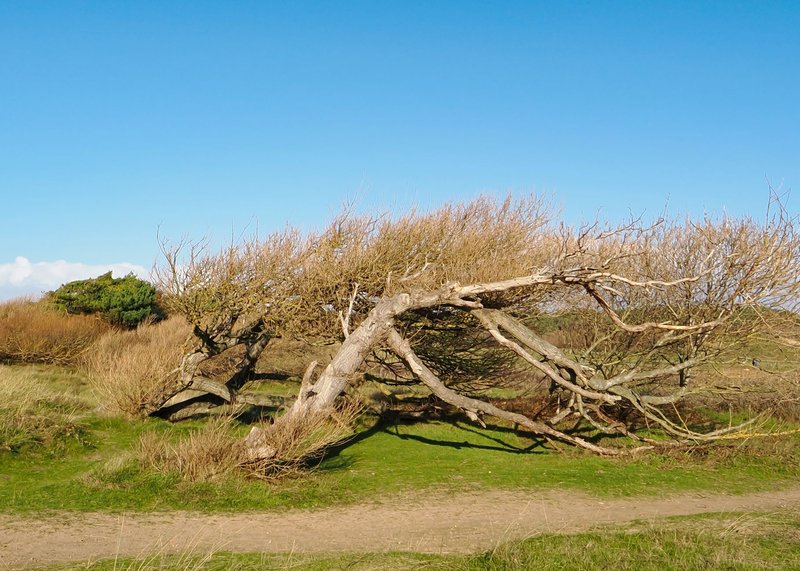
Large, round, leathery leaves and clusters of purple, grape-like fruit that ripen in late summer. Sea grape grows right at the edge of the sand, and its root system is one of the reasons Antigua and Barbuda’s dunes hold together during storm season instead of washing out. The fruit is edible, tart, and traditionally used locally for jams and wine.
Loblolly tree (Pisonia subcordata)
Less familiar outside botanical circles, but a defining species of Barbuda’s dune scrub. It produces sticky, barbed seed pods that cling to feathers, which is how it hitches rides with seabirds between islands — a dispersal strategy that shaped its distribution long before anyone was naming national symbols. Barbuda’s undeveloped coastline still holds stands of it in areas Antigua’s denser development has mostly lost.
Native vs. Cultivated: What Gets Mixed Up
Most “plants of Antigua and Barbuda” content online blends native species with garden imports because, visually, tropical foliage tends to look interchangeable to an outside eye. Here’s where that gets sorted out.
| Plant | Native or cultivated | Where it actually originated |
|---|---|---|
| Agave karatto (Dagger Log) | Native | Lesser Antilles |
| Hibiscus (Hibiscus rosa-sinensis) | Cultivated/ornamental | East Asia |
| Bougainvillea | Cultivated/ornamental | South America |
| Antigua Black pineapple | Cultivated (agricultural cultivar) | Bred locally, but the pineapple species itself is South American in origin |
| Mango | Cultivated | South Asia |
| White cedar (Tabebuia pallida) | Native | Lesser Antilles |
| Flamboyant / Royal poinciana | Cultivated/ornamental | Madagascar |
| Sea grape | Native | Caribbean coastal zones |
The Antigua Black pineapple is the trickiest case — it’s a genuine point of local pride and genuinely grown nowhere else quite like it, but it’s a cultivated agricultural variety, not a wild native species. Same logic applies to most of what shows up in resort gardens: attractive, often Caribbean-adjacent, but not part of the pre-colonial flora.
Where to See Native Flora in the Wild
Wallings Forest, on Antigua’s southwestern side, is the most accessible spot to see genuine native dry forest structure — gumbo limbo, white cedar, and lignum vitae grow along its trails, with the reservoir built during British colonial rule now sitting inside what’s become a managed forest reserve. It’s a short, well-marked hike, not a wilderness trek.
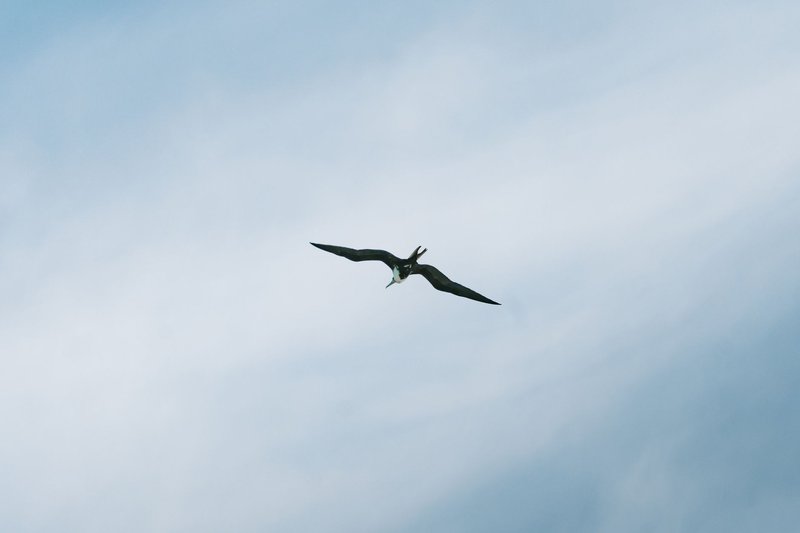
For coastal and wetland species, Barbuda does more of the heavy lifting. Codrington Lagoon holds one of the Caribbean’s largest frigatebird colonies, nesting almost entirely in mangrove stands — red and black mangrove both, growing dense enough to support thousands of breeding pairs. Barbuda’s undeveloped dune systems along the north and east coasts are also where loblolly tree and sea grape still form intact, unmanaged stands, since Barbuda’s population density and development footprint are a fraction of Antigua’s.
Conservation Status Worth Knowing
Dry forest habitat across the Eastern Caribbean has shrunk from centuries of clearing for sugar cultivation, and more recently from coastal development. Lignum vitae’s slow growth and historically valuable wood make it the species most directly threatened. The Endangered Species in Antigua and Barbuda guide details how this pattern extends across the islands’ biodiversity, with mangrove stands also facing pressure from coastal construction, even though they’re the same ecosystems protecting that construction from storm surge — a contradiction that’s playing out on plenty of Caribbean coastlines, not just here.
None of this is presented as pristine wilderness. What’s left is a working mix of protected forest reserve, undeveloped Barbudan coastline, and scattered remnant stands on private land — enough to see genuine native flora, but not infinite.
Summary
The Agave karatto story is the one everyone finds first, and it’s a good story. But it’s one plant in a native flora that includes dry forest hardwoods like lignum vitae and gumbo limbo, coastal specialists like red and black mangrove, and dune scrub species like the loblolly tree that most visitors never get pointed toward. Wallings Forest and Barbuda’s Codrington Lagoon area are the two places to actually see this ecosystem intact, rather than the cultivated hibiscus and bougainvillea that fill everywhere else. Knowing the difference between what’s native and what just looks tropical is most of the battle.