Table of Contents
- TLDR
- How Many Fish Actually Live in Samoan Waters
- Prized Gamefish Anglers Travel For
- The Reef Regulars You’ll See on Any Snorkel
- The Freshwater Fish Almost Nobody Writes About
- Where and When to Find Them
- Quick Identification Table
- A Few Samoan Fish Names Worth Knowing
- Reef Safety: Currents and the Ava
TLDR
Samoa’s waters hold roughly 900 fish species across three very different zones: coral reef species you’ll see snorkeling off Upolu or Savai’i, bluewater gamefish like blue marlin and yellowfin tuna that draw anglers to the deep water just offshore, and a small, underrated group of freshwater natives — eels, gobies, and sleepers — living in the island streams that almost nobody writes about. Reef season runs year-round; gamefish season peaks September through December, when marlin push in close enough to shore that boats don’t need to run far to reach them.
How Many Fish Actually Live in Samoan Waters
Samoa sits inside one of the most fish-dense stretches of ocean on the planet — the same reef systems that support roughly 900 species of fish in the wider Samoan archipelago, built on top of reefs made from around 200 species of coral. That density isn’t an accident. Coral reefs cover less than one percent of the ocean floor but host about a quarter of all known marine fish species, and Samoa’s reefs are close to shore, shallow, and largely intact — which is exactly what turns a “there are fish here” statistic into an actual snorkeling trip.
Split that number three ways and it gets more useful. Reef fish dominate by sheer species count — parrotfish, wrasses, surgeonfish, and dozens of smaller families that never leave the lagoon. Pelagic species — the tuna, marlin, and wahoo that troll the open water — are far fewer in number but the reason most fishing charters exist. And freshwater species, confined to a handful of short, fast island streams, are the smallest group and the one every tourism blog skips.
Prized Gamefish Anglers Travel For
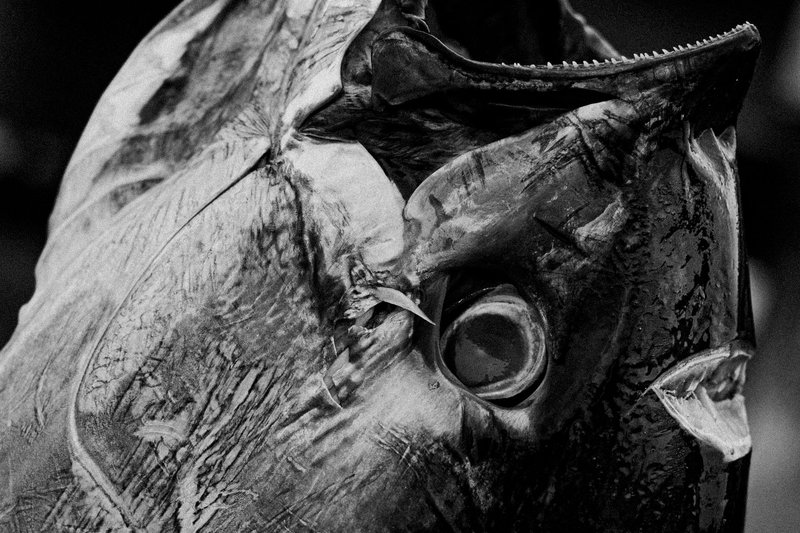
This is the water Samoa’s fishing charters are built around, and it’s a short run from shore compared to most Pacific destinations.
Blue marlin are the headline fish. They’re what fill charter boats between September and December, when the big females move in close enough that boats can reach blue water in twenty minutes instead of two hours.
Yellowfin tuna run year-round and can top 400 pounds at the upper end, though the ones coming over the rail on a typical charter are usually much smaller. Mahi-mahi show up on the same trolling spreads, unmistakable for the neon flash they throw boatside before it fades within minutes of the fish coming out of the water.
Wahoo are the speed merchants — fast enough to strip line before anyone’s braced for it — while sailfish and Spanish mackerel round out the mix, less consistent than marlin or tuna but not rare enough to count as a bonus catch.
The Reef Regulars You’ll See on Any Snorkel
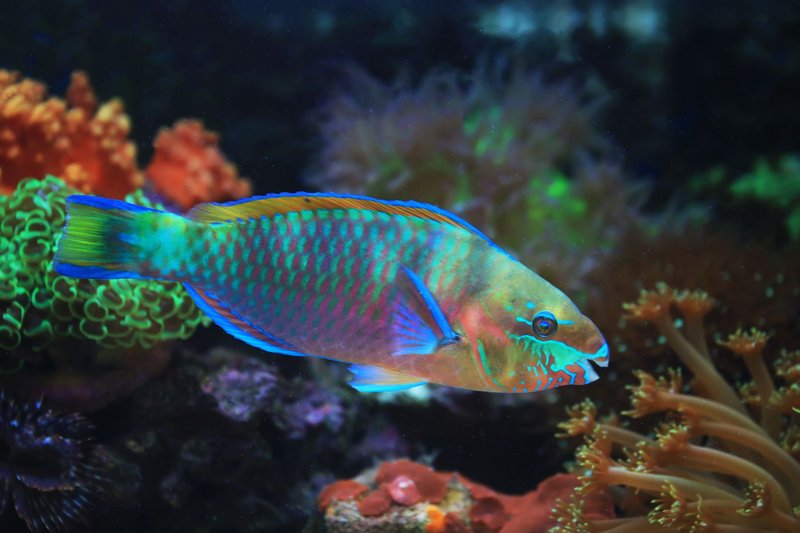
Drop off almost any beach on Upolu or Savai’i and this is the cast of characters waiting.
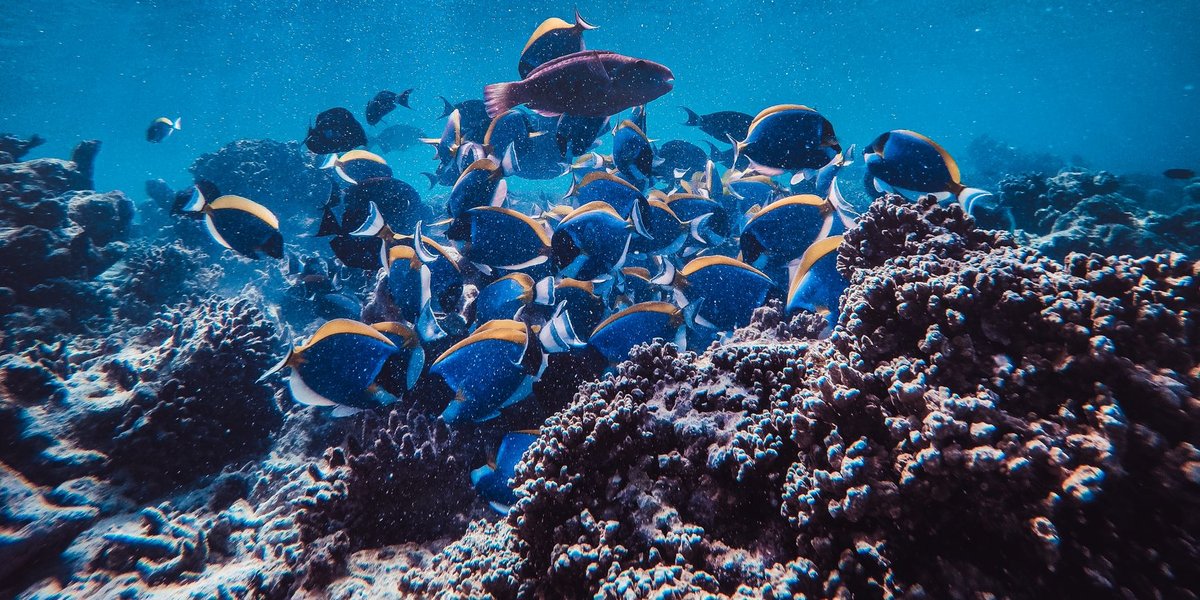
Giant trevally patrol reef edges in small, fast-moving packs — silver, thick-shouldered, and visibly built for pursuit rather than grazing. Parrotfish do the opposite job: they graze coral algae constantly, and the crunching sound of their beaks on coral is audible underwater if you stay still long enough to notice it. That grazing is also why healthy reefs need them — parrotfish bites turn into the white sand that makes Samoa’s beaches look the way they do.
Surgeonfish travel in loose schools and carry a scalpel-sharp spine near the tail that gives the family its name — worth respecting, not fearing. Wrasse cover the widest size range of any reef family here, from finger-length cleaner wrasse working over larger fish to the much bigger Napoleon wrasse occasionally spotted on outer reef slopes. Damselfish are the ones that’ll actually confront you — territorial over small patches of coral and unbothered by size difference. Coral trout, a grouper relative with electric-blue spots, tends to hang back near reef structure rather than open water, which makes it a species you find rather than one that finds you.
The Freshwater Fish Almost Nobody Writes About
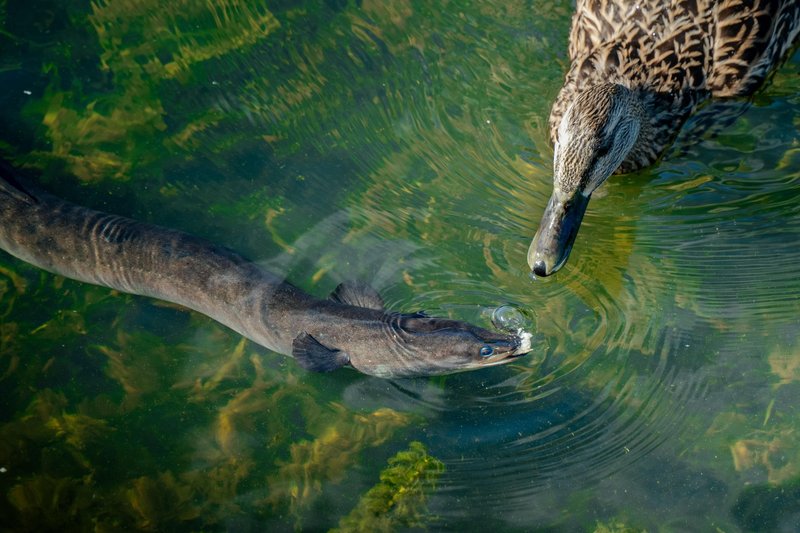
Every Samoa fishing guide covers marlin. Almost none of them mention what’s living in the streams a few minutes inland, which is a gap worth closing.
Samoa’s rivers are short, steep, and fast — they run off volcanic terrain straight to the coast, which limits what can live in them but doesn’t empty them out. Freshwater eels, including the giant mottled eel that grows well past a meter, are the most visible residents and hold cultural weight in Samoa beyond their size — eels appear in local legend, not just local streams.
Gobies are the ones doing the strangest thing biologically: most Samoan stream gobies are amphidromous, meaning larvae hatch in freshwater, get swept out to sea, then migrate back upstream as juveniles — sometimes climbing wet rock faces and waterfalls to do it. Sleepers, a related bottom-dwelling family, share the same streams and the same migration strategy, sitting motionless on stream beds waiting for prey to drift past rather than chasing it down.
None of these are what anyone travels to Samoa to catch. But if a guide only tells you about marlin and parrotfish, they’re describing half the country’s fish.
Where and When to Find Them
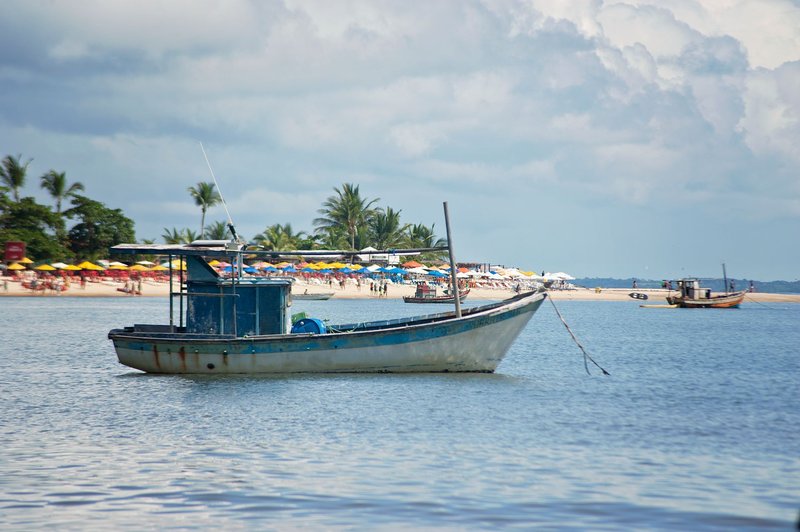
Location matters as much as species here, because Samoa’s two main islands don’t fish the same.
Upolu, home to the capital Apia, is where “Marlin Alley” refers to — a stretch of water off the south coast where the seabed drops into deep water close enough to shore that boats reach blue water fast instead of burning half a charter day getting there. Most gamefishing operators run out of Apia for exactly this reason. Right off Apia itself, Palolo Deep Marine Reserve is a sunken reef basin close enough to walk to from town, and it’s one of the easiest places on the island to see reef species without a boat at all.
Savai’i, larger and less developed, trades charter infrastructure for quieter reefs and less pressure on inshore fish populations — better for snorkeling and diving than for booking a marlin trip.
Season shapes both. Gamefish, especially blue marlin, peak September through December. Reef fish don’t have a real off-season — visibility swings more with rain and swell than with month.
Quick Identification Table
| Fish | Category | Where to spot it |
|---|---|---|
| Blue marlin | Pelagic gamefish | Deep water off Upolu’s south coast, Sept–Dec |
| Yellowfin tuna | Pelagic gamefish | Offshore, trolled year-round |
| Mahi-mahi | Pelagic gamefish | Same trolling spreads as tuna and wahoo |
| Wahoo | Pelagic gamefish | Open water, year-round |
| Giant trevally | Reef predator | Reef edges and drop-offs |
| Parrotfish | Reef grazer | Shallow reef flats, lagoons |
| Surgeonfish | Reef grazer | Schooling over reef flats |
| Wrasse | Reef, size varies | Cleaner stations to outer reef slopes |
| Damselfish | Reef, territorial | Coral heads, shallow water |
| Coral trout | Reef predator | Reef structure, ledges |
| Freshwater eel | Freshwater native | Island streams and pools |
| Amphidromous goby | Freshwater native | Fast-flowing streams, waterfalls |
| Sleeper | Freshwater native | Stream beds |
A Few Samoan Fish Names Worth Knowing
Fish aren’t just wildlife in Samoa — they’re woven into local language and legend, and a handful of names come up often enough that they’re worth learning before a trip.
Atu is skipjack tuna, historically important enough that atu fishing shaped village economies long before charter boats existed. Ature, the goggle-eyed scad, is the fish at the center of one of Samoa’s best-known legends — the story of the ature and the palolo worm at Vaiala, near Apia. Pusi refers to eel, and shows up on menus as much as in stream water — pusi is a genuinely popular dish, not just a species you spot while hiking.
Knowing these three won’t get you through a full conversation with a local fisherman, but they’ll get you a smile of recognition — which counts for more.
Reef Safety: Currents and the Ava
The fish are the draw, but the water they live in deserves respect before anyone gets in it.
Samoa’s reefs are cut through by channels — locally called ava — where lagoon water funnels out to the open ocean. These passages are also where currents concentrate, and they’re the most common place for a swimmer or snorkeler to get pulled further out than intended. The pull is strongest on an outgoing tide, and it’s rarely obvious from the surface until you’re already in it.
None of this means avoiding the water — it means checking with someone local before swimming an unfamiliar stretch of reef, especially near a visible channel or break in the coral line. The same currents that make an ava dangerous to swim across are often what pushes nutrients through and keeps the fish life on either side of it so dense in the first place.