If you’ve walked a PEI ditch line in July and noticed a wall of bamboo-looking stalks, or pulled a crab trap up short a few too many green, spiny-shelled crabs, you’ve already met one of the Island’s invasive species. PEI’s small size and heavy reliance on farming, fishing, and forestry make it especially exposed — a single hitchhiking beetle or a truckload of contaminated soil can do outsized damage on an island this compact.
This guide walks through the species Islanders actually run into: on roadsides, in gardens, in the woods, and off the coast. For each one, what it looks like, why it’s a problem, and where on PEI you’re likely to cross paths with it. At the end, what to do if you find one — because a photo and a report are worth more than a shrug.
Table of Contents
- The Plants Taking Over PEI’s Ditches and Yards
- Japanese Knotweed
- Giant Hogweed
- Purple Loosestrife
- The Threats to PEI’s Trees
- Emerald Ash Borer
- Spongy Moth (Formerly Gypsy Moth)
- The Invader in PEI’s Waters
- European Green Crab
- What to Do If You Spot One
The Plants Taking Over PEI’s Ditches and Yards
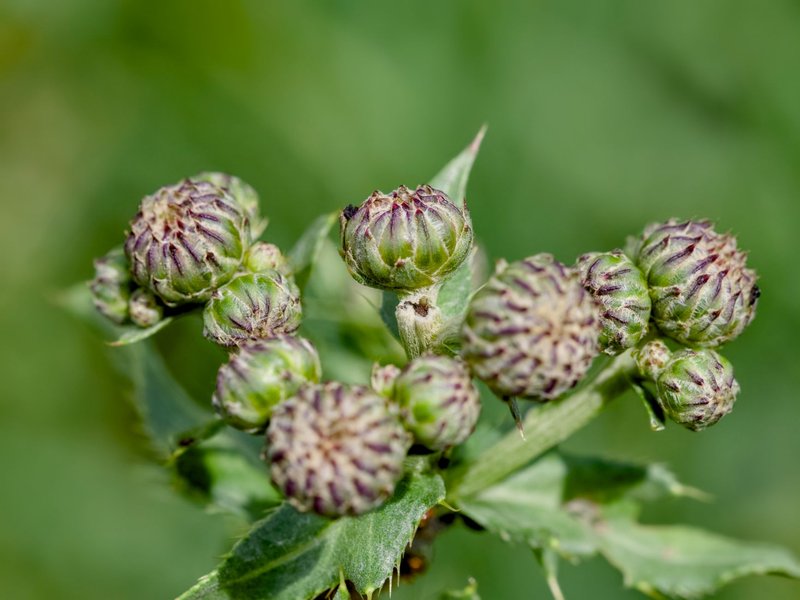
Most of PEI’s plant invaders arrived the same way: as ornamentals, planted on purpose because they were hardy and pretty, before anyone understood how far “hardy” would go.
Japanese Knotweed
You’ll know knotweed when you see it — hollow, jointed stems that look like bamboo, shooting up two to three metres by midsummer, with heart-shaped leaves and sprays of small white flowers in late summer. It spreads mostly through its root system (rhizomes), which can push through asphalt, foundation cracks, and old stone walls. A fragment of root as small as a couple of centimetres, moved in fill dirt or on machinery, is enough to start a new colony.
On PEI, look for it along ditches, old homestead sites, and riverbanks — anywhere soil has been disturbed and left alone. Once established, it out-competes nearly everything else for light and water, and it’s notoriously difficult to eradicate; cutting it back without removing the root system just makes it angrier.
Giant Hogweed
Giant hogweed gets the most attention for a reason: its sap causes phytophotodermatitis, a reaction where skin exposed to the sap and then sunlight develops severe blistering and burns that can leave scarring for months. The plant itself is hard to miss once it’s mature — it can top four metres, with a thick stem covered in purple blotches and coarse white hairs, topped by an umbrella-shaped cluster of white flowers up to a metre across.
The trick is not confusing it with cow parsnip, a native PEI plant that looks similar but grows shorter, has a plain green stem, and carries a much milder sap reaction. If you’re unsure, don’t touch it and don’t let kids or pets brush against it — photograph it from a distance instead.
Purple Loosestrife
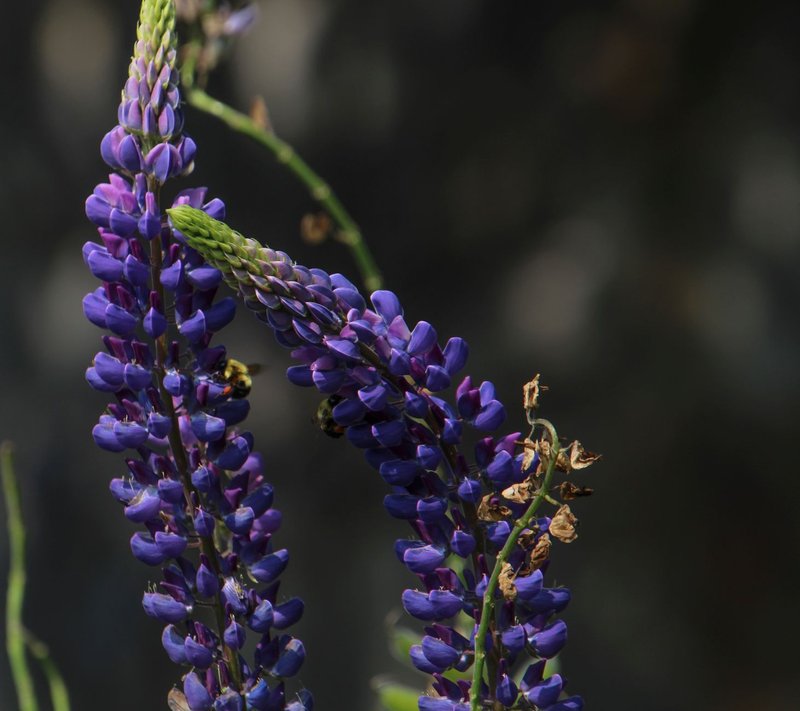
Purple loosestrife shows up in wet ground — marsh edges, ditches, the fringes of ponds — with tall spikes of magenta-purple flowers that bloom through most of the summer. It looks good in a garden bed, which is exactly how it got into North America in the first place.
The problem is what it does to wetlands. A mature plant produces an enormous number of seeds in a single season, and once loosestrife takes hold it can form dense, near-monoculture stands that crowd out cattails and other native wetland plants waterfowl and fish depend on for cover and food. It’s now established in wet areas across the Island, particularly where ditches drain into slower-moving water.
The Threats to PEI’s Trees
PEI’s insect and disease invaders don’t announce themselves the way a four-metre hogweed does — by the time you notice the damage, the tree is usually already in trouble.
Emerald Ash Borer
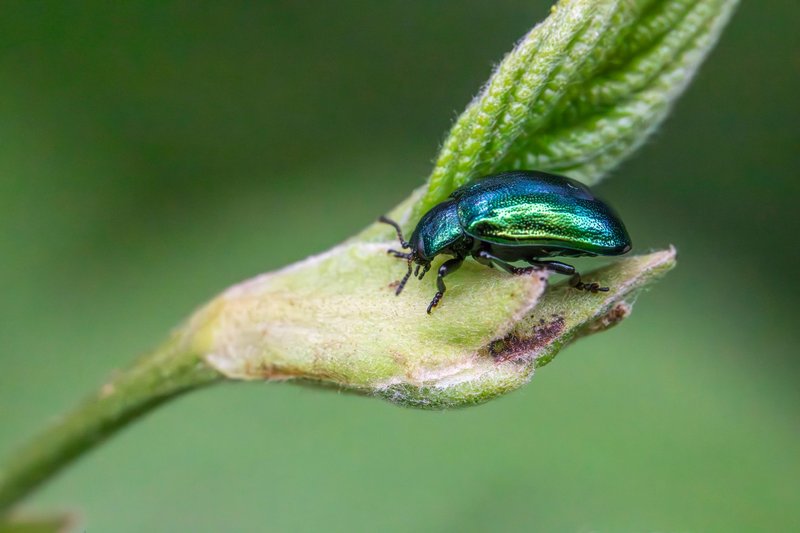
Emerald ash borer is a small, metallic-green beetle, only about a centimetre long, but its larvae are the real damage: they tunnel under the bark of ash trees in distinctive S-shaped galleries that cut off the tree’s ability to move water and nutrients. An infested ash tree usually dies within a few years, often with canopy dieback starting at the top and thin vertical bark splits appearing lower down.
Since arriving on the Island, EAB has put PEI’s ash trees — a common street and woodlot species — under real pressure, and it’s part of why the Canadian Food Inspection Agency regulates the movement of firewood, ash logs, and nursery stock out of infested areas. That regulation is also the single best thing an Island resident can do without lifting a finger: don’t move firewood, period, whether you’re going camping at a provincial park or heading to a cottage down the road.
Spongy Moth (Formerly Gypsy Moth)
Spongy moth — renamed from “gypsy moth” by entomologists in 2022 because the old name was a slur for the Romani people — is a defoliator, meaning its caterpillars strip hardwood trees of leaves in outbreak years. A single heavy infestation can defoliate an oak or maple completely by midsummer; healthy trees usually leaf out again the following spring, but repeated years of defoliation weaken and can eventually kill them.
The easiest way to spot it isn’t the caterpillar, it’s the egg mass: a buff or tan, fuzzy-looking patch about the size of a large coin, stuck to tree bark, firewood, or even outdoor furniture over winter. Outbreaks tend to run in cycles, building for a few years and then crashing once natural predators and disease catch up.
The Invader in PEI’s Waters
European Green Crab
The European green crab is small — shell usually under 10 centimetres across — but it punches well above its size in terms of damage. The giveaway is the shell shape: five short spines along each side, just behind the eyes, which no native PEI crab species has. Colour is a poor way to identify it, despite the name; green crabs range from green to orange to almost black.
What makes it a serious problem for PEI specifically is twofold. It digs through eelgrass beds while foraging, uprooting habitat that juvenile fish and shellfish rely on, and it preys heavily on small clams, mussels, and oysters — directly competing with an Island industry built on those same species. Fisheries and Oceans Canada runs trapping and monitoring programs in PEI estuaries, and green crab numbers are one of the metrics watched most closely in the Island’s shellfish-growing areas.
What to Do If You Spot One
A sighting is only useful if it goes somewhere. The PEI Invasive Species Council tracks reports Island-wide and is the fastest route if you’ve found something on land — a patch of knotweed behind a barn, a hogweed plant near a trail, a spongy moth egg mass on firewood.
For anything with a broader reach, apps built for exactly this job beat an email: iNaturalist lets you snap a photo and get help with identification from a wider community, and EDDMapS (Early Detection & Distribution Mapping System) feeds sightings directly into the databases land managers and biologists actually use. Both work from a phone in the field, no account setup required to just submit a report.
A few things worth doing regardless of species: photograph it from a few angles, note the exact location (a pin drop works fine), and don’t try to remove or destroy it yourself unless you know what you’re dealing with — some invasives, knotweed especially, spread faster when disturbed incorrectly. Leave the pulling to people with a plan.
PEI doesn’t have the luxury of a large landmass to absorb these arrivals quietly. Every report — from a gardener, a hiker, a fisher checking a trap — is part of how the Island actually tracks what’s spreading and where. Not the most exciting form of citizen science, but arguably one of the most useful.