Type “animals only found in Scotland” into Google and you’ll get red deer, otters, and puffins staring back at you from every result. None of those are endemic to Scotland. Red deer roam across most of Europe and Asia. Otters live on every UK coastline. Puffins nest from Maine to Norway. They’re Scottish in the sense that you can see them there — not in the sense that Scotland is the only place they exist.
That distinction matters if you actually care about the word “only.” So this list splits the animals into two honest categories: true endemics, meaning species or subspecies that live nowhere else on Earth, and UK-exclusive species, meaning they’re found in Scotland and nowhere else in Britain, but do exist elsewhere in the world. Both categories are genuinely interesting. They’re just not the same claim.
Quick Answer
Scotland has a short list of true endemics: the Scottish crossbill (the UK’s only endemic bird species), the Orkney vole, the St Kilda wren, and the St Kilda field mouse. Soay sheep on St Kilda are a feral, genetically distinct population found nowhere else, though not a formally separate subspecies. A second tier — ptarmigan, capercaillie, and the Scottish wildcat — is exclusive to Scotland within the UK but exists in other countries or, in the wildcat’s case, is now so hybridized with domestic cats that “purebred” barely applies anymore.
Table of Contents
- What “Endemic” Actually Means
- True Scottish Endemics
- Scotland-Exclusive-in-Britain Species
- Comparison Table
- Is the Scottish Wildcat Really Unique to Scotland?
- Where to Actually See Them
What “Endemic” Actually Means
Endemic means a species (or a distinct subspecies) exists in one place and nowhere else, full stop. Not “mostly there,” not “iconic there” — nowhere else. It’s a narrower claim than “native,” which just means it arrived without human help and has established itself. Scotland has plenty of native wildlife. It has very few true endemics, because most of its mainland species arrived by the same land bridges and sea crossings that stocked the rest of Britain and northern Europe after the last ice age.
The animals that did end up unique to Scotland almost all did it the same way: isolation on an island group — St Kilda, Orkney, the remote Highlands — long enough for a population to drift genetically from its mainland relatives.
True Scottish Endemics
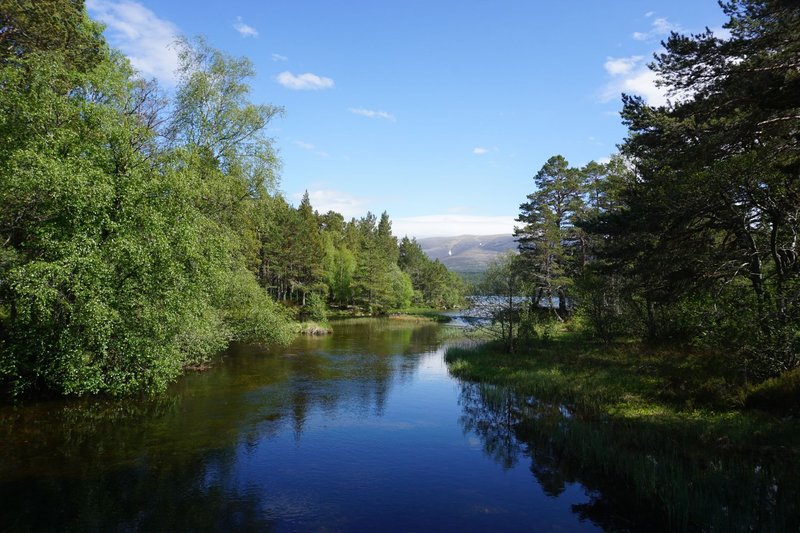
These are the species and subspecies that exist in Scotland and, as far as science currently knows, nowhere else on the planet.
Scottish Crossbill
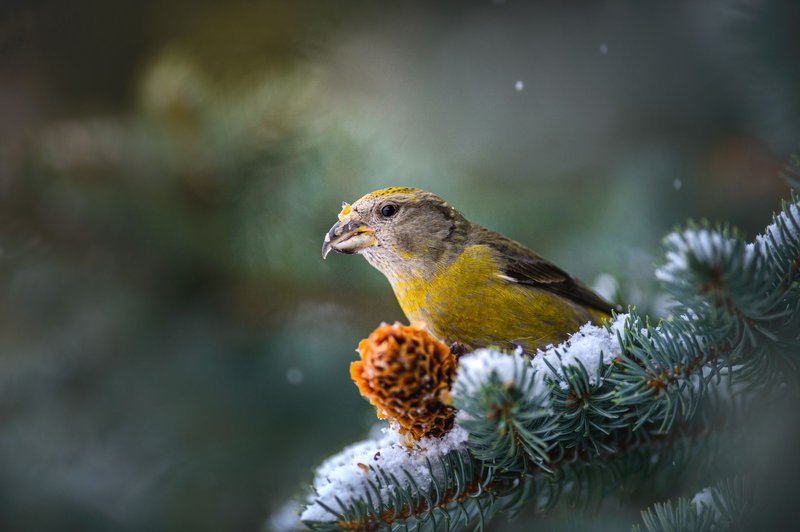
The Scottish crossbill (Loxia scotica) is the only bird species endemic to the entire United Kingdom — not just Scotland, the whole country. It lives exclusively in the old Caledonian pinewoods of the Highlands, feeding almost entirely on Scots pine cones with a bill built specifically for prying seeds out of them. Confirmation that it was a genuinely separate species, rather than a local form of the common or parrot crossbill, didn’t come until 2006, and it rested largely on differences in call and song rather than anything you could easily see in the field. That’s a strange way to define a species, and ornithologists still argue about it. What isn’t in dispute is the population: fewer than 2,000 birds, confined to a shrinking stretch of native pine forest, according to the RSPB. If the Caledonian forest keeps fragmenting, this bird has nowhere else to go — there’s no backup population in Scandinavia or Siberia to fall back on.
Orkney Vole
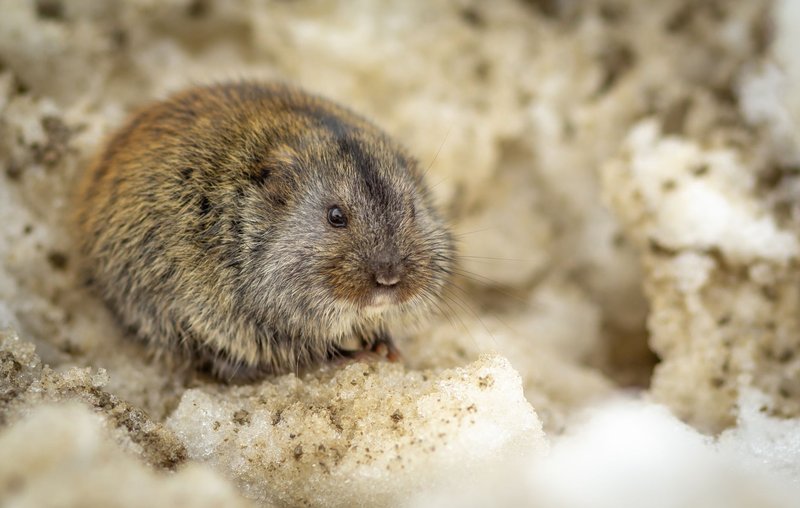
The Orkney vole is a subspecies of the common vole, a species that’s widespread across continental Europe but doesn’t naturally occur anywhere else in the British Isles — not the Scottish mainland, not England, not Ireland. Orkney’s population almost certainly arrived with Neolithic settlers roughly 4,000-5,000 years ago, likely as unintentional cargo, and then evolved in isolation long enough to become noticeably larger and paler than its mainland cousins, with a body length up to 12cm and a lifespan of up to 18 months. Genetic work has traced its likely origin to what’s now Belgium, which means this vole crossed the North Sea by boat before Stonehenge was finished. It’s now the main prey base for Orkney’s hen harriers and short-eared owls, and stoats introduced to the islands in recent decades have put real pressure on the population.
St Kilda Wren
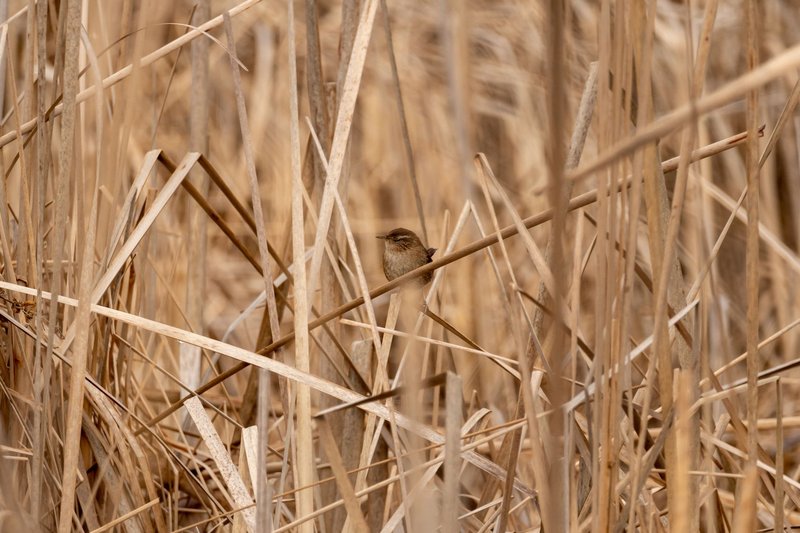
St Kilda sits 64km west of the Outer Hebrides, exposed to the full force of the North Atlantic, and its wren population has been cut off from the mainland long enough to become a distinct subspecies (Troglodytes troglodytes hirtensis). It’s larger than a mainland wren, more heavily barred, and greyer rather than rufous — differences subtle enough that you’d need a mainland wren next to it to notice, but consistent enough that taxonomists gave it separate status back in 1884. Early 20th-century collectors nearly wiped it out chasing specimens for private collections, which is a fairly bleak way to almost end a subspecies before science had properly documented it.
St Kilda Field Mouse
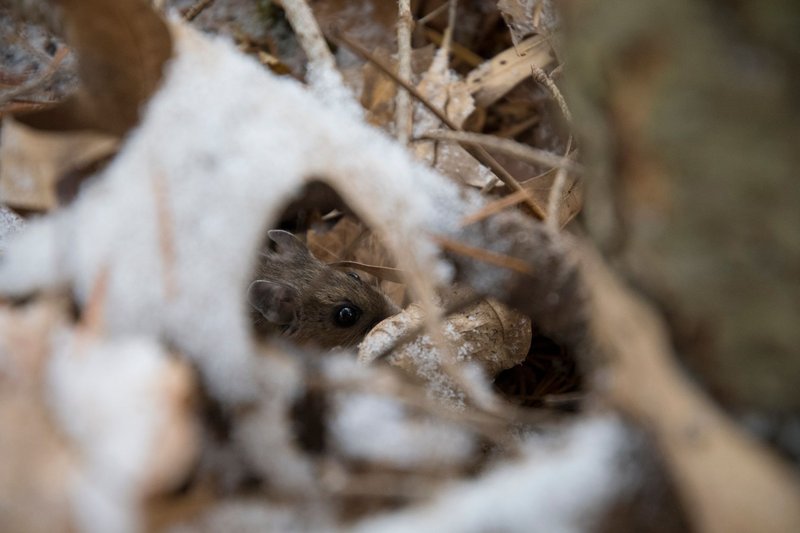
Also unique to the St Kilda archipelago, and also isolated long enough to diverge sharply from its mainland relative: the St Kilda field mouse is roughly twice the weight of an ordinary wood mouse, with longer hair and a longer tail, likely arriving with Norse settlers over a thousand years ago. Oddly, when St Kilda’s human population was evacuated in 1930, a second endemic rodent — the St Kilda house mouse, which depended on human settlements for food and shelter — went extinct within two years. The field mouse, which had always lived independently in the island’s grasslands and cliffs, didn’t need people and is still there.
Soay Sheep
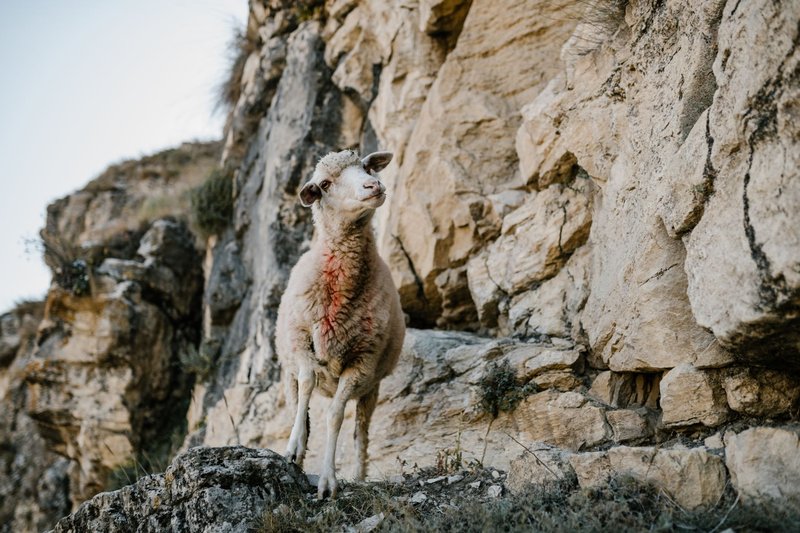
Soay sheep are the closest thing Britain has to a Bronze Age animal still walking around. They’re small — mature rams top out around 38kg, roughly a third the size of a modern farm sheep — and genetically closer to wild mouflon than to any commercial breed. They shed their wool naturally each spring instead of needing to be sheared, and they scatter rather than flock, which is unusual sheep behavior and a strong clue that domestication never fully took. They’ve lived on St Kilda for an estimated 3,000-4,000 years, and after the human evacuation in 1930, 107 sheep were deliberately released onto the main island of Hirta to run wild. That population, tracked continuously since, has become one of the longest-running wild-mammal studies in the world, largely because Soay sheep periodically crash in number for reasons ecologists still argue about. They’re not classified as a separate species or even a formally distinct subspecies, but as a genetically isolated population found in exactly one place on Earth, they earn a spot here.
Scotland-Exclusive-in-Britain Species
These animals aren’t endemic to Scotland in the strict sense — they exist elsewhere in the world — but within the United Kingdom, Scotland is the only place you’ll find them. This pattern parallels what you’ll find with animals unique to England, which has its own set of UK-exclusive species.
Ptarmigan
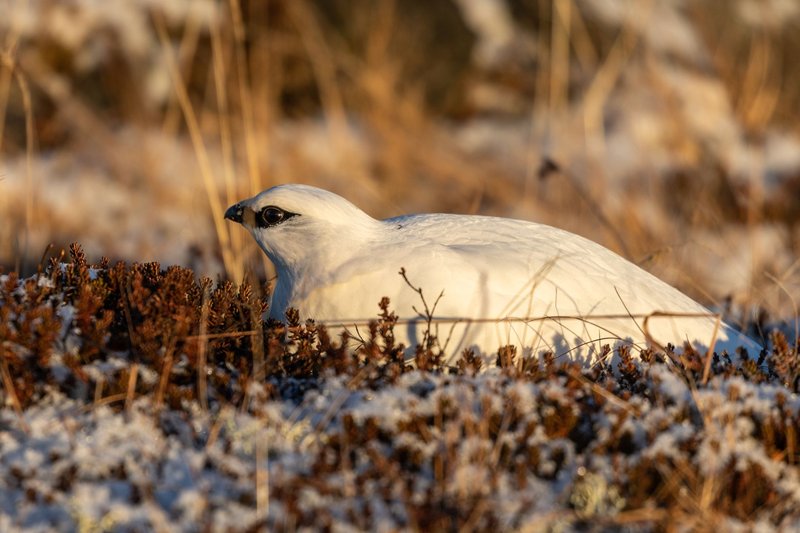
The ptarmigan is a genuine arctic-alpine specialist: white in winter, mottled brown-grey in summer, living above roughly 900 metres on Scotland’s highest mountains year-round. It’s the only place in Britain the species survives — England’s last ptarmigan disappeared in the 1700s, and it retreated out of southern Scotland long before that. Globally it’s common across the Arctic and high mountain ranges of Scandinavia and North America, so it’s not endemic. But in a UK context, if you want to see one, you’re hiking a Munro.
Capercaillie
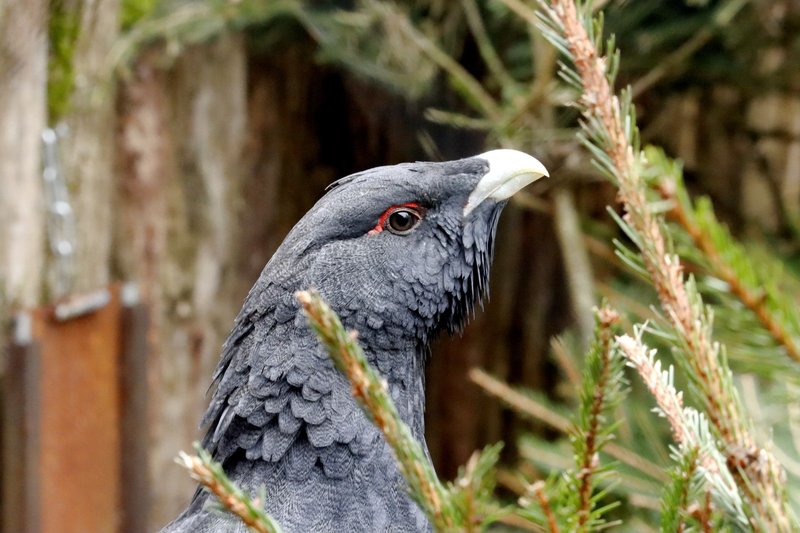
Europe’s largest grouse went fully extinct in Britain in the mid-1700s after its pinewood habitat was cleared, then got reintroduced from Swedish stock in the 1830s. That reintroduced population survives today only in the Cairngorms pinewoods, with roughly 500 birds left, according to the RSPB — making it one of the UK’s most endangered birds despite being widespread and stable across Scandinavia and Russia. Males perform an odd, mechanical-sounding display at dawn leks each spring, a sound closer to popping corks and clicking castanets than anything you’d call birdsong.
Scottish Wildcat
Read the next section for why this one’s complicated.
Comparison Table
| Animal | Status | Found Elsewhere? | Conservation Status |
|---|---|---|---|
| Scottish crossbill | True endemic | No — nowhere else on Earth | Vulnerable; under 2,000 birds |
| Orkney vole | True endemic subspecies | No — nowhere else in the British Isles | Declining, unmonitored population |
| St Kilda wren | True endemic subspecies | No — St Kilda archipelago only | Stable, small range |
| St Kilda field mouse | True endemic subspecies | No — St Kilda archipelago only | Stable, small range |
| Soay sheep | Isolated feral population | No — genetically unique to St Kilda | Not formally assessed |
| Ptarmigan | UK-exclusive to Scotland | Yes — Arctic and alpine Europe/N. America | Least concern globally, declining in UK |
| Capercaillie | UK-exclusive to Scotland | Yes — Scandinavia, Russia | Critically endangered in UK |
| Scottish wildcat | UK-exclusive, heavily hybridized | Related subspecies across Europe | Critically endangered; near-extinct as a pure form |
Is the Scottish Wildcat Really Unique to Scotland?
Not anymore, and that’s the uncomfortable part most articles skip. The Scottish wildcat was long treated as a distinct subspecies of the European wildcat, and its Highland range is genuinely unique within Britain — it went extinct in England and Wales more than a century ago. But genetic studies have found that essentially no wild-living Scottish wildcat today is free of domestic cat ancestry. Interbreeding has been happening for decades and accelerated sharply after 1995, and researchers now describe the wild population as a “hybrid swarm” — a continuum between feral domestic cats and the highest-scoring hybrids, with no clean dividing line between them. By the mid-2000s, the number of individuals scoring as genetically near-purebred had dropped to an estimated 400, and most of those exist only in captive breeding programs, not in the wild.
So the honest answer is: the wildcat that’s genetically distinct from a domestic cat is functionally down to a handful of zoo and breeding-center animals. The tabby-striped cat you might spot in the Cairngorms is very likely carrying domestic cat DNA, even if it looks the part. Conservation groups are running captive breeding and release programs specifically to try to rebuild a population that scores as genuinely wild — worth knowing before you file this one under “still out there, same as always.”
Where to Actually See Them
- Scottish crossbill — Abernethy Forest and the wider Cairngorms pinewoods, where the Caledonian forest is at its most intact.
- Orkney vole — grassland and moorland across the Orkney mainland; look for barn owls and hen harriers hunting low over the fields, since the voles themselves are shy and mostly nocturnal.
- St Kilda wren and field mouse — only accessible by boat trip or National Trust for Scotland work party to the St Kilda archipelago, roughly 40 miles west of the Outer Hebrides.
- Soay sheep — same St Kilda trip; they’re visible on the slopes above Village Bay on Hirta.
- Ptarmigan — above the tree line on Cairngorm, Ben Nevis, or any Munro over roughly 900 metres, best searched for in early morning.
- Capercaillie — the Cairngorms pinewoods; RSPB Abernethy and Loch Garten run supervised early-morning viewing during lek season, since disturbing lekking birds outside a managed hide is actively harmful to the population.
- Scottish wildcat — genuinely wild sightings are rare and increasingly unreliable given hybridization; the Saving Wildcats project and the Highland Wildlife Park are the more dependable ways to see genetically verified animals.
The animals worth chasing here aren’t the ones on every postcard. They’re the ones that only made it this far because an island, a mountain range, or four thousand years of isolation left them nowhere else to go.