Quick disambiguation before we start: if you landed here looking for wildlife near Buffalo, New York, this isn’t that. “Buffalo” as a search term almost always means the animal — and that’s what this covers.
TLDR
No single species is called just “buffalo” and universally endangered — it depends which one you mean. Wild water buffalo is genuinely endangered, with fewer than 4,000 left in the wild. African buffalo and both bison species (American and European) are Near Threatened, meaning they’re not in the safe zone but aren’t in freefall either. The two anoa species — small forest buffalo from Indonesia — are endangered and getting less attention than any of them.
Table of Contents
- The Buffalo Family, At a Glance
- African Buffalo
- Wild Water Buffalo
- Anoa: The Buffalo You’ve Never Heard Of
- American Bison
- European Bison
- FAQ
The Buffalo Family, At a Glance
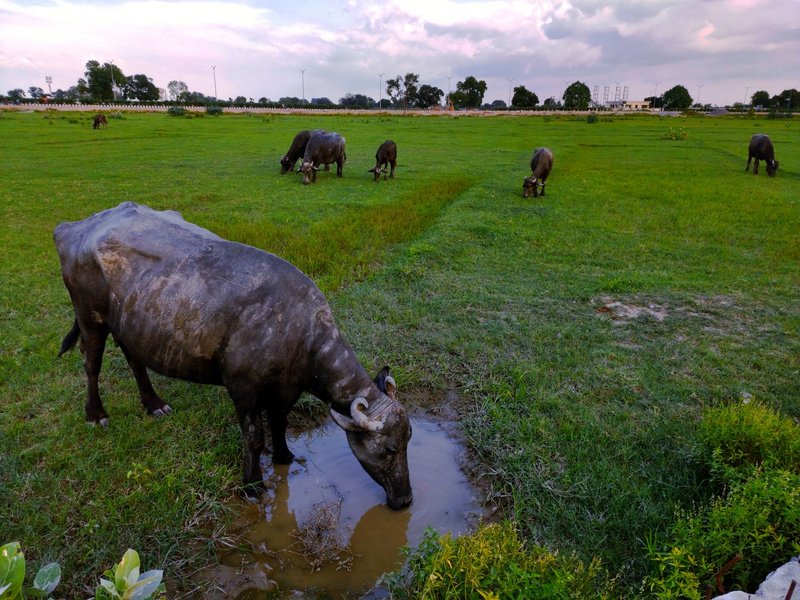
“Buffalo” gets used loosely enough to cover animals that aren’t closely related. True buffalo (genus Bubalus and Syncerus) live in Africa and Asia. Bison, despite the nickname, are a separate genus entirely — American “buffalo” are bison, and so are the shaggier ones roaming parts of Poland.
| Species | IUCN Status | Approximate Population | Primary Threat |
|---|---|---|---|
| African buffalo | Near Threatened | 400,000–900,000 | Poaching, habitat fragmentation, disease |
| Wild water buffalo | Endangered | Under 4,000 mature individuals | Hybridization with domestic buffalo |
| Lowland anoa | Endangered | Estimated under 5,000 | Hunting, habitat loss |
| Mountain anoa | Endangered | Estimated under 2,500 | Hunting, habitat loss |
| American bison | Near Threatened | ~20,500 in wild conservation herds | Historically overhunting; now limited range |
| European bison (wisent) | Near Threatened | ~7,000+ | Genetic bottleneck, habitat connectivity |
Population figures shift year to year depending on the survey, so treat these as working numbers rather than a census.
African Buffalo
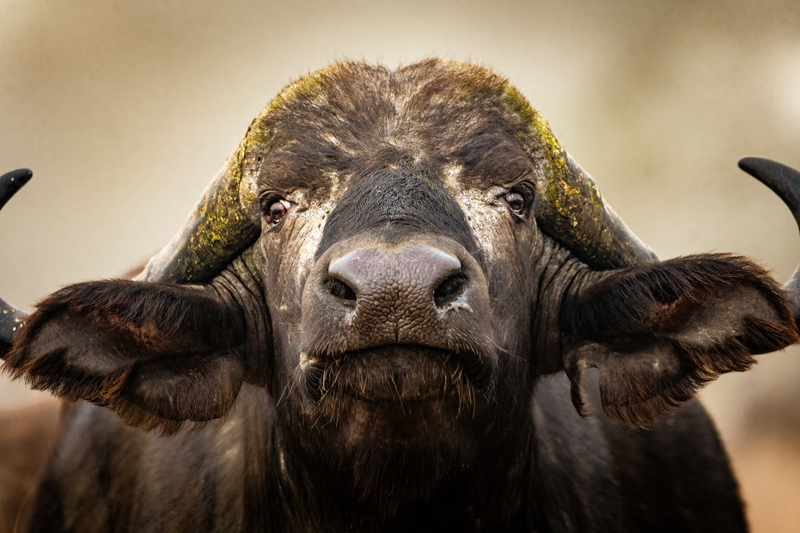
The African buffalo (Syncerus caffer) is the one most people picture — the horned, herd-forming animal that shows up on safari lists as one of the “Big Five.” It’s not endangered, but it’s not thriving either. The IUCN Red List classifies it as Near Threatened, with the overall population trending downward even as some protected reserves hold steady or grow.
The threats stack differently depending on region. In parts of East and Southern Africa, well-managed parks have buffalo numbers that look healthy. Outside those boundaries, poaching for bushmeat and horns, competition with livestock for grazing land, and disease transmission — particularly bovine tuberculosis picked up from cattle — chip away at herds. Buffalo are also notoriously aggressive when wounded or cornered, which historically made them a target for trophy hunters specifically because the hunt was considered dangerous.
Wild Water Buffalo
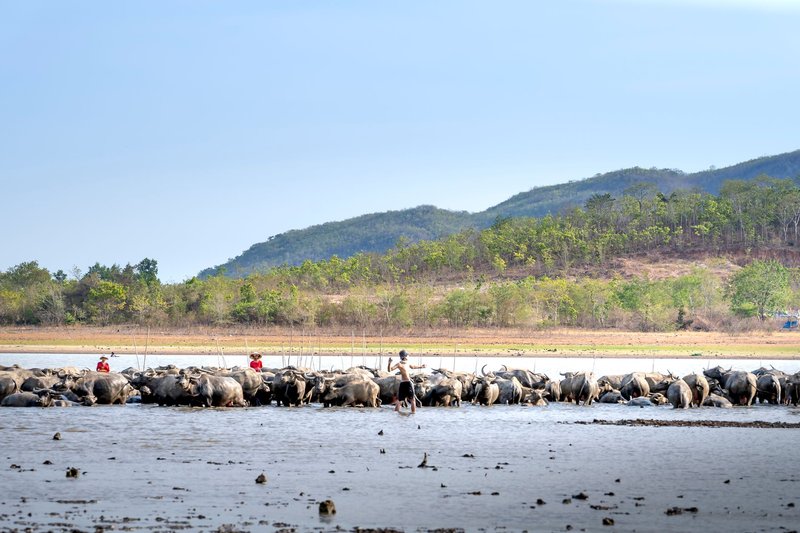
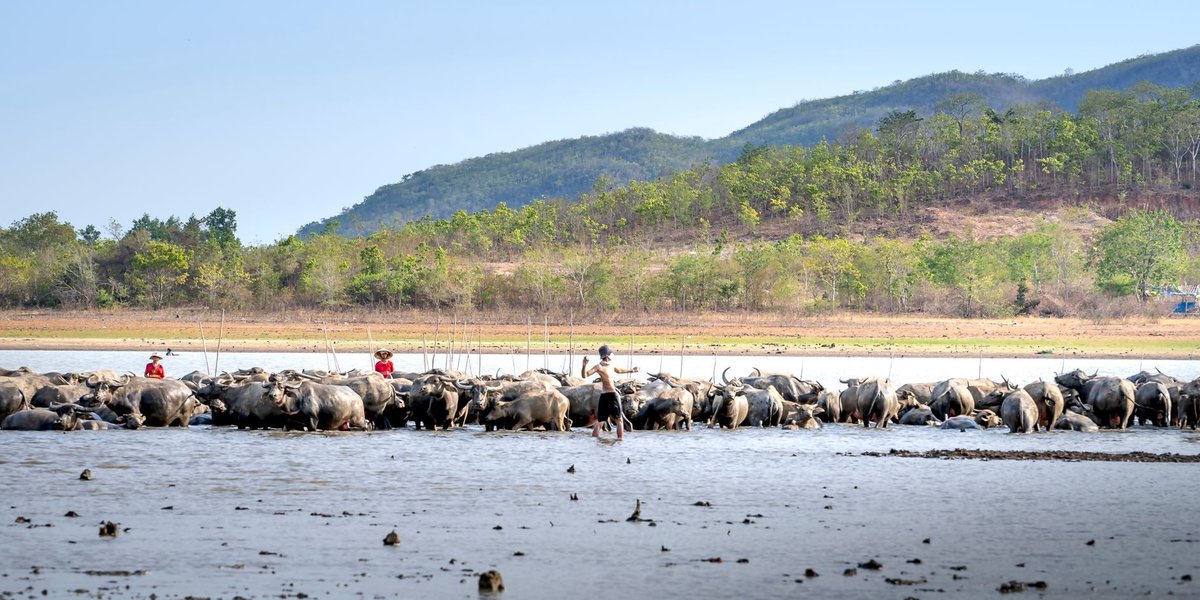
This is the one to point to if someone insists “buffalo aren’t endangered.” Wild water buffalo (Bubalus arnee) are the genuine ancestor of the domestic water buffalo used across South and Southeast Asia for farming — and the wild population is in real trouble. The IUCN lists it as Endangered, with fewer than 4,000 mature individuals remaining, concentrated mostly in protected pockets of India, Nepal, and Southeast Asia.
The threat here isn’t primarily hunting — it’s genetic dilution. Wild water buffalo interbreed readily with domestic and feral buffalo, and in areas where the two overlap, purebred wild populations get absorbed into the much larger domestic gene pool within a few generations. Combine that with wetland habitat loss for agriculture, and you get a species that’s disappearing less through violence and more through erosion.
Anoa: The Buffalo You’ve Never Heard Of
The lowland anoa (Bubalus depressicornis) and mountain anoa (Bubalus quarlesi) are dwarf buffalo native only to Sulawesi, an Indonesian island shaped like a lopsided starfish. Both stand around waist-high, live mostly alone or in pairs rather than herds, and are shy enough that camera traps, not sightings, provide most of what’s known about their behavior.
Both species are classified as Endangered, and unlike African buffalo or bison, there’s no large protected population anchoring recovery efforts. Hunting for meat and horns, combined with logging and agricultural conversion of Sulawesi’s forests, has pushed both species into fragmented, shrinking ranges. Conservation funding for anoa is a fraction of what goes toward better-known megafauna, which is part of why population estimates remain rough.
American Bison
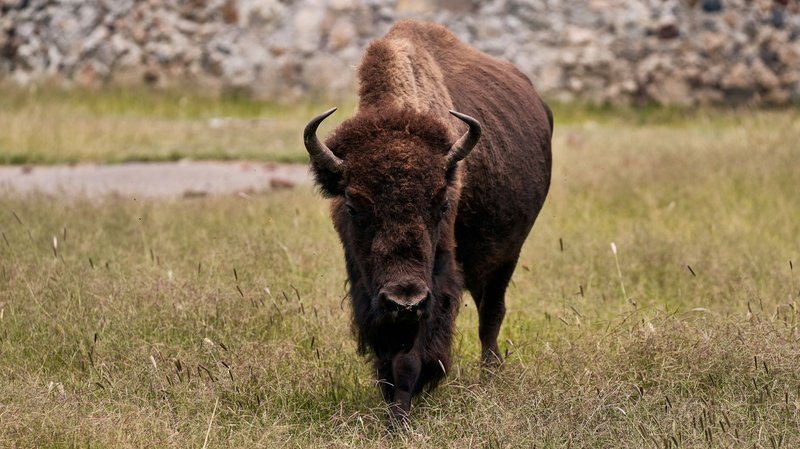
American bison (Bison bison) are the closest thing to a conservation success story on this list, which is exactly why their current classification — Near Threatened rather than fully recovered — surprises people. In the late 1800s, commercial hunting drove the population from tens of millions down to roughly 1,000 animals. What exists today is a direct result of deliberate intervention: ranchers, conservationists, and eventually federal programs rebuilt herds from that near-zero baseline.
The catch is what “recovered” actually means. Most of the roughly 370,000 bison alive today are raised commercially for meat, with selective breeding and, in many herds, some cattle ancestry from historical crossbreeding programs. Wild, genetically pure conservation herds — the kind managed for ecological role rather than production — number closer to 20,500, spread across parks and reserves like Yellowstone. That smaller number is what actually reflects the species’ wild conservation status, and it’s why bison stay on the Near Threatened list instead of graduating off it.
European Bison
The European bison, or wisent (Bison bonasus), has the more dramatic backstory. It went fully extinct in the wild in 1927, with the entire remaining population — a few dozen animals in zoos — becoming the source for every wisent alive today. That’s about as narrow a genetic bottleneck as a large mammal can survive.
Reintroduction efforts, concentrated in Poland’s Białowieża Forest and expanded across Eastern Europe, have grown the population past 7,000, enough that the IUCN downgraded wisent from Vulnerable to Near Threatened in 2020. The lingering risk isn’t numbers — it’s genetics. Every wisent descends from such a small founding group that the species has unusually low genetic diversity, which makes it more vulnerable to disease outbreaks than a population of the same size would normally be.
FAQ
Are buffalo endangered? It depends which one. African buffalo are Near Threatened, not endangered. Wild water buffalo are genuinely Endangered, with under 4,000 left. If someone says “buffalo are endangered” without specifying, they’re most likely thinking of wild water buffalo or conflating buffalo with bison.
Are bison endangered? No, not currently — both American and European bison are classified as Near Threatened. American bison recovered from around 1,000 animals to hundreds of thousands, though only a fraction of that total lives in wild, genetically managed conservation herds. European bison rebuilt an entire species from a few dozen zoo animals.
Does the Buffalo Zoo have endangered species? Yes — like most accredited zoos, the Buffalo Zoo in Buffalo, New York, houses several endangered and threatened species as part of conservation breeding programs, though its collection isn’t limited to buffalo or bison. If you’re researching wildlife tied to the city itself rather than the animal, the zoo’s own conservation pages are the more relevant starting point than general buffalo/bison research.
Why are anoa less well-known than other endangered buffalo? Limited range (Sulawesi only), solitary and shy behavior that makes them hard to study, and comparatively little conservation funding relative to larger, more visible species like African buffalo or bison.