TL;DR
Yes — several crocodile species live in and around forests, just not in the open rivers most people picture. The West African dwarf crocodile and the slender-snouted crocodile both den in closed-canopy rainforest streams and swamps across West and Central Africa. Across the Atlantic, Cuvier’s dwarf caiman does the same job in flooded Amazon forest, though it’s technically an alligator relative, not a true crocodile. All three are shrinking as their forests get logged.
(If you landed here looking for the enemy from the survival game The Forest — that’s a different search. This is about the real animals.)
Table of Contents
- Yes, Forest Crocodiles Are Real
- Meet the Species That Actually Live in Forests
- Forest Crocodile Species at a Glance
- Why Forest Streams Instead of Open Rivers
- Deforestation Is Their Biggest Threat
Yes, Forest Crocodiles Are Real {#yes-forest-crocodiles-are-real}
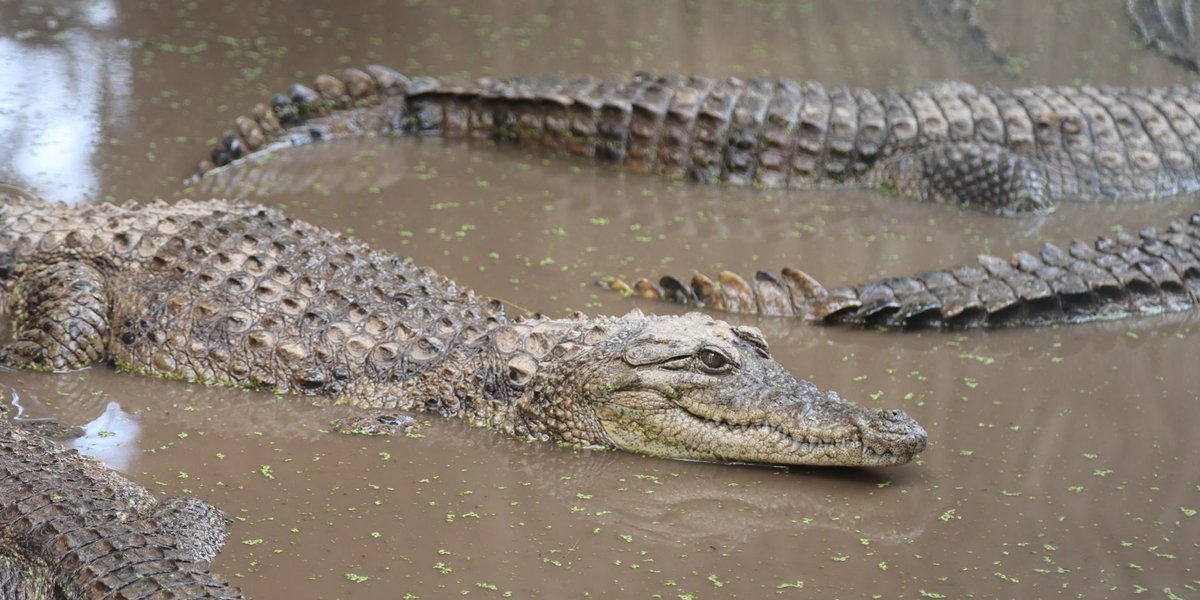
Most crocodilians are river and lake animals. But a handful of species specialize in something narrower: the small, shaded, slow-moving streams that thread through tropical rainforest floors. They’re not there by accident. Forest streams offer cover from predators, stable temperatures, and prey that open-water crocodiles never encounter — frogs, crabs, and forest rodents instead of fish and wading birds.
The confusion usually comes from one of two directions. Some people conflate rainforest with alligator territory, since alligators show up in swamp documentaries alongside dense vegetation. Others assume anything called “dwarf” or living in dense cover must be a caiman, not a crocodile. Both mix-ups are understandable, and both miss a real, if under-covered, group of animals: true forest-dwelling crocodile species, most of them small, secretive, and increasingly rare.
Meet the Species That Actually Live in Forests {#meet-the-species}
The West African Dwarf Crocodile
Osteolaemus tetraspis is the smallest living crocodile species, and it built its whole strategy around being small. Adults top out around 1.8 meters and 45 kilograms — some adult females never break 1 meter. That size lets it move through narrow forest channels that would strand a Nile crocodile.
It ranges across closed-canopy rainforest streams, dense swamps, and savanna pools in West and Central Africa, and it’s unusually terrestrial for a crocodilian: after heavy rain, individuals have been found many meters from the nearest water, walking overland at night. According to the U.S. Fish and Wildlife Service, the species is largely nocturnal and spends daylight hours hidden in burrows dug into stream banks. The IUCN Crocodile Specialist Group lists it as Vulnerable, with logging and bushmeat hunting driving the decline.
The Slender-Snouted Crocodile
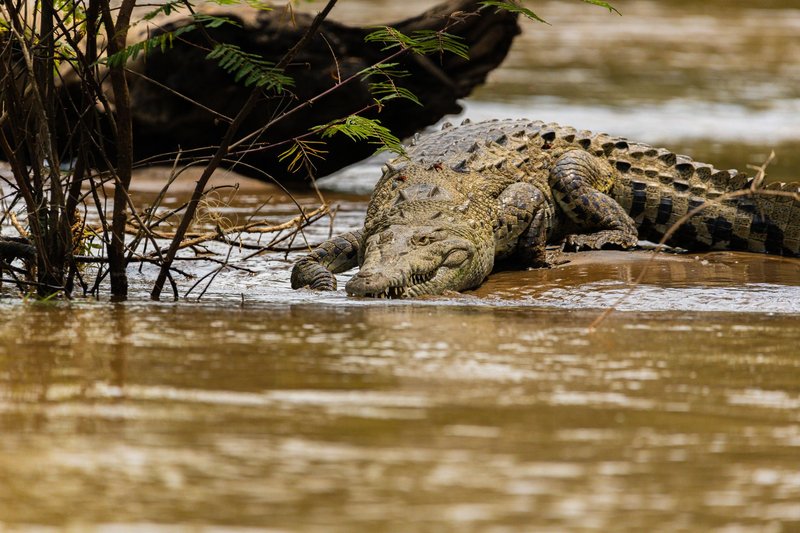
This one used to be a single species; genetic work in 2018 split it into two. Mecistops cataphractus covers West Africa, and Mecistops leptorhynchus covers the Congo Basin and Central Africa. Both prefer shallow, shaded rivers running through rainforest, with a long, narrow snout built for snatching fish in tight quarters rather than ambushing large prey in open water.
The West African species is in serious trouble. The IUCN Crocodile Specialist Group and researchers at Florida International University’s Tropical Conservation Institute estimate fewer than 500 adult Mecistops cataphractus remain in the wild, making it one of Africa’s most endangered rainforest animals and among the rarest crocodilians on the planet. Habitat fragmentation from logging roads, plus targeted hunting for bushmeat, are the main drivers.
Cuvier’s Dwarf Caiman
Swap continents and you get a parallel story in the Amazon. Like other reptiles of South America, Cuvier’s dwarf caiman lives in flooded forest and forest-fringed rivers and streams across the Amazon Basin, favoring fast-flowing water but tolerating the slow, nutrient-poor blackwater rivers found in Venezuela and southeastern Brazil. Males average 1.6 meters; females average 1.2 meters, making it the smallest crocodilian in the Americas.
Here’s the wrinkle worth knowing: this animal is a caiman, and caimans belong to the alligator family, Alligatoridae — not the crocodile family, Crocodylidae. So if your mental image of a “forest crocodile” is actually this species, you’re picturing a close alligator relative, not a true crocodile. The giveaway when you see one up close is the jawline: true crocodiles show a visible lower tooth jutting up outside the closed upper jaw; alligators and caimans hide their lower teeth under an overbite. Unlike its African cousins, Cuvier’s dwarf caiman is doing fine — IUCN rates it Least Concern thanks to its huge range and tolerance for disturbed habitat, though some local populations still take hits from hunting and pollution.
Forest Crocodile Species at a Glance {#species-at-a-glance}
| Species | Max Size | Region | Habitat | Conservation Status |
|---|---|---|---|---|
| West African dwarf crocodile | 1.8 m | West & Central Africa | Rainforest streams, swamps, savanna pools | Vulnerable |
| West African slender-snouted crocodile | ~2.5 m | West Africa | Shaded rainforest rivers | Critically Endangered |
| Central African slender-snouted crocodile | ~2.5 m | Congo Basin | Shaded rainforest rivers | Critically Endangered* |
| Cuvier’s dwarf caiman | 1.6 m (male avg.) | Amazon Basin | Flooded forest, forest streams | Least Concern |
*Assessed jointly with the West African species prior to the 2018 taxonomic split; a standalone reassessment is pending.
Why Forest Streams Instead of Open Rivers {#forest-streams}
Crocodilians are fundamentally aquatic, so “forest crocodile” doesn’t mean an animal that lives on dry land under trees. It means one that’s picked the narrowest, most shaded slice of water available — a stream a couple of meters wide, walled in by root systems and low canopy, rather than a wide river or coastal estuary.
That habitat choice comes with trade-offs. Forest streams hold less prey biomass than open rivers, which is part of why these species evolved small. But they also offer near-total cover: no crocodile competing for basking spots, no large predators cruising open channels, and water temperatures that stay stable under a closed canopy even when the dry season bakes everything else. The dwarf crocodile’s burrowing habit and the slender-snouted crocodile’s narrow snout are both direct adaptations to that tight, resource-poor niche — traits that would be liabilities in a big open-water system like the Nile or the Zambezi.
Deforestation Is Their Biggest Threat {#deforestation}
Every forest-dwelling crocodilian on this list is losing ground to the same cause: logging. Selective logging opens the canopy, warms and silts the streams these species depend on, and cuts access roads that make previously remote populations reachable for bushmeat hunters. For the West African slender-snouted crocodile, with an adult population estimated in the low hundreds, that combination is closer to an extinction pathway than a slow decline.
It’s also the angle most general-audience coverage skips. Articles about “rainforest crocodiles” tend to stop at habitat description and species ID, without connecting the dots to why these particular animals are disappearing faster than their river-dwelling relatives. A dwarf crocodile burrow on a stream bank and a caiman den in flooded forest are both, in effect, staked on the forest around them staying intact.