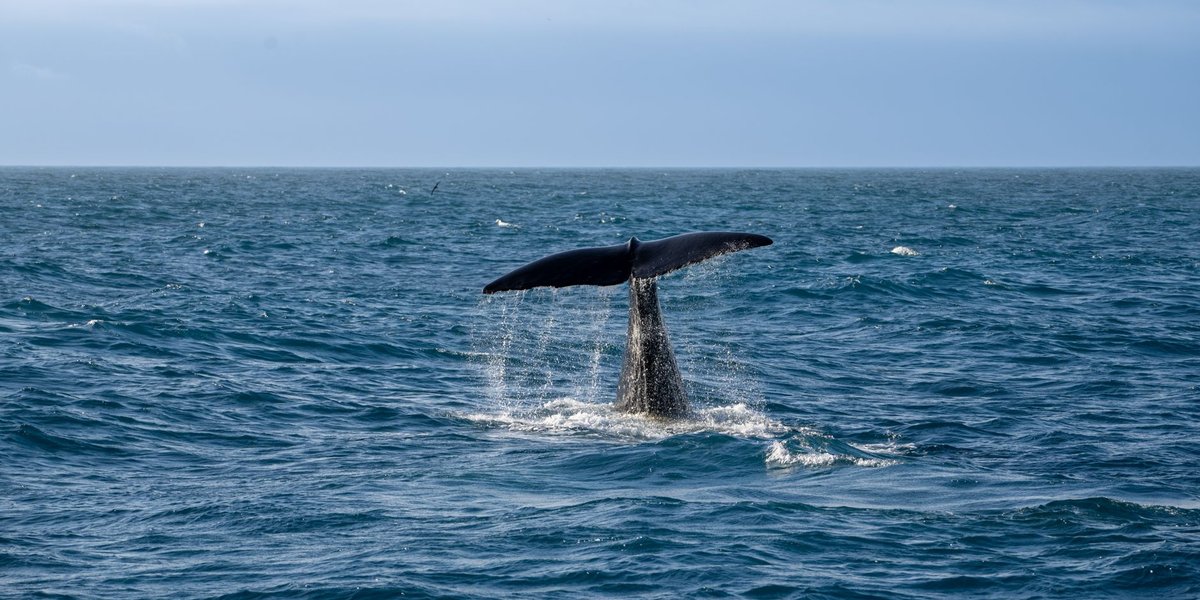
TLDR: If you’re picturing “biggest blue animals” as a color category — blue frogs, blue jays, blue-ringed octopuses — that’s a different, much smaller list (we cover it below). But the search everyone actually lands on points to one animal: the blue whale, the largest creature to ever exist on Earth, full stop. Bigger than every dinosaur that ever walked. A blue whale’s heart alone can weigh as much as a small car, and one adult eats up to 4 tons of krill a day during feeding season.
Table of Contents
- Wait, blue as in color, or blue as in whale?
- How big is a blue whale, actually
- Why the ocean let it get this big
- Blue whale vs. elephant vs. dinosaur: the numbers side by side
- The actual blue-colored animals, for the record
- The size record isn’t changing anytime soon
Wait, blue as in color, or blue as in whale?
Two different questions hide inside this one search. Someone could mean literally blue-hued animals — poison dart frogs, blue jays, the blue-ringed octopus. Someone else means the blue whale, treating “blue” as a name rather than a color.
The second reading is the one that matters here, because the answer is a genuine record, not a matter of opinion.  The blue whale (Balaenoptera musculus) is the largest animal known to have ever lived — larger than any land animal in Earth’s history, dinosaurs included. We’ll circle back to the color-blue crowd near the end, but the size story is where the real weight of this topic lives.
How big is a blue whale, actually
Adult blue whales run 80 to 100 feet long and weigh up to 200 tons — roughly 400,000 pounds. Numbers that size stop meaning anything on their own, so here’s what they translate to:
- The tongue weighs as much as an elephant on its own.
- The heart can weigh around 400 pounds, about the size of a small car, and its main artery is wide enough for an adult human to crawl through.
- A newborn calf already stretches 23 feet and gains around 200 pounds a day nursing on milk that’s roughly 35-50% fat.
- Daily food intake during feeding season hits up to 4 tons of krill — millions of the tiny crustaceans, filtered out of huge mouthfuls of seawater through baleen plates instead of teeth.
None of that is close to a runner-up. The next largest animal alive, the fin whale, tops out around 80 feet and 74 tons — already dwarfed by the blue whale’s upper range.
Why the ocean let it get this big
Land has a size ceiling. Gravity punishes bulk — legs and skeletons have to get disproportionately thick to support extra weight, until the math stops working. That’s part of why even the largest dinosaurs, sauropods like Argentinosaurus, maxed out well short of blue whale territory despite tens of millions of years to work with.
Water removes that constraint. Buoyancy carries the weight, so a blue whale doesn’t need a skeleton built to fight gravity the way an elephant’s does — it just needs to float and swim. That single mechanical difference is most of the reason whales can outweigh anything that ever stood on land.
The second piece is food density. Blue whales are lunge feeders: they engulf a volume of water and krill that can exceed their own body volume in a single gulp, then filter it through baleen in seconds. Krill swarms in the Southern Ocean and other cold, nutrient-rich waters can pack thousands of individuals per cubic meter — dense enough that a single mouthful delivers an enormous caloric return for the energy spent. According to NOAA Fisheries, that feeding efficiency is a major driver behind the species reaching its record size.
Researchers studying whale fossils point to a window starting around 3 million years ago when ocean conditions — shifting currents, seasonal upwelling, ice age patterns — concentrated prey into large, predictable swarms. That’s when baleen whales’ body sizes jumped sharply, rewarding the ones that could engulf the most food in the fewest lunges. Gigantism wasn’t inevitable; it was a specific answer to a specific opportunity.
Blue whale vs. elephant vs. dinosaur: the numbers side by side
| Animal | Length | Weight | Era |
|---|---|---|---|
| Blue whale | 80-100 ft | Up to 200 tons | Present day |
| African bush elephant | ~13 ft (shoulder height) | 6-7 tons | Present day |
| Argentinosaurus (largest known dinosaur) | ~100-115 ft | 65-100 tons | ~95 million years ago |
| Patagotitan | ~120 ft | ~57-69 tons | ~100 million years ago |
| Fin whale (2nd-largest living animal) | Up to 80 ft | Up to 74 tons | Present day |
Line them up and the pattern holds even against the longest dinosaurs: Argentinosaurus may edge close on raw length, but a blue whale can still weigh double or triple its mass. Length is a headline number; weight is where the blue whale’s advantage actually shows up, and WWF’s size comparisons back the same conclusion — nothing in the fossil record outweighs it.
The actual blue-colored animals, for the record
If you came here for animals that are actually blue-colored rather than named “blue,” here’s the short version — and it’s a genuinely different list, since color and size don’t correlate the way this search implies.
- Blue-ringed octopus — a few inches across, and one of the most venomous marine animals on Earth despite the size.
- Poison dart frog (blue morph) — found in Suriname, small enough to sit on a fingertip.
- Blue jay — common across North America, closer to a foot long.
- Hyacinth macaw — the largest of the blue parrots, around 3 feet long including tail.
- Mandarinfish — a small, vividly patterned reef fish, rarely more than 3 inches.
None of them come within orders of magnitude of a blue whale. That gap is the whole point — “biggest” and “blue” pull in the same direction only when “blue” is a species name, not a shade.
The size record isn’t changing anytime soon
Commercial whaling cut the global blue whale population from an estimated 250,000 to roughly 10,000-25,000 today, and the species remains endangered. Recovery is slow — blue whales reproduce roughly once every 2-3 years — but current numbers still hold the size crown by a wide margin, and there’s no fossil or living contender close behind.
So if the question was really “what’s the biggest blue animal,” the honest answer is that it’s also the biggest animal, period. Nothing that’s ever lived on land or in water has beaten it, and the mechanics that let it get there — buoyancy plus a very specific evolutionary window — aren’t circumstances evolution is likely to repeat.